Mitsugu Shrine (Osaka Prefecture) Complete Guide | Over 1000 Years of History, Blessings, and Visiting Information in Amerikamura
Amerikamura, known as a hub of youth culture and a bustling entertainment district in Osaka’s Minami area, is home to the historic Mitsugu Shrine. Nestled quietly amidst its lively streets is the historically significant Mitsugu Shrine. Officially known as Mitsu Hachimangu or Shimanouchi Hachimangu, it boasts a history of over 1000 years and is affectionately known as “Minami no Hachiman-san” by locals.
Despite its urban hustle and bustle, stepping into the shrine grounds reveals a surprisingly calming atmosphere. This article comprehensively covers everything you need to know before visiting Mitsugu Shrine, including its history, enshrined deities and blessings, highlights for visitors, information on Goshuin (shrine stamps), and access methods.
History and Origins of Mitsu-gu Shrine (Mitsu Hachiman-gu Shrine)
A History of Over 1000 Years Dating Back to the Tenpyo Era
The founding of Mitsu-gu Shrine dates back to the first year of the Tenpyo-Shoho era (749 AD). This year, during the reign of Empress Koken in the Nara period, was marked by a significant event in Japanese history.
At that time, Hachiman-sama was invited from Usa Shrine in Oita Prefecture to Tamukeyama Hachiman-gu Shrine as the guardian deity of Todai-ji Temple in Nara. It is believed that the portable shrine carrying the shrine, en route from Usa to Nara, landed in Osaka and was temporarily housed there, which is considered the origin of Mitsu-gu Shrine.
The place where the portable shrine landed was an area with a port called “Mitsu” at the time, a crucial hub for water transport from the Seto Inland Sea through Osaka Bay to the capital. It is said that after the portable shrine rested at this location, it proceeded to Nara, and later, in commemoration of this place where it was enshrined, the shrine was renamed “Mitsu Hachimangu.”
A Shrine That Grew Alongside the Development of Osaka’s Minami District
During the Edo period, this area was called “Shimanouchi” and developed as a commercial district of Osaka. Mitsugu Shrine, as the tutelary deity of Shimanouchi, attracted the faith of the local people and came to be known as “Shimanouchi Hachimangu.”
In the Meiji era, it was ranked as a local shrine and officially recognized as the guardian deity of Osaka’s Minami district. Having survived the war and as times changed from Showa to Heisei and Reiwa, the surrounding area developed significantly into Shinsaibashi and Amerikamura, but Mitsugu Shrine has remained unchanged as a spiritual center for the community.
A Deep Connection with Usa Shrine
An essential aspect of discussing the history of Mitsugu Shrine is its relationship with Usa Shrine in Oita Prefecture. Usa Shrine is the head shrine of approximately 44,000 Hachiman shrines nationwide, and Mitsumiya Shrine holds special significance as a sacred place where the divine spirit temporarily resided.
Given this historical background, Mitsumiya Shrine can be said to occupy an important position not merely as a local shrine, but within the nationwide network of Hachiman faith.
Deities and Benefits
About the Deities
Mitsumiya Shrine enshrines three deities that form the core of Hachiman faith.
Emperor Ōjin
The 15th Emperor, and the deity considered to be the original form of Hachiman. He has been worshipped since ancient times as the god of military fortune and victory. He is also said to have made contributions to the development of culture and industry, and is revered as the god of career advancement and good fortune.
Emperor Chūai
The 14th Emperor, and the father of Emperor Ōjin. Known as a brave warrior, he is believed to grant blessings for lasting military fortune.
Hime-Ōkami
She is a goddess enshrined alongside Hachiman-jin at Usa Shrine. Generally, she is considered to refer to the three Munakata goddesses (Takitsuhime-no-Mikoto, Ichikishimahime-no-Mikoto, and Takirihime-no-Mikoto), and is worshipped as a goddess of maritime safety, traffic safety, and matchmaking.
Benefits of Mitsu-no-Miya
The blessings that can be received at Mitsu-no-Miya are numerous.
- Career Advancement and Good Fortune: Improved career and promotion luck due to the divine virtues of Emperor Ōjin.
- Long-lasting Military Fortune: Good fortune in competitions and success in sports, based on ancient beliefs in the god of war.
- Marital Harmony: From the belief in Emperor Chūai and Empress Jingū as a married couple.
- Success in Love: The divine virtues of Hime Ōkami as a goddess.
- Business Prosperity: As it is located in the commercial district of Osaka’s Minami area, it is also considered a god of business.
- Protection from Evil and Bringing Good Fortune: The comprehensive divine virtues of Hachiman.
The shrine is particularly revered by people working in Shinsaibashi and Amerikamura, and those doing business in the Minami area, with a constant stream of worshippers praying for daily business prosperity and success.
Highlights and Visitor Guide
An Oasis in the City: A Tranquil Shrine Grounds
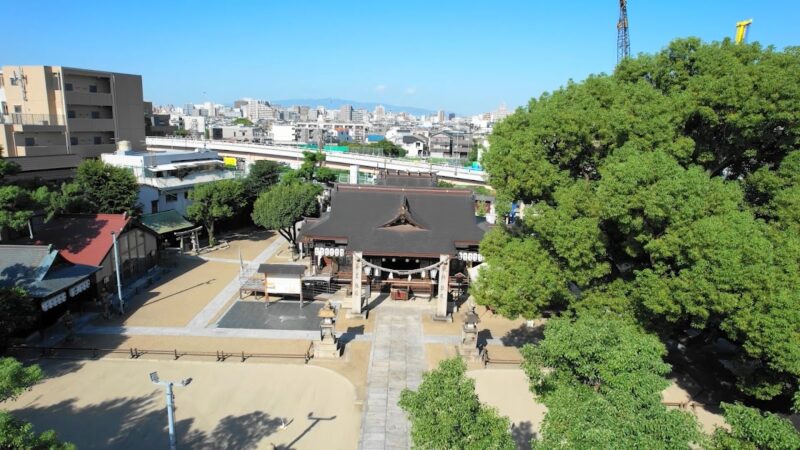
Stepping into the shrine grounds away from the hustle and bustle of Amerikamura, you enter a different world. Despite being surrounded by skyscrapers, the shrine grounds, nestled amongst trees, offer a quiet and peaceful atmosphere. A tranquility so profound it makes you forget you’re in the city welcomes visitors.
The grounds aren’t particularly large, but they are meticulously maintained and spotlessly clean. As you proceed along the stone-paved path, a magnificent shrine building comes into view.
Main Hall and Worship Hall
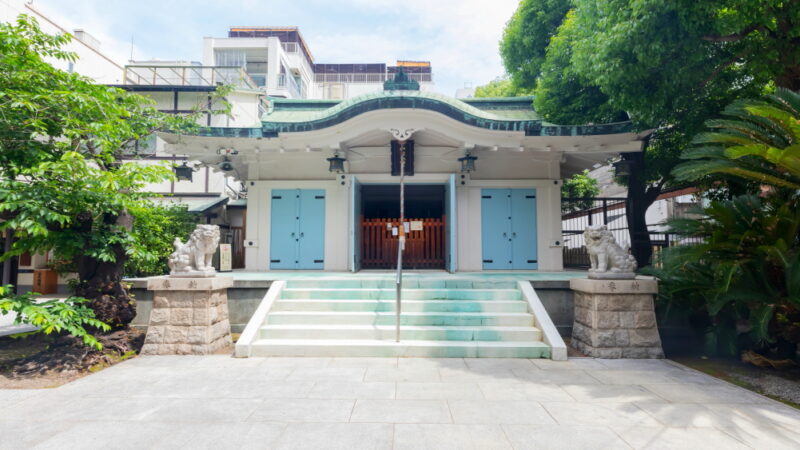
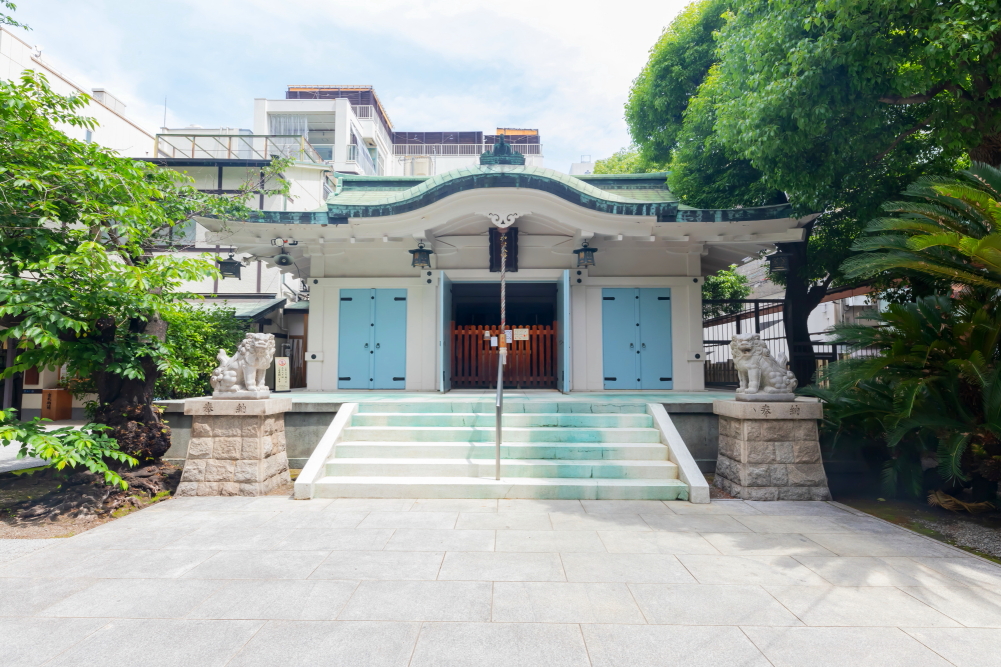
The shrine buildings of Mitsumiya were rebuilt after the war, but they maintain the traditional style of shrine architecture while exhibiting a refined appearance. In front of the worship hall is an offering box; here, you should pray using the two bows, two claps, and one bow ritual.
The main hall enshrines the deity, and a solemn atmosphere permeates the space. When praying, quietly offer your gratitude and wishes in your heart.
Purification at the Water Basin
Before praying, always purify your body and mind at the water basin. Mitsumiya’s water basin, though compact, is kept clean, allowing you to purify your hands and mouth using the correct ritual.
- Hold the ladle in your right hand and purify your left hand.
- Switch the ladle to your left hand and purify your right hand.
- Switch the ladle back to your right hand, receive water in your left hand, and rinse your mouth.
- Finally, stand the ladle upright and purify the handle.
Following this procedure will allow you to worship with a purer heart.
Seasonal Atmosphere and Festivals
Mitsumiya Shrine holds various festivals throughout the year. Particularly noteworthy is the summer festival, which attracts local people and is a beloved summer tradition in Minami.
During the New Year’s visit period, the shrine is bustling with worshippers praying for good fortune in the new year, filling the usually quiet grounds with energy. Traditional Shinto rituals such as the Setsubun Festival and the Grand Festival are also carefully preserved.
Goshuin (Shrine Seal) Information
Mitsumiya Shrine’s Goshuin
At Mitsumiya Shrine, you can receive a goshuin as proof of your visit. The Goshuin (temple/shrine stamp) will have the name “Mitsumiya” or “Mitsu Hachimangu” written in ink, along with the shrine’s red seal.
A Goshuin is not merely a commemorative stamp, but a sacred item that symbolizes a connection with the deity. Please request it politely at the shrine office after your visit.
Points to Note When Receiving a Goshuin
- Receive after your visit: The Goshuin is proof of your visit, so be sure to pray first.
- Prepare a Goshuincho: It is considered good manners to bring a dedicated Goshuincho.
- Prepare the offering: Generally around 300-500 yen (please prepare the exact amount as change will not be given).
- Check the shrine office’s opening hours: They may not be able to accommodate requests at certain times.
- Use polite language: Politely ask, “May I request a Goshuin?”
The Goshuin of Mitsumiya is characterized by its simple yet powerful calligraphy and is highly regarded among Goshuin collectors.
Access and Basic Information
Access by Train
The most convenient way to access Mitsumiya Shrine is by Osaka Metro (subway).
Nearest Station: Shinsaibashi Station
- Approximately 4 minutes on foot from Exit 7 of Shinsaibashi Station (Midosuji Line/Nagahori Tsurumi-ryokuchi Line)
- Exit from Exit 7 and proceed south along Midosuji towards Namba
- Turn west (right) at the Midosuji Hachimancho intersection and go straight
- Once you enter the Amerikamura area, you will see Mitsumiya Shrine on your right
Other Nearest Stations
- Approximately 8 minutes on foot from Namba Station (Midosuji Line/Yotsubashi Line)
- Approximately 5 minutes on foot from Nishi-Ohashi Station (Nagahori Tsurumi-ryokuchi Line)
All stations are within walking distance, making it an ideal location for visiting the shrine while shopping or sightseeing in Shinsaibashi or Amerikamura.
Access by Car and Parking
While access by car is possible, the Shinsaibashi/Amerikamura area has heavy traffic and limited parking, so we recommend using public transportation.
There is no dedicated parking lot for the shrine, so you will need to use nearby coin-operated parking lots. Especially on weekends and holidays, congestion is expected, so please allow ample time for your visit.
Visiting Hours
The grounds of Mitsumiya Shrine are generally open all day, but the shrine office has limited hours.
- Shrine Grounds Visiting: Open all day (Daytime visits are recommended due to limited lighting at night)
- Shrine Office Reception: Generally 9:00 AM to 5:00 PM (may vary depending on the season)
- Goshuin (Shrine Seal) Issuance: During shrine office opening hours
If you want to be sure to receive a goshuin or amulet, we recommend visiting during daytime hours.
Summary of Basic Information
- Official Name: Mitsugu Shrine
- Other Names: Mitsu Hachimangu Shrine, Shimanouchi Hachimangu Shrine
- Location: 2-10-7 Nishishinsaibashi, Chuo-ku, Osaka City, Osaka Prefecture
- Deities Enshrined: Emperor Ojin, Emperor Chuai, Hime-no-Okami
- Former Shrine Rank: Gosha (Village Shrine)
- Founded: Tenpyo Shoho 1 (749)
- Annual Festival Dates: Multiple festivals held throughout the year
- Official Website: https://mitsugu.org/
Tourist Spots Around Mitsugu Shrine
Amerikamura (American Village)
Amerikamura, located right next to Mitsugu Shrine, is a representative hub of youth culture in Osaka. Vintage clothing stores, general stores, cafes, and live music venues line the streets, creating a unique atmosphere.
After visiting the shrine, we recommend browsing the unique shops in Amerikamura or taking a break at a cafe. Triangle Park is a popular meeting spot and is bustling with young people on weekends.
Shinsaibashi Shopping Street
Located a few minutes’ walk from Mitsumiya Shrine, Shinsaibashi Shopping Street is one of Osaka’s most representative shopping streets. The approximately 580-meter-long arcade boasts around 180 shops, ranging from long-established businesses to the latest fashion brands.
Besides shopping, there are many restaurants where you can enjoy Osaka’s gourmet cuisine, making it an area you can enjoy all day long, combined with your visit to the shrine.
Dotonbori
A 10-minute walk south from Mitsumiya Shrine will take you to Dotonbori, a symbol of Osaka. You can enjoy Osaka’s iconic scenery, including the Glico sign and the giant crab sign of Kani Doraku.
There are numerous restaurants where you can savor Osaka’s famous gourmet food, such as takoyaki, okonomiyaki, and kushikatsu, making it the perfect way to end your sightseeing.
Hozenji Yokocho
Located a short distance from Dotonbori, Hozenji Yokocho is a charming alleyway with cobblestone streets. Hōzenji Temple, known for its Mizukake Fudo (Water-Pouring Fudo), offers a unique worship experience where visitors pour water on a moss-covered statue of Fudo Myoo (Acala) while making a wish.
The surrounding area is lined with long-established restaurants and izakayas (Japanese pubs), preserving a valuable Showa-era atmosphere.
Recommended Restaurants Around Mitsumiya Shrine
Famous Restaurants in the Shinsaibashi/Amerikamura Area
The area around Mitsumiya Shrine, being in the heart of Osaka’s Minami district, is a treasure trove of gourmet spots.
Takoyaki
Amerikamura is dotted with popular takoyaki shops. Enjoy Osaka’s soul food, crispy on the outside and gooey on the inside.
Cafes
Amerikamura boasts numerous stylish cafes. Perfect for a break after visiting the shrine, they offer plenty of Instagrammable menu items.
Okonomiyaki & Kushikatsu
Many famous okonomiyaki and kushikatsu restaurants are within walking distance. Enjoy the authentic taste.
Ramen & Udon
The Shinsaibashi area boasts numerous famous ramen shops and long-established Osaka udon restaurants, offering endless culinary choices.
Enjoying Osaka’s food culture alongside your visit to the shrine is one of Mitsumiya’s charms.
The Mitsumiya Shrine Visit Experience and its Power Spot Appeal
A Sanctuary in the City
Mitsumiya’s greatest charm lies in its tranquility and sacred atmosphere, offering a world apart despite its location in the heart of Osaka’s Minami district, one of Japan’s leading entertainment areas.
The hustle and bustle of Amerikamura, the neon lights, the energy of young people—all of this is juxtaposed with a shrine with over 1000 years of history, standing quietly. This contrast is why Mitsumiya is called an “urban oasis” and a “hidden power spot.”
A Space for Purification and Healing
Many visitors comment that they feel a sense of calm upon entering the shrine grounds. This isn’t just my imagination; it might be due to the unique atmosphere of a sacred shrine and the energy accumulated from years of people’s faith.
When you’re tired from shopping or sightseeing, when you’re at a crossroads in life, or when you simply want to quiet your mind, Mitsumiya Shrine is a place of solace open to all who visit.
A Faith Rooted in the Community
Mitsumiya Shrine is deeply revered not only by tourists but also by local people. People visit before their morning commute, stop by during their lunch break, and give thanks for a safe day in the evening. Every day, various people visit, offering their thoughts and feelings before the deity.
This accumulation of everyday faith is what makes Mitsumiya Shrine function not merely as a tourist spot, but as a living place of faith.
Summary: A Recommendation to Visit Mitsumiya Shrine
Mitsumiya Shrine (Mitsu Hachimangu Shrine) is a venerable shrine with a history of over 1000 years, dating back to the Tenpyo era, and has been cherished by the local people as the guardian deity of Osaka’s Minami district. Located in Amerikamura, a hub of youth culture, the shrine grounds are enveloped in tranquility, offering a special space that allows you to forget the hustle and bustle of the city.
The shrine enshrines three deities: Emperor Ojin, Emperor Chuai, and Hime-no-Okami, and is believed to offer a variety of blessings, including career advancement, military success, marital harmony, romantic fulfillment, and business prosperity. Its excellent accessibility, just a 4-minute walk from Shinsaibashi Station, is another attractive feature, making it easy to visit between sightseeing and shopping.
When you visit Osaka, be sure to stop by Mitsumiya Shrine. In Osaka’s Minami district, where history and modernity coexist, you’ll have a valuable experience to calm your mind and gain new energy. Enjoy a visit to discover the profound charm of Osaka while receiving a Goshuin (shrine stamp) and exploring the surrounding gourmet food and shopping.
Mitsumiya Shrine is a hidden gem that will enrich and deepen your Osaka experience.