Myokaku-ji Temple Complete Guide: History, Highlights, Access, and Goshuin Information – A Thorough Explanation
Myokaku-ji Temple is a head temple of the Nichiren sect located in Kamigyo-ku, Kyoto City. It has deep connections with Oda Nobunaga and the Ashikaga shogunate, and has played a significant role in Kyoto’s history. This article comprehensively explains everything you need to know before visiting Myokaku-ji Temple, including its history, highlights within the temple grounds, visiting information, and access methods.
What is Myokaku-ji Temple?: A Key Center of the Kyoto Nichiren Sect
Myokaku-ji Temple is a prestigious temple with the mountain name “Gusoku-san,” serving as the head temple of the Nichiren sect. As a center of the Nichiren sect in Kyoto, it has trained many monks throughout its long history and played a central role in faith.
Sect and Status
- Sect: Nichiren Buddhism
- Mountain Name: Gusokuzan
- Principal Image: Ten Realms Great Mandala
- Status: Head Temple (Nichiren Buddhism)
- Alternate Name: Head Temple of the “Myokakuji School”
Myokakuji Temple holds a particularly important position among Nichiren Buddhist temples in Kyoto, and with its two training halls, “Ryuge” and “Gusoku,” it has served as a place of study for many monks.
History of Myokakuji Temple: From Founding to the Present
Founding in the Muromachi Period
Myokakuji Temple was founded in Eiwa 4 (1378) by Nichijitsu Shonin, a high-ranking priest of the Nichiren sect. Initially a small temple, it rapidly developed through its deepening relationship with the Muromachi Shogunate.
The original location was different from its current location, near Nijō Koromonotana. Subsequently, the temple grounds expanded, and throughout the Muromachi period, it grew into an important center of the Nichiren sect in Kyoto.
Deep Connections with the Ashikaga Shogunate
Myokaku-ji Temple cultivated deep connections with successive shoguns of the Muromachi shogunate. In particular, Ashikaga Yoshinori and Ashikaga Yoshimasa patronized Myokaku-ji Temple and greatly contributed to its development.
With the support of the Ashikaga shogunate, Myokaku-ji Temple became one of Kyoto’s influential temples, developing into a large temple complex with many sub-temples (tatchu). At its peak, dozens of sub-temples stood within its grounds, boasting a vast temple area.
As a Lodging Place for Oda Nobunaga
A noteworthy aspect of Myokaku-ji Temple’s history is its relationship with Oda Nobunaga. Nobunaga frequently used Myokaku-ji Temple as lodging during his stays in Kyoto, and important political decisions were made at this temple.
In Eiroku 11 (1568), when Nobunaga accompanied Ashikaga Yoshiaki to Kyoto, he used Myokaku-ji Temple as his lodging. It is also known that on June 1, 1582 (Tensho 10), the eve of the Honno-ji Incident, Nobunaga’s eldest son, Oda Nobutada, stayed at Myokaku-ji Temple.
When the Honno-ji Incident broke out, Nobutada moved from Myokaku-ji Temple to Nijo Palace, fought against Akechi Mitsuhide’s forces, and then committed suicide. Thus, Myokaku-ji Temple was a crucial historical site during the Sengoku period.
Relocation of the Temple by Toyotomi Hideyoshi
In Tensho 15 (1587), as part of Toyotomi Hideyoshi’s urban redevelopment plan for Kyoto, “Tensho Land Division,” Myokaku-ji Temple was ordered to relocate to its current location in Shimoseizoguchi-cho, Kamigyo-ku.
This relocation resulted in a reduction in the temple grounds, but it marked the beginning of a new history at its current location. Even after the relocation, the temple maintained its status as the head temple of the Nichiren sect and attracted many followers throughout the Edo period.
From the Edo Period to the Modern Era
During the Edo period, the temple enjoyed stable development under the religious policies of the Tokugawa shogunate. It produced many learned monks and functioned as a research center for Nichiren Buddhist studies.
While the impact of the Meiji Restoration’s separation of Shinto and Buddhism and the anti-Buddhist movement was relatively minor, some buildings were lost due to war damage during World War II. After the war, it was rebuilt and is now cherished by many as an important historical site in Kyoto and a place of worship.
Myokaku-ji Temple Grounds and Highlights
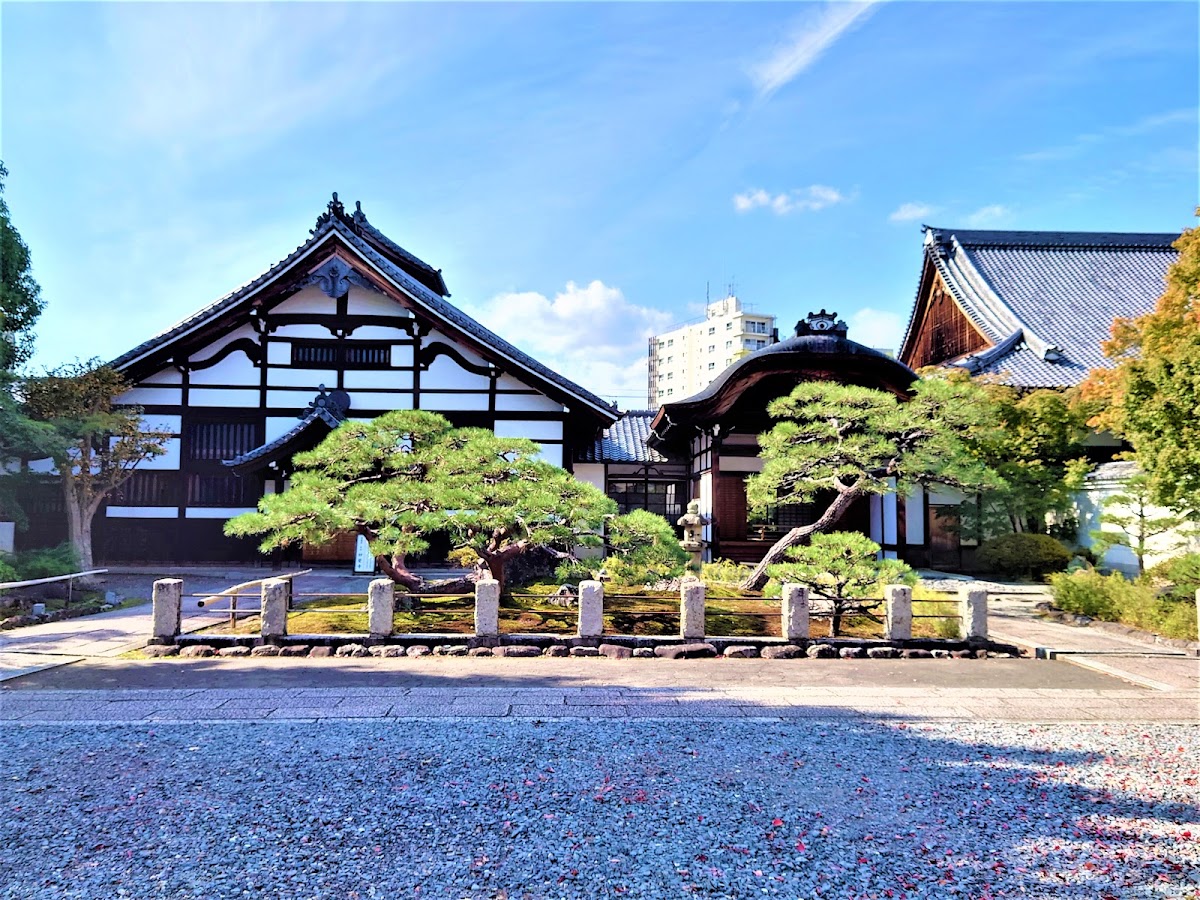
The grounds of Myokaku-ji Temple are dotted with historical buildings and beautiful gardens. Here are some of the main highlights.
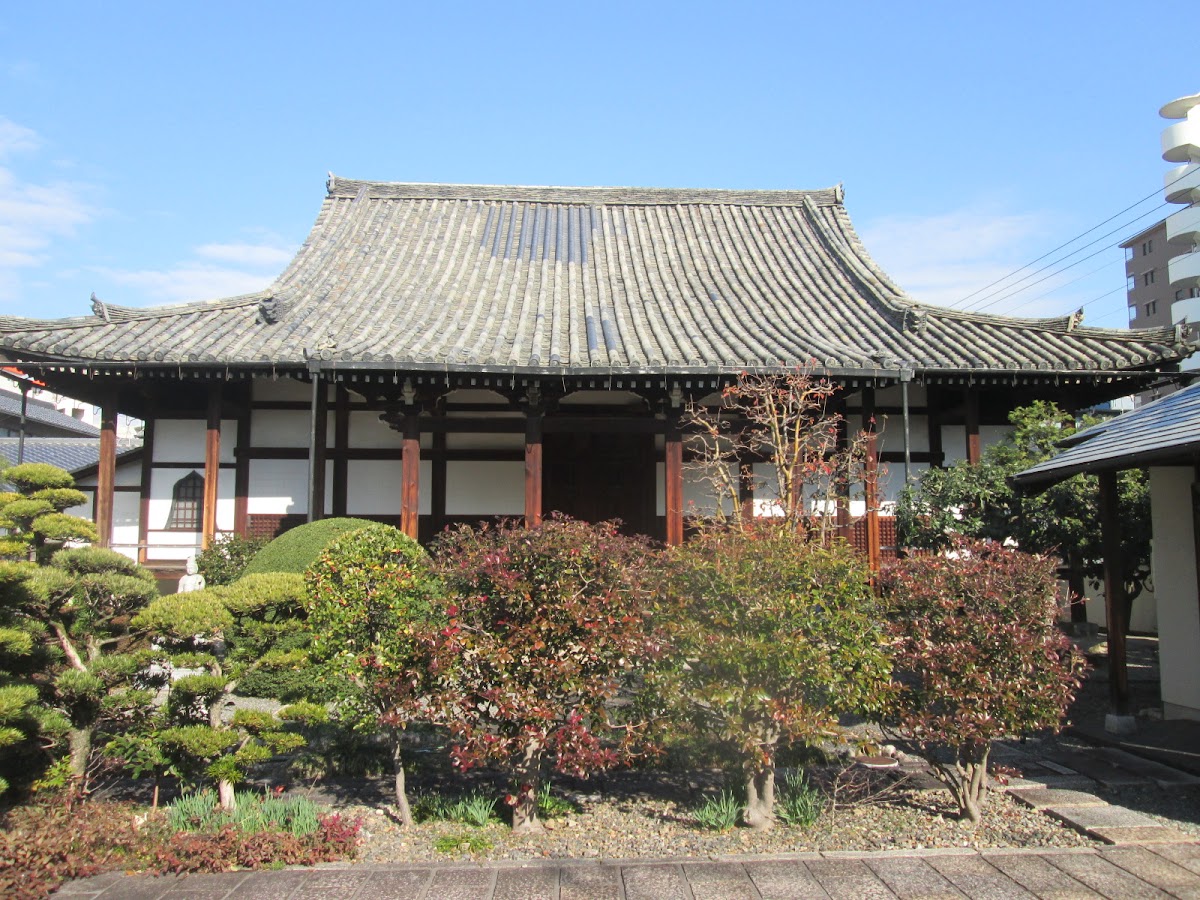
Main Hall (Founder’s Hall)
The main hall of Myokaku-ji Temple also serves as the Founder’s Hall, housing a statue of Nichiren Shonin. Inside the main hall, the Ten Realms Great Mandala is enshrined as the principal image, creating a solemn atmosphere.
The current main hall was rebuilt in the mid-Edo period and showcases the architectural style unique to Nichiren Buddhist temples. The decorations inside the hall and the carvings on the transoms are magnificent, demonstrating the high level of craftsmanship of the time.
Main Gate (Sanmon)
The main gate, which serves as the front entrance to Myokaku-ji Temple, is a magnificent structure that reflects the dignity of the temple. Passing through the gate, one enters a tranquil temple grounds, allowing one to forget the hustle and bustle of the city.
Priest’s Quarters and Guest Hall
The priest’s quarters (kuri) are buildings that function as the temple’s kitchen and offices, and Myokaku-ji Temple’s priest’s quarters preserve the architectural style of the Edo period. The guest hall is used as a space to entertain guests, and its interior features beautiful sliding screen paintings and a room overlooking the garden.
Garden
Myokaku-ji Temple has a Japanese garden based on the dry landscape garden style. The garden, which displays different expressions in each of the four seasons, offers visitors tranquility and peace.
The garden is especially beautiful in the spring with its fresh greenery and in the autumn with its vibrant foliage, allowing visitors to find peace of mind while gazing at it.
Historical Sites Associated with Oda Nobunaga and Nobutada
Within the temple grounds, there are historical sites and explanatory signs indicating that Oda Nobunaga and Nobutada stayed here. As a place deeply connected to the Honnoji Incident, a major event in Japanese history, it holds special significance for history enthusiasts.
Sub-Temples
Several sub-temples remain within Myokaku-ji Temple. Each possesses its own unique history and characteristics, reflecting the depth of Myokaku-ji Temple’s history.
Cultural Properties and Treasures of Myokaku-ji Temple
Myokaku-ji Temple houses valuable cultural properties and treasures accumulated over its long history.
Important Cultural Properties
Among the cultural properties held by Myokaku-ji Temple are important items designated by the national government and Kyoto City. The temple houses valuable materials for studying the history of the Nichiren sect, including Buddhist statues, paintings, and ancient documents.
Relics Related to Nichiren Shonin
As the head temple of the Nichiren sect, the temple also possesses relics and letters related to Nichiren Shonin. These are usually not open to the public, but there are opportunities to view them during special exhibitions.
Calligraphy and Paintings by Successive Chief Priests
Calligraphy and paintings by successive chief priests of Myokaku-ji Temple are also carefully preserved as temple treasures. Many of these works possess high value as religious art, including calligraphy conveying the teachings of the Nichiren sect and ink paintings expressing Zen states of mind.
Annual Events at Myokaku-ji Temple
Myokaku-ji Temple holds various annual events based on the traditions of the Nichiren sect.
Major Buddhist Services and Events
- New Year’s Day (January 1st-3rd): New Year’s prayers and first shrine visit of the year
- Setsubun Festival (around February 3rd): Bean-throwing and prayers for warding off evil
- Spring Equinox Service (around the Spring Equinox in March): Memorial service for ancestors
- Founding of the Sect (April 28th): Commemorating the day Nichiren Shonin began preaching the teachings of the Lotus Sutra
- Obon Festival (August): Memorial service for ancestors during the Obon festival
- Autumn Equinox Service (around the Autumn Equinox in September): Memorial service for ancestors
- Oeshiki Festival (October 13th): Memorial service for the anniversary of Nichiren Shonin’s death
- New Year’s Eve Bell Ringing (December 31st): Ringing of the bell at the end of the year
Some of these events are open to general visitors as well as temple members. The Oeshiki ceremony, in particular, is one of the most important events at Nichiren Buddhist temples and is held with great fanfare.
Special Openings
In spring and autumn, buildings and gardens that are normally closed to the public are sometimes opened to the public. Opportunities such as “Special Openings of Normally Closed Cultural Properties,” organized by Kyoto City and the Kyoto Tourism Association, allow visitors to view temple treasures and architecture that are not usually accessible.
Myokaku-ji Temple’s Goshuin (Temple Seal) Information
Myokaku-ji Temple offers Goshuin to visitors. It features the powerful calligraphy characteristic of Nichiren Buddhist temples.
Types of Goshuin (Temple Seals)
At Myokaku-ji Temple, you can usually receive the following types of goshuin:
- Myokaku-ji Temple Goshuin: The mountain name “Gusoku-zan” and the temple name “Myokaku-ji” are written in ink.
- Nichiren Daibosatsu Goshuin: A goshuin praising Nichiren Shonin.
Goshuin Reception Hours and Location
- Reception Location: Temple Office (Kuri)
- Reception Hours: Approximately 9:00 AM to 5:00 PM (may vary depending on the season)
- Offering Fee: Usually around 300-500 yen
Points to Note When Receiving a Goshuin
- Receive after visiting: The goshuin is proof of your visit, so please visit the main hall first before heading to the goshuin office.
- Bring your goshuin notebook: Please bring your goshuin notebook if you have one. If you do not have one, you may be able to purchase one at the temple office.
- Pre-written Goshuin: When the head priest is absent, you may receive a pre-written Goshuin.
- Please refrain from visiting during religious services: During religious services and events, the granting of Goshuin may be suspended, so please visit with ample time.
Myokaku-ji Temple Visiting Information
This summarizes basic visiting information for Myokaku-ji Temple.
Visiting Hours
- Normal: Grounds are freely accessible (the interior of the main hall is usually closed to the public)
- Special Opening: Designated hours during the opening period (usually 10:00~16:00)
Admission Fee
- Grounds: Free
- Special Opening: Paid (around 800 yen, varies depending on the content of the opening)
Notes on Visiting
- Myokaku-ji Temple is a temple that still functions as a training dojo. Please maintain silence and be considerate so as not to disturb the practice.
- Photography is permitted in some areas of the temple grounds, but may be prohibited inside the main hall and in areas not open to the public.
- Except during special public viewing periods, viewing the interior of the buildings is not permitted.
How to Access Myokaku-ji Temple
Myokaku-ji Temple is located in Kamigyo-ku, Kyoto City, and is easily accessible by public transportation.
Location
135 Shimoseizoguchi-cho, Kamigyo-ku, Kyoto City, Kyoto Prefecture 602-0007
Access by Train and Bus
Using the Kyoto Municipal Subway:
- Get off at Kuramaguchi Station on the Karasuma Line, approximately 10 minutes on foot
Using Kyoto City Buses:
- Get off at Tenjin-koen-mae bus stop, approximately 5 minutes on foot
- Get off at Horikawa-teranouchi bus stop, approximately 8 minutes on foot
Major Bus Routes:
- Routes 9, 12, 67, etc.
Access from JR Kyoto Station:
- Take the Karasuma Line to Kuramaguchi Station (approximately 15 minutes)
- Take City Bus Route 9 to Tenjin-koen-mae (approximately 30 minutes)
Access by Car and Parking
Access by Car:
- Approximately 30 minutes from Kyoto-Minami IC on the Meishin Expressway
- Approximately 25 minutes from the Kyoto East Interchange on the Meishin Expressway.
Parking: Myokaku-ji Temple has a parking lot for visitors, but spaces are limited. There are also coin-operated parking lots nearby, so please consider using those.
Nearby Tourist Attractions
There are many other sights to see around Myokaku-ji Temple:
- Daitoku-ji Temple: Approximately 15 minutes on foot, the head temple of the Daitoku-ji branch of the Rinzai school of Zen Buddhism
- Imamiya Shrine: Approximately 15 minutes on foot, the shrine that gave rise to the phrase “marrying into wealth”
- Kitano Tenmangu Shrine: Approximately 20 minutes on foot, dedicated to Sugawara no Michizane, the god of learning
- Kinkaku-ji Temple: Approximately 15 minutes by bus or taxi
You can enjoy a historical stroll through Kyoto by combining these spots.
Recommended Points When Visiting Myokaku-ji Temple
Experience History in a Quiet Environment
Myokaku-ji Temple has fewer visitors compared to famous tourist spots, making it an attractive place to visit in a quiet environment. Escape the hustle and bustle and reflect on history at your own pace.
A Holy Site for Oda Nobunaga Fans
As a historical site related to the Honnoji Incident, it’s a must-see spot for anyone interested in the Sengoku period or Oda Nobunaga. You can feel the weight of history at this place where Nobutada spent his last night.
Experience the Teachings of Nichiren Buddhism
As the head temple of the Nichiren sect, you can learn about the teachings of Nichiren Shonin and the history of the Nichiren sect. Those interested can purchase related books at the temple office.
Enjoy the Seasonal Beauty
Enjoy the beautiful scenery of each season: the fresh green of spring, the deep green of summer, the autumn leaves, and the snowy landscape of winter. The garden is especially beautifully colored during the autumn foliage season.
Frequently Asked Questions about Myokaku-ji Temple
Q1: Can I visit Myokaku-ji Temple without a reservation?
A: Yes, you can freely visit the temple grounds without a reservation. However, if you wish to visit during a special opening or as a group, we recommend contacting us in advance.
Q2: Can I see the inside of Myokaku-ji Temple’s main hall?
A: The inside of the main hall is usually closed to the public. There is an opportunity to see the interior only during the special opening periods in spring and autumn. Please check the Kyoto City Tourism Association website for information on opening hours.
Q3: Is photography allowed at Myokaku-ji Temple?
A: Photography is permitted on the exterior of the temple grounds, but it may be prohibited inside the main hall and in areas not open to the public. Please check with the temple office or the posted notices before taking photos.
Q4: Does Myokaku-ji Temple have lodging facilities?
A: Myokaku-ji Temple does not have lodging facilities for the general public. If you wish to stay overnight, please use nearby hotels or inns.
Q5: Can I request memorial services or Buddhist rites at Myokaku-ji Temple?
A: Yes, we perform various memorial services and rites for our parishioners. Please contact the temple office directly for details. ## Summary: Experiencing Kyoto’s Deep History at Myokaku-ji Temple
Myokaku-ji Temple, as the head temple of the Nichiren sect, boasts a history of over 600 years and is an important temple with deep ties to the Muromachi Shogunate and Oda Nobunaga. It has etched many historical markings as one of the stages for the Honno-ji Incident and as a center of Nichiren Buddhism’s faith and teachings.
In a quiet environment untouched by tourism, it is a valuable spot where you can experience Kyoto’s deep history and Japanese religious culture. It is especially recommended for Oda Nobunaga fans, those interested in Nichiren Buddhism, and those who wish to visit a peaceful temple.
When visiting Kyoto, be sure to visit Myokaku-ji Temple and experience its historical weight and tranquil atmosphere. During special opening periods, it offers a rare opportunity to view the interior of the buildings and temple treasures that are not usually open to the public.
We hope that your visit to Myokaku-ji Temple will be one of your memorable Kyoto experiences.