A Complete Guide to the History and Highlights of Daioji Temple (Kamigyo-ku, Kyoto Prefecture) | A Rinzai Zen Temple Built on the Site of Hiden-in
Daioji Temple, located in Kamigyo-ku, Kyoto City, is a historic temple built on the site of Hiden-in, an ancient welfare facility. This article provides a detailed explanation of Daioji Temple’s history from its founding to the present day, including its changes in sect, highlights, and access information.
Basic Information on Daioji Temple
Daioji Temple currently belongs to the Shokokuji branch of the Rinzai sect, but it was originally founded as a Nichiren sect temple. This change in sect itself is an interesting case in the history of temples in Kyoto.
Location and Access
Location: Kamigyo-ku, Kyoto City
Mountain Name: Kongozan
Sect: Rinzai Zen, Shokokuji School
Principal Image: Shakyamuni Buddha
Daioji Temple is located in a residential area of Kamigyo-ku, Kyoto City, relatively close to the Kyoto Imperial Palace and Shokokuji Temple. It is a temple where you can feel the history in a quiet environment.
History of Daioji Temple
Founding and Kōō Enji
The history of Daioji Temple dates back to Tenshō 14 (1586). The founder was a monk named Kōō Enji (1559-1619), a disciple of Nichijū Shōnin of Myōmanji Temple. Kōō Enji decided to build a temple in a historically significant location to spread the teachings of the Hokke sect (Nichiren sect).
That location was the site of the Hiden-in, a welfare institution built in the early 9th century by Tachibana no Kachiko, the empress of Emperor Saga, also known as “Danrin Kogo.” Kyoō Enji built a temple on this historically significant land, naming it Daiō-ji.
Records indicate that the original Daiō-ji was a temple that combined the teachings of Tendai, Shingon, and Zen Buddhism, and belonged to Enryaku-ji Temple. This is an interesting fact that illustrates the complex relationships within the Buddhist world in Kyoto at that time.
Deep Connection with Hiden-in
Understanding Daiō-ji requires understanding its relationship with the Hiden-in. The Hiden-in was a welfare facility established based on the Buddhist concept of compassion to provide relief to the poor and orphans.
The history of Hiden-in in Japan is ancient, with the first one said to have been established by Prince Shōtoku at Shitenno-ji Temple. Several Hiden-in (welfare institutions for the poor) were established in Heian-kyo (Kyoto), but the one built by Empress Danrin in the early 9th century was particularly important.
This Hiden-in functioned as a temple during the late Kamakura period, but was reduced to ruins during the Ōnin War (1467-1477). Approximately 100 years later, Kyoō Enji founded Daiō-ji Temple on this historic site.
The name Hiden-in was moved to the grounds of Sennyū-ji Temple in 1646 by Nagai Naokiyo, and it continues to exist today as a sub-temple of Sennyū-ji.
The Great Fire of Tenmei and Reconstruction
A major turning point in the history of Daiō-ji Temple was the Great Fire of Tenmei in 1788. This massive fire was a disaster that destroyed a large part of Kyoto city, and Daiō-ji Temple was no exception.
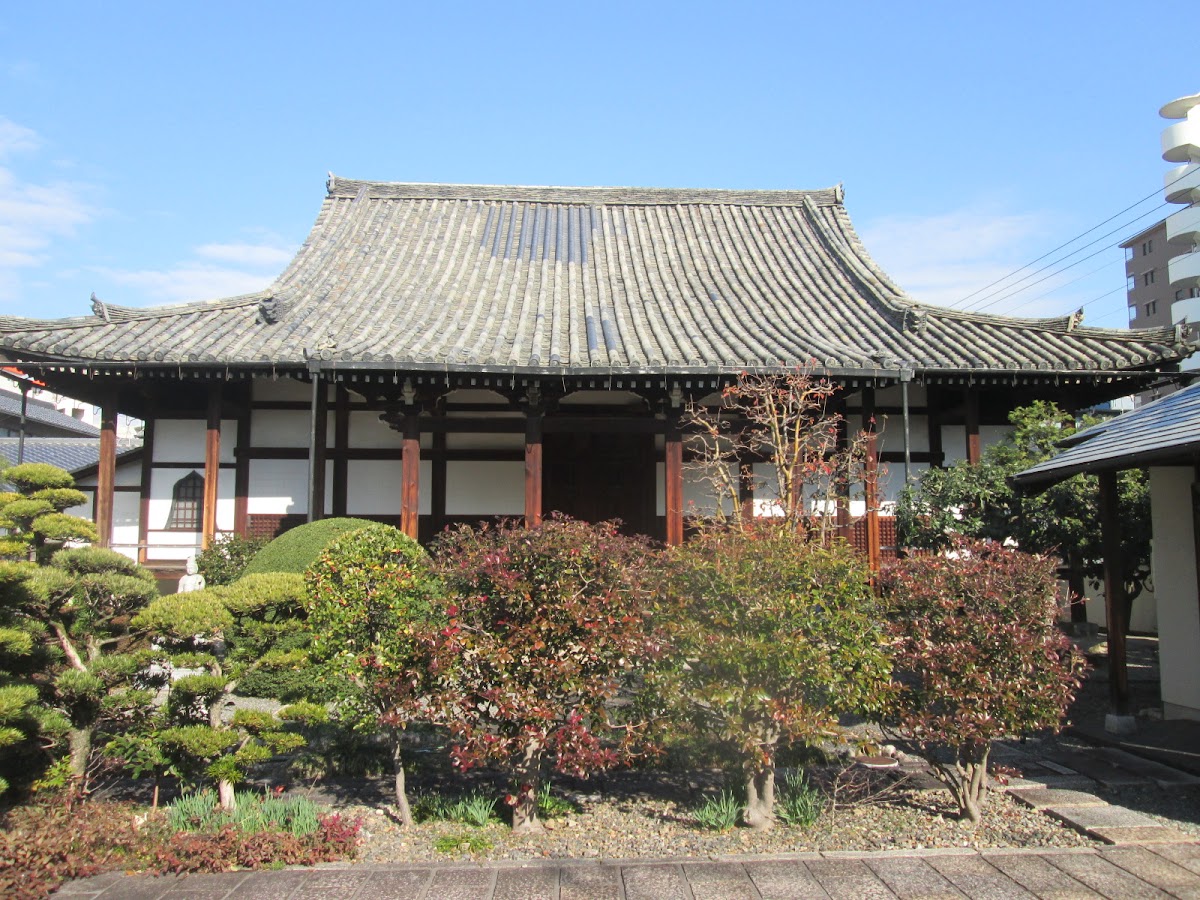
Although Daioji Temple had lost its main buildings, the temple buildings that can be seen today were rebuilt after 1808 (Bunka 5). Even now, more than 200 years after this reconstruction, Daioji Temple stands quietly in Kamigyo Ward.
Changes in Sectarianism
One of the notable aspects of Daioji Temple is its changes in sectarianism. Originally founded as a Nichiren Buddhist (Hokke) temple, it now belongs to the Shokokuji branch of the Rinzai sect.
While detailed records of when and how this change occurred are limited, it serves as a valuable example illustrating the historical changes in Buddhist temples in Kyoto. The Shokokuji branch is a representative branch of the Rinzai sect in Kyoto, and Kinkakuji and Ginkakuji also belong to the same sect.
Highlights of Daioji Temple
Principal Image: Shakyamuni Buddha
The principal image of Daioji Temple is Shakyamuni Buddha. The Shakyamuni Buddha statue represents Shakyamuni, the founder of Buddhism, and is commonly the principal image of worship in Rinzai Zen temples. Viewing it in the tranquil main hall can bring peace of mind.
A Temple Grounds Reflecting History
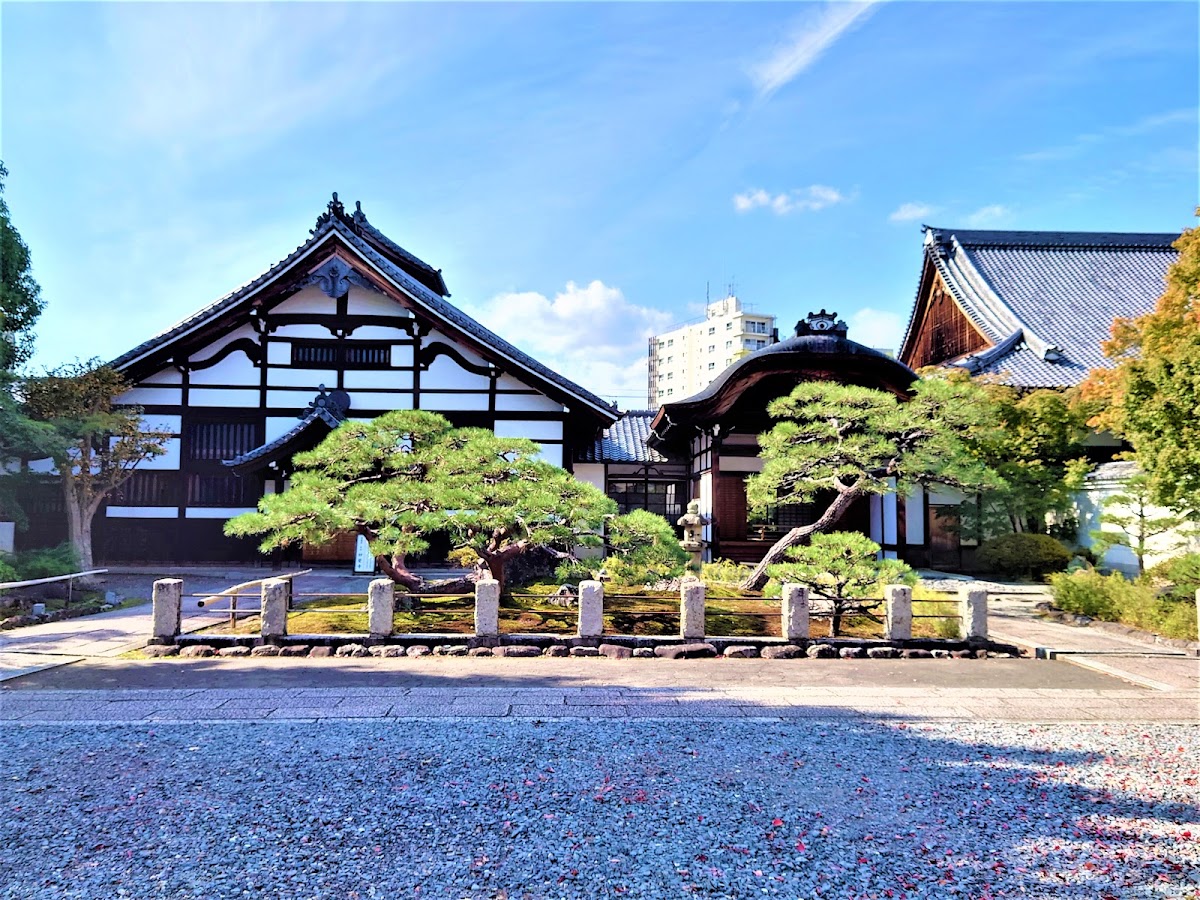
Despite being located in a residential area of Kyoto, the grounds of Daioji Temple possess an atmosphere that evokes a sense of historical weight. The temple buildings, rebuilt after the Great Fire of Tenmei, preserve the architectural style of the late Edo period.
Although the grounds are relatively small, the well-maintained gardens and buildings offer visitors tranquility and peace. Because it is not a temple widely open to the public as a tourist attraction, the peaceful atmosphere during worship is one of its charms.
Historical Value as the Site of the Hiden-in Temple
The greatest attraction of Daioji Temple lies in its location itself. Its historical value as the site of the Hiden-in Temple, built by Empress Danrin, gives it a unique character not found in other temples.
Standing on this land imbued with a spirit of welfare that has continued since the early Heian period, you can feel the history of Kyoto spanning over 1200 years and the practical application of Buddhist compassion.
Attractions around Daioji Temple
Kyoto Imperial Palace
The Kyoto Imperial Palace is within walking distance of Daioji Temple. The Kyoto Imperial Palace was the residence of the Emperor until the Meiji Restoration and is now open to the public. Beautiful gardens and historical buildings are scattered throughout the vast grounds, making it a classic Kyoto sightseeing spot.
Shokokuji Temple
Shokokuji Temple, the head temple of the Shokokuji branch of the Rinzai school to which Daioji Temple belongs, is also nearby. Founded by Ashikaga Yoshimitsu, the third shogun of the Muromachi shogunate, Shokokuji Temple is a prestigious temple with Kinkakuji (Golden Pavilion) and Ginkakuji (Silver Pavilion) as its sub-temples. The “Crying Dragon” painted on the ceiling of the main hall is a must-see.
Historic Streetscapes of Kamigyo Ward
Kamigyo Ward, where Daioji Temple is located, is an area of Kyoto that particularly retains historical streetscapes. By strolling through the Nishijin district, known as the production center of Nishijin weaving, and the areas where many traditional townhouses remain, you can experience Kyoto’s traditional culture.
Manners and Precautions for Visiting the Temple
Basic Manners for Visiting the Temple
When visiting Daioji Temple, please observe the following basic manners:
- Maintain silence: As the temple is located in a residential area, please refrain from loud conversations.
- Photography: Please check if photography is permitted on the temple grounds before taking pictures.
- Dress Code: Please avoid revealing clothing and dress appropriately.
- Offerings: When praying, please offer a sincere donation.
Visiting Hours and Admission Fees
Daioji Temple is not a large-scale tourist temple, so it is recommended to check in advance whether it is open for visits. While general temple visiting hours are during daylight hours, it is best to contact the temple directly for details.
Access Methods
Access by Public Transportation
Daioji Temple is conveniently accessible by Kyoto City Bus. It is a few minutes’ walk from the nearest bus stop. Multiple bus routes operate from Kyoto Station, providing good access to the Kamigyo Ward area.
If using the subway, Imadegawa Station or Marutamachi Station on the Karasuma Line are relatively close, and the temple can be accessed on foot or by bus from there.
Access by Car
If visiting by car, you need to consider the road conditions in Kyoto City. Traffic congestion is especially expected during tourist seasons and weekends, so using public transportation is recommended.
Regarding parking, there may not be a dedicated parking lot for the temple, so you will need to use a nearby coin-operated parking lot.
Daioji Temple and Emperor Go-Hanazono
When discussing the history of Daioji Temple, its relationship with Emperor Go-Hanazono is noteworthy. Emperor Go-Hanazono was an emperor of the Muromachi period who lived during the turbulent period before and after the Onin War. Understanding the historical context of Emperor Go-Hanazono provides clues to a deeper understanding of the temple’s position within Daioji Temple’s historical context.
The Position of Daioji Temple in Kyoto
Within the Temple Culture of Kamigyo Ward
While there are many temples in Kamigyo Ward, Kyoto City, Daioji Temple is special due to its unique historical background as the site of the Hiden-in (a welfare institution). Although it is not widely advertised as a tourist temple, it is positioned as an important temple for studying the history of Buddhism and welfare in Kyoto.
As a Temple of the Shokokuji Branch of the Rinzai School
Currently, Daioji Temple belongs to the Shokokuji branch of the Rinzai school of Zen Buddhism. The Shokokuji school is a leading branch of Zen Buddhism in Kyoto, and it boasts world-famous temples such as Kinkaku-ji (Rokuon-ji) and Ginkaku-ji (Jisho-ji).
Although small in scale, Daioji Temple, as a member of the Shokokuji school, plays a role in supporting Kyoto’s Zen culture.
Historical Significance of Empress Danrin and Hiden-in
About Empress Danrin (Tachibana no Kachiko)
Empress Danrin, also known as Tachibana no Kachiko (786-850), was a woman who played an active role in the early Heian period as the empress of Emperor Saga. She had a deep faith in Buddhism and particularly devoted herself to the practice of compassion.
The name Empress Danrin originates from Danrin-ji Temple, which she founded. Furthermore, the establishment of Hiden-in was a concrete manifestation of her compassionate philosophy.
Hiden-in as an Ancient Japanese Welfare System
The Hiden-in can be considered a precursor to modern-day social welfare facilities. It functioned as a facility to provide relief for the poor, orphans, and the sick, and was also a place to practice the Buddhist concept of compassion.
The tradition of the Hiden-in, which began in the time of Prince Shōtoku, was carried on into the Heian period, and the Hiden-in established by Empress Danrin is also part of that lineage. The fact that Daiō-ji Temple was built on this land symbolizes the continuation of the spirit of compassion across generations.
The Great Fire of Tenmei and Kyoto Temples
Overview of the Great Fire of Tenmei
The Great Fire of Tenmei, which occurred in 1788 (Tenmei 8), is one of the largest fires in Kyoto’s history. It is said that approximately 80% of Kyoto city was destroyed by this fire, and many temples and shrines were also damaged.
Daio-ji Temple was no exception, losing its main buildings after approximately 200 years since its founding. However, the reconstruction after overcoming this disaster forms the foundation of the current Daiō-ji Temple.
History of Reconstruction
The buildings of Daioji Temple, rebuilt after 1808 (Bunka 5), are valuable structures that convey the architectural style of the late Edo period. The fact that it was rebuilt 20 years after the great fire speaks to the power of faith and the support of the local people.
Daioji Temple in the Modern Era
As a Temple Rooted in the Community
Today, Daioji Temple is not a flashy tourist temple, but a quiet temple deeply rooted in the community. It continues to fulfill its role as a place of worship for local people and a place that conveys history.
Value as a Research Subject
Daioji Temple is an important subject for the study of Kyoto’s Buddhist history, welfare history, and urban history. In particular, its location on the former site of Hiden-in (a welfare institution), the changes in its sect, and its reconstruction after the Great Tenmei Fire offer academically interesting themes.
Significance of Visiting Daioji Temple
Experiencing the Layers of History
By visiting Daioji Temple, you can experience the layered history of the Heian period’s philosophy of compassion, the wars of the medieval period, the great fires and reconstructions of the early modern period, and up to the present day. The more than 1200 years of history etched into this single place embody the profound depth of the city of Kyoto.
A Quiet Worship Experience
Unlike famous temples bustling with tourists, Daioji Temple offers a quiet worship experience. The time spent away from the hustle and bustle, calming your mind and reflecting on history, will surely become a special memory during your Kyoto trip.
Summary
Located in Kamigyo-ku, Kyoto City, Daioji Temple was founded in 1586 (Tensho 14) by Kyoō Enji on the site of Hiden-in, a temple built by Empress Danrin. Initially a Nichiren Buddhist temple, it now belongs to the Rinzai sect, Shokokuji branch.
After being destroyed in the Great Fire of Tenmei, Daioji Temple was rebuilt after 1808 and stands to this day. Its mountain name is Kongozan, and its principal image is Shakyamuni Buddha.
The most distinctive feature of Daioji Temple lies in its historical background: it stands on the site of Hiden-in, a welfare facility from the early Heian period. A spirit of compassion and salvation, spanning over 1200 years, breathes life into this land, allowing visitors to feel the profound history of Kyoto.
While not widely open to the public as a tourist temple, this makes it a precious place to quietly contemplate history. Visiting it along with nearby landmarks such as the Kyoto Imperial Palace and Shokokuji Temple will allow you to gain a deeper understanding of the historical and cultural charm of Kamigyo Ward.
When visiting Kyoto, why not visit not only famous temples, but also temples like Daioji Temple that quietly convey the weight of history? There, the true face of Kyoto, not found in guidebooks, awaits.