Complete Guide to Oimatsu Shrine (Wakamiya, Hyogo-cho, Saga City, Saga Prefecture) | History, Deities, and Grounds
Located at 106 Wakamiya, Hyogo-cho, Saga City, Saga Prefecture, Oimatsu Shrine (Oimatsu Tenmangu) is a venerable shrine with a long history and a large camphor tree over 600 years old. This article provides detailed information you should know before visiting, including the shrine’s history and origins, enshrined deities, highlights of the grounds, and access methods.
Basic Information about Oimatsu Shrine
Oimatsu Shrine, also known as “Oimatsu Tenmangu,” is located in the Wakamiya district of Hyogo-cho, Saga City. It is situated approximately 200 meters southwest of the Hyogo-cho Horitate-Nishi intersection where National Routes 34 and 51 merge, and is a beloved local shrine.
Location: 106 Wakamiya, Hyogo-cho, Saga City, Saga Prefecture
Coordinates: 130°20′9.2″E, 33°16′10.34″N
Alternate Name: Oimatsu Tenmangu Shrine
Main Deities: Sugawara no Michizane, Yodohime-no-kami, Otohime-no-kami (wife of Sugawara no Michizane)
Within the shrine grounds stands a 600-year-old camphor tree designated as a “Famous Tree of Saga,” creating a solemn atmosphere that conveys the weight of history.
History and Origin of Oimatsu Shrine
Established in Kenkyu 5 (1194)
The history of Oimatsu Shrine dates back to the early Kamakura period. According to the history of Kose Shrine, during the time when Minamoto no Yoritomo appointed his retainers as local administrators (jitō) in various provinces, in 1194 (Kenkyū 5), Mikawa-no-kami Toshiharu, the head of the Kodama clan, the foremost of the seven clans of Musashi Province, moved to this region.
It is said that Toshiharu built his main castle in Muta, enshrined the tutelary deity of his homeland, Oimatsu Daimyōjin, and worshipped it as the sacred shrine for the more than 500 chō of Kose-shō. This enshrinement is considered the beginning of Oimatsu Shrine, and it has continued to be a venerable shrine with a history of over 800 years to the present day.
The Kodama Clan and Migration from Musashi Province
The Kodama clan was a samurai group based in Musashi Province (present-day Saitama and Tokyo prefectures) and was active from the late Heian period to the Kamakura period. The fact that Mikawa-no-kami Toshiharu gained the trust of Minamoto no Yoritomo and was dispatched to Saga as a local administrator had a significant impact on the history of this region.
It is believed that Shunji’s inviting of the Oimatsu Daimyojin deity from his homeland was both a way to seek a spiritual anchor in his new land and to maintain his connection with Musashi Province. This invitation became a catalyst for the Kanto culture and beliefs to take root in Saga.
Relationship with Sugawara no Michizane
Oimatsu Shrine, also known as “Oimatsu Tenmangu,” enshrines Sugawara no Michizane, known as the god of learning, as its main deity. Michizane was a scholar and politician of the Heian period. After being exiled to Dazaifu, he was enshrined as a Tenmangu in various places after his death.
At Oimatsu Shrine, Michizane and his consorts, Yodohime-no-kami and Otohime-no-kami, are enshrined, and are believed to bring blessings for academic success, family safety, and matchmaking. Local people visit the shrine during exam season to pray for success, and at various milestones in their lives for different prayers.
Highlights of the Shrine Grounds
Hizen Torii Gate and Approach
The approach to Oimatsu Shrine begins by heading due north from National Route 51. At the entrance stands the first Hizen torii gate, bearing a plaque inscribed with “Oimatsu Tenmangu.” The Hizen torii is a distinctive style of torii gate found in the Saga region, characterized by its thick, stable pillars.
After passing through the first torii gate, you reach a sacred bridge about 40 meters away, crossing it to enter the shrine grounds. A second Hizen torii gate stands at the entrance to the grounds, guiding worshippers into the sacred area. The approach is well-maintained, allowing visitors to enjoy the changing seasons as they walk.
600-Year-Old Camphor Tree
The greatest highlight of Oimatsu Shrine is the 600-year-old camphor tree towering beside the shrine building at the back of the grounds. This giant tree is designated as a “Famous Tree of Saga,” boasting a trunk circumference of several meters and an astonishing height.
The great camphor tree is believed to have begun growing between the late Kamakura period and the early Muromachi period, serving as a witness to the history of Oimatsu Shrine. Having watched over the prayers of the local people for 600 years, this sacred tree inspires deep emotion and awe in visitors.
Especially during the seasons of fresh greenery and autumn leaves, the area around the great camphor tree is enveloped in beautiful natural colors, making it a popular spot for photography. Many visitors on power spot pilgrimages also come to this place, seeking to feel the power of the tree.
Atmosphere of the Shrine and Grounds
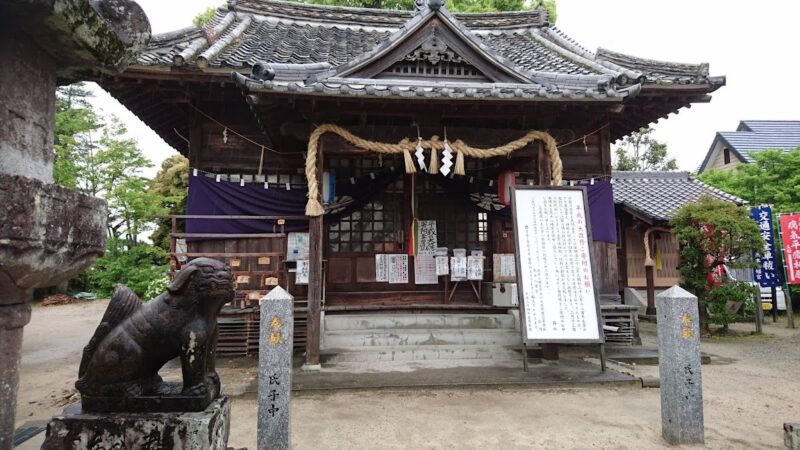
The shrine grounds have a bright and spacious atmosphere and are well-maintained. While maintaining the traditional style of shrine architecture, the shrine buildings are properly maintained, creating a solemn atmosphere.
Within the shrine grounds are a purification fountain, a worship hall, a main shrine, and several smaller shrines, serving as a central place of worship for the region. Visitors can find peace and tranquility in this peaceful environment to offer their prayers.
Major Festivals and Special Rituals
Annual Festivals
At Oimatsu Shrine, various festivals are held throughout the year. The main festivals include:
Annual Grand Festival: Held every autumn, this is the most important festival, bringing together local parishioners and devotees for a portable shrine procession and offering ceremonies.
New Year’s Visit: Many visitors come during the first three days of the New Year to pray for safety and prosperity in the coming year.
Tenjin Festival: As a shrine dedicated to Sugawara no Michizane, special rituals are sometimes held on the 25th, the day of Tenjin’s festival.
Prayers for Success During Exam Season
Oimatsu Shrine, dedicated to Sugawara no Michizane, the god of learning, is visited by many students and their parents during exam season to pray for success. Within the shrine grounds, visitors can dedicate ema (votive tablets) for success, and many ema, each bearing a wish, hang there.
Not only local students, but also visitors from Saga City and surrounding areas come to pray for academic success and passing exams. By praying wholeheartedly in the quiet grounds, students can find spiritual support.
Access and Map
Access by Car
Oimatsu Shrine is easily accessible by car. Using the Hyogo-cho Horitate-Nishi traffic light, where National Routes 34 and 51 merge, as a landmark, proceed approximately 200 meters southwest from there to reach the shrine.
Route from Major Roads:
- From National Route 34: At the Hyogo-cho Horitate Nishi intersection, head towards National Route 51.
- From National Route 51: Take the road that goes due north.
There is parking space for visitors on the temple grounds, but it can get crowded during festivals and New Year’s, so we recommend visiting with plenty of time to spare.
Access by Public Transportation
If using public transportation, the most common way is to take a bus from JR Saga Station. Take a Saga City Bus or Showa Bus towards Hyogo-cho, and the temple is a short walk from the nearest bus stop.
Nearest Bus Stop: Approximately 5-10 minutes on foot from bus stops around Hyogo-cho.
If taking a taxi from Saga Station, it will take approximately 10-15 minutes.
Nearby Tourist Attractions
Around Oimatsu Shrine, there are numerous spots where you can experience the history and culture of Saga:
- Kose Shrine: A historical shrine mentioned in the history records of Oimatsu Shrine.
- Saga Castle Ruins: The site of the Saga Domain’s castle, now open to the public as the Saga Castle Honmaru History Museum.
- Saga City Historical and Folk Museum: A facility where you can learn about the history and culture of Saga.
By visiting these spots in conjunction with your visit to Oimatsu Shrine, you can gain a deeper understanding of Saga’s history.
Manners and Enjoyment of Visiting a Shrine
Basic Etiquette for Visiting a Shrine
When visiting Oimatsu Shrine, please observe the following basic etiquette:
- Bow before passing through the torii gate: As a sign of respect before entering the sacred area, bow before passing through the torii gate.
- Avoid the center of the path: The center of the path is considered the path of the gods, so walk along the side.
- Purify yourself at the water basin: Purify your left hand, right hand, and mouth in that order.
- Two bows, two claps, one bow: In front of the main hall, bow twice, clap twice, and finally bow once.
Photography Tips
Oimatsu Shrine is also an attractive photo spot. The following points are especially recommended:
- Panoramic View of the Great Camphor Tree: This 600-year-old camphor tree can be photographed from various angles.
- Hizen Torii Gate: This distinctive torii gate, characteristic of Saga Prefecture, is perfect for commemorative photos.
- Approach to the Shrine: The combination of the sacred bridge and torii gate creates a beautiful composition.
- Shrine Building: You can capture the beauty of traditional shrine architecture.
When taking photographs, please be considerate of other worshippers, remember that this is a sacred place, and photograph with respect.
Seasons at Oimatsu Shrine
Spring (March-May)
Spring at Oimatsu Shrine is a beautiful season with fresh greenery. The great camphor tree is also covered in young leaves, creating an atmosphere full of vitality. Cherry trees are also planted on the grounds, allowing visitors to enjoy cherry blossom viewing during the blooming season.
After the exam season ends, you can also see people visiting to give thanks for their success.
Summer (June-August)
In summer, the deep green of the large camphor trees provides cool shade, easing the heat. Visiting the shrine amidst the sound of cicadas evokes a quintessential Japanese summer atmosphere.
During the rainy season, hydrangeas bloom, and the shrine grounds, wet with rain, also possess a unique charm.
Autumn (September-November)
Autumn is an important season, as the annual festival is held. The shrine grounds become lively with preparations for the festival, and local people gather. The leaves of the large camphor trees gradually begin to change color, signaling the deepening of autumn.
During the autumn foliage season, the trees on the shrine grounds are beautifully colored, making it an ideal time for photography.
Winter (December-February)
In winter, the Oimatsu Shrine is characterized by a solemn atmosphere enveloped in silence. During the New Year’s period, it becomes bustling with visitors, filling the grounds with people praying for safety and prosperity in the coming year.
During exam season, the number of students and their parents visiting the shrine to pray for success increases, and many votive tablets (ema) are dedicated on the grounds.
Connection with the Community
Role as a Local Guardian Shrine
Oimatsu Shrine serves as the local guardian shrine for the Wakamiya district of Hyogo-cho and the surrounding areas, and is a central place of worship for local residents. It is cherished across generations as a place to pray for the safety and prosperity of the community, and as a place to visit at important life events.
During local festivals and events, the shrine forms a community center around which people gather, playing a role in deepening local bonds.
Value as a Cultural Asset
Just as its 600-year-old camphor tree is designated as a “Famous Tree of Saga,” Oimatsu Shrine also possesses aspects of a valuable cultural asset of Saga Prefecture. The historical shrine buildings and Hizen-style torii gate are important legacies that convey the history of Saga to the present day.
From the perspective of local history research and cultural property preservation, Oimatsu Shrine is positioned as an important entity.
Summary
Located at 106 Wakamiya, Hyogo-cho, Saga City, Saga Prefecture, the Oimatsu Shrine (Oimatsu Tenmangu) is a venerable shrine with over 800 years of history, established in 1194 by Mikawa-no-kami Toshiharu, who descended from Musashi Province.
It enshrines Sugawara no Michizane and his wife as its deities, and is believed to bring blessings for academic success and family safety. Within the shrine grounds stands a 600-year-old camphor tree designated as one of “Saga’s Famous Trees,” deeply impressing visitors.
It is easily accessible, located near the intersection of National Routes 34 and 51. The approach to the shrine, including the Hizen-style torii gate, sacred bridge, and main hall, is well-maintained, creating a bright and relaxed atmosphere for worship.
Various festivals are held throughout the year, and especially during exam season, many students visit to pray for success. As the local guardian shrine and a valuable cultural asset of Saga, Oimatsu Shrine continues to be cherished by the people of the region.
When you visit Saga, we highly recommend visiting Oimatsu Shrine to experience its long history and the power of nature. The time spent calming your mind in the tranquil grounds, feeling the energy of the ancient camphor tree, and offering your own prayers will surely be a memorable experience.