Onjo-ji Temple (Mii-dera Temple) Complete Guide | History, Cultural Assets, and Highlights Explained in Detail
Onjo-ji Temple, located on the slopes of Mt. Nagara overlooking Lake Biwa in Otsu City, Shiga Prefecture, is the head temple of the Tendai Jimon sect, commonly known as “Mii-dera Temple.” With a history spanning over 1300 years, it is known as the “Temple of the Phoenix,” having repeatedly rebuilt itself after being burned down.
It boasts over 100 national treasures and important cultural properties, including the national treasure main hall, and attracts many visitors as the 14th temple on the Saigoku Kannon Pilgrimage. This article comprehensively explains everything you need to know before visiting Onjo-ji Temple, from its history and architecture to its cultural assets and access information.
About Onjō-ji Temple (Mii-dera Temple)
Origin of the Official and Common Names
The official name of Onjō-ji Temple is “Nagara-san Onjō-ji.” The mountain name, Nagara-san, originates from Mount Nagara, where the temple is located, a scenic spot on the southwestern side of Lake Biwa that has been known since ancient times.
The common name “Mii-dera” originates from a sacred spring within the temple grounds. This spring is said to have been used for the first bath of three emperors: Emperor Tenji, Emperor Tenmu, and Empress Jitō, and the temple was called “Mii no Tera” (Temple of the Imperial Well). Later, when Chishō Daishi Enchin used this spring as the sacred water for the three-part initiation ritual of esoteric Buddhism, the name “Mii-dera” became established. Even today, the “Mii no Reisen” (Sacred Spring of Mii) remains on the temple grounds and can be seen by visitors.
Head Temple of the Tendai Jimon Sect
Onjo-ji Temple holds a significant position in the history of Japanese Buddhism as the head temple of the Tendai Jimon sect. The Tendai sect was founded by Saicho, but during the Heian period, it split into two branches: the Jimon branch (led by Chisho Daishi Enchin) and the Sanmon branch (led by Jikaku Daishi Ennin).
Onjo-ji Temple, the base of the Jimon branch, developed into a major temple playing a key role in the Nara (Todai-ji and Kofuku-ji) and Hokurei (Enryaku-ji and Onjo-ji) complex, despite its conflict with the Sanmon branch of Enryaku-ji Temple on Mount Hiei. This conflict sometimes escalated into armed clashes, significantly impacting the history of Onjo-ji Temple.
Principal Image and Beliefs
The principal image of Onjo-ji Temple is Maitreya Bodhisattva. Maitreya Bodhisattva is the future Buddha who is said to descend to earth 5.67 billion years after the death of Shakyamuni Buddha to save all sentient beings. Along with deep faith in Chisho Daishi Enchin, Maitreya Bodhisattva serves as the spiritual pillar of Onjo-ji Temple.
Furthermore, the principal image of the Kannon Hall, Nyoirin Kannon Bodhisattva, attracts the faith of many pilgrims as the 14th temple of the Saigoku Thirty-Three Kannon Pilgrimage.
History of Onjo-ji Temple
Founding and the Asuka Period
Onjo-ji Temple was founded in the 7th century, during the Asuka period. It is said to have begun when Prince Otomo Yota, son of Prince Otomo (Emperor Kobun), who was defeated in the Jinshin War of 672, built it to mourn his father’s passing.
Emperor Tenmu bestowed the imperial plaque “Onjo” upon the temple, and it officially became known as “Onjo-ji Temple.” With a historical background dating back to the time of Otsu-kyo, Onjo-ji Temple began as a temple deeply connected to the lineage of Emperor Tenji.
Restoration by Chisho Daishi Enchin
Onjo-ji Temple’s significant development occurred during the restoration period of Chisho Daishi Enchin (814-891) in the Heian period. After serving as the fifth head of the Tendai sect at Mount Hiei, Enchin returned from Tang China in 858 and restored Onjo-ji Temple as a Tendai branch temple.
Enchin brought the teachings of esoteric Buddhism, acquired during his training in Tang China, to Onjo-ji Temple, bringing back many scriptures and Buddhist statues. Due to his exceptional personality and scholarship, Onjo-ji Temple became an important center of Tendai esoteric Buddhism, growing into a large temple where many monks came for training.
Devotion to Chisho Daishi remains strong today, and a memorial service for him is held every year on October 29th, the anniversary of his death.
Conflict with Enryaku-ji Temple and Burning Down the Temple
From the late Heian period to the Kamakura period, Onjo-ji Temple experienced fierce conflict with Enryaku-ji Temple on Mount Hiei. The two clashed over the succession of the Tendai head priest and doctrinal interpretations, often escalating into armed conflict.
Particularly famous is the burning down of the temple during the Genpei War. In 1081, it was burned down by warrior monks of Enryaku-ji Temple, and in 1180, it was attacked by the Taira clan. It also suffered damage during the wars between the Minamoto and Taira clans. It was destroyed again during the Nanboku-cho period, and Onjo-ji Temple was reduced to ashes numerous times.
However, each time, it was rebuilt through the efforts of people supported by their fervent faith in Chisho Daishi. Because of this indomitable history, Onjo-ji Temple came to be known as the “Temple of the Phoenix.”
From the Azuchi-Momoyama Period to the Edo Period
During the Sengoku period, it received the patronage of Oda Nobunaga and Toyotomi Hideyoshi, and once again flourished. In particular, in 1595, many temple buildings were rebuilt thanks to a donation from Kita-no-Mandokoro (Nene), the principal wife of Toyotomi Hideyoshi. The current main hall (Kondo) was also relocated during this period.
During the Edo period, the temple received protection from the Tokugawa family, and its land holdings were secured, leading to stable development. The layout of the temple complex established during this period forms the foundation of the current Onjo-ji Temple.
Temple Complex and Architecture
Onjo-ji Temple boasts a vast area of approximately 350,000 tsubo (approximately 1.15 million square meters), with numerous temple buildings. The grounds are broadly divided into the central complex centered around the main hall (Kondo), the Kannon-do area, the Tang-style building (Kara-in), and the Okunoin area on the mountaintop.
Main Hall (National Treasure)
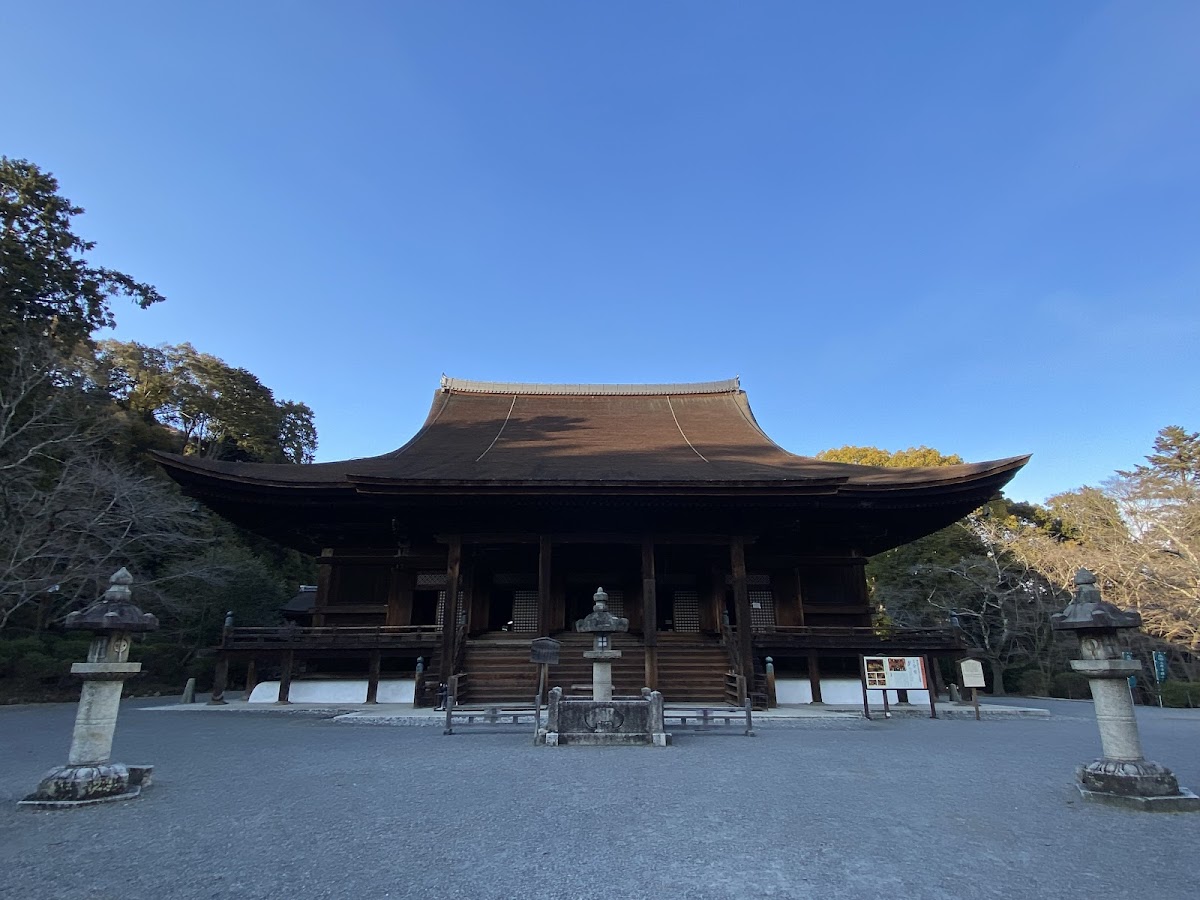
The main building of Onjo-ji Temple is the main hall (Kondo). The current main hall is believed to have been originally a palace built by Kita-no-Mandokoro, the principal wife of Toyotomi Hideyoshi, at Fushimi Momoyama Castle in Kyoto, and was relocated in 1599.
This building, designated a National Treasure, is a valuable example of the magnificent architectural style of the Momoyama period. Inside, the principal image of Miroku Bodhisattva is enshrined, and the solemn atmosphere within the hall overwhelms visitors.
It boasts a hip-and-gable roof covered with cypress bark, and a grand scale of seven bays on the front and five bays on the sides. The decoration of the inner sanctuary is also magnificent, conveying the essence of Momoyama culture to this day.
Kannon-do Hall (Important Cultural Property)
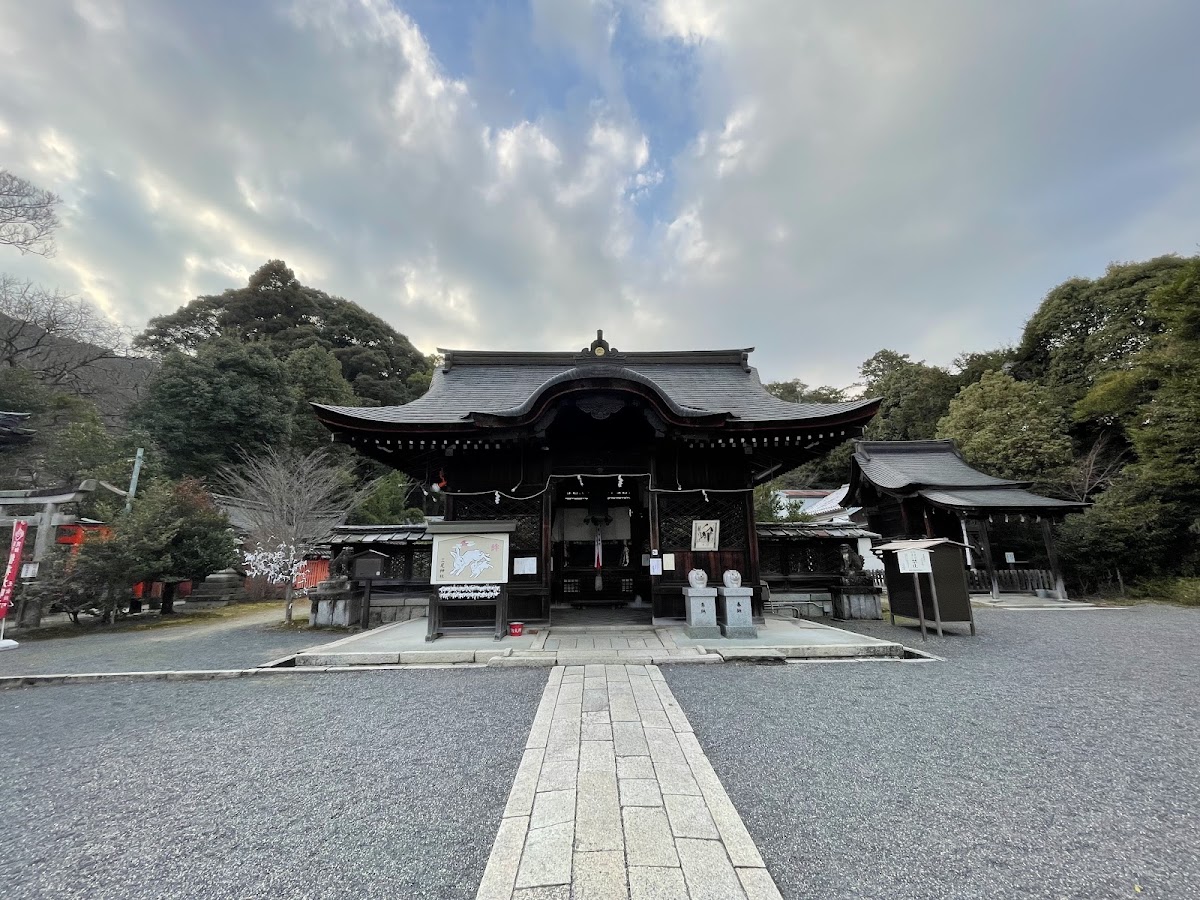
The Kannon-do Hall, the 14th temple of the Saigoku Thirty-Three Kannon Pilgrimage, is an important temple visited by many pilgrims. The principal image, Nyoirin Kannon Bodhisattva, is a hidden Buddha and is not usually open to the public, but it is sometimes unveiled on special occasions.
The current Kannon-do Hall was built in the early Edo period and is designated an Important Cultural Property. Many votive offerings and votive tablets are displayed inside, telling the story of a long history of faith.
From the Kannon-do Hall, you can enjoy a panoramic view of Lake Biwa, and its beauty is a popular attraction for visitors. In spring, cherry blossoms adorn the hall, and in autumn, the autumn leaves color it, allowing visitors to enjoy the beauty of each season.
Shakado Hall (Important Cultural Property)
The Shakado Hall was originally a building relocated from Hiso-ji Temple in Nara. It is a valuable structure that conveys the architectural style of the late Heian period to the early Kamakura period.
Inside, a statue of Shakyamuni Buddha is enshrined, and visitors can worship in a serene atmosphere. It is designated as an Important Cultural Property due to its historical significance in architecture.
Tang Dynasty Hall
The Tang Dynasty Hall is a mausoleum dedicated to Chisho Daishi Enchin and forms the core of Onjo-ji Temple’s faith. The name Tang Dynasty Hall originates from Enchin’s training in Tang China.
Within the Tang-style building are the mausoleum of Chisho Daishi, the Chōnichi Goma Hall, and the Daishi Hall, among others. The Daishi Hall, in particular, is designated as an Important Cultural Property. Every year on October 29th, the anniversary of Chisho Daishi’s death, many devotees visit to pay their respects.
The tranquil atmosphere of the Tang-style building best represents the spiritual essence of Onjō-ji Temple.
Three-Storied Pagoda (Important Cultural Property)
Built during the Muromachi period, the three-storied pagoda stands gracefully within the temple grounds, reaching a height of approximately 25 meters. Designated as an Important Cultural Property, it features a distinctive architectural style that blends Japanese and Zen Buddhist architectural elements.
A statue of Dainichi Nyorai is enshrined inside the first floor, and the murals on the inner sanctuary are magnificent. The sight of the three-storied pagoda against the backdrop of Lake Biwa is one of Onjō-ji Temple’s most iconic landscapes.
Niomon Gate and Bell Tower
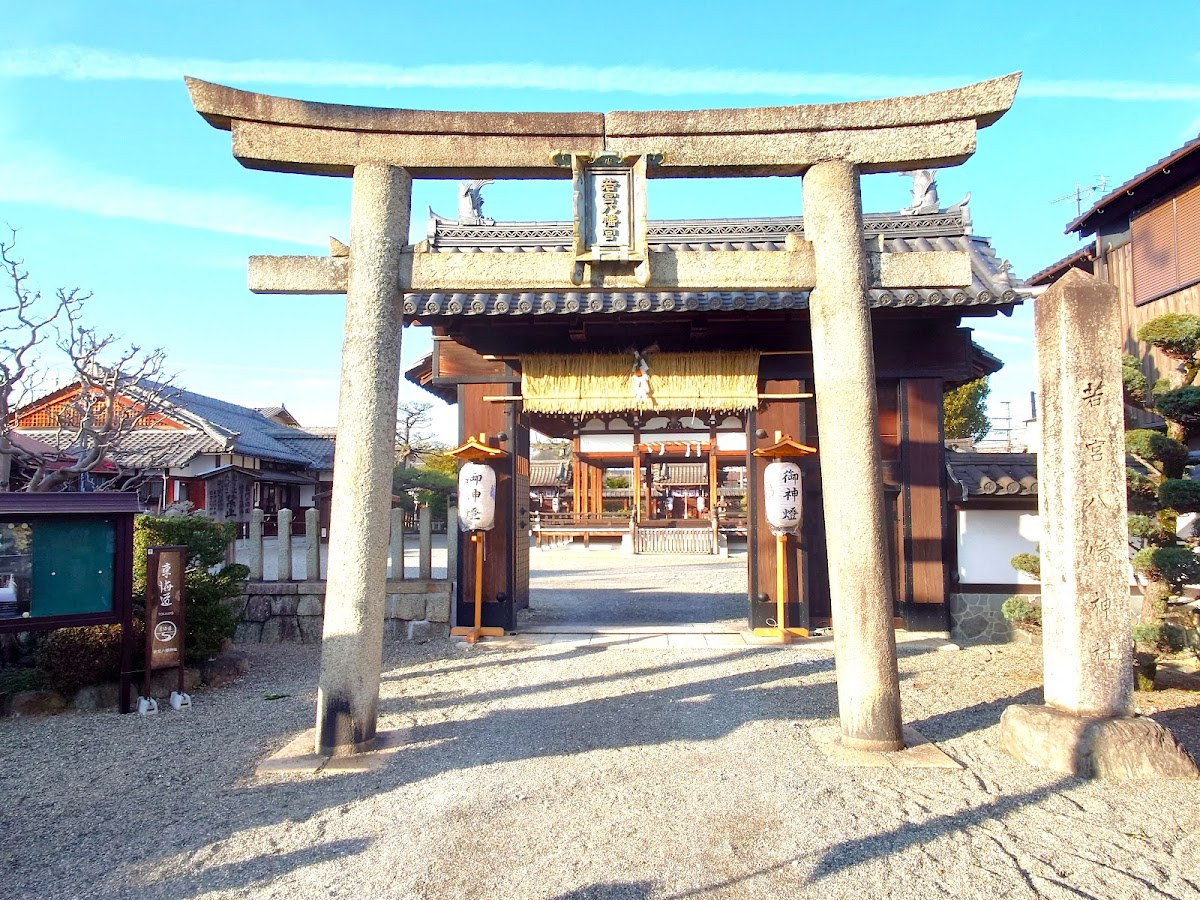
The Niomon Gate, standing at the entrance to the temple grounds, is an early Edo period structure, with Kongo Rikishi statues (Nio statues) enshrined on either side. Its imposing gate, welcoming visitors, reflects the prestige of Onjo-ji Temple.
The bell tower houses a temple bell known as the “Evening Bell of Mitsui.” The sound of this bell is considered one of the Eight Views of Omi and has been cherished by many writers and artists since ancient times. It is still rung daily, and its clear sound resonates throughout the city of Otsu.
Yellow Fudo and Cultural Properties
One of Japan’s Three Fudo: “Yellow Fudo”
The “Yellow Fudo Myoo statue” owned by Onjo-ji Temple is a masterpiece counted as one of Japan’s “Three Fudo,” along with the Red Fudo of Koyasan and the Blue Fudo of Shoren-in Temple.
This Buddhist painting, believed to be from the late Heian period, is characterized by its predominantly yellow coloring and beautifully depicts the majestic figure of Fudo Myoo (Acala). It is designated a National Treasure and is sometimes displayed in the Onjo-ji Temple Treasure Hall.
There is a legend that the Yellow Fudo was brought from Tang China by Chisho Daishi Enchin, making it an important cultural asset symbolizing Onjo-ji Temple’s esoteric Buddhist faith. Due to its high artistic value, it occupies an important position in the history of Japanese Buddhist art.
Numerous National Treasures and Important Cultural Properties
Onjo-ji Temple possesses over 100 National Treasures and Important Cultural Properties. Major National Treasures include:
- Kondo (Main Hall) (Building)
- Silla Zenjindo (Shinra Zenjindo Hall) (Building)
- Kojoin Guest Hall (Building)
- Yellow Fudo Myoo Statue (Painting)
- Documents and Manuscripts Related to Chisho Daishi (Calligraphy and Manuscripts)
- Kangakuin Guest Hall Wall Paintings (Paintings)
There are also numerous Important Cultural Properties, including buildings such as the Kannondo (Kannon Hall), Shakado (Shakyamuni Hall), Three-Storied Pagoda, and Toin Daishido (Tang Dynasty Master Hall), as well as a wide range of items including Buddhist statues, Buddhist paintings, crafts, and ancient documents.
Public Display at the Treasure Hall
These valuable cultural properties are regularly displayed at the Treasure Hall (cultural property storage facility) located within the temple grounds. Especially during the special spring and autumn exhibition periods, masterpieces that are usually not on public display are sometimes exhibited, making it an unmissable opportunity for Buddhist art enthusiasts.
You can see up close items that tell the history of Onjo-ji Temple, such as scriptures and ritual implements brought by Chisho Daishi, and items used by successive eminent monks.
The Evening Bell of Mii, one of the Eight Views of Omi
The temple bell of Onjo-ji Temple has long been known as “The Evening Bell of Mii,” one of the Eight Views of Omi. The Eight Views of Omi are a selection of outstanding landscapes around Lake Biwa, and Utagawa Hiroshige, a ukiyo-e artist of the Edo period, also depicted this bell in his “Eight Views of Omi” series.
The sound of the bell ringing at dusk resonates on the surface of Lake Biwa, creating an indescribable atmosphere. This bell is still rung every day and is cherished as a sound that marks the passage of time in the city of Otsu.
Visitors can also ring the bell (a donation is required) and experience its clear sound firsthand. Enjoying this melody along with the view of Lake Biwa is one of the highlights of visiting Onjo-ji Temple.
14th Temple of the Saigoku Thirty-Three Kannon Pilgrimage
Onjo-ji Temple’s Kannon Hall is the 14th temple of the Saigoku Thirty-Three Kannon Pilgrimage, attracting many pilgrims. The Saigoku Thirty-Three Pilgrimage is considered the oldest pilgrimage route in Japan, and it is believed that one can gain merit by visiting the sacred sites of Kannon Bodhisattva.
Principal Image and Waka Poem
The principal image of the temple is Nyoirin Kannon Bodhisattva, carefully preserved as a hidden Buddha. The waka poem is “The moon rises over the waves, the sound of the bell of Mii-dera Temple rings out over the lake,” a beautiful poem that depicts Lake Biwa and the evening bell of Mii-dera Temple.
Preceding and Following Temples
- Temple No. 13: Ishiyama-dera (Otsu City, Shiga Prefecture)
- Temple No. 14: Onjo-ji (Mii-dera)
- Temple No. 15: Imakumano Kannon-ji (Higashiyama Ward, Kyoto City)
The route from Ishiyama-dera to Onjo-ji follows Lake Biwa northward, offering a scenic pilgrimage route.
Famous for Cherry Blossoms and Autumn Leaves
Onjo-ji is also known as a famous spot for cherry blossoms and autumn leaves, allowing visitors to enjoy its beauty throughout the seasons.
Spring Cherry Blossoms
In spring, approximately 1,000 Somei Yoshino cherry trees adorn the temple grounds. The cherry blossoms around the Kannon Hall and near the three-story pagoda are particularly magnificent, and the view of the cherry blossoms against the backdrop of Lake Biwa is breathtaking.
The trees are also illuminated at night, allowing visitors to enjoy the magical sight of cherry blossoms after dark. During cherry blossom season, the temple grounds are bustling with many visitors, making it a quintessential spring scene.
Autumn Foliage
In autumn, the entire temple grounds are adorned with vibrant autumn leaves. The foliage around the Tang Dynasty Hall and along the path to the Kannon Hall is particularly beautiful, with trees dyed in red and yellow, further enhancing the atmosphere of this ancient temple.
The temple is also illuminated during the autumn foliage season, offering a magical atmosphere different from that of the daytime.
Annual Events and Memorial Services
Throughout the year, various events and memorial services are held at Onjo-ji Temple.
Main Annual Events
- January 1st: Shushō-e (New Year’s Ceremony)
- March: Spring Equinox Ceremony
- April: Hana Matsuri (Buddha’s Birthday Ceremony)
- May: Chishō Daishi’s Birthday Celebration
- August 9th: Sen-dango Festival
- September: Autumn Equinox Ceremony
- October 29th: Memorial Service for Chishō Daishi
- December 31st: New Year’s Eve Bell Ringing
In particular, the Memorial Service for Chishō Daishi on October 29th is one of the most important ceremonies at Onjō-ji Temple, and many believers attend.
Access and Visiting Information
Location
246 Onjoji-cho, Otsu City, Shiga Prefecture 520-0036
Access Methods
Access by Train
- Approximately 10 minutes by Keihan Bus from JR Biwako Line “Otsu Station,” get off at “Mii-dera” bus stop.
- Approximately 10 minutes on foot from Keihan Ishiyama-Sakamoto Line “Mii-dera Station.”
- Approximately 12 minutes on foot from Keihan Ishiyama-Sakamoto Line “Bessho Station.”
Access by Car
- Approximately 10 minutes from Meishin Expressway “Otsu IC.”
- Parking: Capacity for 350 regular cars (paid).
Visiting Hours and Admission Fees
Visiting Hours
- 8:00~17:00 (Last entry at 16:30)
Admission Fees
- Adults: 600 yen
- Junior and Senior High School Students: 300 yen
- Elementary school students: 200 yen
*Additional fees may apply during special openings of the Treasure Hall or during nighttime viewings.
Estimated Time Required
Approximately 1.5 to 2 hours is a good guideline for leisurely exploring the temple grounds. If you plan to visit the Treasure Hall, allow an additional 30 minutes to 1 hour.
Nearby Tourist Attractions
Many historical sites of Lake Biwa and Otsu are scattered around Onjo-ji Temple.
Lake Biwa Canal
Constructed during the Meiji era, the Lake Biwa Canal is a waterway that carries water from Lake Biwa to Kyoto and passes near Onjo-ji Temple. In spring, the cherry blossom trees along the canal are beautiful, making it ideal for a stroll.
Omi Jingu Shrine
Omi Jingu Shrine, dedicated to Emperor Tenji, is approximately a 10-minute drive from Onjo-ji Temple. Known as a sacred site for competitive karuta (a Japanese card game), it was also the setting for the movie “Chihayafuru.”
Ishiyama-dera Temple
Ishiyama-dera Temple, the 13th temple of the Saigoku Kannon Pilgrimage, is located about 5 km south of Onjo-ji Temple. It is famous as the temple where Murasaki Shikibu is said to have conceived the idea for “The Tale of Genji.”
Enryaku-ji Temple on Mount Hiei
Historically, Enryaku-ji Temple on Mount Hiei was a rival of Onjo-ji Temple, and it is located on the opposite shore of Lake Biwa. Visiting both temples will allow you to gain a deeper understanding of the history of the Tendai sect.
Wakou Miidera Temple Lodging
In 2017, the temple lodging “Wakou Miidera Temple” opened on the grounds of Onjo-ji Temple. It is a lodging facility renovated from the Myogon-in Guest Hall, a nationally registered tangible cultural property, offering a unique experience of staying at a temple.
Special programs are available that allow you to experience the faith and culture of Onjo-ji Temple, including participation in morning services, vegetarian meals, and Zen meditation. Guests staying overnight can also stroll through the tranquil temple grounds at night and in the early morning, enjoying the unique charm of Onjo-ji Temple that cannot be experienced during a regular visit.
Summary of Onjo-ji Temple’s Charms
Onjo-ji Temple (Mii-dera Temple), as the head temple of the Tendai Jimon sect with a history of over 1300 years, has played a crucial role in the history of Japanese Buddhism. Its history as the “Temple of the Phoenix,” having been rebuilt numerous times after being burned down, speaks to the deep faith in Chisho Daishi and the strength of the people who supported it.
With its magnificent temple buildings, including the National Treasure Golden Hall, the Yellow Fudo (one of Japan’s three most famous Fudo statues), the evening bell of Mii (one of the Eight Views of Omi), and the breathtaking views of Lake Biwa, Onjo-ji Temple possesses a unique charm where history, culture, and nature harmonize.
Onjo-ji Temple, beloved by many as both a pilgrimage site on the Saigoku Thirty-Three Kannon Pilgrimage and a famous spot for cherry blossoms and autumn leaves, is a renowned temple that you should definitely visit when you come to Shiga Prefecture.
Walking through the temple grounds, you can reflect on its 1300-year history and connect with the teachings of Chisho Daishi. Such a special experience awaits you at Onjo-ji Temple (also known as Miidera Temple).