Complete Guide to Onto Onshaguji Shrine (Suwa City, Nagano Prefecture)
What is Onto Onshaguji Shrine?
Onto Onshaguji Shrine is a Shinto shrine located in Nakasu, Suwa City, Nagano Prefecture. It holds an important position as an auxiliary shrine outside the main grounds of the Suwa Grand Shrine’s Upper Shrine. This shrine has deep ties to the Onto Festival, which forms the core of Suwa faith, and is a valuable sacred site that preserves the ancient ritual culture of Suwa.
The name Onto Onshaguji Shrine reflects the unique nature of its rituals. “Onto” refers to the ancient custom of offering a deer’s head to the gods, and “Onshaguji” refers to Mishaguji-no-kami, the indigenous deity of Suwa. As a shrine that strongly retains the primordial form of Suwa faith, it is an extremely important site in the study of religious history.
History and Origins of the Mishaguji Shrine
Position in Suwa Faith
The Mishaguji Shrine has played a special role in the ritual system of the Suwa Grand Shrine’s Upper Shrine. Suwa faith has a unique form of belief, a syncretism of the faith centered on Takeminakata-no-kami and the indigenous Mishaguji deity worship that existed even before.
The Mishaguji Shrine, as a shrine dedicated to this Mishaguji deity, is one of the oldest sacred sites in Suwa faith. Mishaguji deity is revered as a god residing in natural objects such as stones and trees, and numerous Mishaguji shrines exist throughout the Suwa region. However, the Mishaguji Shrine on Nakasu is considered particularly important due to its connection to the Mishaguji Festival.
Deep Connection to the Ontou Matsuri Festival
The Ontou Matsuri Festival is one of the most important Shinto rituals of the Suwa Grand Shrine’s Upper Shrine, and was formerly held on the Day of the Rooster in the third month of the lunar calendar. During this festival, as many as 75 deer heads were offered to the gods, and a unique ritual was performed that combined the hunting culture of the Suwa region with Shinto rituals.
The Ontou Omisha Guji Shrine has functioned as a shrine that played an important role in this Ontou Matsuri Festival. It served as an important base for the procession of the portable shrine during the ritual, and it is believed that some of the rituals of the Ontou Matsuri Festival were performed at this shrine. Although the current Ontou Matsuri Festival has changed form, the Ontou Omisha Guji Shrine continues to exist as a valuable place that preserves its historical memory.
Historical Background of the Nakasu District
The Nakasu district of Suwa City, where the Ontou Omisha Guji Shrine is located, is situated on a plain near Lake Suwa and has been a place of human habitation since ancient times. The place name “Kaido” suggests a connection to land development and sluice gates, indicating the region’s deep involvement in agriculture and water management.
The Nakasu district is located a short distance from the Suwa Grand Shrine’s Upper Shrine Main Sanctuary, and this “outside the precincts” location strengthens the ritual significance of the Mishaguji Shrine. As an auxiliary shrine outside the precincts, it has formed its own unique sphere of worship distinct from the main sanctuary, yet has played an indispensable role within the overall Suwa faith.
Deities and Beliefs of the Mishaguji Shrine
What is Mishaguji-no-Kami?
The principal deity of the Mishaguji Shrine, Mishaguji-no-Kami, is a deity unique to the Suwa region and occupies a distinctive position within the Japanese mythology system. This deity does not appear in the Kojiki or Nihon Shoki myths, but is rooted in the indigenous beliefs of the Suwa region.
The deity Mishaguji-no-kami is understood as an elemental god residing in natural objects such as stones, trees, and springs, and strongly reflects the tradition of nature worship dating back to the Jomon period. In particular, it is often enshrined at boundaries, crossroads, and mountain passes, and has been worshipped as a guardian deity of the land and community.
The Moriya family, the priestly family of Suwa Grand Shrine, has been responsible for the worship of Mishaguji-no-kami, and has carried out a separate lineage of rituals from the Ohokari, who worships Takeminakata-no-kami. The Mitoguji-shaguji Shrine has deep ties to the rituals of the Moriya family.
Character as a Hunting Deity
Due to its connection with the Mitoguji Festival, the Mitoguji-shaguji Shrine also has a strong character as a hunting deity. The Suwa region has been a thriving hunting area since ancient times, and deer hunting, in particular, was an important livelihood. The Mitoguji Festival, in which a deer’s head is offered to the deity, is believed to be a prayer for successful hunting and to appease the spirit of the prey.
The deity Mishaguji-no-kami has been revered as a mountain god and a hunting god, and has been worshipped as the guardian deity of hunters. The rituals at the Mitou Mishaguji Shrine strongly reflect this ancient form of belief, where hunting culture and Shinto rituals were intertwined.
Aspects as an Agricultural and Water God
On the other hand, Mishaguji-no-kami also possesses characteristics as an agricultural and water god. In the Nakasu district, located on the plains around Lake Suwa, rice cultivation was a vital livelihood, and securing water resources was directly linked to the survival of the community.
Mishaguji-no-kami was also worshipped as a land god and a rice field god, and was an object of prayer for abundant harvests. The combination of these seemingly contradictory characteristics—a hunting god and an agricultural god—demonstrates the multi-layered nature of Suwa faith during the transition period from a hunting culture to an agricultural culture.
Grounds and Shrine Buildings of Ontou-Omishaguji Shrine
Grounds
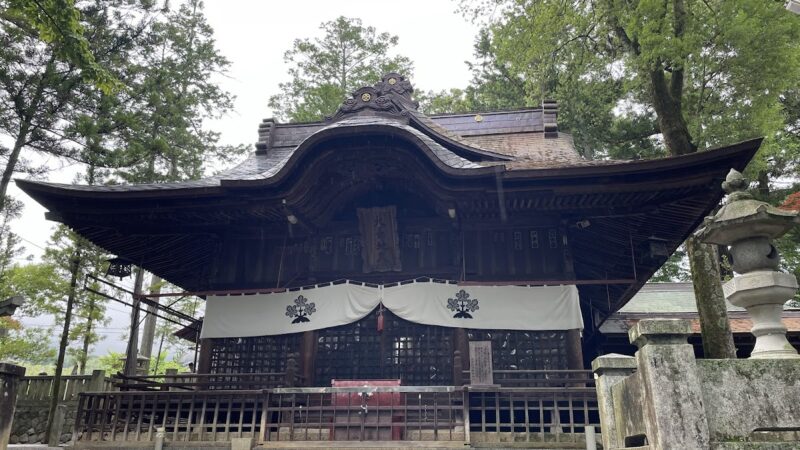
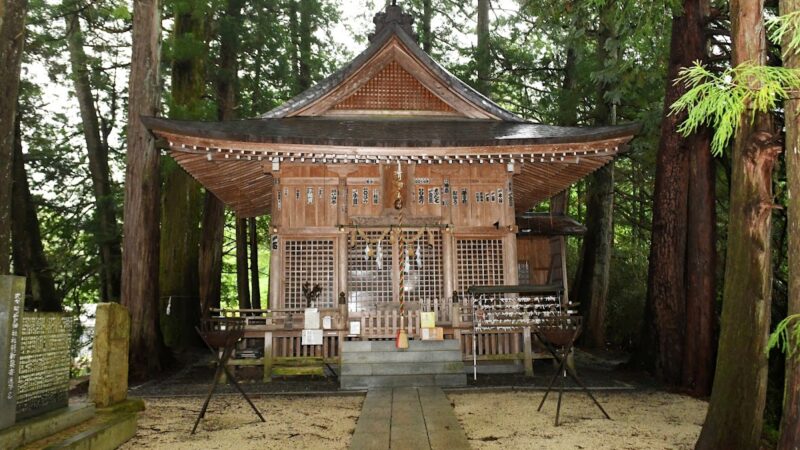
The grounds of Ontou-Omishaguji Shrine are quietly situated in a residential area of Nakasu, Suwa City. While not a large shrine, the grounds, surrounded by ancient trees, exude a solemn atmosphere, conveying the weight of ancient faith to visitors.
Within the grounds, a small but well-maintained sacred area is formed around the main shrine building. Passing through the torii gate, the path leads to the main shrine, with the surrounding trees creating a sacred space. The presence or absence of subsidiary shrines and smaller shrines may vary depending on the time of visit and the current state of maintenance.
Features of the Shrine Building
The shrine building of Ontou-Omishaguji Shrine preserves the traditional style of shrine architecture in the Suwa region. Despite its small size, it is meticulously maintained, reflecting the deep faith of the local people.
Shrine architecture in the Suwa region is characterized by its robust construction adapted to harsh climatic conditions, and the shrine building of Ontou-Omishaguji Shrine is believed to inherit this tradition. While detailed records regarding the style and construction date of the main shrine are limited, it has been maintained as a place of worship through regular repairs.
Remains and Monuments Related to the Ontou Festival
There is a possibility that remains and monuments related to the Ontou Festival exist within the shrine grounds and surrounding areas. Elements of historical value may remain, such as the route taken by the portable shrine during the Ontou Festival procession or traces of the places where rituals were performed.
Stone monuments and memorials can provide clues to the history of the Ontou Festival and the origins of the Ontou-Omishaguji Shrine. By listening to stories from local elders and parishioners, you can learn valuable traditions not recorded in written documents.
Annual Events and Festivals of the Ontou-Omishaguji Shrine
Modern Rituals
The Ontou-Omishaguji Shrine still holds various rituals throughout the year. As an auxiliary shrine located outside the grounds of the Suwa Grand Shrine’s Upper Shrine Main Sanctuary, it performs rituals linked to the Main Sanctuary’s festival calendar and also serves as the local tutelary shrine.
For accurate information regarding the dates of the annual festival and major festivals, please contact the Suwa Grand Shrine or the local parishioners’ organization. Rituals related to agriculture, such as the spring Kinensai (harvest festival) and the autumn Niinamesai (harvest festival), are likely to be of great importance.
Modern Connection to the Ontosai Festival
The current Ontosai Festival is held on April 15th at the Suwa Grand Shrine’s Upper Shrine Main Sanctuary. While it no longer involves the offering of 75 deer heads as in the past, it now uses stuffed or replica deer heads. However, the spirituality and historical significance of the Ontosai Festival are still carefully preserved.
The role of the Ontosai Shrine in the modern Ontosai Festival needs to be examined within the context of the Suwa Grand Shrine’s ritual system. At the very least, its significance as an important historical site conveying the history of the Ontosai Festival remains undiminished.
Local Religious Activities
The Otogashira-Otogashira-Guji Shrine, the tutelary shrine of the Nakasu district, is also an object of daily faith for the local residents. Visits are made for important life events such as New Year’s prayers, Shichi-Go-San (a traditional rite of passage for children), and exorcisms. Festivals praying for community safety and abundant harvests are also likely to be held.
During local festivals, parishioners take the lead in cleaning the shrine and preparing for the festivities, serving as a place to reaffirm community bonds. These deeply rooted religious activities continue to support the Otogashira-Otogashira-Guji Shrine.
How to Access the Otogashira-Otogashira-Guji Shrine
Location and Basic Information
Location: Nakasu, Kaido, Suwa City, Nagano Prefecture
The Otogashira-Otogashira-Guji Shrine is located in the Nakasu district of Suwa City, in a residential area near the eastern shore of Lake Suwa. It is approximately 2-3 kilometers northwest of the Suwa Grand Shrine’s Upper Shrine Main Sanctuary.
Access by Public Transportation
By JR:
- The nearest station is JR Chuo Main Line “Kami-Suwa Station”.
- It takes approximately 30-40 minutes to walk from Kami-Suwa Station.
- It takes approximately 10 minutes by taxi.
By Local Bus:
- There is a bus route that circulates within Suwa city from Kami-Suwa Station.
- Get off at a bus stop near the Nakasu area and access the shrine on foot.
- We recommend checking the routes and timetables of buses such as the Karin-chan Bus (Suwa City Community Bus) in advance.
Access by Car
Access from Expressway:
- Approximately 15 minutes from Chuo Expressway “Suwa IC”.
- After exiting Suwa IC, proceed towards National Route 20 and head towards Suwa city center.
Parking:
- As Onto-Omisha-Guji Shrine is a small shrine, there may not be a large dedicated parking lot.
- When visiting, please be considerate of the surrounding area and avoid causing inconvenience.
- You can use a nearby public parking lot, or consider parking your car at the Suwa Grand Shrine Upper Shrine Main Sanctuary parking lot and walking to the shrine.
Landmarks and Directions
The Nakasu area is a residential area, so it may be a little difficult to find for first-time visitors. Please refer to the following points:
- It is located inland from National Route 20 on the eastern shore of Lake Suwa.
- It is recommended to search for “Onto Onshaguji Shrine” or “Kaido, Nakasu, Suwa City” on a map app or car navigation system.
- When asking locals for directions, calling it “Onto Onshaguji Shrine” or “Onto-san” may be more easily understood.
Points to Note and Manners When Visiting Onto Onshaguji Shrine
Basic Manners for Visiting a Shrine
When visiting Onto Onshaguji Shrine, please observe general shrine visiting manners:
- How to Pass Through the Torii Gate: Bow before passing through the torii gate. Since the center of the approach to the shrine is considered the path of the gods, please make sure to walk along the edges.
- Procedure for Washing Hands: If there is a water basin for washing hands, wash your left hand first, then your right hand, rinse your mouth with your left hand, and finally wash the handle of the ladle.
- Procedure for Worship: The basic procedure is two bows, two claps, and one bow. Bow deeply twice, clap your hands twice, and finally bow deeply once.
Characteristics as an Outlying Subsidiary Shrine
Since the Onto-Omisha-Guji Shrine is an outlying subsidiary shrine of the Suwa Grand Shrine’s Upper Shrine Main Sanctuary, visiting it in conjunction with a visit to the Main Sanctuary will allow you to gain a deeper understanding of the overall picture of Suwa faith. If you have time, we recommend visiting the Onto-Omisha-Guji Shrine in conjunction with a visit to the four shrines: Upper Shrine Main Sanctuary, Upper Shrine Front Sanctuary, Lower Shrine Autumn Sanctuary, and Lower Shrine Spring Sanctuary.
Photography and Respect for Privacy
Photography is generally permitted on the shrine grounds, but please note the following:
- Refrain from taking photos in restricted areas, such as inside the main hall.
- Refrain from taking photos during festivals, or obtain permission beforehand.
- As the shrine is located in a residential area, please be considerate of the privacy of the surrounding residents.
- Maintain quiet and avoid disturbing other worshippers.
Consideration for the Community
Otogashira-Otogashira-Guji Shrine is a small shrine located in a residential area. When visiting, please pay particular attention to the following points:
- Do not speak loudly or make noise.
- Always take your trash with you.
- Absolutely avoid parking on the street.
- Do not trespass on private property.
- Avoid visiting early in the morning or late at night.
Nearby Spots for Deeper Understanding of Suwa Faith
The Four Shrines of Suwa Grand Shrine
To deepen your understanding of the Onto-Omisha-Guji Shrine, visiting the four shrines of Suwa Grand Shrine is essential:
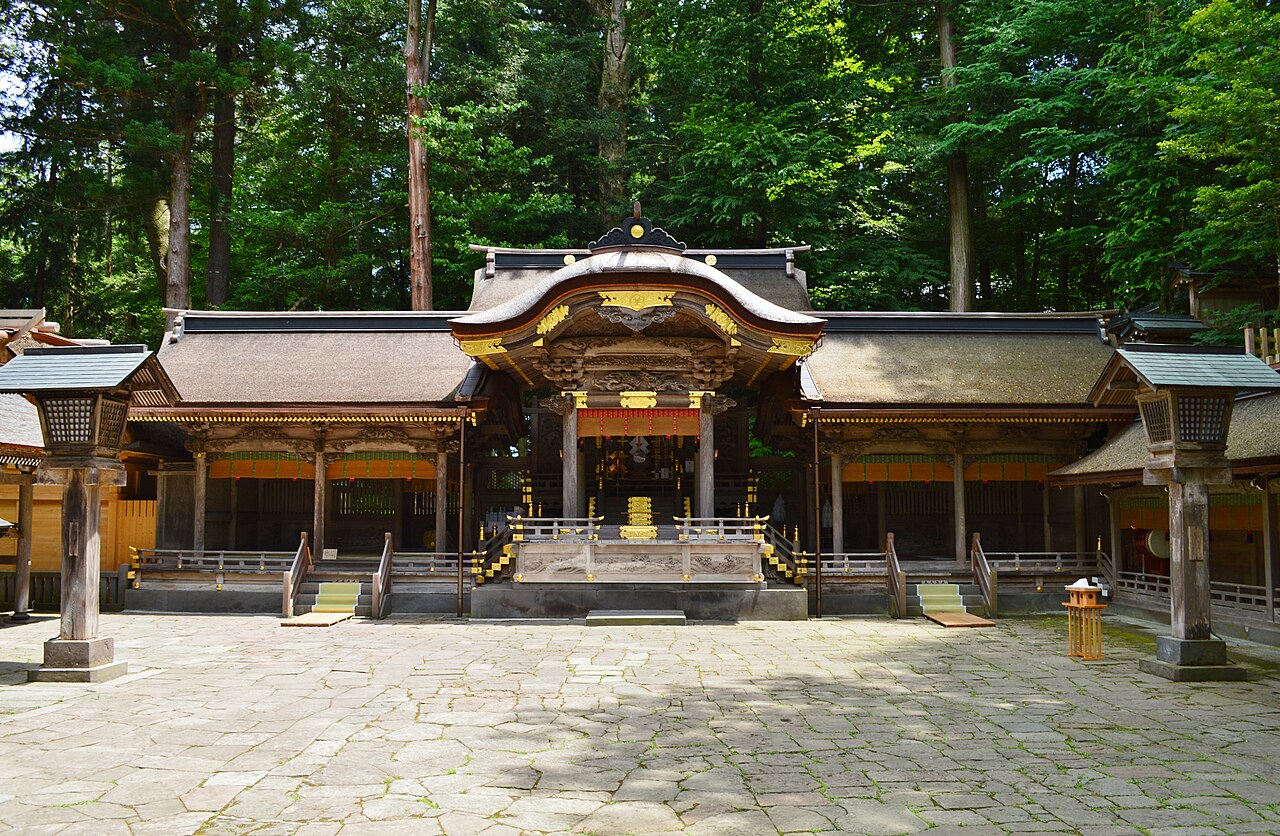
Kamisha Honmiya (Miyayama, Nakasu, Suwa City): This is the main shrine of the Onto-Omisha-Guji Shrine and the center of Suwa faith. The Onto Festival is held here.
Kamisha Maemiya (Miyagawa, Chino City): Considered the birthplace of Suwa Grand Shrine, many historical sites related to the Moriya family remain.
Shimosha Akimiya (Shimosuwa-machi, Suwa-gun): Characterized by its shrine buildings known for their elaborate carvings.
Shimosha Harumiya (Shimosuwa-machi, Suwa-gun): This shrine is a counterpart to Akimiya, and the Manji Stone Buddha is located nearby.
Shincho-kan Moriya Historical Museum
The Shincho-kan Moriya Historical Museum in Chino City exhibits materials related to the Moriya family, who have served as Shincho-kan (chief priests) of Suwa faith for generations. It is a valuable facility where you can learn in detail about the history of the Ontou Festival and the faith of the Onshaguji deity.
The exhibits include stuffed deer heads used in the Ontou Festival, ancient documents, and ritual implements, which are very helpful in understanding the religious background of the Ontou Onshaguji Shrine.
Suwa City Museum
The Suwa City Museum offers a comprehensive learning experience of the history and culture of the Suwa region. Exhibits cover the history of Suwa from the Jomon period, the development of Suwa faith, and the changes in festivals, including the Ontou Festival.
Other Onshaguji Shrines
In addition to the Ontou Onshaguji Shrine, numerous other Onshaguji shrines are scattered throughout the Suwa region. Visiting each shrine allows you to experience firsthand the widespread influence of the Onshaguji-shin faith throughout the Suwa region.
Cultural and Academic Value of Ontou-Omishaguji Shrine
Folkloric Significance
Ontou-Omishaguji Shrine holds a significant position in Japanese folklore research. Folklorists such as Kunio Yanagita and Shinobu Origuchi have focused on Suwa faith, particularly the Ontou Festival and the Onshaguji-shin faith, studying them as keys to understanding Japan’s primitive beliefs.
The custom of offering a deer head is a valuable example of the transformation of beliefs during the transition from hunting to agricultural culture. Ontou-Omishaguji Shrine has value as a “living museum” that conveys these changes in belief to the present day.
Position in Religious History
In the history of Japanese religion, Suwa faith is unique in that it has maintained its own form of belief distinct from the central mythological system. The process by which indigenous deities like Onshaguji-no-Kami have been worshipped while maintaining their unique identity, even associating with the gods of the Kojiki and Nihon Shoki myths, is a prime example of the diversity of Japanese religious culture.
Onto Onshaguji Shrine, as a shrine embodying this uniqueness of Suwa faith, is an important subject of research in religious history studies.
Inheritance of Regional Culture
Onto Onshaguji Shrine also plays a role in passing on the regional culture of the Suwa region to future generations. Through festivals, the history and traditions of the region are recounted, fostering a sense of community.
Maintaining small shrines is not easy amidst depopulation and an aging population, but preserving historically important shrines like Onto Onshaguji Shrine is extremely important for maintaining regional identity.
Historical Changes in the Onto Festival and Onto Onshaguji Shrine
Ancient Onto Festival
The origins of the Onto Festival are ancient, and it is believed to have been held at least as early as the Heian period. The Ontō-sai festival at that time was a magnificent event in which 75 deer heads were offered to the gods, a unique festival that combined the hunting culture and Shinto rituals of the Suwa region.
Not only deer, but also wild boars and rabbits were offered, and the types of sacred offerings were diverse. Furthermore, a ritual was performed in which a boy was tied to a pillar called the Oniebashira, which has attracted attention as a remnant of human sacrifice (in reality, it was a formality in which a Shinto priest would stop the boy just before he was cut with a knife).
Development from the Medieval to the Early Modern Period
In the medieval period, Suwa faith spread to the samurai class, and it came to be revered especially as the god of hunting and martial arts. Suwa Daimyōjin attracted the faith of Sengoku warlords such as Takeda Shingen, and the Ontō-sai festival was also highly valued by the samurai.
During the Edo period, the Ontō-sai festival continued under the protection of the Suwa domain, but its form changed over time. Nevertheless, the central element of offering deer heads remained, and the Ontou-Omishaguji Shrine continued to play an important role within the ritual system.
Transformations in the Modern Era
The separation of Shinto and Buddhism after the Meiji Restoration and the wave of modernization had a significant impact on Suwa faith. Stricter hunting regulations made it difficult to actually hunt and offer 75 deer, and the practice gradually shifted to using stuffed or replica deer.
Since the Showa era, the Ontou Festival has been fixed on April 15th, establishing its current form. While no longer a large-scale religious ceremony as in the past, it continues to be passed down as an important festival that conveys the traditions of Suwa faith.
The Ontou-Omishaguji Shrine, having witnessed these historical changes in the Ontou Festival, plays a role as a “place of memory” for Suwa faith.
Spread of Onshaguji Deity Worship
Network of Onshaguji Shrines in the Suwa Region
Onshaguji deity is worshipped throughout the Suwa region, with numerous Onshaguji shrines scattered throughout the area. These shrines are often enshrined in boundary locations such as village borders, mountain passes, and crossroads, and they possess the character of guardian deities of the community.
The Ontou-Omishaguji Shrine holds a particularly important position within this network of Ontou-Omishaguji shrines in the Suwa region, due to its connection with the Ontou Festival. Within the faith system with Suwa Grand Shrine at its apex, various Ontou-Omishaguji shrines are organically connected, forming the Suwa faith sphere.
Influence on Other Regions
Suwa faith spread throughout Japan from the medieval period onward. It is estimated that there are over 5,000 shrines throughout Japan that enshrine Suwa Daimyojin, and they are worshipped under names such as Suwa Shrine, Suwa Shrine, and Nangū Shrine.
Some of these Suwa-related shrines also enshrine Ontou-Omishaguji-no-Kami, indicating that the faith unique to the Suwa region spread throughout the country. The Ontou-Omishaguji Shrine holds significant historical importance as a shrine located at the source of this nationwide expansion of Suwa faith.
Significance of Onto-Omisha-Guji Shrine in the Modern Era
Value as Cultural Heritage
Onto-Omisha-Guji Shrine is a shrine whose value lies more in intangible cultural heritage than in tangible cultural properties. While the building itself is small, the history of faith, the tradition of rituals, and the local memory embedded within it possess immeasurable value.
Preserving Onto-Omisha-Guji Shrine as a place that conveys ancient forms of faith to the present day, and passing them on to future generations, is a crucial issue in protecting Japan’s cultural diversity.
Potential as a Tourism Resource
The Suwa region is blessed with abundant tourism resources such as Suwa Grand Shrine, Lake Suwa, and hot springs. Incorporating historically valuable shrines like Onto-Omisha-Guji Shrine into tourist routes can provide a deeper cultural experience.
However, careful consideration is needed when developing it as a tourist destination. Because it is a small shrine located in a quiet residential area, an excessive influx of tourists could impact the lives of local residents. It is necessary to explore sustainable forms of cultural tourism.
As a Core of the Local Community
In modern society, where the cohesion of local communities tends to weaken, shrines remain valuable places where local people gather. The Onto-Omishaguji Shrine, as the tutelary shrine of the Nakasu district, plays a central role in the local community.
Through festivals and cleaning activities, intergenerational exchanges are fostered, strengthening community bonds. This social function is one of the modern significances of the Onto-Omishaguji Shrine.
Summary: The Significance of Visiting Onto-Omishaguji Shrine
The Onto-Omishaguji Shrine is an auxiliary shrine of the Suwa Grand Shrine’s Upper Shrine Main Sanctuary, located in Nakasu, Suwa City, Nagano Prefecture. It is an important sacred site belonging to the oldest layers of Suwa faith. It conveys a multi-layered history of faith, including its deep connection to the Onto Festival, the worship of the indigenous deity Omishaguji-no-kami, and its character as a crossroads of hunting and agricultural cultures.
Although a small shrine, it encapsulates the diversity of Japanese religious culture and the power of faith rooted in the community. Visiting the Onto-Omisha-Guji Shrine in conjunction with a visit to the four Suwa Grand Shrines will allow you to gain a deeper understanding of the overall picture of Suwa faith.
When visiting, remember to be considerate of the local community and offer your prayers quietly; this will allow you to feel the spirit of faith that has continued since ancient times. The Onto-Omisha-Guji Shrine is an irreplaceable cultural heritage that teaches us, who live in the modern age, the importance of coexisting with nature and being grateful for the efforts of our ancestors.