Rakuhōji Temple (Amabiki Kannon) Complete Guide | History, Cultural Assets, Goshuin (Temple Seal), and Access Information
About Rakuhōji Temple
Rakuhōji Temple is a Shingon sect (Toyozan branch) temple located in Motoki, Sakuragawa City, Ibaraki Prefecture. Its mountain name is Amabiki-san, and it is also known as Amabiki Kannon, beloved by the local people.
The principal image is Enmei Kannon Bodhisattva. As the 24th temple of the Bandō Thirty-Three Kannon Pilgrimage and the 6th temple in Ibaraki Prefecture of the Eastern Japan Hundred Flower Temples Pilgrimage, it is one of the most prominent sacred sites in the Kanto region, attracting many visitors. The temple grounds spread across a slope approximately 150 meters above sea level, on the middle of Amabiki-san, which is part of the ridge of Kaba-san, and the view of Tsukuba-san is one of its attractions.
Rakuhōji Temple is particularly well-known as a sacred site for safe childbirth and child-rearing. Due to the legend that Empress Kōmyō transcribed and dedicated a volume of the Lotus Sutra to pray for a safe delivery, many pregnant women and families raising children still visit the temple today.
History and Background of Rakuhōji Temple
Founding and the Asuka Period
Rakuhōji Temple is said to have been founded in the second year of Emperor Yōmei’s reign (587 AD). It is a venerable ancient temple founded by Hōrin Dokushu Koji, who immigrated from the Liang dynasty of China. Because it was founded during the Asuka period, a time shortly after the introduction of Buddhism to Japan, it is a valuable temple that conveys the dawn of Buddhist culture in Japan.
During the reign of Empress Suiko, prayers for the emperor’s recovery from illness were answered, leading to the temple becoming an imperial prayer temple and receiving fervent devotion from the imperial court. This story demonstrates that Rakuhōji Temple was recognized as a temple with miraculous powers from ancient times.
Development during the Nara Period
During the Nara period, Rakuhōji Temple flourished as a temple associated with the imperial family, particularly due to the deep devotion of Emperor Shōmu and Empress Kōmyō. It is said that Empress Kōmyō transcribed and dedicated a volume of the Lotus Sutra to the temple for her own safe childbirth, and this is considered the origin of Rakuhōji Temple’s reputation as a sacred site for safe childbirth and child-rearing.
During this period, Rakuhōji Temple established itself as a national prayer temple, and many buildings were constructed.
Heian Period and Transition to Shingon Buddhism
During the Heian period, Kōbō Daishi (Kūkai) designated Rakuhōji Temple as a Shingon Buddhist training ground. This led to a new development of Rakuhōji Temple as a center of Shingon Esoteric Buddhism.
There is a legend that during the reign of Emperor Saga, prayers for rain were offered for people suffering from drought, and the prayers were miraculously answered, bringing rain. For this achievement, Emperor Saga bestowed upon the temple the mountain name “Amabiki-yama,” and it subsequently became widely known by the alternative name “Amabiki Kannon.”
From the Medieval to the Early Modern Period
During the medieval period, despite the effects of warfare, it survived as a center of local faith. It received patronage from warlords, including the lord of Makabe Castle, and its connection to castle architecture is evident, particularly in the relocation of the Yakui-mon gate of Makabe Castle as the Kuro-mon (black gate).
During the Edo period, it was established as the 24th temple of the Bando Thirty-Three Kannon Pilgrimage, attracting many pilgrims. Many of the existing temple buildings were constructed during this period, forming the foundation of the current temple layout.
Rakuhōji Temple in the Modern and Contemporary Periods
Despite the impact of the anti-Buddhist movement of the Meiji era, it survived, supported by the fervent faith of the local people. During the Showa era, many cultural properties were designated by the national government and Ibaraki Prefecture, officially recognizing its historical value.
In modern times, it is one of Ibaraki Prefecture’s leading temples, attracting many visitors throughout the year as a sacred site for safe childbirth and child-rearing, and as a temple of flowers.
Temple Grounds Structures and Highlights
Niomon Gate
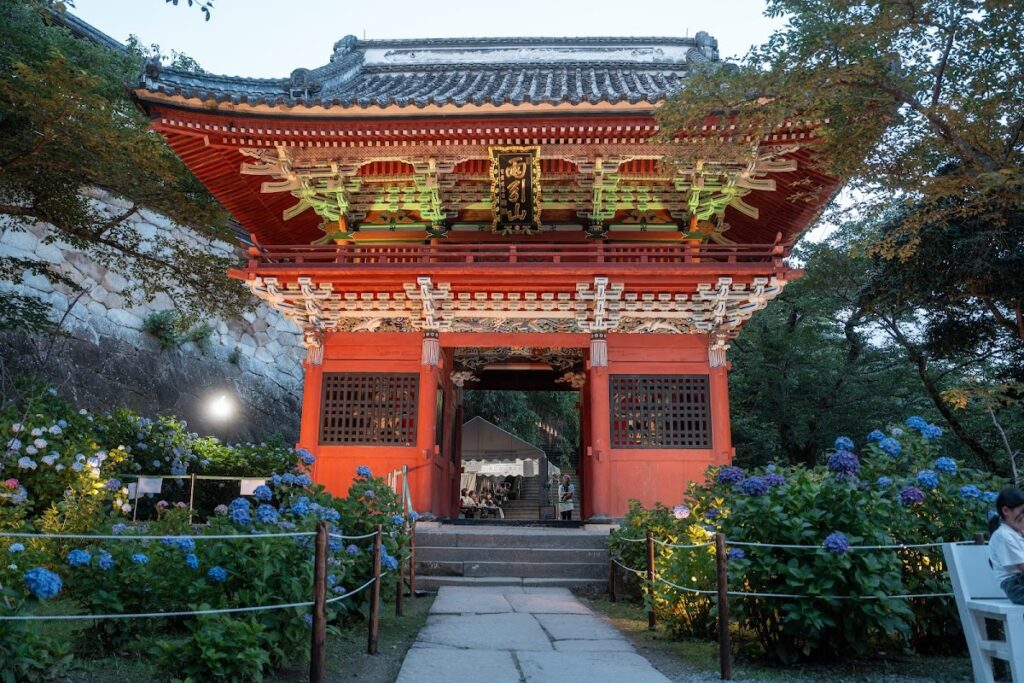
The first thing you see when you ascend the approach to the temple is the Niomon Gate. The imposing gate houses Kongo Rikishi statues, welcoming visitors. Beside the Niomon Gate stands a large stone wall reminiscent of a castle, creating a magnificent landscape that suggests a connection to the former Makabe Castle.
This stone wall reaches several meters in height and has a unique structure that feels more like samurai architecture than temple architecture.
Kuromon Gate (Yakuimon Gate)
The Kuromon Gate, which serves as the entrance to the temple grounds, is a Yakuimon gate that was relocated from Makabe Castle. A Yakuimon gate is a type of gate with supporting pillars behind the main pillars, a dignified gate style used in samurai residences and castles.
The imposing, black-painted structure speaks to the deep faith that Rakuhōji Temple enjoyed, even among the samurai class.
Main Hall (Kannon Hall)
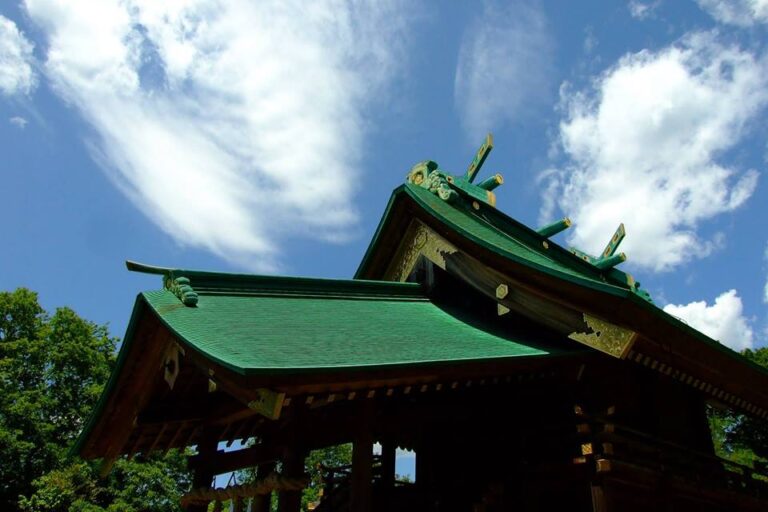
The main hall, the heart of Rakuhōji Temple, is the Kannon Hall, housing the principal image, the Enmei Kannon Bodhisattva. The hall is filled with a solemn atmosphere, and many worshippers offer their prayers.
The principal image, believed to be from the early Heian period, is a hidden Buddha and is only unveiled on special occasions. The architectural style of the Kannon Hall retains characteristics of the Edo period, and the detailed carvings and decorations are magnificent.
Worshippers constantly visit to pray for safe childbirth and child-rearing, and many votive tablets and offerings are displayed inside the hall.
Tahōtō Pagoda
The Tahōtō pagoda, standing on a hill within the temple grounds, is a symbolic presence of Rakuhōji Temple. Its beautiful double-tiered structure can be seen from afar.
The Tahōtō (multi-storied pagoda) is a structure unique to Esoteric Buddhist temples, often housing a statue of Dainichi Nyorai (Vairocana Buddha), symbolizing Rakuhōji Temple’s status as a Shingon Buddhist training ground. Its harmonious appearance with the surrounding nature reveals different expressions in each season, making it a popular spot for photography.
Bell Tower
Within the temple grounds stands a magnificent bell tower, housing a temple bell. The sound of this bell resonates through the surrounding mountains, serving as a timekeeper for the local people since ancient times.
Many worshippers visit during the New Year’s Eve bell-ringing ceremony, a beloved traditional event welcoming the new year.
Main Hall and Guest Hall
The main hall is where the temple’s head priest resides and conducts temple affairs. The guest hall is a space used for receiving worshippers and conducting religious ceremonies, and is a dignified shoin-zukuri (study-style) building.
These buildings are not open to the public, but their rows of roofs enhance the solemnity of the entire temple grounds.
Cultural Properties
Important Cultural Properties (Nationally Designated)
Rakuhōji Temple houses several nationally designated Important Cultural Properties. Of particular note are the Buddhist art pieces from the early Heian period, which convey the advanced techniques and deep faith of the time.
The principal image, the Enmei Kannon Bodhisattva statue, is believed to be from the early Heian period and is highly valued for its elegant form and excellent state of preservation. Because it has been carefully protected as a hidden Buddha, the original coloring and detailed expression remain remarkably well-preserved.
Ibaraki Prefecture Designated Tangible Cultural Properties
Rakuhōji Temple also houses several Ibaraki Prefecture designated tangible cultural properties, which are valuable resources that convey the history and culture of the region. These diverse cultural properties, including buildings, sculptures, paintings, and crafts, demonstrate the cultural value that Rakuhōji Temple has accumulated over its long history.
These cultural properties undergo regular surveys and preservation and repair work, and efforts continue to ensure they are passed down to future generations.
Ibaraki Prefecture Designated Tangible Cultural Properties
Rakuhōji Temple also houses several Ibaraki Prefecture designated tangible cultural properties, which serve as valuable resources that convey the history and culture of the region. The diverse cultural properties, including buildings, sculptures, paintings, and crafts, demonstrate the cultural value that Rakuhōji Temple has accumulated over its long history.
These cultural properties undergo regular surveys and preservation and repair work, and efforts continue to ensure they are passed down to future generations. ## Rakuhōji Temple’s Faith and Events
A Sacred Site for Safe Childbirth and Child-Rearing
Since the story of Empress Kōmyō’s prayer for safe childbirth, Rakuhōji Temple has been widely revered as a sacred site for safe childbirth and child-rearing. Pregnant women and families raising children visit from all over Japan to pray for safe delivery and the healthy growth of their children.
Special goma (fire ritual) prayers are performed for safe childbirth, and amulets and maternity belts are offered. Many families return after childbirth to give thanks, demonstrating the continuation of faith across generations.
Matara Kishin Festival (Exorcism Festival)
Every year on the first Sunday of April, the Matara Kishin Festival (Exorcism Festival) is held. Matara is a special deity in esoteric Buddhism, believed to have the power to ward off evil and bring good fortune.
Special religious services are held during this festival, and many worshippers visit to pray for protection from evil. Stalls line the temple grounds, making it an important annual event in the region.
Hydrangea Festival
The Hydrangea Festival, held from around June 10th to 20th, is the reason why Rakuhōji Temple is known as the “Temple of Flowers.” The temple grounds are home to approximately 3,000 plants and over 5,000 hydrangeas, which bloom in a riot of colors during the rainy season.
The sight of hydrangeas of various colors—blue, purple, pink, white, and more—adorning the mountainside is breathtaking, attracting many tourists and photography enthusiasts. During the hydrangea season, special temple stamps are also offered, making it a memorable memento of your visit.
Other Flowers
Rakuhōji Temple is designated as the 6th temple in Ibaraki Prefecture of the 100 Flower Temples of Eastern Japan, and in addition to hydrangeas, you can enjoy flowers of all seasons. From cherry blossoms in spring, to fresh greenery in early summer, and autumn leaves in fall, it’s a temple where you can appreciate the beauty of nature throughout the year.
Peacocks are also kept on the temple grounds, and you can admire their elegant presence. Peacocks are considered symbols of good fortune in Buddhism and delight the eyes of visitors.
Goshuin (Temple Seal) Information
Rakuhōji Temple offers several types of goshuin, including the one designated as the 24th temple of the Bandō Thirty-Three Kannon Pilgrimage. Goshuin are cherished as proof of pilgrimage and as a record of faith.
Goshuin are available from 8:30 AM to 5:00 PM at the goshuin office near the main hall. Seasonal special goshuin are sometimes offered, and those featuring beautiful hydrangea flowers are particularly popular during hydrangea season.
Rakuhōji Temple also sells goshuin notebooks with original designs, which are popular as souvenirs of their visit. Each carefully inscribed goshuin is a handcrafted work of art.
Location and Access
Location
Address: 1 Motoki, Sakuragawa City, Ibaraki Prefecture 309-1231
Rakuhōji Temple is located at the foot of Mt. Kaba, on the slopes of Mt. Amabiki. The surrounding area is rich in nature, offering views of mountains such as Mt. Tsukuba and Mt. Kaba.
Access by Public Transportation
Nearest Station: JR Mito Line, Iwase Station
From Iwase Station, it’s approximately a 15-minute taxi ride or you can take a local bus. However, bus services are limited, so it’s recommended to check the timetable in advance.
During peak seasons, extra buses may operate from the station.
Access by Car
Nearest Interchange: Kita-Kanto Expressway, Sakuragawa-Chikusei Interchange
It’s approximately 15 minutes (about 8km) from the Sakuragawa-Chikusei Interchange. After exiting the interchange, following the signs will lead you to a relatively easy route.
Parking
The temple grounds have a parking lot for visitors. While it normally accommodates a sufficient number of cars, congestion is expected during peak seasons such as the Hydrangea Festival, so visiting earlier in the day is recommended.
From the parking lot to the main hall is a few minutes’ walk, up a well-maintained path along the mountainside. For those with mobility issues, a route allowing cars to drive closer to the temple grounds is also available.
Positioning as the 24th Temple of the Bando Thirty-Three Kannon Pilgrimage
As the 24th Temple
Rakuhōji Temple is the 24th temple of the Bando Thirty-Three Kannon Pilgrimage. The Bando Thirty-Three Kannon Pilgrimage, along with the Saigoku Thirty-Three and Chichibu Thirty-Four Kannon Pilgrimages, is considered one of Japan’s three major Kannon pilgrimage routes, and is a pilgrimage route of Kannon worship spread mainly in the Kanto region.
The Bando pilgrimage is said to have been established by Minamoto no Yoritomo based on Kannon worship, and has a long history dating back to the Kamakura period. Rakuhōji Temple is one of the oldest temples on this pilgrimage route.
Preceding and Following Temples
Temple No. 23: Shofuku-ji Temple (Itako City, Ibaraki Prefecture)
Temple No. 24: Rakuhō-ji Temple (Sakuragawa City, Ibaraki Prefecture)
Temple No. 25: Ōmidō (Tsukuba City, Ibaraki Prefecture)
Pilgrims continue their pilgrimage from Shofuku-ji Temple (Temple No. 23), through Rakuhō-ji Temple, to Ōmidō (Temple No. 25). Each temple is located within Ibaraki Prefecture, indicating that this region was an important center of Bandō Kannon worship.
Significance of the Pilgrimage
The Bandō Thirty-Three Kannon pilgrimage is a journey of spiritual practice to experience the compassion of Kannon Bodhisattva and attain inner peace. It is believed that merit is accumulated by receiving a temple stamp at each temple and chanting the Kannon Sutra.
Rakuhō-ji Temple, in particular, is visited by many worshippers praying for family happiness, as it is dedicated to Kannon for safe childbirth and child-rearing. Those stopping by during their pilgrimage can find peace of mind in the tranquil atmosphere of Rakuhōji Temple before continuing their journey to the next temple.
Nearby Tourist Attractions
Mount Tsukuba
Mount Tsukuba, located about 30 minutes by car from Rakuhōji Temple, is a sacred mountain with an elevation of 877 meters, famous as “Fuji in the west, Tsukuba in the east.” You can reach the summit by cable car or ropeway and enjoy a spectacular panoramic view of the Kanto Plain.
Makabe Townscape
The Makabe district of Sakuragawa City is an important traditional building preservation district with many historical buildings remaining from the Edo period to the early Showa period. Located about 20 minutes by car from Rakuhōji Temple, it’s a great place for a stroll.
Every year from February to March, the “Makabe Hina Matsuri” (Doll Festival) is held, offering a beautiful combination of the old townscape and Hina dolls.
Mount Kaba
Mount Kaba, towering behind Rakuhōji Temple, is a sacred mountain that has been revered as an object of mountain worship since ancient times. Kaba Shrine is located at the summit, and hiking trails are well-maintained.
Points and Manners for Visiting
Visiting Hours
While the temple’s hours for receiving temple stamps are from 8:30 AM to 5:00 PM, the temple grounds themselves are open for worship outside of these hours. However, if you wish to receive a temple stamp or prayer, you must visit during these hours.
Clothing and Items to Bring
Since the temple grounds are located on a mountain slope, comfortable walking shoes are recommended. Particular caution is needed on rainy days, as the ground can be slippery.
In summer, the sun is strong, so a hat or parasol is useful. In winter, it gets cold due to the mountainous terrain, so be sure to dress warmly.
Photography
Photography of the temple grounds and buildings is generally permitted, but there are areas where photography is prohibited, such as inside the main hall. Please be considerate of other visitors. Photographing peacocks is popular, but please refrain from startling them or feeding them.
Etiquette for Visiting the Temple
- Bow before passing through the Niomon Gate.
- Cleanse your hands and mouth at the water basin.
- Join your hands in prayer at the main hall and offer a quiet prayer.
- Receive a Goshuin (temple stamp) at the sutra hall.
- Stroll around the temple grounds and visit each hall.
As this is a Shingon Buddhist temple, chanting “Namu Daishi Henjo Kongo” is also appropriate.
The Charm of Rakuhōji Temple
The greatest charm of Rakuhōji Temple lies in its grounds, where the solemn atmosphere woven from over 1400 years of history harmonizes with the natural beauty of the four seasons.
As a sacred site for safe childbirth and child-rearing, the compassion of Kannon, who has received the prayers of many families, brings peace to the hearts of visitors. It will be a particularly meaningful place of worship for parents with children, and those who are about to become parents.
Located on the slopes of Mount Kaba, Rakuhōji Temple offers a tranquil environment far removed from the hustle and bustle of the city, making it ideal for calming the mind and offering prayers. The views of Mount Tsukuba are also magnificent, allowing visitors to experience a space of faith integrated with nature.
The temple grounds, adorned with flowers such as hydrangeas, display different expressions with each season, offering a fresh and moving experience with every visit. The beauty during hydrangea season is particularly exceptional, and the landscape created by the harmony of flowers and Buddhist architecture leaves a deep impression on the hearts of visitors.
The temple’s many valuable cultural assets, including important cultural properties, are another major attraction. Visitors can experience the essence of Buddhist art that has continued since the Heian period, making it a must-see temple for history and art lovers alike.
Summary
Rakuhōji Temple (Amabiki Kannon) is one of the leading ancient temples in the Kanto region, having attracted the faith of people for over 1400 years since its founding in 587. As a temple of the Shingon-shu Buzan sect and the 24th stop on the Bando Thirty-Three Kannon Pilgrimage, it attracts many worshippers.
Due to the story of Empress Komyo’s prayer for a safe delivery, it is widely known as a sacred site for safe childbirth and child-rearing, and even today, people from all over Japan continue to visit to pray. The mountain name “Amabiki-yama,” bestowed by Emperor Saga, signifies its miraculous power to bring rain, and it is affectionately known as “Amabiki Kannon.”
Within the temple grounds, numerous buildings such as the Niomon Gate, Kuromon Gate (Yakuimon Gate), Main Hall (Kannon Hall), and Tahoto Pagoda line the grounds, creating a solemn atmosphere. It houses nationally designated important cultural properties and Ibaraki Prefecture designated tangible cultural properties, making it a temple of high historical and cultural value.
As the 6th stop on the Ibaraki Prefecture section of the Eastern Japan Hundred Flower Temples Pilgrimage, it is particularly known as a famous spot for hydrangeas, and many tourists visit during the hydrangea festival in June. The temple delights visitors with its seasonal flowers, natural beauty, and the graceful presence of peacocks.
Located in the naturally rich environment of Sakuragawa City, Ibaraki Prefecture, it boasts attractive views of Mount Tsukuba and Mount Kaba. With easy access from the Kita-Kanto Expressway and ample parking, it’s easily accessible for a visit.
Rakuhōji Temple, where history, culture, nature, and faith harmonize, is a special place worth visiting for modern people seeking peace of mind. Whether as part of a pilgrimage to the Bandō Kannon temples, to pray for safe childbirth and child-rearing, or simply to enjoy the beautiful flowers and scenery, why not pay a visit?