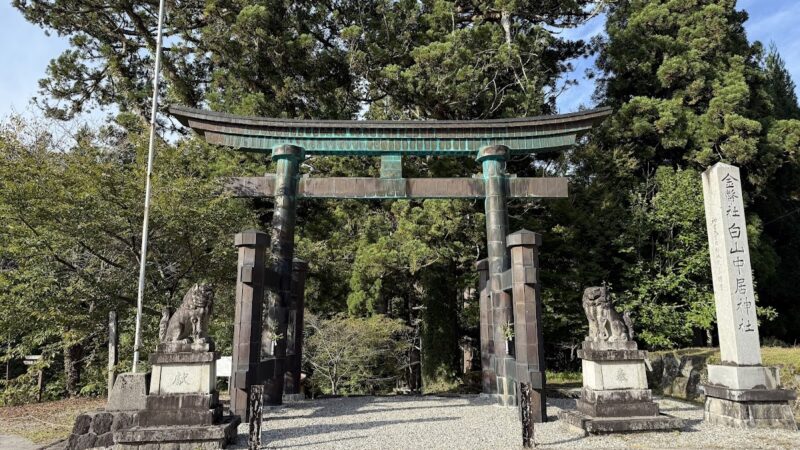
Reizenji Temple (Ena City, Gifu Prefecture) Complete Guide: History, Access, and Highlights Explained in Detail
Reizenji Temple, located in Nakanokata-cho, Ena City, Gifu Prefecture, is a historic temple belonging to the Shinshu Otani sect. Its official name is written as “靈仙寺” in the old kanji style, and its mountain name is Kuonzan. This article will introduce the charm of this temple in its entirety, from its historical background and role in the region to useful information for visitors.
Basic Information on Reizenji Temple
Reizenji Temple is a Shinshu Otani sect temple located at 2885 Nakanokata-cho, Ena City, Gifu Prefecture. The Shinshu Otani sect is a branch of Jodo Shinshu Buddhism and is known as a sect that inherits the teachings of Shinran Shonin. Reizenji Temple enshrines Amida Buddha as its principal image and has functioned as a center of faith for local followers.
Location and Access
Location: 2885 Nakanokata-cho, Ena City, Gifu Prefecture
Ena City is located in the Tono region of Gifu Prefecture, a region blessed with abundant nature and scenic beauty. Nakanokata-cho is located in the northern part of Ena City, an area with a peaceful mountain landscape.
Access Method:
- By Car: Approximately 20 minutes from Ena IC on the Chuo Expressway via National Route 257
- By Public Transportation: Approximately 30 minutes by bus or taxi from Ena Station on the JR Chuo Main Line
Because Nakanokata-cho is located in a mountainous area, access by private car is convenient. The most common route from Ena city center is to head north on National Route 257, where you can enjoy the beautiful rural scenery along the way.
History and Background of Reizenji Temple
Religious Situation in Nakanokata Village during the Edo Period
To understand the establishment of Reizenji Temple, it is necessary to know the religious background of Nakanokata Village during the Edo period. At that time, Nakanokata Village had a unique religious environment, divided among multiple sects.
During the Edo period, the residents of Nakanokata Village were mainly divided into the following three groups:
- Followers of Shinkanji Temple, Myoshinji School of the Rinzai sect: People who considered Shinkanji Temple on Mt. Kasagi as their family temple.
- Followers of the Shinshu Otani sect: People belonging to Hoseiji Temple in Hisatami Village, Kamo District, and Nenkoji, Honkakuji, and Kakushoji Temples in Gujo District.
- Other sects: A small number of residents belonging to other sects.
This situation, where multiple sects coexisted in one village, demonstrated the religious diversity of the Mino region at that time. In particular, followers of the Shinshu Otani sect experienced inconvenience in daily religious activities and funerals due to their affiliation with temples in distant locations.
Founding and Establishment of Reizenji Temple
Against this backdrop, Reizenji Temple was founded in Nakanokata Town as a temple of the Shinshu Otani sect. For local Shinshu followers, the establishment of a family temple in a nearby location significantly improved the convenience of their religious life.
With the founding of Reizenji Temple, Shinshu followers in Nakanokata-cho and the surrounding areas could now perform memorial services and Buddhist rituals without having to travel to distant temples. This also played a role in strengthening the bonds of the local community.
The temple’s mountain name, “Kuonzan,” symbolizes eternity and universality in Buddhism, expressing that the salvation of Amida Buddha transcends time and space and is eternal. This mountain name can be said to represent the religious ideals upheld by Reizenji Temple.
Doctrines of the Shinshu Otani School and Reizenji Temple
About the Shinshu Otani School
The Shinshu Otani School is a branch of Jodo Shinshu Buddhism, founded by Shinran Shonin (1173-1263). The Shinshu Otani sect is a large religious denomination with its head temple located at Higashi Honganji Temple in Kyoto, and boasts approximately 8,700 temples nationwide.
The characteristics of the Shinshu Otani sect are as follows:
- Teaching of Salvation by Other Power: A belief that salvation is achieved not by one’s own power, but by the vow of Amida Buddha.
- Emphasis on Nembutsu: Receiving salvation from Amida Buddha by chanting “Namu Amida Butsu.”
- Lay-Centered Faith: Relativizing the distinction between monks and lay believers, the teaching asserts that all people are equally saved.
- Affirmation of the Present World: Practicing faith in daily life without requiring renunciation or rigorous training.
Faith Practice at Reizenji Temple
At Reizenji Temple, the following religious activities are carried out based on the teachings of the Shinshu Otani sect:
Principal Image: The central belief is in the power of salvation, with Amida Buddha enshrined as the principal image.
Memorial Services: Regular memorial services and events such as the Hoonko (memorial service on the anniversary of Shinran Shonin’s death) provide opportunities for followers to gather and chant the Nembutsu.
Relationship with Followers: In Shin Buddhism, followers are called “monto” (followers) rather than “danka” (parishioners). The relationship between the temple and its followers is emphasized not as master-disciple, but as a shared bond (companionship) of those who rejoice in the salvation of Amida Buddha.
History and Culture of Nakanokata-cho, Ena City
Regional Characteristics of Nakanokata-cho
Nakanokata-cho is located in the northern part of Ena City, in a mountainous region at a high altitude. Surrounded by abundant nature, this region has long been centered on forestry and agriculture.
Characteristics of Nakanokata Town:
- Natural Environment: Surrounded by mountains and blessed with clear streams, it boasts a rich natural environment.
- Traditional Culture: Folk culture and festivals unique to mountain villages are still preserved.
- Depopulation: Like other mountainous regions, it is experiencing population decline and aging.
Mt. Kasagi and Shinkanji Temple
Besides Reizenji Temple, Nakanokata Town has other important religious facilities. One of them is Shinkanji Temple, a Rinzai Zen Myoshinji sect temple located on Mt. Kasagi.
Mt. Kasagi is a mountain with an elevation of 1,128 meters, a famous peak straddling Ena City and Nakatsugawa City. Large rocks are scattered near the summit and have been objects of worship since ancient times. Shinkanji Temple is located on the mountainside of Mt. Kasagi and has functioned as a place of ascetic training and as a center of local faith.
As mentioned above, in the Edo period, the parishioners of Shinkanji Temple and followers of the Shinshu sect coexisted in Nakanokata Village. This religious diversity demonstrates the tolerance of the local community and continues to lead to the coexistence of temples of different denominations in the region even today.
Temple Culture in Ena City and the Position of Reizenji Temple
Religious Facilities in Ena City
In addition to Reizenji Temple, many other temples exist in Ena City. Temples of various denominations, including the Shinshu Otani sect, Rinzai sect, and Nichiren sect, are scattered throughout the city, each supporting the faith of the region.
Representative temples in Ena City include the following:
- Jōkyūji Temple: One of the temples located within the city.
- Shinkanji Temple: A Rinzai Zen temple located on the aforementioned Mt. Kasagi.
- Other Shinshu Temples: Temples of the Shinshu Ōtani and Shinshu Honganji sects are distributed throughout the city.
Role of Reizenji Temple in the Community
Reizenji Temple plays the following roles in Nakanokata-machi and the surrounding area:
- Center of Faith: As a spiritual pillar for Shinshu followers, it provides a venue for memorial services and Buddhist rituals.
- Community Hub: It serves as a place for interaction among local residents through temple events.
- Cultural Transmission: It plays a role in passing on Buddhist culture and local traditions to the next generation.
- Spiritual Sanctuary: In the midst of depopulation, it provides a place of peace of mind for residents.
Especially in mountainous areas experiencing population decline, temples hold meaning beyond mere religious facilities. They embody the history of the region and are important entities that support the identity of the residents.
Guide to Visiting Reizenji Temple
Points to Note When Visiting
When visiting Reizenji Temple, please note the following:
Visiting Hours: As with most temples, daytime visits are recommended. It is advisable to check in advance if there are any religious services or other events.
Dress Code: There are no specific dress code requirements, but modest attire is desirable when visiting a temple.
Photography: Photography may be restricted in some areas, such as inside the main hall. Please check in advance or take photos discreetly.
Manners: Please visit quietly and be considerate of other visitors and religious services.
Etiquette for Visiting Shinshu Temples
Shinshu Otani-ha temples have different etiquette for visiting than other sects:
- Gassho and Bowing: When entering the main hall, join your hands in prayer towards the main image and bow once.
- Nembutsu: Chant “Namu Amida Butsu” silently or aloud.
- Incense Offering: When participating in a memorial service, in Shinshu, the incense is not held to the forehead but dropped directly into the incense burner.
- Prayer Beads: In Shinshu, prayer beads are worn on both hands.
Nearby Tourist Attractions
When visiting Reizenji Temple, you can also visit other tourist attractions in Ena City:
Kasagiyama: A mountain where you can enjoy climbing and hiking, with spectacular views from the summit. You can also visit Shinkanji Temple.
Iwamura Castle Ruins: One of Japan’s three great mountain castles and selected as one of Japan’s 100 Famous Castles. The stone walls are beautiful, making it a must-see spot for history buffs.
Iwamura Town’s Old Townscape: Designated as an Important Preservation District for Groups of Traditional Buildings, it retains a beautiful townscape that evokes the Edo period.
Ena Gorge: A scenic spot where you can enjoy the beauty of the Kiso River gorge, with tourist facilities such as pleasure boats and a ropeway.
Nakasendo Oi-juku: A historical townscape that retains the atmosphere of an Edo period post town.
Attractions and Local Products of Ena City
Overview of Ena City
Ena City is located in the Tono region of Gifu Prefecture, with an area of approximately 504 square kilometers and a population of approximately 50,000. In 2004, Ena City, Iwamura Town, Yamaoka Town, Akechi Town, Kushihara Village, and Kamiyahagi Town merged to form the current Ena City.
City Characteristics:
- Abundant Nature: Blessed with a beautiful natural environment of mountains and clear waters.
- History and Culture: Rich in historical heritage, including Iwamura Castle.
- Transportation Hub: A transportation hub where the Chuo Expressway and National Routes 19 and 257 intersect.
Ena City’s Specialty Products
When visiting Ena City, there are specialty products you should definitely try:
Kurikinton: Ena City is known as the birthplace of kurikinton, and in autumn, Japanese confectionery shops in the city compete to sell it. It is characterized by its refined sweetness using locally produced chestnuts.
Goheimochi: A local dish from the Tono region, made by crushing non-glutinous rice, putting it on a skewer, coating it with a sweet and savory sauce, and grilling it.
Kangen: Yamaoka Town is known as a production area for kanen (agar-agar), producing high-quality kanen.
Local Sake: Ena City has several sake breweries, producing sake using pure water.
Akechi Maple: A specialty maple tree cultivated in Akechi Town, creating a beautiful landscape during the autumn foliage season.
Reizenji Temple and the Future of the Local Community
Depopulation and Challenges for Temples
In mountainous areas, including Nakanokata Town, as in many rural areas across Japan, population decline and aging are progressing. This poses a significant challenge for temples.
The decrease in parishioners is making it increasingly difficult to maintain temples and conduct religious services. However, at the same time, it is precisely in these circumstances that the importance of the role temples play as the core of the local community is being re-recognized.
The New Role of Temples
In modern times, temples are expected to fulfill new roles beyond their traditional function as religious institutions:
- Community Hub: As a venue for events and gatherings utilizing the temple grounds
- Preservation of Cultural Properties: A role in conveying the history and culture of the region
- Mental Health Care: A source of emotional support for those suffering from stress and loneliness in modern society
- Tourism Resource: As a tourist spot that showcases the region’s charm
Reizenji Temple is also expected to deepen its ties with the local community while adapting to these changing times.
Through a Visit to Reizenji Temple
Visiting Reizenji Temple is not simply about seeing a temple; it is an opportunity to experience the history and culture of Nakanokata-cho, Ena City, and the faith of its people.
Nestled in a quiet mountain setting, Reizenji Temple is a temple worth visiting as a place to escape the hustle and bustle of modern life, find peace of mind, and learn about the history of the region.
When visiting Ena City, why not explore not only famous tourist spots like Iwamura Castle and Enakyo Gorge, but also locally rooted temples like Reizenji Temple? There, you might discover the true face of the region, something not found in guidebooks.
Summary
Reizenji Temple (Nakanokata-cho, Ena City, Gifu Prefecture) is a temple belonging to the Shinshu Otani sect, and has supported the faith of local Shinshu followers since the Edo period. With its mountain name, Kuonzan, and Amida Buddha as its principal deity, this temple is not merely a religious facility, but plays a vital role as the center of the local community.
Located in the mountainous region of Nakanokata-cho, Ena City, Reizenji Temple embodies the history and culture of the area. Even in today’s era of depopulation, temples retain their value as a spiritual anchor for local residents and a place to pass on traditional culture to future generations.
If you have the opportunity to visit Ena City, please experience the charm of Reizenji Temple and its surrounding area. The abundant nature, historical temples and shrines, and encounters with the warm-hearted local people will surely create lasting memories.