Renmyoji Temple (Kashihara City, Nara Prefecture) Complete Guide | History, Highlights, and Access Information
Renmyoji Temple, located in Imai-cho, Kashihara City, Nara Prefecture, is an ancient Nichiren Buddhist temple founded at the end of the Kamakura period. Deeply connected to the history of Imai-cho, which has been designated a National Important Preservation District for Groups of Traditional Buildings, this temple, with its nearly 700-year history, is a must-visit spot when visiting Kashihara City.
Basic Information about Renmyoji Temple
Temple Overview
Official Name: Renmyoji Temple
Sect: Nichiren Buddhism
Location: 1-9-8 Imaicho, Kashihara City, Nara Prefecture 634-0812
Corporate Number: 6150005005172
Founded: 1333 (Shokei 2)
Founder: Daikaku Daisojo Myojitsu Shonin
Renmyoji Temple is one of 114 temples in Kashihara City, Nara Prefecture. It occupies a historically and culturally significant position among the 1,799 temples in Nara Prefecture and 76,660 temples nationwide.
Access Method
Public transportation is the most convenient way to access Renmyoji Temple.
Access by Train:
- Approximately 5 minutes on foot from Kintetsu Kashihara Line “Yagi-Nishiguchi Station” (nearest station)
- Approximately 10 minutes on foot from Kintetsu Osaka Line/Kashihara Line “Yamato-Yagi Station”
- Approximately 10 minutes on foot from JR Sakurai Line “Unebi Station”
Access by Car:
- Approximately 30 minutes from Nishimeihan Expressway “Koriyama IC”
- Approximately 20 minutes from Minami-Hanna Expressway “Katsuragi IC”
Imai-cho is a designated Important Preservation District for Groups of Traditional Buildings, so it is recommended to use nearby public parking lots. The Imai-cho Tourist Parking Lot (free) is available.
History and Origins of Renmyoji Temple
Background of Founding
Renmyoji Temple was founded in 1333 (Shokei 2) by Daikaku Daisojo Myojitsu Shonin. This was also the year the Kamakura Shogunate fell, a period of great change in Japanese history. Founded to spread the teachings of the Nichiren sect, this temple has served as a spiritual pillar of Imai-cho for nearly 700 years.
Deep Connection to Imai-cho
Imai-cho, where Renmyoji Temple is located, developed as a temple town of the Ikkō-shū (Jōdo Shinshū) sect during the Sengoku period. However, Renmyoji Temple of the Nichiren sect is also an important presence that demonstrates the religious diversity of the region. During the Edo period, Imai-cho prospered to such an extent that it was said, “Seven-tenths of Yamato’s wealth is in Imai,” and flourished as a commercial city.
Currently, Imai-cho is known as the largest Important Preservation District for Groups of Traditional Buildings in Japan, with approximately 500 traditional buildings remaining. Renmyoji Temple forms part of this historical landscape.
From the Edo Period to the Present
During the Edo period, Imai-cho became a territory directly controlled by the shogunate and achieved stable development. Renmyoji Temple also established a firm position as a center of faith in the region during this period. Even after the Meiji Restoration, it has maintained close ties with the local community and continues to preserve its religious traditions to this day.
Features and Highlights of Renmyoji Temple
Characteristics as a Nichiren Buddhist Temple
Renmyoji Temple operates based on the doctrines of the Nichiren sect. The Nichiren sect was founded by Nichiren Shonin during the Kamakura period and emphasizes the chanting of the mantra “Namu Myoho Renge Kyo.”
The temple’s name, “Renmyoji,” is thought to be a combination of “Renge” (lotus flower) and “Myoho” (wonderful law), symbolizing the teachings of the Lotus Sutra, making it a fitting name for a Nichiren Buddhist temple.
Architecture and Grounds
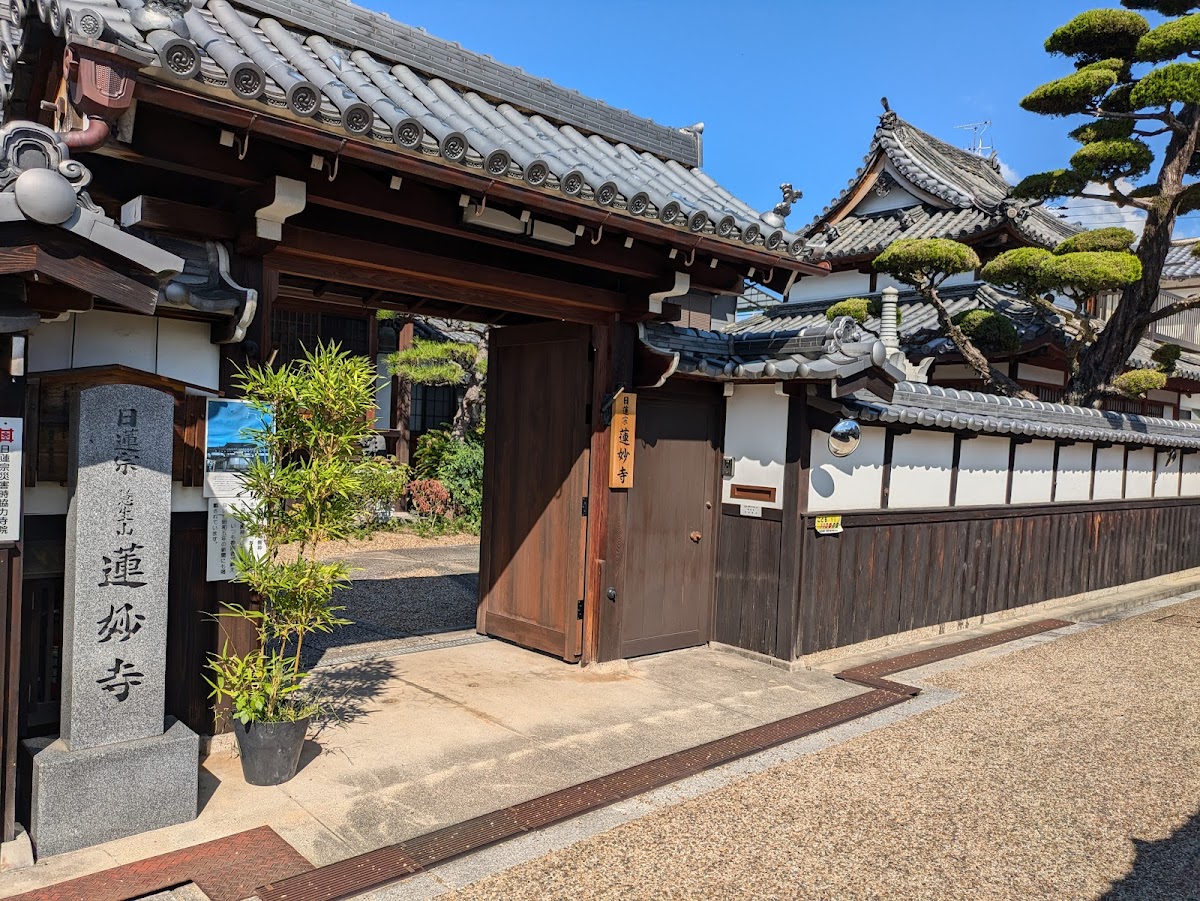
The architecture of Renmyoji Temple harmonizes with the traditional townscape of Imai-cho. Located within a designated Important Preservation District for Groups of Traditional Buildings, maintenance is carefully managed to avoid damaging the historical landscape.
The temple grounds are enveloped in a tranquil atmosphere, providing a peaceful space despite its urban location. Daily services are held in the main hall, supporting the faith of the local community.
Combining a Stroll Through Imai-cho
When visiting Renmyoji Temple, we highly recommend combining it with a stroll through the entire Imai-cho area. Imai-cho retains many Edo-period townhouses, including several designated as Important Cultural Properties.
- Imanishi Residence (Important Cultural Property): The home of the head elder of the moated settlement, built in 1650 (Keian 3)
- Toyoda Residence (Important Cultural Property): A merchant’s house that operated a rice shop
- Former Yoneya Residence (Important Cultural Property): A townhouse that operated a hardware store
By visiting these historical buildings and Renmyoji Temple, you can experience the townscape and religious practices of the Edo period.
Annual Events and Visiting Information
Main Annual Events
Renmyoji Temple holds annual events in accordance with the traditions of the Nichiren sect.
Buddha’s Birthday (Flower Festival): April 8th
A celebration of the Buddha’s birth, with the custom of pouring sweet tea over the statue.
Omeiko (Memorial Service): October 13th
A memorial service for Nichiren Shonin, and one of the most important events for Nichiren Buddhist temples. It is an opportunity to remember Nichiren Shonin, the founder of the sect, and to reaffirm his teachings.
During these events, more worshippers than usual visit, demonstrating the deep faith of the community.
Manners and Etiquette for Visiting Temples
When visiting a temple, please observe the following basic manners.
- A Bow at the Temple Gate: Bow before entering the temple grounds to compose yourself.
- Respectful Attitude: Be quiet within the temple grounds and be considerate of other worshippers.
- Consideration for Photography: When taking photographs, keep in mind that this is a religious site and do so with moderation.
- Offering a Coin: Offer your coin respectfully with gratitude.
Historical Background of Kashihara City
Location and Geography of Kashihara City
Kashihara City is located almost in the center of Nara Prefecture, in the southeastern part of the Nara Basin, and spans approximately 7.5 km east-west and 8.3 km north-south. While the terrain is generally flat, the Yamato Sanzan (Mt. Unebi, Mt. Amakagu, and Mt. Miminashi), whose names appear in the Manyoshu (an ancient collection of Japanese poetry), rise majestically, preserving the historical landscape from ancient times.
Yagi as a Transportation Hub
North of Imai-cho, where Renmyoji Temple is located, lies Yagi-cho. In ancient times, “Yagi” was a transportation hub at the intersection of the north-south Shimotsumichi (later the Nakakaido) and the east-west Yokoodo. During the Edo period, conflict ceased, and after the northern part became a shogunate-controlled territory during the Genroku era, it experienced stable development.
This convenient transportation supported the prosperity of Imai-cho as a commercial city and also contributed to the development of temples, including Renmyoji Temple.
Tourism Resources of Kashihara City
Besides Renmyoji Temple and Imai-cho, Kashihara City has many other tourist resources.
- Kashihara Shrine: A shrine dedicated to Emperor Jimmu, the first emperor of Japan.
- Imai-cho: A designated Important Preservation District for Groups of Traditional Buildings.
- Fujiwara Palace Site: The ruins of Japan’s first full-fledged capital city.
- Yamato Sanzan: Objects of worship since ancient times.
Visiting Renmyoji Temple in conjunction with these tourist spots will allow you to gain a deeper understanding of Kashihara City’s history and culture.
Historical Value of Imai-cho
Important Preservation District for Groups of Traditional Buildings
Imai-cho was designated a National Important Preservation District for Groups of Traditional Buildings in 1983. Its area is approximately 17.4 hectares, making it the largest in Japan.
Approximately 500 traditional buildings from the Edo to Meiji periods remain in the town, 9 of which are designated as Important Cultural Properties. This densely populated historical townscape is extremely valuable in the history of Japanese urban and architectural history.
Characteristics of the Moated Settlement
Imai-cho originally developed as a moated settlement. As an autonomous city surrounded by a moat, it boasted such prosperity during the Sengoku period that it was known as “Imai Senken” (Imai of a Thousand Houses). Even today, parts of the moat remain around the town, allowing visitors to imagine its former glory.
A Treasure Trove of Townhouse Architecture
The townhouse architecture of Imai-cho preserves the typical style of Edo-period merchant houses.
- Gable roof with tiled roof: A roof style adopted by many buildings.
- Mushikomado (insect cage window): A lattice window serving both ventilation and security.
- Komatsunagi (horse tethering): A decorative element indicating the status of a merchant house.
- Udatsu (fire-resistant gable end): An architectural element symbolizing fire prevention and wealth.
With Renmyoji Temple situated within a landscape of townhouses possessing these architectural elements, a historical space is formed where the temple and the town are integrated.
Attractions Around Renmyoji Temple
Main Spots in Imai-cho
Imai Townscape Exchange Center “Hana-Iraka”
A facility where you can learn about the history and culture of Imai-cho. A restored building of the Takagi family residence from the Edo period, it’s an ideal starting point for exploring the townscape.
Shonenji Temple
A Jodo Shinshu Buddhist temple that was central to the development of Imai-cho. Also known as Imai Gobo, it’s an indispensable place for understanding the town’s origins.
Imanishi Family Residence
A nationally important cultural property built in 1650. Built as the residence of the town’s chief elder, it boasts a castle-like grandeur.
Nearby Dining and Rest Spots
Imai-cho has many cafes and restaurants utilizing traditional townhouses.
- Take a break at a renovated old house cafe
- Enjoy dishes made with local ingredients
- A gallery renovated from a townhouse
Stopping by during your stroll will allow you to more deeply experience the historical atmosphere.
Points to Note and Recommendations for Visiting
Best Time to Visit
Renmyoji Temple is open year-round, but there are particularly recommended times to visit.
Spring (March-May): Beautiful cherry blossoms and fresh greenery, mild weather, perfect for a stroll.
Autumn (October-November): Autumn foliage season, and you can also experience the Omyo-ko ceremony on October 13th.
Winter (December-February): Fewer tourists, allowing for a peaceful visit.
Summer is extremely hot, so early morning or evening visits are recommended.
Estimated Time Required
- Visiting Renmyoji Temple only: 15-30 minutes
- Including a stroll through Imai-cho: 2-3 hours
- Including major tourist attractions in Kashihara City: Half a day to a full day
By allowing ample time, you can slowly enjoy the historical atmosphere.
Clothing and Belongings
- Comfortable walking shoes: Essential as Imai-cho has cobblestone and unpaved paths.
- Seasonal clothing: Sun protection in summer, warm clothing in winter.
- Camera: For photographing the historical townscape.
- Map or guidebook: Useful for exploring Imai-cho.
Renmyoji Temple and the Teachings of Nichiren Buddhism
Basics of Nichiren Buddhism
Nichiren Buddhism is a Buddhist sect founded by Nichiren Shonin (1222-1282), a monk of the Kamakura period. It considers the Lotus Sutra as its fundamental scripture and teaches that all people can attain Buddhahood by chanting the title “Namu Myoho Renge Kyo.”
Faith at Renmyoji Temple
At Renmyoji Temple, the traditional form of Nichiren Buddhism is preserved.
- Chanting the Title: Chanting “Namu Myoho Renge Kyo” is the basic practice.
- Recitation of the Lotus Sutra: Learning and practicing the teachings of the sutra.
- Ancestral Memorial Service: Offering prayers for the deceased.
Together with local parishioners, we apply the teachings of Buddhism to our daily lives through these religious activities.
Benefits and Faith
At Renmyoji Temple, a Nichiren Buddhist temple, various benefits from the merits of the Lotus Sutra are believed to be present.
- Fulfillment of All Wishes: The fulfillment of all wishes.
- Family Safety: Peace and health for the family.
- Ancestral Memorial Service: Praying for the repose of ancestors’ souls.
- Peace of Mind: Mental stability achieved through chanting the title.
Culture of Kashihara City and Renmyoji Temple
Connection with the Local Community
With a history spanning nearly 700 years, Renmyoji Temple has been deeply connected to the local community of Imai-cho. During its prosperous period as a commercial city in the Edo era, it functioned as a spiritual pillar of the community, and even today, it remains one of the centers of local faith and culture.
Contribution to Cultural Property Preservation
Located within a designated Important Preservation District for Groups of Traditional Buildings, Renmyoji Temple plays a crucial role in preserving the historical landscape of Imai-cho. By maintaining its traditional temple architecture, it enhances the historical value of the entire town.
Value as a Tourist Resource
In recent years, with the increase in tourists to Imai-cho, Renmyoji Temple has also become an important tourist resource. It welcomes visitors from both Japan and abroad as a place where they can experience historical temple architecture and the faith culture of the Nichiren sect.
Summary: The Significance of Visiting Renmyoji Temple
Renmyoji Temple is not merely a tourist spot; it is a living place of faith with a history of nearly 700 years. Since its founding in 1333, it has continued to uphold the teachings of the Dharma established by the Great High Priest Myojitsu, and has walked hand in hand with the development of Imai-cho.
As part of Imai-cho, a designated Important Preservation District for Groups of Traditional Buildings, Renmyoji Temple contributes to the preservation of the historical landscape. Visiting Renmyoji Temple while strolling through Imai-cho, which retains its Edo-period streetscape, will allow you to gain a deeper understanding of Japanese history and culture.
Its convenient location, just a 5-minute walk from Kintetsu Yagi-Nishiguchi Station, is another attractive feature. When visiting Kashihara City, be sure to visit Renmyoji Temple, find peace in its tranquil grounds, and feel the spirit of faith woven over 700 years of history.
Located in the historical setting of Imai-cho, Kashihara City, Nara Prefecture, Renmyoji Temple continues to transmit the teachings of the Nichiren sect. Its existence is a precious cultural heritage connecting the past and the present, and it continues to convey Japanese tradition and spirituality to visitors.