Ryōjūji Temple (Kamakura City, Kanagawa Prefecture) Complete Guide: History and Visiting Information of the Butsugan Sect
Ryōjūji Temple, located in Koshigoe 5-chome, Kamakura City, Kanagawa Prefecture, is known as a temple with its own unique sect, the Butsugan Sect. Situated in a residential area somewhat removed from the center of Kamakura, this temple possesses a tranquil atmosphere unlike typical tourist temples and has a distinctive religious background. This article provides a detailed explanation of Ryōjūji Temple’s history, the characteristics of its sect, and visiting information.
Basic Information about Ryōjūji Temple
Ryōjūji Temple is located at 5-14 Koshigoe 5-chome, Kamakura City, and belongs to the Butsugan Sect (a new religious movement affiliated with the Honganji sect). It is located away from major tourist areas in Kamakura, such as Komachi Street and Tsurugaoka Hachimangu Shrine, and is within walking distance of Mejiroyamashita Station on the Enoshima Electric Railway.
Location and Access
Address: 5-5-14 Koshigoe, Kamakura City, Kanagawa Prefecture
Nearest Station:
- Approximately 5 minutes on foot from Mejiroyamashita Station on the Enoshima Electric Railway
- Approximately 7 minutes on foot from Koshigoe Station on the Enoshima Electric Railway
The Koshigoe area is located in the western part of Kamakura City, close to Enoshima and the Shonan coastline. Because it is located in a residential area, it does not have large parking facilities, but it offers a quiet environment for worship.
About the Butsugan Sect: About the Sect of Ryoju-ji Temple
The Butsugan Sect, to which Ryoju-ji Temple belongs, is a relatively new sect that originated from Jodo Shinshu Buddhism. It has its own unique doctrines and history that differ from general Buddhist sects.
Background of the Establishment of the Butsugan Sect
The Butsugan Sect was founded by its founder, Ryōju Shōnin. Venerable Reiju was born in Daimon-machi, Toyama Prefecture (present-day Imizu City), and was originally a monk of the Shinshu Otani sect. Later, he received ordination at Nishi Honganji, the head temple of Jodo Shinshu, and established his own unique religious views.
When it was registered as a religious corporation in 1951 (Showa 26), it was called “Butsugan-shu,” but from 1954 (Showa 29) it became known as “Butsugan-shu Eijitsu-kai.” It is positioned as a new religious movement within the Honganji sect, and while based on the traditional teachings of Jodo Shinshu, it develops its own unique interpretations and practices.
Relationship with Jodo Shinshu
The doctrines of Butsugan-shu are strongly influenced by Jodo Shinshu. Given that its founder, Venerable Reiju, was from the Shinshu Otani sect and received ordination at Nishi Honganji, there is a common emphasis on faith in Amida Buddha and the practice of nembutsu (recitation of Amida Buddha’s name).
However, because it established an independent sect, it is believed to possess its own unique doctrinal interpretations and practices that differ from traditional Jodo Shinshu. Its distinctive feature is that, while possessing aspects of a new religion, it also inherits the traditions of Jodo Shinshu.
The Life and Thought of Venerable Reiju
Let’s take a closer look at the life and thought of Venerable Reiju, the founder of Venerable Reiju, after whom the temple is named.
Origins and Training
Venerable Reiju was born in Daimon-cho, Toyama Prefecture (present-day Daimon district, Imizu City). The Hokuriku region is a region where Jodo Shinshu faith is very strong, and Toyama Prefecture in particular is known as a Shinshu kingdom due to the strong influence of Jodo Shinshu.
In his youth, Venerable Reiju trained as a monk of the Shinshu Otani sect (Higashi Honganji sect). Later, he received formal ordination at Nishi Honganji in Kyoto. His involvement with both the Higashi Honganji and Nishi Honganji sects is thought to have influenced the later formation of his own unique sect.
Founding of the Butsugan Sect
While detailed records are limited regarding the circumstances under which Venerable Reiju established his own sect, it is presumed that the historical context of the post-war period, from the chaotic to the reconstruction era of the 1940s, played a role.
In 1951, the Butsugan Sect was officially recognized as a religious corporation through a notification under the Religious Corporations Act. The renaming to “Butsugan Sect Eijitsukai” three years later, in 1954, is thought to indicate the organization’s development and the deepening of its doctrines.
History of Reiju-ji Temple and its Connection to Kamakura
This section explains the circumstances under which Reiju-ji Temple was established in Koshigoe, Kamakura City, and its connection to this region.
Historical Background of the Koshigoe Area
Koshigoe has been an important area since the Kamakura period. It is a historically significant place, home to Manpuku-ji Temple, known for the “Koshigoe Letter” in which Minamoto no Yoshitsune stayed seeking a meeting with his brother Yoritomo. During the Edo period, it flourished as a post town on the Tokaido road and as a base for pilgrimages to Enoshima.
The area where Ryōjūji Temple is located, Koshigoe 5-chome, is a residential area slightly inland from the coastline. Unlike the area where major tourist temples of Kamakura are concentrated, it is a location with a strong character as a place of worship for local residents.
Ryōjūji Temple in Modern Times
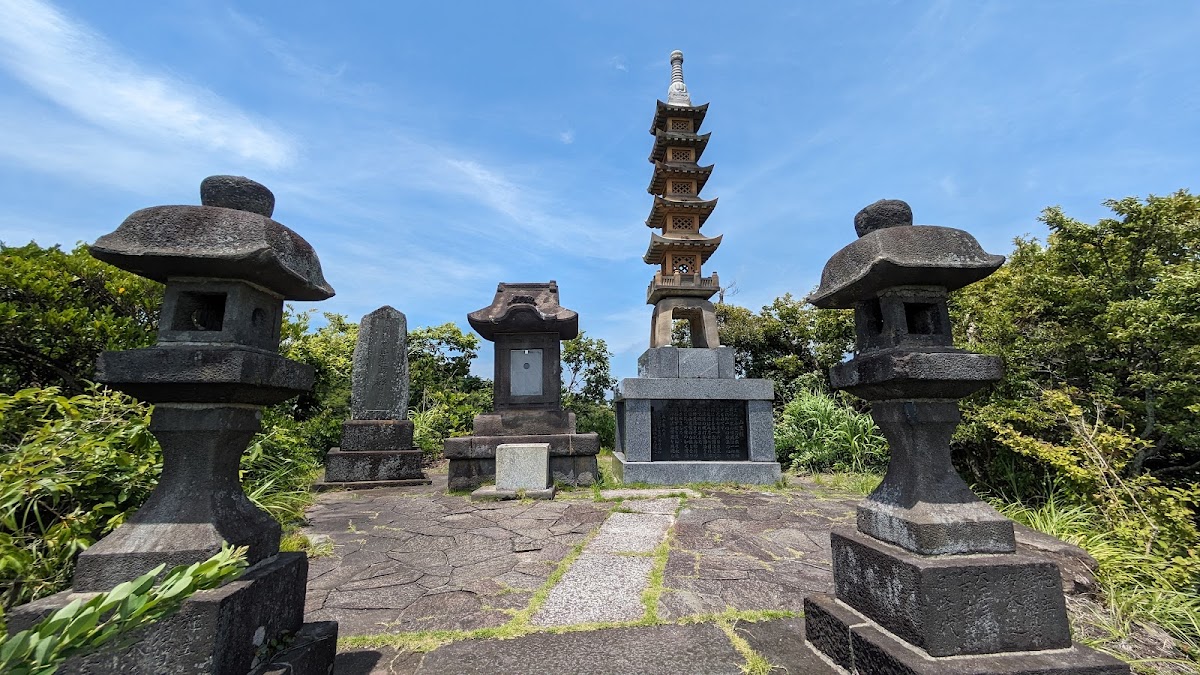
Ryōjūji Temple is not a large-scale tourist temple, but rather exists as a place of worship deeply rooted in the community. Because it belongs to its own sect, the Butsugan-shū, it is not included in typical Kamakura tourist routes, but it is an interesting place from the perspective of religious history and Buddhist studies.
Other temples such as Hōgenji Temple and Hōzen-in Temple are scattered nearby, playing a part in the religious culture of the Koshigoe area.
Attractions Around Ryōjūji Temple
When visiting Ryōjūji Temple, you can also visit the surrounding historical sites.
Hōgenji Temple
Hōgenji Temple, located about a 5-minute walk from Ryōjūji Temple, is a Nichiren Buddhist temple. This is also a quiet temple nestled in a residential area, supporting the faith of the local community. Visiting both Ryōjūji and Hōgenji allows you to compare temples of different sects. ### Manpuku-ji Temple (The Temple of the Koshigoe Letter)
Manpuku-ji Temple, a historical temple representative of Koshigoe, is said to be the place where Minamoto no Yoshitsune wrote the “Koshigoe Letter,” a letter of explanation to his brother Yoritomo. It is a Shingon Buddhist temple and houses materials and exhibits related to Yoshitsune. It is about a 10-minute walk from Ryoju-ji Temple.
Koyurugi Shrine
Located near the coast of Koshigoe, Koyurugi Shrine is said to be a shrine visited by Minamoto no Yoshitsune and Benkei when they were detained in Koshigoe. Situated on a hill overlooking the sea, it offers views of Enoshima Island.
Enoshima Island
Enoshima Island is accessible on foot from Koshigoe. Crossing the Enoshima Bridge, you’ll find tourist attractions such as Enoshima Shrine, a sacred site of Benzaiten worship, as well as observation decks and caves.
Other Temples in Kamakura with “Ryōjūsan” in Their Name: Differences from Gokurakuji Temple
In relation to the name “Ryōjū,” there is a famous temple in Kamakura City called Gokurakuji Temple, which also has “Ryōjūsan” as its mountain name. Understanding the differences between the two will make the characteristics of Ryōjūji Temple clearer.
Overview of Gokurakuji Temple
Gokurakuji Temple is a Shingon Ritsu sect temple located in Gokurakuji, Kamakura City, Kanagawa Prefecture. Its official name is “Ryōjūsan Kannōin Gokurakuritsuji.” It is a historical temple founded in 1259 during the Kamakura period by Hōjō Shigetoki, and opened by Ninshō Shōnin.
Meaning of “Ryōjūsan”
“Ryōjūsan” (Vulture Peak) is a mountain in the Magadha Kingdom of India, known as a sacred place where Shakyamuni Buddha preached many scriptures. It was called “Gridrakuta” in Sanskrit, and was named because it was a mountain where many eagles lived. The use of “Ryōjūzan” (霊雀山) as a mountain name by Buddhist temples signifies that the temple is a place that carries on the teachings of Shakyamuni Buddha. While Gokuraku-ji Temple uses it as its mountain name, Ryōjū-ji Temple is unique in that it includes “Ryōjū” (霊雀) in its temple name itself.
Differences between the two temples
Gokuraku-ji Temple is a historical temple founded during the Kamakura period, belonging to the Shingon Ritsu sect, and is a prestigious temple possessing numerous nationally important cultural properties. On the other hand, Ryōjū-ji Temple is a Butsugan sect temple established during the Showa era, and differs significantly in scale and character.
Although they are sometimes confused due to the similarity of their names, it is important to understand that they are separate temples in terms of sect, history, scale, and character.
Points to note and manners when visiting
When visiting Ryōjū-ji Temple, please note the following points.
General temple etiquette
Ryōjū-ji Temple is a small temple located in a residential area. Please observe the following manners when visiting the temple:
- Be quiet: As the surrounding area is residential, please refrain from loud conversations and noise.
- Photography: Photography is often permitted within the temple grounds, but please avoid entering the main hall or private property.
- Parking: There is likely no dedicated parking lot, so we recommend using public transportation.
- Visiting Hours: Please avoid visiting early in the morning or late at night, and visit during appropriate daytime hours.
Understanding the Characteristics of the Butsugan-shu Sect
The Butsugan-shu sect is a branch of the Jodo Shinshu sect, so basic worship practices are considered to be similar to those of Jodo Shinshu:
- The main practice is to bow with hands clasped together; the practice of using incense and ringing bells varies depending on the sect.
- When chanting the Nembutsu, “Namu Amida Butsu” is the basic phrase.
- There may be unique practices of the Butsugan-shu sect, so please refrain from asking questions if you are unsure.
Detailed Access Information to Ryoju-ji Temple
This section provides a detailed explanation of how to access Ryoju-ji Temple.
Access by Train
Using the Enoshima Electric Railway (Enoden)
- Board the Enoden from Kamakura Station
- Get off at “Mejiroyamashita Station” (approx. 15 minutes from Kamakura Station)
- Approximately 5 minutes on foot from the station
Or
- Board the Enoden from Fujisawa Station
- Get off at “Koshigoe Station” (approx. 10 minutes from Fujisawa Station)
- Approximately 7 minutes on foot from the station
Routes from Major Stations
From Tokyo
- Take the JR Tokaido Line or Yokosuka Line to Ofuna Station or Kamakura Station
- Transfer to the Enoden from Kamakura Station
From Yokohama
- Take the JR Yokosuka Line to Kamakura Station
- Transfer to the Enoden from Kamakura Station
From Shinjuku
- Take the Odakyu Line to Fujisawa Station
- Transfer to the Enoden from Fujisawa Station
Walking Route Guide
From Mejiroyamashita Station, the route goes through a residential area. Exit the station and head away from the sea (towards the mountains), following the roads within the residential area. Since there may be few signs, we recommend using a smartphone map app.
The Position of Reijuji Temple in Kamakura’s Temple Culture
Kamakura has numerous temples, each with a different sect and history. What position does Reijuji Temple occupy within Kamakura’s temple culture?
Major Buddhist Sects in Kamakura
Kamakura became the center of a new Buddhist movement known as “Kamakura Buddhism.” The main Buddhist sects are:
- Rinzai Zen: Engaku-ji, Kencho-ji, and other Kamakura Five Mountains
- Jodo Buddhism: Komyoji, etc.
- Nichiren Buddhism: Myohon-ji, Hongaku-ji, etc.
- Jodo Shinshu Buddhism: Relatively few in number
- Shingon Buddhism: Gokuraku-ji, etc.
Among these, Reiju-ji Temple, with its own unique sect, the Butsugan-shu, is a special presence among Kamakura’s temples.
Aspects as a New Religion
The Butsugan-shu, to which Reiju-ji Temple belongs, is a relatively new sect established during the Showa era. In Kamakura, where many ancient temples dating back to the Kamakura period are located, temples belonging to new religious movements are rare.
This indicates that Kamakura is not merely a region of historical temples, but a diverse area that has embraced new religious movements up to the present day.
Significance of Reiju-ji Temple Research
While Reiju-ji Temple is not a highly-regarded tourist destination, it is an interesting subject of research from the perspectives of religious studies and sociology.
Perspectives on New Religious Studies
Understanding the development of new religious movements in postwar Japan requires examining Jodo Shinshu-based new sects such as the Butsugan-shu. Understanding how they separated from traditional Buddhist sects and formed their own unique organizations provides clues to understanding the diversity of Japanese religious culture.
Research on Local Beliefs
The existence of Reiju-ji Temple, a small, community-based temple rather than a large tourist temple, illustrates the nature of local beliefs in Kamakura. It is a valuable example for considering the role of temples as places of worship closely intertwined with daily life, distinct from tourist-oriented temples.
Summary: The Charm and Significance of Visiting Reiju-ji Temple
Reiju-ji Temple possesses a quiet atmosphere, unlike the famous tourist temples of Kamakura. It belongs to its own unique sect, the Butsugan-shu, and has a history of being founded by its founder, Reiju Shonin.
Summary of the characteristics of Ryōjūji Temple:
- A Buddhist temple of the Butsugan sect located in Koshigoe 5-chome, Kamakura City, Kanagawa Prefecture.
- Founder Ryōjū Shōnin was from Toyama Prefecture, a member of the Shinshū Ōtani sect, and was ordained at Nishi Honganji Temple.
- Registered as a religious corporation in 1951, and has been called “Butsugan-shū Eijitsukai” since 1954.
- Located in a residential area about a 5-minute walk from Mejiroyamashita Station on the Enoden Line.
- Not a large-scale tourist temple, but a place of faith rooted in the local community.
Visiting Ryōjūji Temple offers an opportunity to learn about one aspect of Kamakura’s diverse religious culture. It is a valuable spot where you can experience a tranquil, community-based place of faith, different from the splendor of famous temples.
When sightseeing in Kamakura, why not extend your trip a little from the main tourist routes and experience the history and culture of the Koshigoe area? Ryōjūji Temple and its surroundings are worth visiting as a place where you can catch a glimpse of the unspoiled, authentic face of Kamakura.