Complete Guide to Sakaori Shrine (Yamanashi Prefecture) | History, Goshuin (Shrine Seal), and Access Information for the Birthplace of Renga (Linked Verse)
Sakaori Shrine, located in Sakaori, Kofu City, Yamanashi Prefecture, is the only ancient shrine in Yamanashi Prefecture mentioned in both the Kojiki and Nihon Shoki, Japan’s oldest historical records. Known for its connection to the legend of Yamato Takeru no Mikoto’s eastern expedition and as the birthplace of Renga, a significant event in Japanese literary history, this shrine attracts considerable interest from history enthusiasts, literature fans, and those collecting Goshuin (shrine seals).
This article comprehensively covers everything you need to know before visiting Sakaori Shrine, from its historical background and highlights to festivals, Goshuin information, and access methods.
Overview and Basic Information of Sakaori Shrine
What is Sakaori Shrine?
Sakaori Shrine is a Shinto shrine that originated from a “temporary palace” (angu) where Yamato Takeru is said to have stopped on his return from pacifying the eastern barbarians during the reign of Emperor Keiko (around 111 AD). An angu refers to a temporary palace established for the temporary stay of emperors and members of the imperial family during imperial visits.
Sakaori Shrine is the only shrine in Yamanashi Prefecture mentioned in both the Kojiki and Nihon Shoki, and its historical value is considered extremely high. Its former shrine rank was a village shrine, and it has attracted deeply rooted faith in the local community.
Facility Information & Basic Data
Location
3-1-13 Sakaori, Kofu City, Yamanashi Prefecture 400-0805
Phone Number
055-231-2690
Visiting Hours
Grounds are freely accessible (Shrine office: 9:00 AM – 5:00 PM)
Main Deity
Yamato Takeru no Mikoto
Shrine Rank
Former Village Shrine
Main Hall Style
Shinmei-zukuri
Annual Festival
Third Saturday and Sunday of October (around October 17th)
Parking
Available (Free)
Official Website
https://sakaorinomiya.jp/
History of Sakaori Shrine | Legends Recorded in the Kojiki and Nihon Shoki
The Eastern Expedition of Yamato Takeru and Sakori Shrine
The origins of Sakori Shrine can be traced back to the legend of Yamato Takeru’s eastern expedition recorded in the Nihon Shoki (Chronicles of Japan), specifically in the entry for the 40th year of Emperor Keiko’s reign, and in the Kojiki (Records of Ancient Matters).
During the reign of the 12th Emperor Keiko, Yamato Takeru was ordered by the Emperor to pacify the eastern provinces. On his return journey after pacifying the eastern barbarians, he is said to have stopped at Sakori in Kai Province, where he established a temporary palace and held a banquet.
At this banquet, Yamato Takeru addressed his accompanying warriors with a short poem (a 5-7-7 syllable poem): “How many nights have we slept since passing Niihari and Tsukuba in Hitachi Province?”
None of the warriors could answer, but then the old man tending the fire (the fire-stoker) recited the following poem: “All in all, there are nine nights and ten days.” This means, “If we count the days, there are nine nights and ten days.”
It is recorded that Yamato Takeru greatly praised the fire-stoker’s intelligence and quick wit and bestowed upon him a generous reward.
Significance as the Birthplace of Renga
This exchange of poems between Yamato Takeru and the fire-stoker, in which one person recites the first verse and another responds with the second verse, is considered the origin of renga in Japan. For this reason, Sakazori Shrine holds an important position in literary history as the “birthplace of renga.”
Motoori Norinaga, a scholar of Japanese classics during the Edo period, also valued this story and erected a stone monument called the “Sakori Shrine Monument” when he visited Sakori Shrine. This monument still remains on the shrine grounds today, bearing an inscription written by Motoori Norinaga.
The Sacred Object and the Legend of Shiomi no Sukune
The sacred object of Sakori Shrine is a “fire-starting pouch” (hiuchibukuro) said to have been given by Yamato Takeru to Shiomi no Sukune, one of his retainers, during his eastern expedition. A fire-starting pouch is a bag for holding flint, and in ancient times, fire was considered sacred.
It is said that Yamato Takeru commanded Shiomi no Sukune to “stay here, develop the country, and nurture the people,” and bestowed this fire-starting pouch upon him. Shiomi no Sukune is believed to have remained in this area, engaged in the development of Kai Province and the guidance of its people, and is thought to have been deeply involved in the founding of Sakori Shrine.
Changes in the Shrine
Sakori Shrine was originally located on the mountainside of Tsukimiyama, north of its current location. Before the medieval period, the area around Sakori was a crucial transportation hub in Kai Province, and all nine ancient roads leading to other provinces—the “Kai Nine Roads” (Wakabiko Road, Nakado Highway, Suruga Highway, Kamakura Highway, Chichibu Highway, Ome Highway, Hosaka Road, Itsumi Road, and Bou Road)—started from Sakori.
Later, with the changing times, the shrine was moved to its current location and has since been revered as the guardian deity of the region. Under the Meiji era’s shrine ranking system, it was designated a village shrine and has functioned as a central shrine in the local community.
Deities and Benefits
Main Deity: Yamato Takeru
The main deity of Sakori Shrine is Yamato Takeru. Yamato Takeru was the son of Emperor Keiko, the 12th emperor, and is depicted in the Kojiki and Nihon Shoki as a hero who pacified various parts of Japan. He is revered as a warrior god who pacified the Kumaso in the west and the Emishi in the east, making a significant contribution to the unification of Japan. His bravery, wisdom, and tragic end have captivated the hearts of many people since ancient times.
Expected Benefits
The main benefits you can expect at Sakaori Shrine are as follows:
- Long-lasting Military Fortune and Success in Competitions: As it enshrines Yamato Takeru, the god of war, many visitors pray for success in competitions and contests.
- Good Fortune and Prosperity: By drawing on Yamato Takeru, who successfully completed his eastern expedition, visitors pray for the strength to overcome life’s difficulties.
- Traffic Safety: As a god of travel, visitors pray for safe journeys and travel.
- Academic Success and Literary Improvement: As the birthplace of renga (linked verse), many visitors pray for improvement in academics, literature, and art.
- Matchmaking and Family Safety: As a guardian deity of the region, visitors pray for family happiness and good relationships.
Especially due to its literary history as the birthplace of renga, it is frequently visited by writers, poets, scholars, and other cultural figures, and is known as a place to pray for improvement in creativity and expressiveness.
Highlights of the Shrine Grounds
Worship Hall and Main Sanctuary
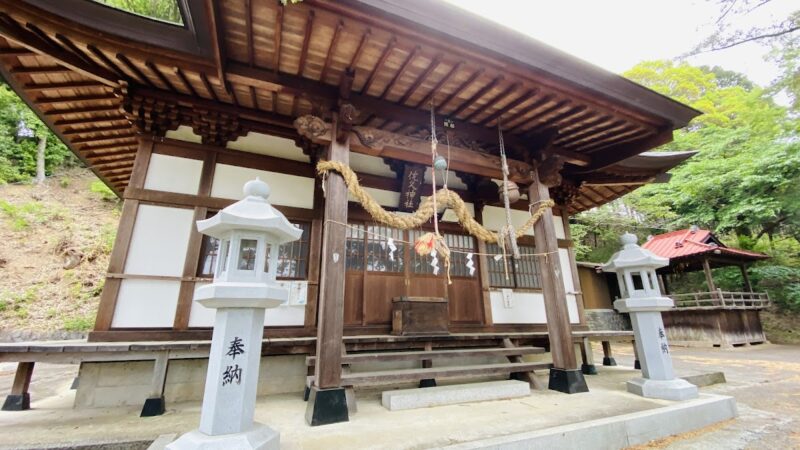
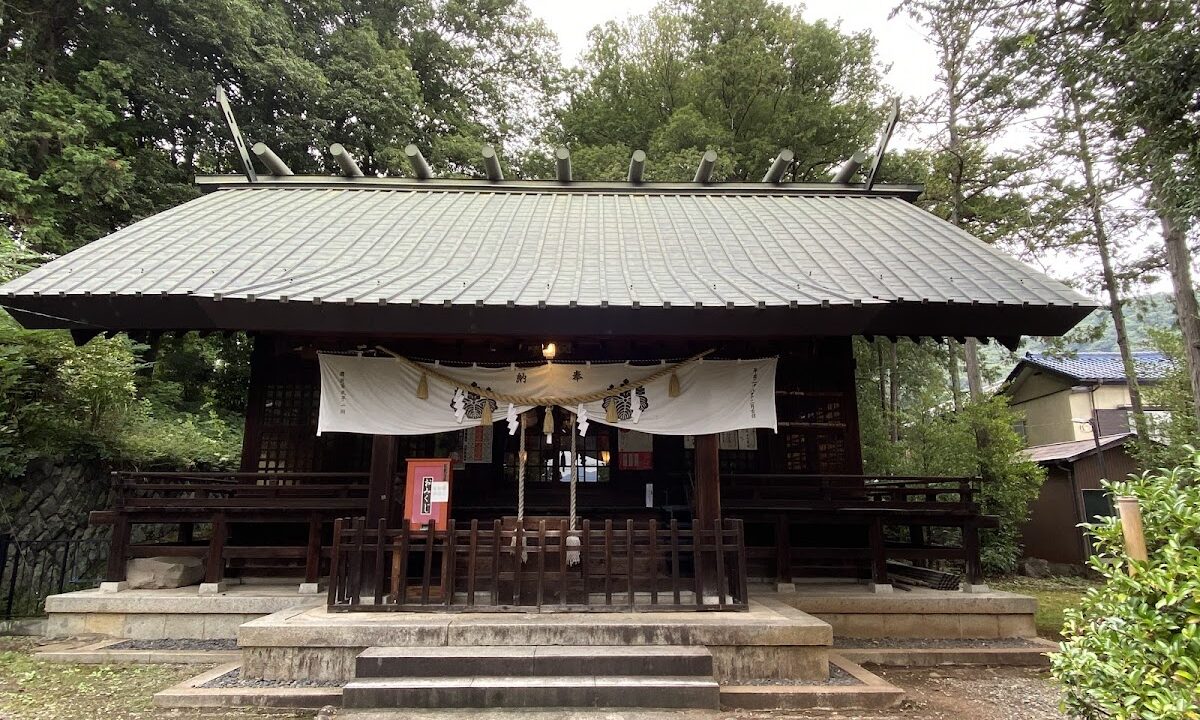
The main sanctuary of Sakaori Shrine is built in the Shinmei-zukuri style. Shinmei-zukuri is one of the oldest shrine architectural styles in Japan, exemplified by Ise Grand Shrine, and is characterized by its simple and pure beauty.
The worship hall is where worshippers offer their prayers, and its tranquil wooden structure is impressive. The entire shrine grounds are enveloped in a peaceful atmosphere, and despite its urban location, one can feel a sacred air.
Stone Monument Marking the Birthplace of Renga (Linked Verse)
Several stone monuments marking the “birthplace of renga” are erected on the shrine grounds. The most famous is the “Sakaori Shrine Monument,” inscribed by Motoori Norinaga, a scholar of Japanese classics from the Edo period.
Motoori Norinaga is a leading authority on Japanese classical studies, known as the author of “Kojiki-den” (Commentary on the Kojiki). His recognition of Sakaori Shrine’s historical value and the erection of this monument speak to the shrine’s literary and historical importance.
Many visitors reflect on the dialogue between Yamato Takeru and the fire-maker in front of this stone monument, making it a special place for literature enthusiasts.
Tsukimiyama and the Former Shrine Site
To the north of Sakaori Shrine lies Tsukimiyama, and the shrine building once stood on its slopes. Traces of the former shrine site remain, allowing visitors to enjoy historical exploration.
From Tsukimiyama, one can enjoy a panoramic view of the Kofu Basin, imagining how ancient people viewed this land.
Shrine Precincts
Within the grounds of Sakaori Shrine, in addition to the main hall dedicated to the principal deity, Yamato Takeru, several smaller shrines are located. These smaller shrines also attract local devotion, and it is recommended to visit them as well during your visit.
Festivals and Annual Events
Grand Festival (Third Saturday and Sunday of October)
The most important festival of Sakaori Shrine is the Grand Festival, held annually on the third Saturday and Sunday of October (generally around October 17th). This festival features traditional Shinto rituals such as the procession of portable shrines and the dedication of Kagura (sacred dance). The entire community participates, and the Sakazori district is enveloped in a festive atmosphere.
During the annual festival, the usually quiet shrine grounds become bustling with many worshippers, and stalls sometimes line the streets. It’s a valuable opportunity to experience the region’s traditional culture.
Renga Dedication Ceremony
Befitting its status as the birthplace of Renga (linked verse), Sakazori Shrine sometimes holds events related to Renga and Waka (Japanese poetry). Literary enthusiasts and haiku/tanka groups gather to dedicate their works before the shrine, a unique cultural activity specific to this shrine.
New Year’s Visit, Setsubun (Bean-Throwing Festival), and Shichi-Go-San (Seven-Five-Three Festival)
As is typical for shrine events, prayers for New Year’s visits, Setsubun festivals, and Shichi-Go-San (seven-five-three festival) are also offered. As the local guardian shrine, people can be seen visiting at various milestones in their lives.
Goshuin (Shrine Seal) Information
Issuance of Goshuin
Sakori Shrine offers goshuin. Goshuin are popular among many visitors as proof of worship and as a memento of their shrine visits.
Issuance Hours: 9:00 AM – 5:00 PM (during shrine office hours)
Offering Fee: Approximately 300-500 yen (subject to change)
The goshuin features the shrine’s name, “Sakori Shrine,” and the date, written in ink, and stamped with the shrine’s seal. As a shrine with a special history as the birthplace of renga (linked verse), the goshuin is popular among literature enthusiasts.
Goshuincho (Shrine Seal Book)
Please check with the shrine office upon your visit to see if original goshuincho are available. As a memento of your shrine visits within Yamanashi Prefecture, the goshuin from Sakori Shrine, the only shrine in the prefecture mentioned in the Kojiki and Nihon Shoki, will hold special significance.
Etiquette for Visiting the Shrine
When receiving a Goshuin (shrine stamp), it is customary to first visit the main shrine before going to the shrine office. A Goshuin is not merely a stamp rally; it is a token of your visit, so please treat it with respect.
Access and Transportation Information
Access by Train
Approximately 5 minutes on foot from JR Chuo Line “Sakori Station”
The nearest station to Sakori Shrine is Sakori Station on the JR Chuo Line. Exit the north exit of the station, walk north through the residential area, and you will arrive at Sakori Shrine in about 5 minutes on foot. It is very close to the station and easily accessible.
From Kofu Station to Sakori Station, it takes about 5 minutes by train, and the fare is approximately 190 yen. From the Tokyo area, take the Limited Express “Azusa” from Shinjuku Station to Kofu Station (approximately 1 hour 30 minutes), then transfer to a local train to Sakori Station.
Access by Car
Approximately 15 minutes from the Kofu-Showa Interchange on the Chuo Expressway
If you are visiting by car, take the Kofu-Showa Interchange off the Chuo Expressway and head towards Kofu city center via National Route 20. The Sakazori area is located in the eastern part of Kofu city and is accessible in about 15 minutes from the interchange.
While there is free parking available on the temple grounds, spaces are limited, so during busy periods such as the annual festival, we recommend using public transportation.
Nearby Tourist Attractions
When visiting Sakazori Shrine, you can also visit nearby tourist attractions:
- Kai Zenkoji Temple: A famous temple associated with Takeda Shingen (approx. 10 minutes by car)
- Takeda Shrine: A shrine dedicated to Takeda Shingen (approx. 15 minutes by car)
- Kofu Castle Ruins (Maizuru Castle Park): A historical site in the heart of Kofu City (approx. 10 minutes by car)
- Shosenkyo Gorge: One of Japan’s most beautiful gorges (approx. 30 minutes by car)
Art and Literary Works Featuring Sakazori Shrine
Ukiyo-e and Paintings
The legend of Yamato Takeru’s eastern expedition has been depicted by many ukiyo-e artists and painters since the Edo period. The scene of the dialogue poem at Sakazori Shrine is sometimes featured in works depicting the story of Yamato Takeru.
Many works by ukiyo-e artists who specialized in warrior paintings, such as Utagawa Kuniyoshi and Tsukioka Yoshitoshi, depict Yamato Takeru’s eastern expedition. ### The Tradition of Waka and Renga
As the birthplace of Renga, Sakaori Shrine holds a special place in the history of Waka and Renga poetry. From the medieval to the early modern period, many poets and Renga masters visited this site and composed works based on the legend of Yamato Takeru.
The stone monument erected by Motoori Norinaga demonstrates the high level of interest that scholars of Japanese classics had in Sakaori Shrine, showing that cultural figures of the Edo period considered this shrine a literary sanctuary.
Contemporary Literary Works
Even today, the legend of Yamato Takeru and Sakaori Shrine as the birthplace of Renga are sometimes featured as subjects in novels, poems, and essays. Episodes at Sakaori Shrine are also sometimes depicted in historical novels and works based on mythology.
The Historical Importance of the Nine Routes of Kai Province and Sakaori
Sakaori as a Transportation Hub
From ancient to medieval times, the Sakaori area was a transportation hub in Kai Province. The fact that all nine ancient roads leading to other provinces—the “Nine Routes of Kai Province”—the Wakabiko Road, Nakado Highway, Suruga Highway, Kamakura Highway, Chichibu Highway, Ome Highway, Hosaka Road, Itsumi Road, and Bodo Road—started from Sakaori speaks to the strategic importance of this area.
It is thought that Prince Yamato Takeru chose this area on his return journey from his eastern expedition because Sakaori was important as the center of Kai Province and a key transportation hub.
The Center of Ancient Kai Province
In ancient Kai Province, the area around Sakaori was one of the political and economic centers. Its importance, as evidenced by its mention in the Kojiki and Nihon Shoki, indicates that this region was highly valued under the control of the Yamato court.
While the Sakaori area has developed into a residential area today, there is a possibility that ancient remains lie buried beneath, making it an archaeologically interesting region.
Points and Manners for Visiting the Shrine
Etiquette for Visiting the Shrine
The basic etiquette for visiting Sakaori Shrine is as follows:
- Bow before passing through the torii gate: Bow before entering the shrine grounds, in front of the torii gate.
- Purify yourself at the water basin: Purify your hands and mouth at the water basin (right hand → left hand → mouth → left hand → handle of the ladle).
- Worship at the main hall: Two bows, two claps, one bow (bow deeply twice, clap twice, bow deeply once).
- Visit the subsidiary shrines: If time permits, visit the subsidiary shrines as well.
- Bow upon leaving: When leaving through the torii gate, turn around and bow.
Regarding Photography
Photography is generally permitted on the shrine grounds, but photography inside the main hall or during Shinto rituals should be avoided. Also, please be considerate of other visitors.
Attire
While there are no specific dress code requirements, it is advisable to dress appropriately for a sacred place like a shrine. Avoid overly revealing clothing or overly casual attire such as sandals.
Summary of the Charms of Sakaori Shrine
Sakaori Shrine is the only shrine in Yamanashi Prefecture mentioned in both the Kojiki and Nihon Shoki, possessing significant historical value. It boasts two major characteristics: the legend of Yamato Takeru’s eastern expedition and its status as the birthplace of renga (linked verse).
Despite its urban location, it maintains a tranquil atmosphere, and its grounds, imbued with history and literature, evoke a sense of romance for visitors to ancient Japan. Its excellent accessibility, just a 5-minute walk from JR Sakaori Station, is another attractive feature.
Sakaori Shrine attracts visitors with various purposes, including those seeking good fortune and success in competitions due to its dedication to the warrior god Yamato Takeru, those drawn by its literary significance as the birthplace of renga, and those enjoying collecting Goshuin (shrine stamps).
When visiting Yamanashi Prefecture, be sure to visit this sacred site of history and literature. You will be able to experience a part of Japan’s spiritual culture, which has continued from ancient times to the present day.