Sennenji Temple (Ukyo-ku, Kyoto Prefecture) | Complete History and Visitor Guide to the Jodo-shu Seizan Zenrinji School
Sennenji Temple, located in Narutaki Honmachi, Ukyo-ku, Kyoto City, is the head temple of the Nishitani branch of the Jodo-shu Seizan Zenrinji school and has played an important role in the history of Buddhism in Kyoto. This article provides comprehensive information useful for visitors, including the historical background of Sennenji Temple, the characteristics of the sect, highlights of the temple grounds, and access methods.
Basic Information about Sennenji Temple
Sennenji Temple is a temple of the Jodo-shu Seizan Zenrinji school located at 67 Narutaki Honmachi, Ukyo-ku, Kyoto City.
Official Name: Seikokusan Sennenji Temple
Mountain Name: Seikokusan
Sect: Jodo-shu Seizan Zenrinji-ha Seikoku-ryu
Principal Image: Amida Buddha
Founder: Jōon (Seikokusan Shonin)
Alternate Name: Seikokusan Shonin Honbyōchi (Main Mausoleum of Seikokusan Shonin)
Address: 67 Narutaki Honmachi, Ukyo-ku, Kyoto City, Kyoto Prefecture 616-8245
Telephone Number: 075-462-8347
Sennenji Temple is located in a quiet residential area of the Narutaki district, across from Ryōtokuji Temple. Because it is a little removed from the center of Kyoto, you can visit in a peaceful atmosphere.
History and Origins of Sennenji Temple
Nishitani Shonin Jōon and the Founding of Sennenji Temple
Sennenji Temple is known as the main mausoleum of Nishitani Shonin Jōon, the founder of the Nishitani school of the Jōdo-shū Seizan Zenrinji sect. Nishitani Shonin was a high-ranking priest who established the Nishitani school, which particularly emphasized the practice of nembutsu (recitation of Amida Buddha’s name) within the Jōdo-shū Seizan sect.
Jōon Shonin followed the lineage of the Seizan sect, which inherited the teachings of Honen Shonin, and preached rebirth in paradise through nembutsu. Sennenji Temple became a center of his teachings, a training ground where many monks and believers gathered.
What is the Nishitani School of the Jōdo-shū Seizan Zenrinji sect?
The Jōdo-shū Seizan Zenrinji sect is a branch of the Jōdo-shū sect, with Shōkū Shonin (Nishiyama Shonin), a senior disciple of Honen Shonin, as its founder. Among them, the Nishitani school, established by Jōon Shōnin, has the following characteristics:
- Emphasis on the practice of Nembutsu: Particular emphasis is placed on the practice of Nembutsu in daily life.
- Devotion to Amida Buddha: Believing in Amida Buddha’s original vow and aiming for rebirth in the Pure Land through chanting Nembutsu.
- Relationship with Zenrinji Temple: A deep connection with Zenrinji Temple (Eikandō), the head temple of the Nishiyama Zenrinji school.
Sennenji Temple is an important temple that has preserved the teachings of the Nishitani school to this day, and serves as a center of faith.
Relationship with the temples in the Narutaki area
The Narutaki area, where Sennenji Temple is located, is historically a region with many temples. In particular, its location directly across the road from Ryōtokuji Temple indicates that this area has long been a center of Buddhist culture.
The place name Narutaki is said to originate from the sound of the nearby stream. The tranquil environment was suitable as a place for ascetic practice, leading to the construction of many temples.
Sennenji Temple Grounds and Highlights
Main Hall and Principal Image, Amida Buddha
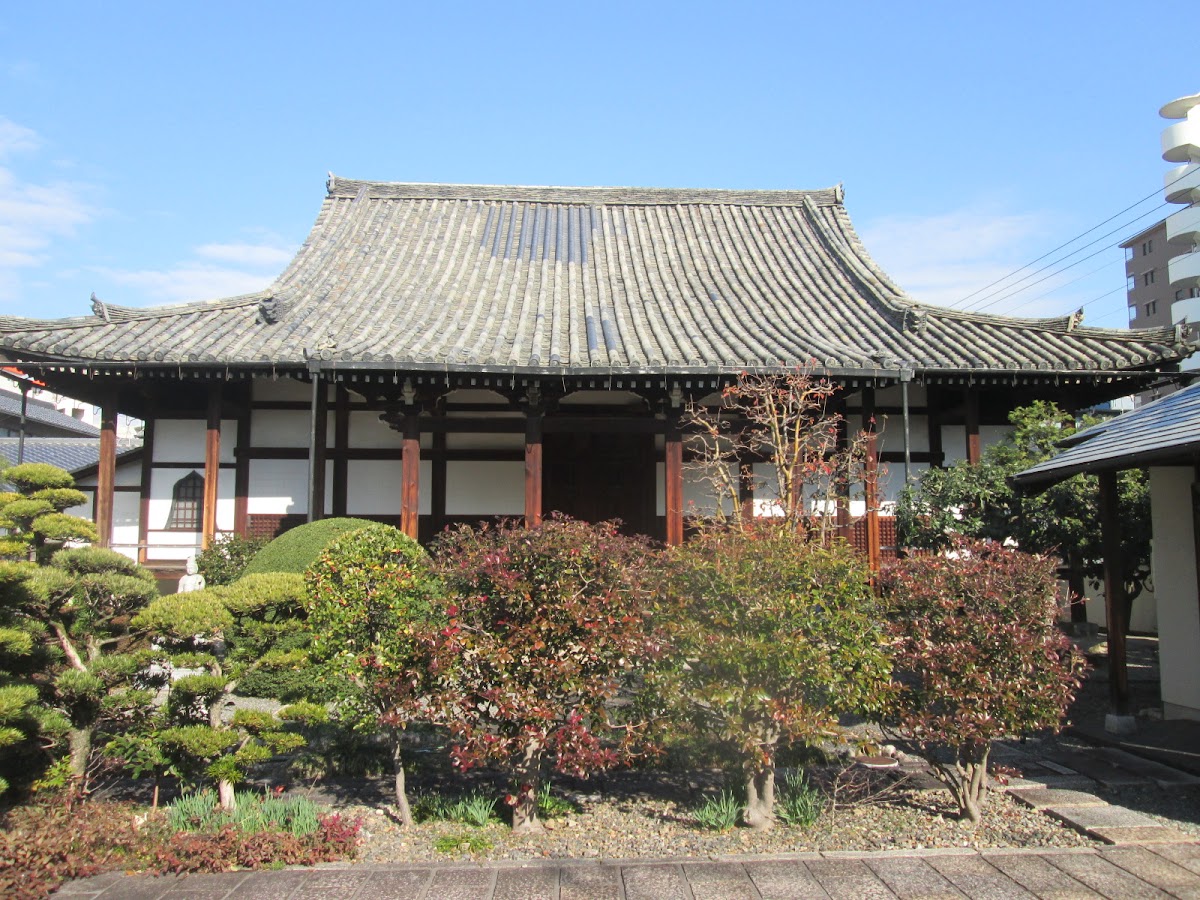
The main hall of Sennenji Temple houses the principal image, a statue of Amida Buddha. Amida Buddha is the most important Buddha in the Jodo sect, believed to guide those who chant the Nembutsu to the Pure Land.
The main hall maintains the style of traditional Buddhist architecture, providing a space where worshippers can quietly chant the Nembutsu and find peace of mind.
Mausoleum of Nishitani Shonin
Sennenji Temple is also known as “Nishitani Shonin’s Main Mausoleum,” and the mausoleum of its founder, Jōon Shonin, is located within the temple grounds. This mausoleum is an important pilgrimage site for those who follow the Nishitani school, attracting many worshippers.
At the mausoleum, you can commemorate the virtues of Jōon Shōnin and learn his teachings. It is a particularly important place for monks and followers of the Nishitani school to reaffirm the origins of their faith.
Atmosphere and Seasonal Scenery of the Temple Grounds
While Sennenji Temple’s grounds are smaller than those of other large temples in Kyoto, they exude a quiet and peaceful atmosphere. Located in Narutaki, away from the hustle and bustle of the city, it allows for a tranquil visit.
In spring, cherry blossoms adorn the grounds, and in autumn, the autumn leaves color the area, allowing you to appreciate the beauty of nature throughout the seasons. The autumn foliage season, in particular, is a beautiful time for strolling, as the entire Narutaki area is vibrantly colored.
Access to Sennenji Temple
Access by Public Transportation
Sennenji Temple can be accessed primarily by the following means of transportation:
Using the Keifuku Electric Railway (Arashiyama Line) Kitano Line
The nearest station is “Utano Station.”
- Get off at Utano Station on the Keifuku Electric Railway Kitano Line.
- Approximately 10-15 minutes on foot from the station.
- Proceed towards Narutaki Honmachi, using Ryotoku-ji Temple as a landmark to reach Sensoku-ji Temple.
Using City Buses
If using Kyoto City Buses, the following route is convenient:
- Get off at the Narutaki bus stop (Kyoto City Bus).
- Approximately 5 minutes on foot from the bus stop.
If accessing by city bus from major areas such as Kyoto Station or Shijo Kawaramachi, transfers may be necessary. It is recommended to check the Kyoto City Bus route map and timetable in advance.
Access and Parking by Private Car
If visiting by private car, please note the following:
- Address: Set your navigation to 67 Narutaki Honmachi, Ukyo-ku, Kyoto City, Kyoto Prefecture.
- Parking: Parking spaces for visitors at Sennenji Temple may be limited.
- Surrounding Roads: The Narutaki area is a residential area, so some roads are narrow.
We recommend calling the temple in advance (075-462-8347) to confirm parking availability and hours.
Combining with Nearby Tourist Attractions
When visiting Sennenji Temple, combining it with other nearby temples and tourist attractions will allow you to enjoy a more fulfilling Kyoto sightseeing experience.
Major Nearby Temples and Tourist Attractions
- Ryotoku-ji Temple: A temple located across from Sennen-ji Temple.
- Ninna-ji Temple: The head temple of the Omuro branch of Shingon Buddhism, a UNESCO World Heritage Site (approximately 10 minutes by car).
- Ryoan-ji Temple: A UNESCO World Heritage Site famous for its rock garden (approximately 15 minutes by car).
- Kinkaku-ji Temple: A representative tourist attraction of Kyoto (approximately 20 minutes by car).
The Narutaki area is located in the northwestern part of Kyoto and is relatively close to tourist areas such as Arashiyama and Kinkaku-ji Temple, making it easy to incorporate into your sightseeing route.
Etiquette and Precautions for Visiting Temples
Basic Etiquette for Visiting Temples
When visiting Sennen-ji Temple, please observe the following basic etiquette.
- Maintain silence: Please behave quietly within the temple grounds and avoid disturbing other visitors.
- Photography: Photography inside the main hall and of Buddha statues may be prohibited, so please check in advance.
- Attire: Avoid revealing clothing and visit in appropriate, subdued attire for a temple.
- Offering: When offering money, please do so quietly and respectfully.
- Praying with clasped hands: At the main hall, clasp your hands together and pray with sincerity.
Visiting Hours and Admission Fee
Visiting hours and admission fees for Sennenji Temple may differ from those of typical temples. Especially given its nature as the main mausoleum of Nishitani Shonin, visits may be open to the public freely, or reservations may be required.
We strongly recommend checking by phone (075-462-8347) before visiting. Please check the following points in particular:
- Visiting hours
- Admission fee
- Dates of memorial services and events (general visits may be restricted)
- Parking availability
Annual Events and Special Visits
Jodo-shu temples hold various memorial services and events throughout the year. Sennenji Temple may also hold the following events:
- Spring and Autumn Equinox Services: Memorial services held during the equinox period, centered around the spring and autumn equinoxes
- Obon Memorial Service: An ancestral memorial service held in mid-August
- Nishitani Shonin Memorial Service: A memorial service held on the anniversary of the death of the temple’s founder, Jōon Shonin
During these events, special memorial services may be held, and areas not normally open to the public may be accessible. Please contact the temple directly for details.
The Teachings and Nembutsu of the Jodo-shu Seizan Zenrinji School
The Lineage from Honen Shonin to the Seizan School
To understand the teachings of the Jodo-shu Seizan Zenrinji school, to which Sennenji Temple belongs, it is necessary to know its origins.
Honen Shonin (1133-1212) was a monk who was active from the late Heian period to the early Kamakura period, and is the founder of the Jodo-shu school. Honen Shonin taught that anyone can be reborn in the Pure Land by chanting “Namu Amida Butsu.”
Shoku Shonin (Seizan Shonin, 1177-1247), one of Honen Shonin’s leading disciples, developed his own unique teachings based in Seizan (Nishikyo-ku, Kyoto City), which marked the beginning of the Seizan school.
Characteristics of the Nishitani School
The Nishitani School is a branch of the Nishiyama school established by Jōon Shōnin, and has the following characteristics:
- Practice of Nembutsu Samadhi: Emphasis on constantly chanting the Nembutsu in daily life
- Confidence in Rebirth: Deep belief in Amida Buddha’s original vow and confidence in rebirth in the Pure Land
- Emphasis on Precepts: Along with Nembutsu, the observance of Buddhist precepts is also valued
- Balancing Scholarship and Practice: Emphasis on both doctrinal study and practical practice
Sennenji Temple continues to provide a place of faith and practice as an important center for transmitting the teachings of the Nishitani School to the present day.
How to Practice Nembutsu
The Nembutsu of the Jōdo School is chanted as “Namu Amida Butsu.” This Nembutsu (Buddhist chant) has profound meaning:
- Namu: Meaning to take refuge in, to entrust oneself to
- Amida Buddha: The Buddha with immeasurable light and lifespan, the lord of the Pure Land
It is believed that by chanting the Nembutsu, one is enveloped in the compassion of Amida Buddha, and rebirth in the Pure Land is promised.
When you visit Sennenji Temple, why not quietly chant “Namu Amida Buddha” in the main hall and calm your mind?
Sennenji Temple and Kyoto’s Buddhist Culture
The Role of Jodo Sect Temples in Kyoto
Numerous Jodo Sect temples exist in Kyoto, each playing an important role as a center of local faith. Sennenji Temple is one such temple, supporting the faith of the people of the Narutaki district.
Jodo sect temples have not only performed Buddhist ceremonies such as funerals and memorial services, but have also played the following social roles:
- Educational Place: Responsible for the education of children as terakoya (temple schools)
- Cultural Transmission: Transmission of Buddhist art and music (such as chanting)
- Community Center: A place for interaction among local residents
- Spiritual Support: A source of spiritual support during life’s milestones and difficult times
Historical Background of the Narutaki District
The Narutaki district is located in the northwestern part of Kyoto City and has long been an area where many temples were built. Characteristics of this area:
- Natural Environment: A tranquil environment surrounded by mountains and streams
- Place of Training: A suitable location for spiritual training, far from the hustle and bustle of the city
- Temple Cluster: A concentration of Buddhist culture with multiple temples
- Historical Landscape: An area where traditional Kyoto scenery remains
Sennenji Temple occupies an important position as a base of the Nishitani branch of the Jodo-shu Seizan Zenrinji sect in the Narutaki district, which possesses such a historical and cultural background.
Practical Guide to Visiting Sennenji Temple
Flow of Visiting
This guide outlines the basic flow of visiting Sennenji Temple.
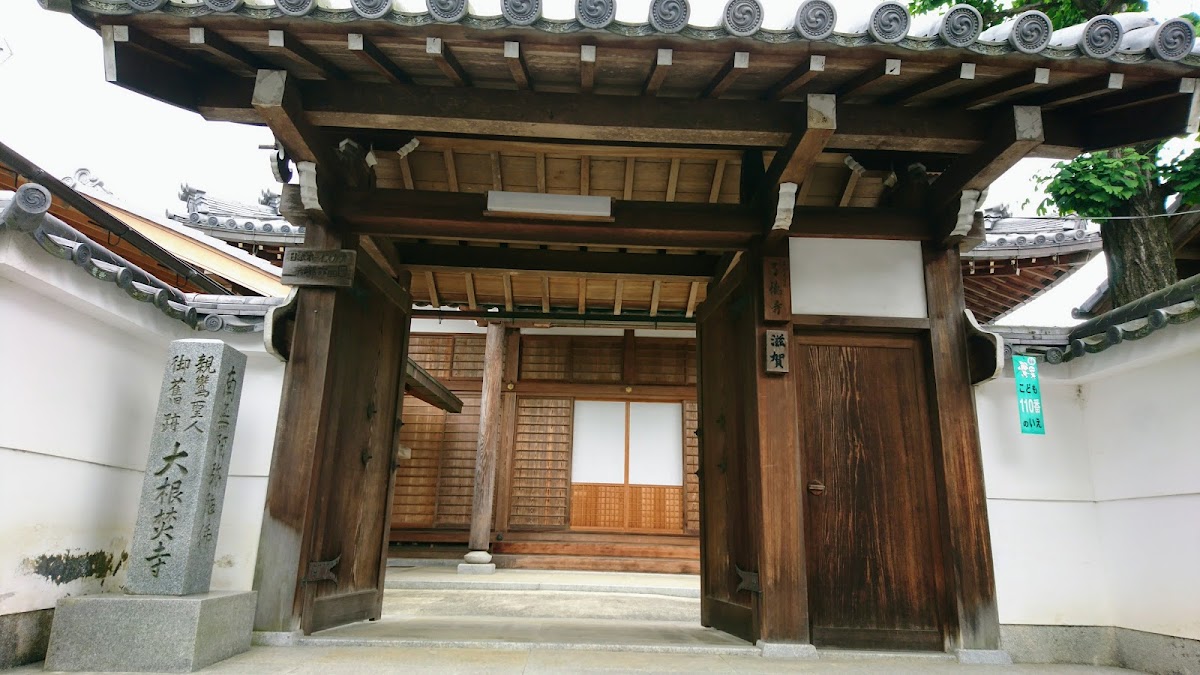
- A Bow at the Temple Gate: Before entering the temple grounds, bow at the temple gate to compose yourself.
- Purify Yourself at the Water Basin: If there is a water basin, purify your hands and mouth.
- Proceed to the Main Hall: Approach the main hall and place your offering in the offering box.
- Pray and Bow: Join your hands in prayer, chant “Namu Amida Butsu,” and pray with sincerity.
- Visit the Mausoleum of Saint Nishitani: If there is a mausoleum, pay your respects there as well.
- Stroll Through the Temple Grounds: Quietly stroll through the temple grounds and soak up the atmosphere of the temple.
- A Bow at the Temple Gate: When leaving, bow at the temple gate before exiting.
Recommended Time to Visit
Here are some particularly recommended times to visit Sennenji Temple.
Spring (Late March to April)
- The temple grounds are beautifully adorned with cherry blossoms.
- Buddhist services such as the Spring Equinox are held.
- The weather is mild, making it ideal for visiting.
Autumn (November)
- The season of beautiful autumn foliage.
- Buddhist services such as the Autumn Equinox are held.
- The best season for sightseeing in Kyoto, and easy to combine with other nearby attractions.
Weekday Mornings
- Fewer tourists, allowing for peaceful worship.
- Visiting in the refreshing morning air is exceptional.
Estimated Time Required
Please use the following as a guideline for the time required to visit Sennenji Temple.
- Worship Only: 20-30 minutes
- A Relaxing Stroll Through the Temple Grounds: 40 minutes to 1 hour
- Combined with Visiting Nearby Temples: 2-3 hours
By allowing ample time, you can more deeply experience the atmosphere of the temple.
Frequently Asked Questions about Sennenji Temple
Is there an admission fee?
Regarding admission fees for Sennenji Temple, we recommend checking directly with the temple. Generally, due to its nature as a main temple site, there may be cases where free entry is permitted, or special viewings may require an admission fee.
Can I get a Goshuin (temple stamp)?
Many temples offer Goshuin, but we recommend checking in advance whether Sennenji Temple offers them. If you wish to receive a Goshuin, please bring your Goshuincho (stamp book) and make a polite request.
Is group worship possible?
If you wish to worship as a group, you must contact the temple in advance, informing them of the date, time, and number of people, and obtaining permission. The phone number is 075-462-8347.
Are there temple lodgings (shukubo)?
Regarding the availability of temple lodgings (shukubo) at Sennenji Temple, please inquire directly with the temple. Generally, smaller temples do not have temple lodgings, but they may be able to accommodate special training or retreats.
Summary: The Charm of Sennenji Temple
Located in Narutaki Honmachi, Ukyo-ku, Kyoto City, Sennenji Temple is the head temple of the Nishitani branch of the Jodo-shu Seizan Zenrinji sect, boasting a long history and deep faith. As the ancestral site of Nishitani Shonin Jōon, it is an important pilgrimage site for followers of the Nishitani branch.
Situated in a quiet environment slightly removed from the center of Kyoto, it is a precious place where one can escape the hustle and bustle of the city and worship in peace. With Amida Buddha as its principal deity, it continues to pass on the Jodo-shu teaching that anyone can attain rebirth in the Pure Land by chanting “Namu Amida Butsu.”
Sennenji Temple is easily accessible by public transport, approximately a 10-15 minute walk from Utano Station on the Keifuku Electric Railway Kitano Line, or approximately a 5 minute walk from the “Narutaki” bus stop on the Kyoto City Bus. Nearby are other temples such as Ryōtokuji Temple, as well as World Heritage sites such as Ninna-ji Temple and Ryōan-ji Temple, making it easy to incorporate into a Kyoto sightseeing route.
When visiting, it is recommended to call in advance (075-462-8347) to confirm visiting hours, admission fees, and parking availability. In the tranquil grounds, you can find peace of mind and have a valuable experience of encountering the teachings of the Jodo sect while chanting the Nembutsu.
As a hidden gem in Kyoto, Sennenji Temple is well worth a visit. Through a visit to this historic temple, why not feel the depth of Japanese Buddhist culture and the teachings of salvation through Nembutsu?