Shinano Omiya Shrine (Ueda City, Nagano Prefecture): A Thorough Explanation of the History and Highlights of the Shinano Province’s Grand Shrine
Shinano Omiya Shrine, located in the city center of Ueda City, Nagano Prefecture, is a historically significant shrine believed to be the grand shrine of Shinano Province. “Shinano” is said to be the origin of the name “Shinano,” and it has been a central center of worship in this region since ancient times. This article provides a detailed explanation of Shinano Omiya Shrine, including its history, enshrined deities, highlights within the grounds, and access information.
What is Shinano Omiya Shrine?: The Importance of the Shinano Province’s Grand Shrine
Shinano Omiya Shrine is located in Tokida 2-chome, Ueda City, Nagano Prefecture, and its former shrine rank was Prefectural Shrine. Its most notable feature is that it is believed to be the Shinano Province’s Grand Shrine.
What is a Grand Shrine?
A Grand Shrine is a special shrine established under the Ritsuryo system (ancient Japanese legal and administrative system). The provincial governor, upon assuming post at the provincial capital, was originally obligated to visit all the shrines within his jurisdiction. However, this was an extremely time-consuming and laborious task. Therefore, the practice of gathering the deities of the major shrines within the province in one place to enshrine them simplified the pilgrimage, marking the beginning of the Sōsha (general shrine).
Sōsha were typically built near the provincial office. Shinano Ōmiya Shrine was initially called “Sōsha Ōmiya” and functioned as an important shrine visited by the provincial governor of Shinano Province.
Meaning of the Place Name “Shinano”
“Shinano” is an older spelling of “Shinano” and is the original name for this region. The name Shinano Ōmiya Shrine indicates that this area was the center of ancient Shinano Province. The area around present-day Ueda City flourished as the political and cultural center of Shinano Province in ancient times, and the provincial capital and provincial temple were located in this vicinity.
History of Shinano Omiya Shrine: From Founding to the Present
Ancient Times: Founding Legend During the Reign of Emperor Sujin
According to shrine tradition, the founding of Shinano Omiya Shrine dates back to the reign of Emperor Sujin, the 10th emperor. The founder is said to be Takeihotake-no-Mikoto, the grandson of Kamuyai-mimi-no-Mikoto. Takeihotake-no-Mikoto, as the governor of Shinano Province, is said to have established the main shrine in this area.
If this founding date is historically accurate, Shinano Omiya Shrine would have a history of over 2000 years. However, since the system of main shrines itself was established along with the Ritsuryo system, it is believed that its actual function as a main shrine was established after the early Heian period.
Heian Period: Establishment as the Main Shrine of Shinano Province
In the early Heian period, as the Ritsuryo system was being established, Shinano Omiya Shrine clearly defined its role as the main shrine of Shinano Province. During this period, the Shinano Provincial Government and the provincial temple were located on the Kamishina Plateau, and Shinano Omiya Shrine was situated nearby. It played an important role as a place where provincial governors regularly visited to pray for peace and security throughout the country.
Medieval Period: Connection with the Kanto Kanrei
In the medieval period, Shinano Omiya Shrine began to attract reverence from the samurai class as well. Of particular note is the record from 1362 (Kōan 2), when Kanto Kanrei Ashikaga Motouji prayed for the safety of the nation upon the appearance of a comet and dedicated a written prayer. This prayer still exists today and is a valuable historical document demonstrating the importance of Shinano Omiya Shrine at that time.
Sengoku to Edo Period: Deep Connection with the Sanada Clan
From the Sengoku period to the Edo period, Shinano Omiya Shrine developed a deep connection with the Sanada clan, who built Ueda Castle. When Sanada Masayuki built Ueda Castle, he designated Shinano Omiya Shrine as the guardian shrine of Ueda Castle and held it in high esteem. This relationship continued even after Sanada Nobuyuki became the lord of Ueda Domain. Even when the lords of Ueda Domain changed to the Sengoku and Matsudaira clans, successive lords continued to worship Shinano Omiya Shrine as the guardian deity of Ueda Castle. Successive lords such as Sengoku Tadamasa and Matsudaira Tadachika also showed unwavering reverence for Shinano Omiya Shrine.
Modern Era: Designation as a Prefectural Shrine and the Present
Under the Meiji-era shrine ranking system, Shinano Omiya Shrine was designated a Prefectural Shrine. This was a recognition of its historical importance and the deep faith it enjoys in the region.
The current shrine building was rebuilt in 1860. Even during the turbulent period of the late Edo period, the fact that such a magnificent shrine was rebuilt thanks to the faith of the local people speaks volumes about how much Shinano Omiya Shrine has been cherished.
Deities Enshrined: Ōnamuchi-no-Mikoto and Kotoshironushi-no-Mikoto
The main deities enshrined at Shinano Ōmiya Shrine are Ōnamuchi-no-Mikoto and Kotoshironushi-no-Mikoto.
Ōnamuchi-no-Mikoto (Ōkuninushi-no-Mikoto)
Ōnamuchi-no-Mikoto is a deity known as another name for Ōkuninushi-no-Mikoto. He is also famous as the main deity of Izumo Taisha Shrine and is believed to possess a wide range of divine virtues, including being the god of nation-building, agriculture, commerce, and medicine. He possesses the characteristics of a god who governs the land, befitting a shrine dedicated to a grand nation.
Kotoshironushi-no-Mikoto
Kotoshironushi-no-Mikoto is the son of Ōkuninushi-no-Mikoto and played an important role in the myth of the transfer of the land. He is worshipped as the god of oracles and commerce, and is also known as Ebisu. Enshrined together with his father, he plays a role in protecting the peace and prosperity of the land.
Highlights of the Shrine Grounds
Shrine Architecture
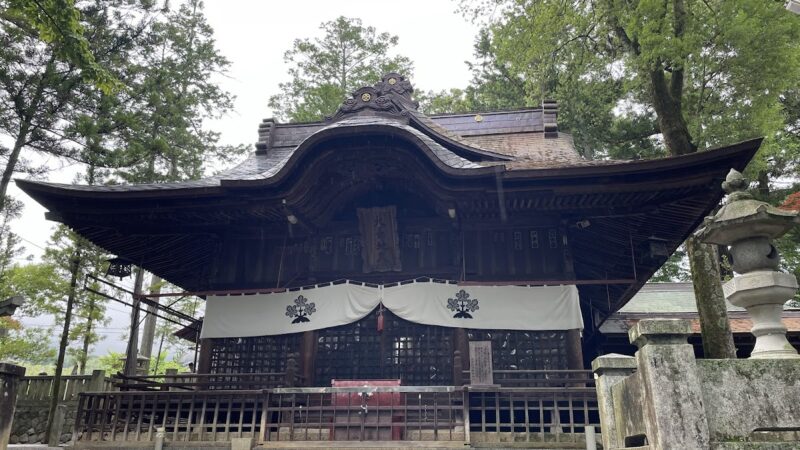
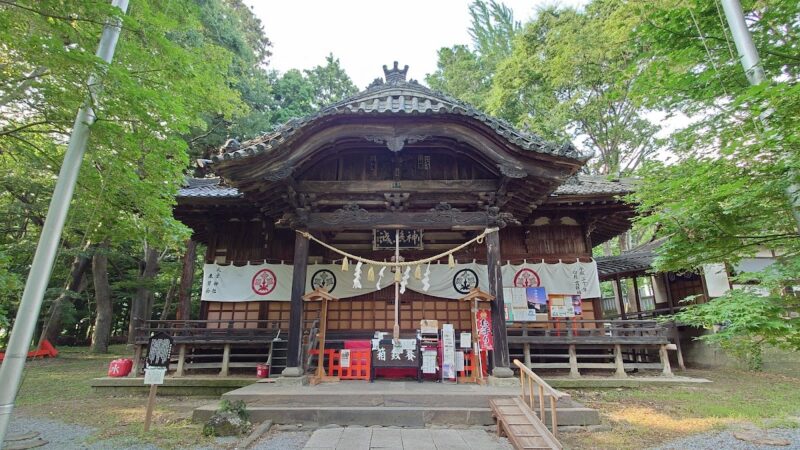
The current shrine buildings were rebuilt in 1860 (Man’en 1). It is a valuable structure that preserves the characteristics of late Edo period shrine architecture, with both the main hall and the worship hall exhibiting a dignified style. Built under the patronage of the Ueda Domain, it shows meticulous craftsmanship down to the smallest detail.
Shinano Omiya Shrine Grove: City-Designated Natural Monument
Numerous giant trees stand within the shrine grounds, and the Shinano Omiya Shrine Grove is designated as a natural monument of Ueda City. A shrine grove is a forest surrounding a shrine, and this natural environment, nurtured over many years, is a valuable green space in the increasingly urbanized city of Ueda.
Walking through the grounds, you can feel the sacred atmosphere created by the ancient trees, some of which appear to be hundreds of years old. These giant trees are also evidence that Shinano Omiya Shrine has been enshrined in this place since ancient times and has been protected by the local people.
Shrines within the Precincts: Rokushō Myōjin and Komagata Inari Shrine
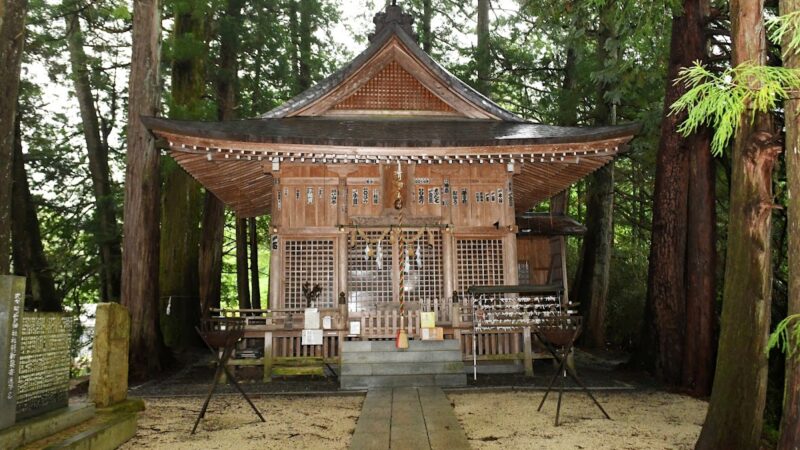
Several shrines are enshrined within the grounds of Shinano Ōmiya Shrine. Of particular note are Rokushō Myōjin and Komagata Inari Shrine.
Rokushō Myōjin is a shrine dedicated to six deities, a fitting shrine for Shinano Ōmiya Shrine, which has the character of a general shrine. It may enshrine the major deities of Shinano Province.
Komagata Inari Shrine is a shrine of Inari worship, revered by worshippers praying for abundant harvests and business prosperity. It boasts a magnificent shrine building, and many people visit it along with the main shrine.
Stone Monuments and Historical Sites
Throughout the shrine grounds are stone monuments and historical sites that tell the story of Shinano Ōmiya Shrine’s long history. There are monuments related to a prayer offered by Ashikaga Motouji, the Kanto Kanrei (governor of the Kanto region), and stone monuments showing the reverence of successive feudal lords, making it a must-see for history-loving visitors.
The Relationship Between Shinano Omiya Shrine and Ueda Castle
When discussing Shinano Omiya Shrine, its relationship with Ueda Castle is essential. When Sanada Masayuki built Ueda Castle in 1583, Shinano Omiya Shrine was designated as the castle’s guardian shrine.
Ueda Castle is famous for the “Battle of Ueda,” in which the Sanada clan repelled the large Tokugawa army twice. It is believed that the Sanada clan prayed for victory at Shinano Omiya Shrine and also reported their victories there. Ueda Castle and Shinano Omiya Shrine are located approximately 1 km apart in a straight line, an ideal location for the shrine to function as the castle’s guardian deity.
Currently, the Ueda Castle ruins have been developed into Ueda Castle Ruins Park, a popular tourist spot visited by many. When visiting Ueda Castle, be sure to also visit Shinano Omiya Shrine and experience the atmosphere of the shrine revered by the Sanada clan.
Nearby Historical Spots
Around Shinano Omiya Shrine, there are numerous historical sites related to the Shinano Provincial Government and spots where you can experience the history of Ueda City.
Shinano Kokubunji Temple Ruins
Approximately 2 km northeast of Shinano Omiya Shrine lies the Shinano Kokubunji Temple Ruins. It was one of the Kokubunji temples established throughout Japan by order of Emperor Shomu during the Nara period, and the temple still exists today as Shinano Kokubunji. The three-story pagoda is designated as an Important Cultural Property, allowing you to experience the history of this region, which was the center of ancient Shinano Province.
Ueda Castle Ruins Park
As mentioned above, the Ueda Castle Ruins are a historical site deeply connected to Shinano Omiya Shrine. It is a popular cherry blossom viewing spot in spring and attracts many tourists throughout the year due to its connection to the Sanada clan. Sanada Shrine is also located within the castle grounds, and visiting it along with Shinano Omiya Shrine is highly recommended.
Bessho Onsen
In the southern part of Ueda City lies Bessho Onsen, said to be the oldest hot spring in Shinshu (Nagano Prefecture). It boasts numerous historical sights, including Kitamuki Kannon-do Hall and the octagonal three-story pagoda (National Treasure) of Anraku-ji Temple. A popular sightseeing plan involves visiting Shinano Omiya Shrine and then relaxing in Bessho Onsen.
Access Information
Access by Train
- Approximately 15 minutes on foot from JR Hokuriku Shinkansen/Shinano Railway Ueda Station
- Approximately 15 minutes on foot from Ueda Electric Railway Bessho Line Ueda Station
The route from Ueda Station to Shinano Omiya Shrine is almost a straight line. Exit the station and head east towards National Route 141. Along the way, you can enjoy the charming streetscape of Ueda city.
Access by Car
- Approximately 10 minutes by car from Ueda Sugadaira IC
- Near the “Shinano Omiya-sha-mae” intersection on National Route 141
- Parking available for 5 regular cars on the shrine grounds
Shinano Omiya-sha Shrine is located along a road just off National Route 141. Because of the intersection name “Shinano Omiya-sha-mae,” it should be easy to find using car navigation or smartphone map apps.
Location and Contact Information
- Address: 2-22 Tokida, Ueda City, Nagano Prefecture (or sometimes listed as 2-21-31)
- Phone Number: 0268-27-5018
- Parking: 5 regular cars (free)
While visits are generally free, it is recommended to call in advance if you wish to obtain a Goshuin (shrine stamp) or receive detailed information.
Goshuin Information
Goshuin (shrine stamps) are available at Shinano Omiya-sha Shrine. Due to its historical importance as the main shrine of Shinano Province, it is popular among visitors who enjoy collecting Goshuin (shrine stamps).
To receive a Goshuin, you need to visit during the hours the shrine office is open. Since the hours may vary depending on the season and day of the week, it is recommended to call ahead to confirm if you want to be sure to receive a Goshuin.
Points and Manners for Visiting
Etiquette for Visiting
When visiting Shinano Omiya Shrine, follow the general etiquette for visiting a shrine.
- Bow before passing through the torii gate
- Cleanse your hands and mouth at the temizuya (water basin)
- Bow twice, clap twice, and bow once in front of the main hall
- Visit the subsidiary shrines within the grounds
- Bow once again at the torii gate when leaving
Recommended Time to Visit
Shinano Omiya Shrine can be visited throughout the year, but there is a particularly recommended time.
Spring: The trees in the shrine grounds bud, and the fresh greenery is beautiful. It’s a good idea to visit in conjunction with the cherry blossoms at Ueda Castle.
Autumn: The autumn leaves in the shrine’s grove are beautiful, and the grounds are ablaze with color. Visiting in the crisp air is a special experience.
Festival Period: The annual festival of Shinano Omiya Shrine is an important local event. It is recommended to check the festival dates in advance.
Cultural Value of Shinano Omiya Shrine
Shinano Omiya Shrine is not only a place of worship, but also holds significant cultural value.
Historical Value
Its designation as the main shrine of Shinano Province is important evidence that the center of Shinano Province under the ancient Ritsuryo system was around Ueda. Examples of shrines with surviving remains and traditions are limited nationwide, making Shinano Omiya Shrine a valuable resource for ancient history research.
Value as a Natural Environment
The Shinano Omiya Shrine grove is a valuable natural environment in an urban area, as it is designated as a natural monument of Ueda City. The shrine’s forest, formed over many years, serves as a habitat for diverse organisms and is an ecologically important space.
Architectural Historical Value
The shrine building, rebuilt in 1860 (Man’en 1), still preserves the characteristics of late Edo period shrine architecture. The fact that a shrine of this scale was rebuilt during the turbulent Bakumatsu period speaks to the deep faith of the local people.
Shinano Omiya Shrine and the Shinano Provincial Capital
Understanding the Shinano Omiya Shrine is crucial to understanding its relationship with the Shinano Provincial Capital. Under the ancient Ritsuryo system, each province had a provincial capital where the provincial governor conducted government affairs. The Shinano Provincial Capital is thought to have been located in the vicinity of present-day Ueda City, and the Shinano Omiya Shrine, the main shrine of the province, was founded nearby.
While there are various theories regarding the exact location of the provincial capital, the most widely accepted theory is that it was located on the Kamishina Plateau in Ueda City. The remains of what appears to be an ancient government office have been discovered in this area, and considering this in conjunction with the location of Shinano Omiya Shrine, it supports the idea that this was the political center of Shinano Province.
Upon taking up his post, the provincial governor would first visit the Sōsha shrine to pay his respects to the gods of the province and pray for peace and prosperity during his term. It was also customary for him to visit the Sōsha shrine again upon returning to the capital after completing his term to offer his gratitude. Shinano Omiya Shrine holds historical significance as the site where these ancient rituals took place.
Summary: The Charm of Shinano Omiya Shrine
Shinano Omiya Shrine is an ancient shrine located in Ueda City, Nagano Prefecture, and is believed to be the Sōsha shrine of Shinano Province. It is said to have been founded by Take-Iotake-no-Mikoto during the reign of Emperor Sujin, and may have a history of over 2000 years.
During the Heian period, it functioned as the Sōsha shrine of Shinano Province, an important shrine visited by the provincial governor. In the Middle Ages, Ashikaga Motouji, the Kanto Kanrei (governor of the Kanto region), dedicated a prayer to the shrine. From the Sengoku period to the Edo period, successive lords of the Ueda domain, including the Sanada clan, deeply revered it as the guardian shrine of Ueda Castle.
The shrine grounds feature a sacred grove designated as a city natural monument, a main shrine rebuilt in 1860 (Man’en 1), and subsidiary shrines such as Rokushō Myōjin and Komagata Inari Shrine. Its convenient access—a 15-minute walk from Ueda Station and a 10-minute drive from the Ueda-Sugadaira Interchange—is also a major draw.
Visiting the shrine in conjunction with nearby tourist attractions such as the Ueda Castle ruins, the Shinano Kokubunji Temple ruins, and Bessho Onsen will allow you to gain a deeper understanding of the history and culture of Shinano Province. Why not take some time to tranquilize your mind and pray in the peaceful grounds while feeling the history of Ueda, which flourished as the center of Shinano Province?