Complete Guide to Shinjo Hachiman Shrine (Saga Prefecture) | History, Deities, and Highlights Explained in Detail
Shinjo Hachiman Shrine, located in Morita, Nabeshima-cho, Saga City, is a venerable shrine with a history of over a thousand years. It enshrines five deities and has long been revered as the guardian shrine of the region. This article provides a detailed explanation of Shinjo Hachiman Shrine’s history, enshrined deities, highlights, and access methods.
Basic Information on Shinjo Hachiman Shrine
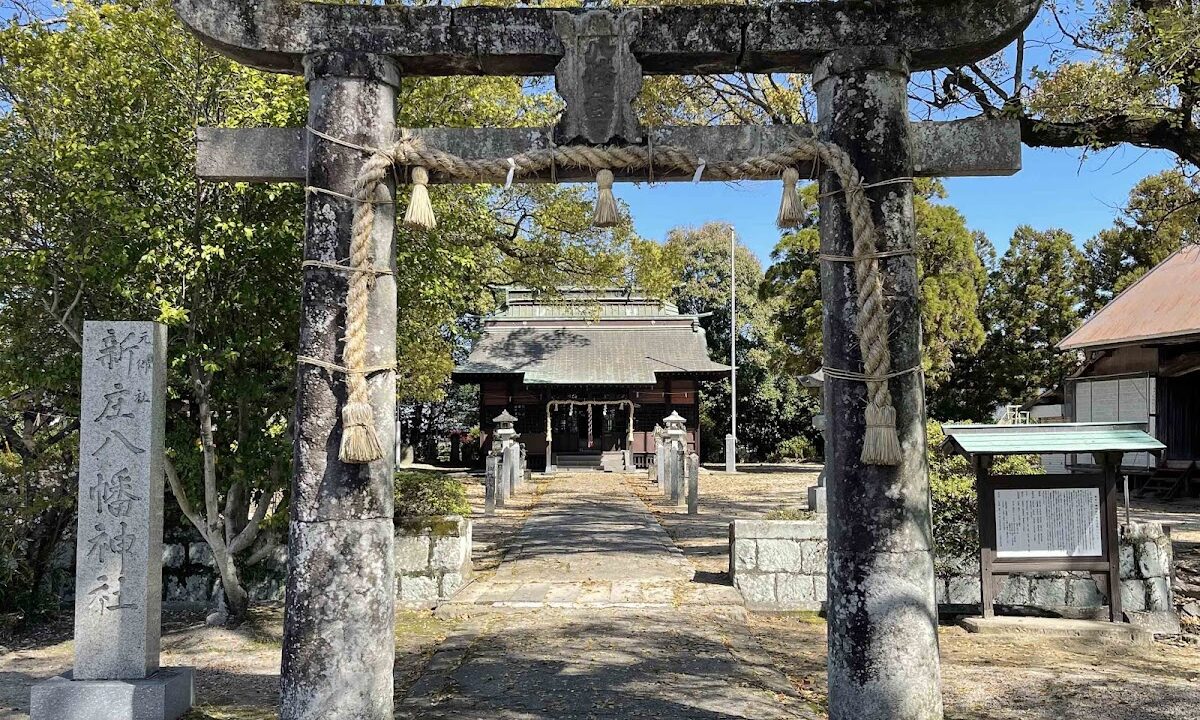
Shinjo Hachiman Shrine is located at 2028 Morita, Nabeshima-cho, Saga City, Saga Prefecture, and is revered as the local tutelary deity. Within the shrine grounds stands a magnificent camphor tree over 800 years old, its majestic presence captivating visitors.
Location: 2028 Morita, Nabeshima-cho, Saga City, Saga Prefecture
Main Deities: Emperor Ōjin, Emperor Chūai, Empress Jingū, Hime Ōkami, Kasuga Daimyōjin
Alternate Name: Gosha Hachiman-gū
History and Origins of Shinjō Hachiman Shrine
Founding and Invitation of Divided Spirits from Usa Hachiman-gū
Shinjō Hachiman Shrine has ancient origins, and from the beginning, it enshrined five deities: Emperor Ōjin, Emperor Chūai, Empress Jingū, Hime Ōkami, and Kasuga Daimyōjin. In the first year of the Yōwa era (1181) during the reign of Emperor Antoku, a divided spirit was invited from Usa Hachiman-gū, the head shrine of Kyushu, and it came to be called “Gosha Hachiman-gū.”
The invitation of a divided spirit from Usa Hachiman-gū demonstrates the deep belief of the local people in Hachiman worship and is an important historical fact that illustrates the spread of Hachiman worship in the late Heian period.
The Relationship Between Nabeshima Naoshige and Shinjo Hachiman Shrine
An essential part of understanding the history of Shinjo Hachiman Shrine is its deep connection with Nabeshima Naoshige, a Sengoku period daimyo of Hizen Province and the founder of the Saga Domain. Naoshige deeply revered the shrine and is said to have frequently visited it to pray for victory in battle and for peace in his territory.
Nabeshima Naoshige is also known for donating a battle bell to the shrine. This bell, which had been used on the battlefield, was donated by Naoshige as a token of gratitude for his prayers for victory being answered. This donation of the battle bell is a valuable historical artifact demonstrating the strong bond between the Nabeshima family and Shinjo Hachiman Shrine.
Reconstruction and Development of the Shrine
Throughout its long history, Shinjo Hachiman Shrine has faced numerous difficulties. However, each time, the shrine buildings were reconstructed with the support of local people and feudal lords, leading to its present state. Especially during the Edo period, under the patronage of the Nabeshima clan, the shrine buildings were repaired and the grounds were improved, developing into a center of local faith.
The local people prayed for protection from unforeseen disasters, and their faith deepened as their wishes were miraculously granted. This faith has been the driving force that has supported the shrine.
About the Deities
Shinjo Hachiman Shrine enshrines five deities, each possessing different divine virtues.
Emperor Ōjin
The 15th Emperor, he is the principal deity enshrined at Hachiman shrines throughout Japan. He is worshipped as the god of military success, national protection, and industrial development.
Emperor Chūai
The 14th Emperor, and the father of Emperor Ōjin. Known as a brave and courageous emperor, he is revered as the god of martial prowess.
Empress Jingū
The empress of Emperor Chūai and mother of Emperor Ōjin. Known for the legend of her conquest of the Three Kingdoms of Korea, she is widely worshipped as a goddess of safe childbirth, child-rearing, and victory.
Hime Ōkami
A goddess enshrined alongside Emperor Ōjin at Usa Hachiman Shrine. While there are many theories, the most likely is that she is one of the Munakata Three Goddesses. She is believed to bestow divine protection for maritime safety and traffic safety.
Kasuga Daimyōjin
The deities of Kasuga Taisha Shrine in Nara, a collective term for Takemikazuchi-no-Mikoto, Futsunushi-no-Mikoto, Amenokoyane-no-Mikoto, and Himegami. They are worshipped as gods of national peace, long-lasting military fortune, and good fortune.
Highlights of Shinjo Hachiman Shrine
The Camphor Tree Over 800 Years Old
The greatest highlight of Shinjo Hachiman Shrine is the giant camphor tree over 800 years old that stands tall within the shrine grounds. This camphor tree is designated as a protected tree by Saga City and continues to grow to this day.
Its trunk circumference is several meters, and its majestic appearance tells the story of the shrine’s long history. The tree’s vitality empowers visitors, and it is known as a power spot. The camphor tree, which shows different expressions in each of the four seasons, deeply moves visitors.
Shrine Buildings and Architecture
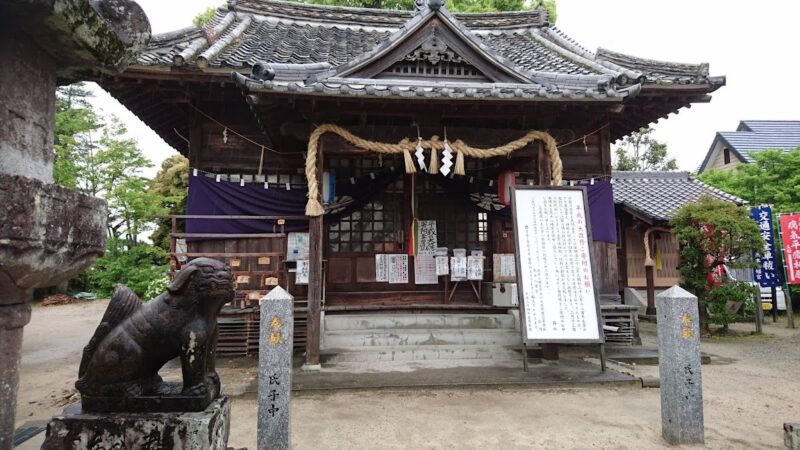
The shrine buildings of Shinjo Hachiman Shrine maintain the style of traditional shrine architecture while also reflecting local characteristics. The worship hall has a solemn atmosphere that welcomes worshippers, and the main hall quietly enshrines the five deities.
There is also a Kagura hall within the grounds, where traditional Kagura dances are performed during festivals. Furthermore, historical stone structures such as guardian lion-dogs and stone lanterns are placed throughout the grounds, creating a historical atmosphere throughout the entire area.
Shrines Merged with Subsidiary Shrines
In 1968 (Showa 43), Onsen Shrine, Arahō Shrine, Iso Shrine, and Hatoba Shrine were merged into Shinjō Hachiman Shrine. These shrines each represented specific local beliefs, but with the changing times, they were integrated into Shinjō Hachiman Shrine, and these beliefs continue to be passed down today.
The grounds also house several subsidiary shrines, including Itsukushima Shrine and Shinjō Inari Daimyōjin, making it a place of diverse faith. It is believed that visiting these subsidiary shrines as well will bring deeper blessings.
Battle Bell Donated by Nabeshima Naoshige
As mentioned above, the battle bell donated by Nabeshima Naoshige is an important treasure of Shinjō Hachiman Shrine. This bell is a testament to Naoshige’s prayers for victory and his gratitude, and is carefully preserved as a valuable cultural asset that conveys the history of Saga.
While Naoshige sometimes offered prayers through a representative, it is also said that he personally visited the shrine before important battles, demonstrating the depth of his faith in this shrine.
Annual Events and Festivals of Shinjo Hachiman Shrine
Shinjo Hachiman Shrine holds various festivals and events throughout the year. The spring grand festival brings together local people for a procession of the portable shrine and the dedication of sacred dances. The autumn harvest festival features a solemn Shinto ritual expressing gratitude for the year’s bounty.
These festivals strengthen community bonds and serve as important opportunities for passing on traditional culture to future generations. On festival days, the shrine grounds are bustling with many worshippers, creating a vibrant atmosphere.
Divine Blessings and Faith
Shinjo Hachiman Shrine, which enshrines five deities, is believed to offer a variety of blessings.
- Long-lasting military fortune and victory: Divine virtues of Emperor Ōjin and Emperor Chūai
- Safe childbirth and child-rearing: Divine virtues of Empress Jingū
- National peace and protection from evil: Divine virtues of Kasuga Daimyōjin
- Maritime safety and traffic safety: Divine virtues of Hime Ōkami
- Business prosperity: Divine virtues of the enshrined Inari deity
Local people visit this shrine to pray at turning points in their lives or when facing difficulties. Stories of being protected from unexpected disasters and of wishes miraculously coming true are still passed down, demonstrating the deep faith of the community.
Access and Visiting Information
Location and Map
Address: 2028 Morita, Nabeshima-cho, Saga City, Saga Prefecture
Shinjō Hachiman Shrine is located in the Morita district of Nabeshima-cho, southwest of the center of Saga City. The surrounding area is a quiet mix of residential areas and farmland, with the shrine’s forest serving as a landmark.
Access
Access by Car:
- Approximately 15 minutes from Saga Station
- Approximately 20 minutes from the Nagasaki Expressway “Saga Yamato IC”
- Parking available (parking is possible on the shrine grounds or nearby)
Access by Public Transportation:
- Approximately 20 minutes by bus from JR Saga Station, approximately 5 minutes on foot from the nearest bus stop
- Approximately 15 minutes by taxi from Saga Station
Visiting Hours and Precautions
Shinjo Hachiman Shrine is generally open for worship all day, but the shrine office’s reception hours may be limited. Those wishing to obtain a Goshuin (shrine stamp) or amulet are advised to check in advance.
When visiting, please maintain the tranquility of the shrine grounds and respect the natural environment, including the 800-year-old camphor tree. Photography is permitted, but please be considerate of other visitors.
Nearby Tourist Attractions
When visiting Shinjo Hachiman Shrine, we recommend also visiting the nearby tourist attractions.
- Saga Castle Ruins: The site of the former castle of the Nabeshima family of the Saga Domain, with a reconstructed main keep.
- Saga Prefectural Museum & Art Museum: A facility where you can learn about the history and culture of Saga.
- Chokokan Museum: Exhibits art and crafts passed down through the Nabeshima family.
- Okuma Shigenobu Memorial Museum: Introduces the life of Okuma Shigenobu, a great figure born in Saga.
By combining these spots, you can gain a deeper understanding of Saga’s history and culture.
Cultural Value of Shinjo Hachiman Shrine
Shinjo Hachiman Shrine holds an important position as a historical and cultural heritage site of Saga Prefecture. It has a clear record of being established in 1181 (Yowa 1) with a divided spirit from Usa Hachiman Shrine, making it a valuable example of the development of Hachiman worship from the late Heian period to the Kamakura period.
The shrine’s connection to Nabeshima Naoshige and the dedication of a battle bell provide concrete evidence of the relationship between samurai families and shrines from the Sengoku period to the Edo period. Furthermore, the camphor tree, over 800 years old, is important from the perspective of preserving the natural environment.
Due to these historical and cultural values, Shinjo Hachiman Shrine is registered in the “Saga History and Culture Treasures” and recognized as a valuable cultural heritage of the region.
The Local Community and Shinjo Hachiman Shrine
Shinjo Hachiman Shrine is not merely a historical building; it continues to function as the center of the local community. The people of this area have revered the shrine as their guardian deity since ancient times.
The local parishioners’ organization is responsible for the maintenance and management of the shrine, including organizing festivals and cleaning the grounds. It is also a place of worship for milestones in life, such as children’s Shichi-Go-San (a traditional rite of passage for children) and New Year’s visits, and is cherished across generations.
In recent years, it has also attracted attention as a place to learn about local history, and the number of people visiting as part of school education and lifelong learning is increasing. The 800-year-old camphor tree is used as teaching material for environmental education and is cherished as a local treasure from both a natural and historical perspective.
Summary
Shinjo Hachiman Shrine is an important shrine in Saga Prefecture with a history of over a thousand years. It enshrines five deities: Emperor Ojin, Emperor Chuai, Empress Jingu, Hime-no-Okami, and Kasuga Daimyojin. It is also known as Gosha Hachiman-gu because a divided spirit was invited from Usa Hachiman-gu in 1181.
Deeply connected to the history of Saga, with Nabeshima Naoshige donating a battle bell, the 800-year-old camphor tree on the shrine grounds boasts an awe-inspiring presence. In 1968, Onsen Shrine, Arahō Shrine, Iso Shrine, and Hatoba Shrine were merged, making it a place of even more diverse worship.
Revered as the guardian shrine by the local people, Shinjo Hachiman Shrine is one of Saga Prefecture’s representative shrines, possessing both historical value and a role as a center of the modern community. This is a place I highly recommend visiting when you come to Saga.