Complete Guide to Shiratori Shrine | Sacred Site and Visiting Information Related to Yamato Takeru
What is Shiratori Shrine?
Shiratori Shrine is a shrine dedicated to Yamato Takeru no Mikoto as its main deity. Based on the legends in the Kojiki and Nihon Shoki, which state that after Yamato Takeru’s death, his soul transformed into a white swan and flew off to various places, Shiratori Shrines are located throughout Japan.
Yamato Takeru was born as the son of Emperor Keiko, the 12th emperor, and is a legendary hero who led expeditions to the west and east to unify Japan for the Yamato court, achieving numerous victories. However, on his return from his eastern expedition, he fell ill in Nobono, Ise Province, and died at the young age of 30. Afterward, it is said that a white swan flew from his tomb, passed through Yamato Province and Kawachi Province, and finally landed in Sanuki Province and other places.
Yamato Takeru was born as the son of Emperor Keiko, the 12th emperor, and is a legendary hero who achieved numerous victories on expeditions to the west and east for the unification of Japan by the Yamato court. However, on his return from his eastern expedition, he fell ill in Nobono, Ise Province, and died at the young age of 30. Afterward, a white swan flew off from his tomb, and it is said that he flew through Yamato Province and Kawachi Province before finally landing in Sanuki Province and other places. Based on this mythical story, Shiratori Shrine has long been widely revered for its blessings related to martial arts improvement, good fortune, protection from evil, victory, and traffic safety.
Major Shiratori Shrines Nationwide
Shiratori Shrine in Higashikagawa City, Kagawa Prefecture
Shiratori Shrine, located in Matsubara, Higashikagawa City, Kagawa Prefecture, is known as the center of Shiratori worship in Sanuki Province. It is said to have originated from the construction of a sacred tomb at the place where the spirit of Yamato Takeru descended in the form of a white swan, and it is affectionately known as “Shiratori-san” by locals.
The shrine grounds contain approximately ten camphor trees, and their fragrance has been selected as one of the “100 Scentscapes” by the Ministry of the Environment. The Crane Gate, main hall, and worship hall retain a strong Edo period appearance, making it a shrine of high historical value.
This shrine is particularly famous as a place for good fortune and protection against evil, attracting many worshippers not only from the local area but also from outside the prefecture. Within walking distance of the shrine grounds are the pine forest with its white sand and green pines, and the Shiratori Furusato Coast, known as a scenic spot overlooking the Harima Sea.
Location: Matsubara, Higashikagawa City, Kagawa Prefecture
Main Benefits: Good fortune and protection against evil, improvement in martial arts, victory, traffic safety
Features: Scent of camphor wood, Edo period shrine buildings, coastal location
Shiratori Shrine in Habikino City, Osaka Prefecture
Shiratori Shrine, located in Habikino City, Osaka Prefecture, holds an important position in the legend of Yamato Takeru and the white swan. It is said that Yamato Takeru first landed in Kawachi Province after transforming into a white swan, and the Shiratori Mausoleum (Shiratori Imperial Mausoleum) was built there.
Kawachi Province was an important base for the Yamato court in ancient times, and Shiratori Shrine is a valuable place that conveys this historical background to the present day. It is revered as the local tutelary deity and a sacred site of Yamato Takeru worship.
Location: Habikino City, Osaka Prefecture
Main Benefits: Long-lasting military fortune, good luck, protection from evil
Features: Connection to Shiratori Mausoleum, historical significance
Shiratori Shrine, Ebino City, Miyazaki Prefecture
Located on the way from Ebino city center to Ebino Plateau, Shiratori Shrine is a mystical shrine nestled in the mountains of the Kirishima mountain range. It is said to have been founded by the monk Shōkū during the reign of Emperor Murakami (946-967).
According to legend, while Shōkū was reciting the Lotus Sutra in the Kirishima mountains, an old man appeared and said, “I am Yamato Takeru. I have long resided in these mountains. You must build a shrine for me,” and then instantly transformed into a white swan and flew away.
Location: Ebino City, Miyazaki Prefecture
Main Benefits: Improvement in martial arts, good fortune and protection from evil, mountain worship
Features: Natural environment of the Kirishima mountain range, connection to the monk Shōkū
Shiratori Shrine, Gotō City, Nagasaki Prefecture
Shiratori Shrine, located along the coast facing Tamanoura Bay, is considered the second oldest shrine in the Gotō Islands, after Gosha Shrine. It is said to have been founded in 698 when Emperor Monmu enshrined Yamato Takeru as a guardian deity. A white swan flew in and declared, “I am an incarnation of a god,” leading to the shrine being called Shiratori-no-miya (White Swan Shrine).
Location: Goto City, Nagasaki Prefecture
Main Benefits: Maritime safety, fishing prosperity, good fortune and protection from evil
Features: Coastal location, ancient history
Shiratori Shrine, Tomi City, Nagano Prefecture
Shiratori Shrine, located in Unno-juku (present-day Hon-Unno, Tomi City, Nagano Prefecture), a post town on the Hokkoku Kaido road in Shinshu, is also known as the tutelary shrine of the Unno clan. The shrine, whose origins lie in the legend of Yamato Takeru, is deeply intertwined with the history of the region.
Unno-juku is an important post town that retains the atmosphere of the Edo period, and Shiratori Shrine forms the core of its cultural landscape.
Location: Honkaiuno, Tomi City, Nagano Prefecture
Main Benefits: Good fortune, protection from evil, traffic safety, protection of the community
Features: Integration with Unno-juku, history of the Hokkoku Kaido road
Shiratori Shrine in Murata-cho, Shibata-gun, Miyagi Prefecture
Shiratori Shrine, located in Murata-cho, Shibata-gun, Miyagi Prefecture, also enshrines Yamato Takeru as its main deity. It is a center of Shiratori worship in the Tohoku region and is cherished by the local people.
Location: 1 Nanakoji, Murata, Murata-cho, Shibata-gun, Miyagi Prefecture
Annual Festival Date: October 15th
Main Benefits: Good fortune, protection from evil, improvement in martial arts
History and Origins of Shiratori Shrine
The Eastern Expedition of Yamato Takeru and the Legend of the White Swan
Yamato Takeru, under orders from his father, Emperor Keiko, first set out to conquer the Kumaso in the west, and then was ordered to conquer the Emishi in the east. During his eastern expedition, he was wounded in a battle against the fierce god of Mount Ibuki, and his illness worsened on his return journey. He passed away in Nobono, Ise Province.
According to the Kojiki and Nihon Shoki, when Yamato Takeru’s body was placed in his mausoleum, a white swan suddenly flew away from the mausoleum and flew towards Yamato Province. It is said that the white swan passed through Yamato Province and Kawachi Province, and finally landed in Sanuki Province, and a shrine was built at its landing site.
This legend of the white swan is considered a symbolic representation of the soul of Yamato Takeru returning to his homeland, and it is one of the most memorable episodes in Japanese mythology.
The Establishment and Development of Shiratori Shrines
Many Shiratori shrines were founded from ancient to medieval times. The Shiratori shrine in Sanuki Province (present-day Kagawa Prefecture) holds special significance as the place where the white swan last landed, and it is recorded as a Shikinaisha (a shrine listed in the Engishiki, an ancient Japanese legal code) of Sanuki Province.
From the medieval period onward, with the rise of the samurai class, the worship of Yamato Takeru as the god of martial arts increased, and Shiratori shrines came to attract the reverence of samurai. During the Edo period, shrine buildings were constructed and repaired by feudal lords and local rulers throughout the country, and many of the shrine buildings seen today were built during this period.
Even after the Meiji Restoration’s separation of Shinto and Buddhism, Shiratori shrines continued to exist as central shrines in their respective regions, and this continues to the present day.
Blessings and Divine Virtues of Shiratori Shrine
Improvement in Martial Arts and Good Fortune
Yamato Takeru is known as a god of martial prowess who won numerous battles. Therefore, Shiratori Shrine is believed to grant blessings for improvement in martial arts and increased luck in competitions, attracting martial artists, athletes, and students preparing for exams.
Good Fortune and Protection from Misfortune
Yamato Takeru’s powerful spiritual energy is believed to ward off misfortune and open up good fortune. Shiratori Shrine in Higashikagawa City, Kagawa Prefecture, in particular, is widely known as a shrine for good fortune and protection from misfortune, attracting many visitors during their unlucky years.
Traffic Safety
As Yamato Takeru is a god of travel who traversed the entire country, he is also believed to grant blessings for traffic safety. Many people visit the shrine today to pray for safe driving.
Family Safety and Business Prosperity
As a local guardian deity, the shrine is also worshipped for blessings such as family safety, business prosperity, and abundant harvests.
Shiratori Shrine Grounds and Highlights
Main Hall and Worship Hall
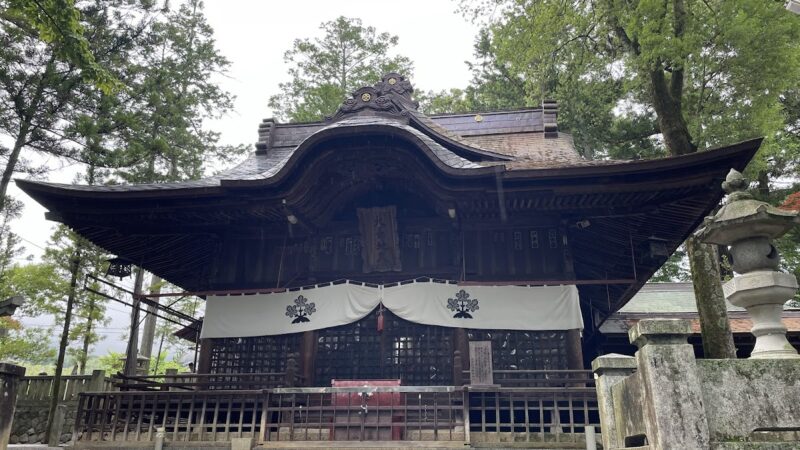
The main hall of Shiratori Shrine is a historical building, largely constructed during the Edo period. At Shiratori Shrine in Higashikagawa City, Kagawa Prefecture, both the main hall and worship hall retain strong Edo-period architectural styles, with magnificent carvings and decorations.
Crane Gate
Shiratori Shrine in Kagawa Prefecture features a distinctive gate called the “Crane Gate.” It is an important structure symbolizing the legend that a white swan descended to Sanuki Province as a crane.
Sacred Camphor Trees
Several camphor trees, estimated to be several hundred years old, stand on the shrine grounds, their fragrance soothing visitors. The unique scent envelops the entire grounds, so much so that it has been selected as one of the Ministry of the Environment’s “100 Scentscapes.”
Shiratori Furusato Coast
Located within walking distance of Shiratori Shrine in Kagawa Prefecture, Shiratori Furusato Coast boasts a beautiful landscape of white sand and pine trees. Overlooking the Harima Sea, the coastline features a promenade, restrooms, and gazebos, making it ideal for a stroll after visiting the shrine.
Information for Visitors
Etiquette for Visiting the Shrine
Visiting Shiratori Shrine follows the general etiquette for visiting a shrine.
- Bow before passing through the torii gate: Before entering the sacred area, bow before the torii gate.
- Purify at the water basin: Purify your left hand, then your right hand, and then your mouth at the water basin.
- Walk along the approach: The center of the approach is considered the path of the gods, so walk along the sides.
- Worship at the main hall: Worship using the two bows, two claps, and one bow ritual.
- Bow deeply twice
- Clap your hands twice
- Pray sincerely
- Bow deeply once
Visiting Hours and Shrine Office
At most Shiratori Shrines, entry to the grounds is generally free, but the shrine office hours are limited. If you wish to obtain a Goshuin (shrine stamp) or amulet, it is recommended to check the shrine office hours in advance.
Generally, shrine office hours are from 9:00 AM to around 5:00 PM, but this varies depending on the shrine.
Annual Events and Festivals
At Shiratori Shrines, various Shinto rituals and festivals are held throughout the year.
- New Year’s Day Festival: January 1st
- Setsubun Festival: Around February 3rd
- Spring Grand Festival: Around April (varies by shrine)
- Summer Purification Ceremony: June 30th
- Autumn Grand Festival: Around October (varies by shrine)
- Year-End Purification Ceremony: December 31st
Especially during the Grand Festivals, portable shrine processions and offering ceremonies are held, making it a community-wide festival.
Access
Access to Shiratori Shrine, Higashikagawa City, Kagawa Prefecture
For those coming by public transport:
- Approximately 15 minutes on foot from JR Kotoku Line “Sanuki-Shiratori Station”
- Approximately 5 minutes by taxi from the station
For those coming by car:
- Approximately 10 minutes from Takamatsu Expressway “Shiratori-Ouchi IC”
- Accessible from National Route 11
Parking Information:
A parking lot for visitors is available on the shrine grounds. Please allow ample time for your visit, as congestion is expected during long holidays and festivals.
Access to other Shiratori Shrines
For access to Shiratori Shrines in various locations, please check the latest information on their respective official websites and tourist information sites. Especially for shrines located in mountainous areas or on remote islands, public transportation may be limited.
Tourist Attractions Around Shiratori Shrine
Around Higashikagawa City, Kagawa Prefecture
- Shiratori Furusato Coast: A scenic spot with beautiful sandy beaches and pine forests
- Sanshu Izutsuya Residence: A museum restoring an Edo-period merchant house
- Hikida Hina Matsuri: A traditional event held in spring
- Glove Museum: A facility where you can learn about the history of Higashikagawa City’s proud glove industry
Around Ebino City, Miyazaki Prefecture
- Ebino Plateau: A plateau resort where you can enjoy the beautiful nature of the Kirishima mountain range
- Kankoku-dake: The highest peak of the Kirishima mountain range
- Shiratori Onsen: An area known as a hot spring resort
Goshuin (Shrine Seals) and Amulets
About Goshuin (Shrine Seals)
At Shiratori Shrine, you can receive a Goshuin as proof of your visit. Goshuin (temple/shrine stamps) are available at the shrine office, and the offering fee is generally around 300 to 500 yen.
You can bring your own goshuincho (stamp book) or purchase one on-site. The Shiratori Shrine’s original goshuincho features designs inspired by swans and Yamato Takeru.
Amulets and Items Offered
Shiratori Shrine offers various types of amulets.
- Good Fortune and Protection Amulet: Blessings of protection from evil and good fortune
- Victory Amulet: Improved luck in competitions and success in exams
- Traffic Safety Amulet: Prayers for traffic safety
- Health Amulet: Health and longevity
- Academic Achievement Amulet: Improved academic performance
Other items such as ema (votive tablets), omikuji (fortune slips), and hama-ya (demon-repelling arrows) are also available.
Information on the Priests and Official Information of Shirotori Shrine
Official Social Media and Latest Information
Shirotori Shrine in Higashikagawa City, Kagawa Prefecture, shares information about the shrine grounds and events through its official Instagram account (@shirotori.higashi). The shrine’s official character, “Mya-maru,” is also popular.
The latest information on visiting the shrine, event schedules, and seasonal scenery of the shrine grounds can be found on the official website and social media.
Inquiries
For inquiries regarding visiting the shrine, prayer reservations, and life ceremonies such as weddings and Shichi-Go-San, please contact the shrine office of each Shirotori Shrine directly. Telephone numbers and reception hours are listed on each shrine’s official website.
Prayers and Life Ceremonies at Shirotori Shrine
About Prayers
Shirotori Shrine accepts prayers from individuals and groups.
Main Types of Prayers
- Prayers for Protection from Misfortune
- Prayers for Protection from Unfavorable Directions
- Prayers for Family Safety
- Prayers for Business Prosperity
- Prayers for Traffic Safety
- Prayers for Recovery from Illness
- Prayers for Success in Exams
- Prayers for Safe Childbirth
If you wish to have a prayer performed, it is recommended that you contact the shrine office in advance to reserve a date and time. The offering fee varies depending on the content of the prayer.
Shichi-Go-San Ceremony
Shichi-Go-San visits are mainly held in November. This is a traditional event to pray for the healthy growth of children aged 3, 5, and 7, and many families visit the shrine dressed in formal attire.
First Shrine Visit (Omiyamairi)
A visit is made with a baby about one month old to pray for their healthy growth.
Wedding Ceremony
Traditional Shinto wedding ceremonies can be held at Shiratori Shrine. In a solemn atmosphere, you can experience an ancient Japanese wedding ceremony.
Summary
Shiratori Shrine is a historical and traditional shrine based on the myth that the soul of Yamato Takeru descended to earth in the form of a white swan. Shiratori Shrines, located throughout Japan, are deeply intertwined with the history and culture of their respective regions, attracting worshippers seeking blessings for martial arts improvement, good fortune, protection from evil, and traffic safety.
In particular, the Shiratori Shrine in Higashikagawa City, Kagawa Prefecture, is the center of white swan worship in Sanuki Province, boasting many attractions such as its Edo-period shrine buildings and the fragrance of camphor trees. The beautiful scenery of the Shiratori Furusato Coast extending from the shrine grounds is also a major draw.
When visiting, why not quietly offer a prayer while reflecting on the great achievements of Yamato Takeru and the legend of the white swan? Each Shiratori Shrine has its own unique history and characteristics, and you’re sure to discover something new with every visit.
For the latest information on visiting shrines, event schedules, and access methods, please check the official websites and social media accounts of each Shiratori Shrine.