Complete Guide to Shokenji Temple (Kamigyo Ward, Kyoto Prefecture) | History, Access, and Highlights of a Shinshu Otani School Temple
Located in Kamigyo Ward, Kyoto City, Shokenji Temple is a historic temple belonging to the Shinshu Otani school. Despite its proximity to the heart of Kyoto, this temple, nestled in a quiet residential area, has long been cherished by the local community. This article provides a detailed explanation of Shokenji Temple, from its basic information and history to access methods and nearby attractions.
Basic Information on Shokenji Temple
Shokenji Temple is a Shinshu Otani school temple located in Teraima-cho, Kamigyo Ward, Kyoto City. As its address, Motoseiganji-dori Omiya Higashi-iri, indicates, it is situated within Kyoto’s traditional town layout.
Location and Contact Information
Address: 517 Teramachi, Omiya-higashi-iru, Motoseiganji-dori, Kamigyo-ku, Kyoto City, Kyoto Prefecture 602-8215
Phone Number: 075-451-3323
While there are multiple ways to write the temple’s official address, it is located near the intersection of Motoseiganji-dori and Omiya-dori, and uses a traditional Kyoto street name.
About the Sect
Shokenji Temple belongs to the Shinshu Otani-ha sect. The Shinshu Otani-ha is one of the major sects of Jodo Shinshu Buddhism, and its head temple is Higashi Honganji (Shinshu Honbyo) in Kyoto. It is known as the sect with the second largest number of followers after the Honganji-ha sect.
Jodo Shinshu Buddhism considers Shinran Shonin as its founder and teaches that salvation is attained through the power of Amida Buddha’s vow by chanting the Nembutsu, “Namu Amida Butsu.” In the Shinshu Otani sect, daily chanting includes the Shōshinge, Nembutsu, Wasan, Sanbutsuge, Jūseige, and Jūnirei.
How to Access Shōkenji Temple
Shōkenji Temple is located in the heart of Kamigyo Ward, Kyoto City, and can be accessed by public transportation.
Access by Train
Nearest Station: Imadegawa Station, Kyoto Municipal Subway Karasuma Line
It is approximately a 12-minute walk from Exit 4 of Imadegawa Station. From the station, head west and access via Ōmiya-dōri. It is also close to the Kyoto Imperial Palace and Doshisha University.
Access by Bus
If using Kyoto City Buses, the nearest bus stops are along Ōmiya-dōri and Horikawa-dōri. It is within walking distance of bus stops such as “Ōmiya Imadegawa” and “Imadegawa Ōmiya.”
Access by Car
As it is located in the heart of Kyoto City, it is accessible by car, but the surrounding area is a residential area, so some roads are narrow. It is recommended to check with the temple in advance regarding parking availability.
History and Origins of Shokenji Temple
Background of Founding
While detailed records regarding the founding of Shokenji Temple are limited, it is a temple of the Shinshu Otani sect, deeply rooted in Kyoto and boasting a long history. Records confirm its existence as early as the Edo period, and it has functioned as a center of local faith.
Changes in the Temple
Many temples in Kyoto have experienced relocation and reconstruction amidst the Onin War, urban redevelopment during the Edo period, the Meiji Restoration, and the wave of modernization. Shokenji Temple, too, has walked hand in hand with Kyoto’s history, adapting to the changing times to reach its present state.
Kamigyo Ward is located north of the Kyoto Imperial Palace and has long been an area with many court nobles and temples. Shokenji Temple, as part of this historic area, has maintained its religious traditions while maintaining deep ties with the local community.
Highlights and Features of Shokenji Temple
Main Hall and Temple Grounds
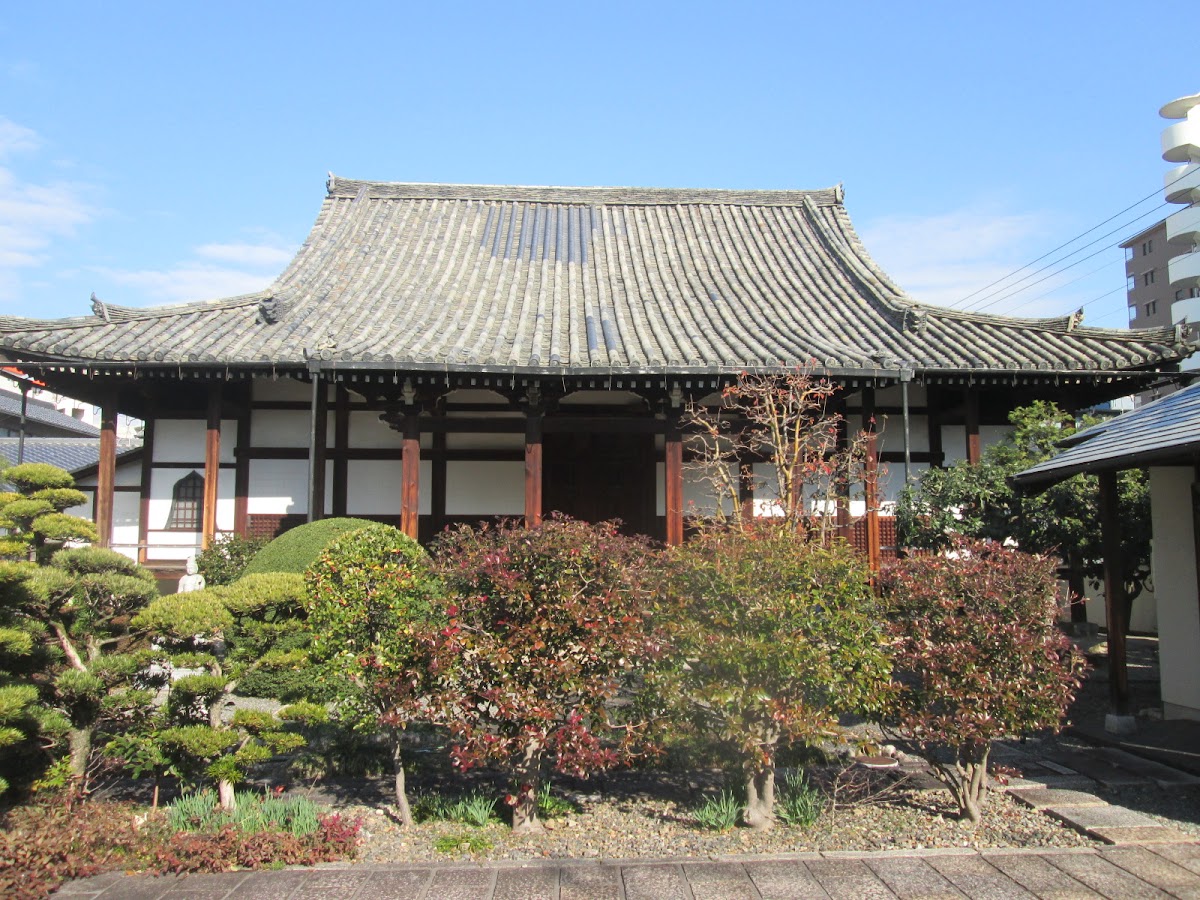
Shokenji Temple’s main hall is built in the traditional style of the Shinshu Otani sect and enshrines Amida Buddha as its principal image. Typical of Jodo Shinshu temples, it features a simple and austere atmosphere that emphasizes the teachings of Nembutsu rather than extravagant decoration.
The temple grounds, while compact for a temple located in the city of Kyoto, are a well-maintained space.
Etiquette for Worship
Jodo Shinshu temples have different worship etiquette than other Buddhist sects.
- Gassho (prayer with hands clasped): Bring your hands together and bow.
- Nembutsu (Buddhist chant): Chant “Namu Amida Butsu.”
- No clapping: Unlike Shinto shrines, clapping is not practiced.
- Incense: In Jodo Shinshu Buddhism, it is common to break the incense stick and lay it horizontally as an offering.
About Goshuin (temple stamps):
Some temples do not offer Goshuin. We recommend contacting Shokenji Temple directly regarding the availability of Goshuin.
Nearby Attractions and Tourist Spots:
Shokenji Temple is surrounded by numerous famous tourist spots and historical buildings representing Kyoto.
Kyoto Imperial Palace and Kyoto Gyoen National Garden:
Located about a 15-minute walk east of Shokenji Temple, the Kyoto Imperial Palace was the residence of the Emperor until the Meiji Restoration. It is now open to the public and, along with the vast Kyoto Gyoen National Garden, serves as a place of relaxation for citizens.
Nishijin Area
The area around Shokenji Temple is close to the Nishijin district, known as the production center of Nishijin weaving, a traditional Kyoto industry. You can experience demonstrations and workshops of traditional crafts at places like the Nishijin Textile Center.
Kitano Tenmangu Shrine
Further west lies Kitano Tenmangu Shrine, known as the shrine of the god of learning. It’s also famous for its plum blossoms, and the Tenjin Market held on the 25th of each month attracts many worshippers and tourists.
Seimei Shrine
Seimei Shrine, dedicated to the Onmyoji (exorcist) Abe no Seimei, is within walking distance and has recently become popular as a power spot.
Temple Culture of Kamigyo Ward
Characteristics of Kamigyo Ward
Kamigyo Ward in Kyoto City is a historical area centered around the Kyoto Imperial Palace, with many temples and shrines scattered throughout. There are also many former residences of court nobles and samurai, making it an area that strongly preserves Kyoto’s history.
Shinshu Otani School Temple Network
Kyoto has numerous temples belonging to the Shinshu Otani School, and Shokenji Temple is one of them, supporting the local faith. The Shinshu Otani School, with Higashi Honganji Temple as its head temple, is a large sect with approximately 8,900 temples nationwide.
Services and Events at Shokenji Temple
Regular Services
Shinshu Otani School temples hold monthly services and annual events. Shokenji Temple also holds services primarily for its parishioners.
Main Annual Events
- Shushōe (New Year’s Ceremony): New Year’s memorial service
- Spring Equinox Ceremony & Autumn Equinox Ceremony: Memorial services held around the spring and autumn equinoxes
- Urabon-e (Buddhist Festival): Memorial service held during the Obon festival
- Hōonkō (Memorial Service): The most important memorial service commemorating the death anniversary of Shinran Shōnin
For specific dates and participation methods, please contact the temple directly.
Perpetual Memorial Services and Cemeteries
Cemeteries and Columbariums at Shōkenji Temple
Some temples offer perpetual memorial graves and columbariums. For information regarding perpetual memorial services and cemeteries at Shōkenji Temple, we recommend contacting the temple directly.
Nearby Cemeteries and Burial Grounds
The following cemeteries and burial grounds are located in the vicinity of Kamigyo Ward:
- Kensoin Cemetery
- Zenkoin Nishijin Garden Tree Burial Ground
- Kyohoin Perpetual Memorial Grave
These facilities are located near Shokenji Temple and offer options for those considering a burial plot.
Points to Note When Visiting Shokenji Temple
Visiting Hours
While most temples are open for visits during the daytime, it is recommended to check Shokenji Temple’s specific visiting hours in advance. General visits may be restricted during memorial services or events.
Photography
Please follow the temple’s policy regarding photography on the temple grounds. Photography inside the main hall and of Buddha statues is often prohibited, so please be sure to check before taking pictures.
Dress Code and Manners
When visiting temples, please observe the following manners:
- Avoid revealing clothing
- Maintain silence
- Refrain from eating or drinking on the temple grounds
- Avoid entering areas other than designated areas
- Set your mobile phone to silent mode
The Charms of Kamigyo Ward, Kyoto
A Town Where History and Culture Thrive
Kamigyo Ward is a particularly historically rich area of Kyoto. Centered around the Kyoto Imperial Palace, it fostered the culture of the court nobility and townspeople. Traditional townhouses still remain, making it an area where you can feel the unique atmosphere of Kyoto.
A Town of Traditional Industries and Craftsmen
Traditional industries, including Nishijin weaving, are still thriving, making it a town where you can experience the skills of craftsmen up close. There are also many long-established Japanese confectionery shops and kimono shops, allowing you to experience Kyoto’s traditional culture.
A Town of Learning
With many educational institutions, including Doshisha University’s Imadegawa Campus, you can see many students. It is a vibrant area where history and modernity harmonize.
Dining and Shopping Around Shokenji Temple
Nearby Restaurants
Kamigyo Ward boasts a variety of attractive restaurants, including long-established Japanese restaurants and cafes housed in renovated townhouses.
- Traditional Kyoto Cuisine Restaurant: A restaurant where you can enjoy traditional Kyoto cuisine.
- Machiya Cafe: A stylish cafe utilizing an old townhouse.
- Japanese Confectionery Shop: A long-established Japanese confectionery shop in Kyoto.
Shopping
- Nishijin Textile Shop: A shop handling traditional Nishijin textile products.
- Antique Shop: A shop handling antique art and collectibles.
- Kyoto Traditional Crafts Shop: Crafts such as fans, ceramics, and lacquerware.
Model Course for Visiting Shokenji Temple
Half-Day Course (Morning)
- 9:00 Arrive at Imadegawa Station
- 9:15 Stroll through Kyoto Gyoen National Garden
- 10:30 Visit Shokenji Temple
- 11:00 Visit nearby temples and shrines
- 12:00 Lunch at a nearby Kyoto cuisine restaurant
Full-Day Course
- 9:00 Arrive at Imadegawa Station
- 9:15 Visit Kyoto Imperial Palace (advance reservation required)
- 11:00 Visit Shokenji Temple
- 11:30 Stroll around the Nishijin area
- 12:30 Lunch
- 14:00 Visit Kitano Tenmangu Shrine
- 15:30 Visit Seimei Shrine
- 16:30 Break at a traditional townhouse cafe
Frequently Asked Questions about Shokenji Temple
Is there an admission fee?
There is no admission fee for general visits, but this may differ for special events or memorial services. Please contact the temple directly for details.
Is there parking?
We recommend checking directly with the temple regarding parking availability. There are also coin-operated parking lots in the surrounding area.
Can I get a Goshuin (temple stamp)?
The availability of Goshuin varies depending on the temple. Please inquire directly regarding the Goshuin (temple stamp) at Shokenji Temple.
Is photography permitted?
Please follow the temple’s policy regarding photography on the temple grounds. Photography inside the main hall is generally prohibited.
The teachings of the Shinshu Otani sect and Shokenji Temple
Basic teachings of Jodo Shinshu
Jodo Shinshu is a sect founded by Shinran Shonin, and it preaches the teaching of “reliance on the power of others.” It teaches that everyone can be saved equally by believing in the power of Amida Buddha’s vow and chanting the Nembutsu (invocation of Amida Buddha).
Characteristics of the Shinshu Otani sect
The Shinshu Otani sect has Higashi Honganji Temple as its head temple and faithfully preserves and transmits the teachings of Shinran Shonin.
- Principal Deity: Amida Buddha
- Scriptures: The Three Pure Land Sutras (Sutra of Immeasurable Life, Sutra of Contemplation of Immeasurable Life, Amida Sutra)
- Words to Chant: Namu Amida Butsu
The Role of Shokenji Temple
Shokenji Temple, as a local Shinshu Otani sect temple, plays a role in supporting the religious lives of its parishioners and transmitting Buddhist teachings. It values its connection with the local community through funerals, memorial services, and annual events.
Visiting Kyoto Temples and Shokenji Temple
Kyoto’s Temple Culture
Kyoto is said to have approximately 3,000 temples, each with its own unique history and characteristics. Not only famous tourist temples, but also locally rooted temples like Shokenji Temple are important in supporting Kyoto’s Buddhist culture.
The Charm of Quiet Temple Visits
While famous temples bustling with tourists are wonderful, visiting quiet temples like Shokenji Temple allows you to experience the daily life of Kyoto and feel a deeper spirituality.
Summary: Visiting Shokenji Temple
Shokenji Temple, located in Kamigyo Ward, Kyoto City, is a Shinshu Otani sect temple that has supported the faith of the local community. Its location near the Kyoto Imperial Palace and the Nishijin area makes it easily accessible during Kyoto sightseeing.
It is a temple where you can find peace of mind and offer prayers in a tranquil atmosphere based on the teachings of the Shinshu Otani sect. It offers a valuable opportunity to experience Japanese Buddhist culture amidst Kyoto’s historic streets.
When planning your visit, it is recommended to contact the temple in advance to confirm visiting hours and any events. Why not visit Shokenji Temple as one place to experience Kyoto’s profound temple culture?
Reconfirming Access Information
Shokenji Temple
- Address: 517 Teramachi, Motoseiganji-dori, Omiya Higashi-iru, Kamigyo-ku, Kyoto City, Kyoto Prefecture 602-8215
- Phone: 075-451-3323
- Sect: Shinshu Otani-ha
- Nearest Station: Approximately 12 minutes on foot from Exit 4 of Imadegawa Station on the Kyoto Municipal Subway Karasuma Line
When you visit Kyoto, be sure to stop by Shokenji Temple. You can spend a peaceful time in a space where history and faith breathe life into.