Sugi Shrine (Chizu-cho, Yazu-gun, Tottori Prefecture) | The Charm and Highlights of the Only Shrine in Japan Dedicated to the Spirit of the Cedar Tree
Located in Chizu-cho, Yazu-gun, Tottori Prefecture, Sugi Shrine is a unique shrine in Japan that enshrines the spirit of the cedar tree as its deity. Its distinctive white triangular tower, uniquely designed torii gate, and the mystical space beyond the approach to the shrine leave a deep impression on visitors.
This article will fully convey the charm of this special shrine, from its history and unique architectural style to its highlights and access information.
What is Sugi Shrine? | The Only Shrine in Japan Dedicated to the Spirit of the Cedar Tree
A Unique Belief Born in Chizu-cho, the Town of Cedar Trees
Chizu-cho is a center of forestry, particularly known for its cedar production, even though forests cover approximately 80% of Tottori Prefecture’s total area. With a history of forestry dating back to the Edo period, “Chizu Cedar” is nationally renowned for its high quality. Sugi Shrine is a shrine that embodies the gratitude and reverence for the trees held by the people of Chizu Town, who have a deep connection with cedar trees and have received their blessings over many years. The idea of enshrining the spirit of the cedar tree itself as the deity is extremely rare nationwide, and can be considered a unique form of worship specific to Chizu Town.
History of Construction by Shinjiro Yonei
The current form of Sugi Shrine was completed in October 1955 (Showa 30). The construction was spearheaded by Shinjiro Yonei, who was a town council member at the time. Mr. Yonei invested his personal fortune to construct this unique shrine, aiming to contribute to the development of Chizu Town’s forestry industry and to express his gratitude for the cedar trees.
Considering the historical context of the post-war reconstruction period of the 1950s, the act of an individual investing their personal fortune to construct a shrine is a testament to extraordinary determination and passion. Mr. Yonei’s deep love for cedar trees and Chizu Town created this mystical space. ## The Unique Architectural Style and Highlights of Sugi Shrine
The White Triangular Tower | 12-meter-tall Sacred Object
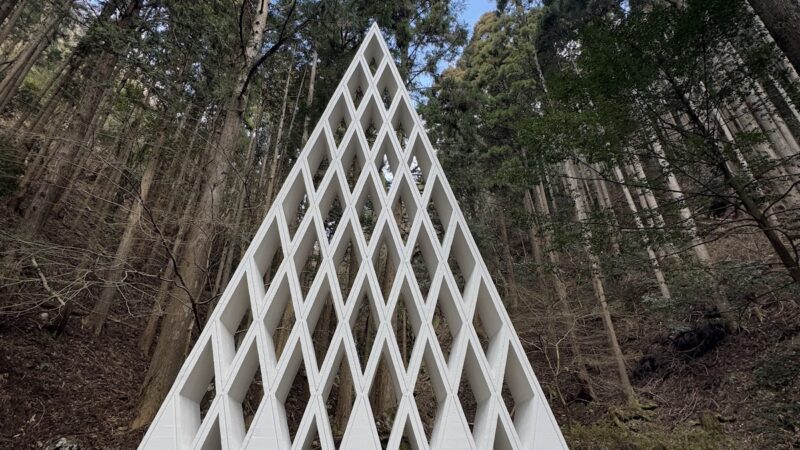
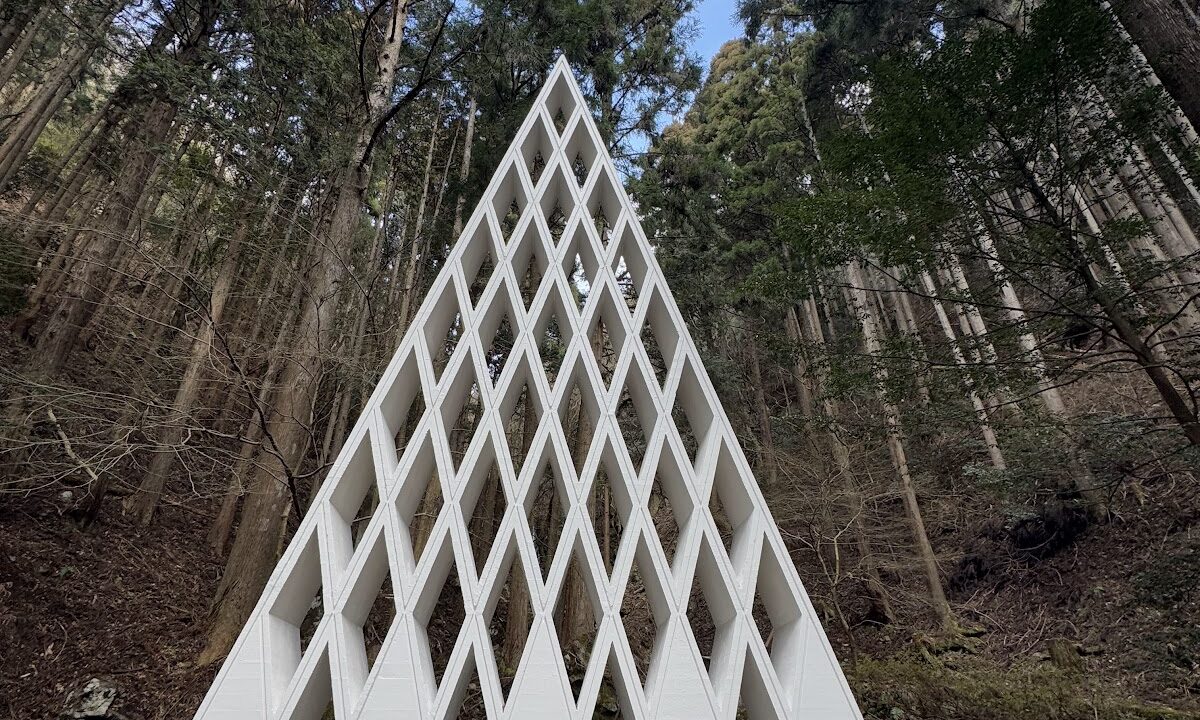
The most distinctive feature of Sugi Shrine is undoubtedly its sacred object: a white triangular tower. This massive triangular pyramid, 12 meters tall with an 8-meter base, symbolically represents a cedar tree and is said to house the spirit of the tree.
While typical shrines have a main hall and worship hall where the sacred object is enshrined, Sugi Shrine has neither. The white triangular tower itself, constructed from diagonally arranged white wood, is the sacred object and the object of worship.
The sight of the pure white triangular tower soaring amidst the deep green cedar grove creates a unique atmosphere that can only be described as mystical. On sunny days, the contrast between the blue sky and the white tower is beautiful, while on cloudy days, it presents a fantastical appearance shrouded in mist.
Unique Torii Gate Design | Two Stone Pillars and Shimenawa Rope
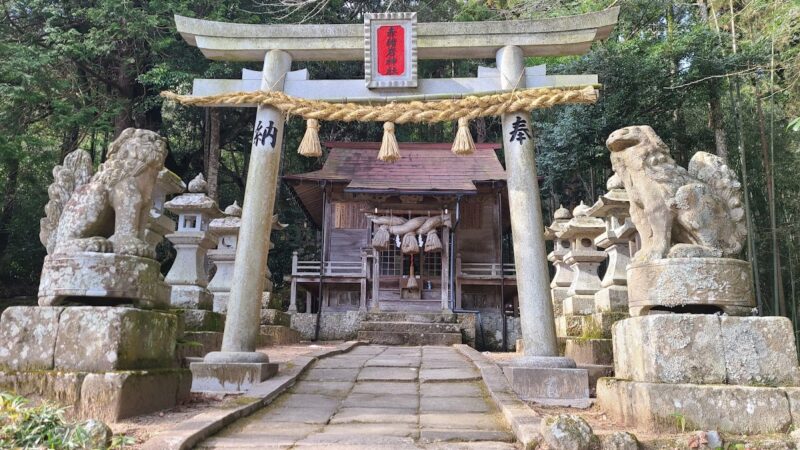
Another distinctive feature of Sugi Shrine is its uniquely designed torii gate. Unlike typical shrine torii gates, Sugi Shrine’s gate is extremely simple yet innovative, consisting of just two stone pillars with a single thick shimenawa rope stretched across them.
This simple yet powerful design, combined with the white tower, creates a mystical space unlike any other. The weighty presence of the stone pillars and the sacredness of the shimenawa rope guide visitors from the secular world into a sacred realm.
Silent Approach | Path Surrounded by Cedar and Cypress Trees
After passing through the torii gate, a tranquil approach leads to the white tower. This approach is also one of Sugi Shrine’s major attractions. Cedar and cypress trees planted by local volunteers cover both sides of the approach, creating a luxurious space where visitors can enjoy a forest bath while praying.
Walking along the path bathed in dappled sunlight, you are enveloped in the scent of cedar, experiencing a refreshing and cleansing feeling. It’s a precious place to escape the hustle and bustle of the city and become one with nature.
Ryutani Falls and Takidai Myojin | A Sacred Area Beyond the Path
Ryutani Falls, a Famous Place in Inaba
Behind the white tower lies Ryutani Falls. This waterfall has long been known as a famous place in Inaba (eastern Tottori Prefecture) and has been cherished as a place of worship.
When visiting Sugi Shrine, we highly recommend continuing further along the path to Ryutani Falls. The sound of the waterfall and the surrounding nature create a landscape that further enhances the mystique of Sugi Shrine.
Faith in Takidai Myojin
Takidai Myojin is enshrined at Ryutani Falls and has long been revered as the god of water and nature. The space where Sugi Shrine, dedicated to the spirits of cedar trees, and Takidai Myojin Shrine, dedicated to the god of water, are integrated, is a place that makes you feel a renewed sense of reverence and gratitude for nature.
Prayer for Hay Fever Relief | A Modern Benefit
Hay Fever Relief through Prayers to the Spirits of Cedar Trees
In recent years, the number of visitors to Sugi Shrine seeking the unique benefit of “praying for hay fever relief” has been increasing. This can be considered a modern prayer, possible only at a shrine dedicated to the spirits of cedar trees.
The idea of people suffering from hay fever praying directly to the spirits of cedar trees for symptom relief may seem contradictory at first glance, but it is a Chizu Town-style initiative that expresses gratitude to cedar trees and a spirit of coexistence.
Annual Festival in Mid-April
Sugi Shrine holds its annual festival in mid-April every year. This time of year, when the fresh green leaves of the cedar trees are beautiful and it is also pollen season, attracts many visitors. At the annual festival, a Shinto ritual is performed to express gratitude for the cedar trees, pray for the prosperity of the forestry industry, and for the health of worshippers.
Chizu Town’s Forestry Culture and Sugi Shrine
History and Quality of Chizu Cedar
Forestry in Chizu Town originated when the Tottori Domain, during the Edo period, highly valued Chizu-juku as an important post town. Thanks to the accumulation of forestry techniques since the Edo period, Chizu cedar is known as a high-quality timber with beautiful grain and excellent strength.
Even today, Chizu Town remains a center of forestry, continuing sustainable forest management and timber production, and Sugi Shrine is a symbolic representation of this.
The Spirit of a Town Coexisting with Forestry
The existence of Sugi Shrine is not merely a tourist spot, but a testament to the history and culture of the people of Chizu Town who have coexisted with forests for many years. The form of worship, which involves enshrining the spirits of trees, reflects the spirit of the people of Chizu Town, who never forget their reverence and gratitude for nature.
How to Visit and Important Points at Sugi Shrine
A Different Style of Worship from Typical Shrines
Sugi Shrine has no main hall or worship hall, nor does it have an offering box or a gift shop. Worship takes place in front of the white pagoda. Please follow the typical shrine worship etiquette (two bows, two claps, one bow) to offer gratitude and prayers to the spirits of the cedar trees.
Consideration for the Natural Environment
Sugi Shrine is surrounded by abundant nature. When visiting, please be mindful of the natural environment by taking your trash with you and refraining from collecting plants. Also, since there are slippery areas, we recommend wearing comfortable shoes.
Access Information and Nearby Attractions
Basic Information
Location: Chizu, Chizu-cho, Yazu-gun, Tottori Prefecture 689-1402
Access:
- Approximately 5 minutes by car from JR Chizu Station
- Approximately 20-25 minutes on foot from JR Chizu Station
- Approximately 10 minutes by car from Chizu IC on the Tottori Expressway
Parking: Available (Free)
Visiting Hours: No specific restrictions (However, it is recommended to avoid visiting at night)
Admission Fee: Free
Nearby Tourist Attractions
When visiting Sugi Shrine, it is recommended to also visit other tourist attractions in Chizu-cho.
Chizu-juku: A post town that retains the atmosphere of the Edo period, with its old townscape preserved.
Ishitani Residence: A large-scale modern Japanese-style building designated as a National Important Cultural Property, the residence of the Ishitani family, who made their fortune in the forestry industry of Chizu.
Ashizu Gorge: A natural spot where you can enjoy the beautiful scenery of a gorge, also known as a famous spot for autumn foliage.
Itaihara Village: A mountain village that retains the original landscape of Japan, and has been designated as an Important Preservation District for Groups of Traditional Buildings.
Access to Chizu Town
Chizu Town is located at a key transportation hub connecting Tottori City and Okayama Prefecture.
- From Tottori: Approximately 40 minutes from Tottori Station to Chizu Station on the JR Inbi Line
- From Okayama: Approximately 1 hour 30 minutes from Okayama Station to Chizu Station on the JR Inbi Line/Chizu Express
- Access by Car: Use the Chizu Interchange on the Tottori Expressway
Best Season to Visit Sugi Shrine
Season of Fresh Greenery (April-May)
The season of fresh greenery, including the time of the annual festival in mid-April, is one of the most beautiful times to visit Sugi Shrine. The vibrant greenery complements the white pagoda, and you can worship in refreshing air.
Autumn Foliage Season (October-November)
The autumn foliage season, when the surrounding broadleaf trees change color, is also magnificent. The contrast between the evergreen cedars and the autumn leaves is beautiful, making it an ideal time for photography.
Snowscape (December-February)
In winter, there is often snowfall, and the Sugi Shrine covered in white snow creates a fantastical atmosphere. However, caution is needed regarding icy roads.
What Sugi Shrine Teaches Us
Sugi Shrine is more than just a tourist spot. This shrine is a precious place that conveys the coexistence of nature and humanity, the gratitude of people who have received the blessings of the forest for many years, and the history and culture of the region.
The unique form of worship, which enshrines the spirit of the cedar tree, is unparalleled nationwide and is a testament to how the people of Chizu Town have lived alongside cedars, reminding us, who live in the modern age, of reverence for nature.
The white triangular tower symbolizes the spirit of the cedar tree, the torii gate has a unique design, the approach to the shrine is tranquil, and the Ryukoku Waterfall stands in the distance—all of these elements come together to create a mystical space unlike any other.
When you visit Tottori Prefecture, be sure to extend your trip to Chizu Town and experience this one-of-a-kind cedar shrine, where you can feel gratitude for nature’s bounty and the depth of Japan’s forestry culture. Away from the hustle and bustle of the city, the time you spend calming your mind surrounded by the scent of cedar will surely become an unforgettable memory.