Complete Guide to Togakushi Shrine | A Thorough Explanation of the Order of Visiting the Five Shrines, Goshuin (Shrine Seals), Access, and History
Located in Togakushi, Nagano City, Nagano Prefecture, Togakushi Shrine is one of Japan’s leading power spots, boasting a history of over 2,000 years since its founding. It consists of five shrines—Okusha, Chusha, Hokosha, Kuzuryusha, and Hinomikosha—scattered at the foot of the sacred Togakushi Mountain. As a shrine dedicated to deities associated with the myth of the opening of the Heavenly Rock Cave, it attracts many worshippers from all over Japan.
This article comprehensively explains everything you need to know before visiting Togakushi Shrine, from its historical background to the specific order of visiting the five shrines, the characteristics of each shrine, access methods, and Goshuin information.
What is Togakushi Shrine? | The Myth of the Opening of the Heavenly Rock Cave and 2,000 Years of History
The Legend of the Opening of the Heavenly Rock Cave and the Origin of Togakushi Shrine
The origin of Togakushi Shrine is deeply connected to the “Legend of the Opening of the Heavenly Rock Cave” in Japanese mythology. When Amaterasu Omikami became angry at the violence of her brother Susanoo-no-Mikoto and hid in the Heavenly Rock Cave, the world was plunged into darkness. The eight million gods, troubled by this situation, gathered at Amanoyasugawara and devised a plan to lure Amaterasu Omikami out of the cave.
Ame-no-Uzume-no-Mikoto danced in front of the cave, and Amaterasu Omikami, intrigued by the laughter of the gods, slightly opened the cave. At that moment, Ame-no-Tajikarao-no-Mikoto forcefully threw the cave open. Legend says that the cave, thrown away at that time, became the present-day Togakushi Mountain, and this is the origin of the name Togakushi Shrine.
Development as a Sacred Site of Shugendo
From the late Heian period onward, Togakushi Shrine developed as “Togakushi-san Kanshuin Kenkoji,” a syncretic Shinto-Buddhist temple where Tendai Buddhism, Shingon Buddhism, and Shinto were combined. As a center of Shugendo (mountain asceticism), it was known as “Togakushi Thirteen Valleys and Three Thousand Monasteries” and flourished to the point of being counted as one of the “Three Thousand Monasteries of the Three Mountains,” alongside Enryaku-ji Temple on Mount Hiei and Kongobu-ji Temple on Mount Koya.
At its peak, many ascetics and pilgrims gathered, and numerous lodgings were built throughout Togakushi. Even today, about 30 lodgings remain, offering accommodation and vegetarian meals to visitors.
The Meiji Era Separation of Shinto and Buddhism and its Current State
Due to the Meiji-era decree separating Shinto and Buddhism, Kenko-ji Temple was abolished and re-established as Togakushi Shrine. Although its history as a shrine is relatively recent, it is a sacred site with a history of over 2,000 years as a place of worship. Currently, it is known as a shrine deeply connected to the gods of the myth of the opening of the Heavenly Rock Cave, and is renowned for its divine blessings of good fortune, fulfillment of wishes, abundant harvests, and victory in sports.
Characteristics and Deities of the Five Shrines of Togakushi Shrine
Togakushi Shrine consists of five shrines, each with its own unique deity and divine virtues. It is believed that visiting all five shrines brings deeper blessings.
Okusha (Main Shrine) | The Head Shrine Dedicated to Ame-no-Tajikarao-no-Mikoto
Deity: Ame-no-Tajikarao-no-Mikoto
Divine Virtues: Good fortune, fulfillment of wishes, abundant harvests, victory in sports
The main shrine, the heart of Togakushi Shrine, enshrines Ame-no-Tajikarao-no-Mikoto, the god of strength who opened the Heavenly Rock Cave. Situated against the backdrop of the cliffs of Mount Togakushi, the cedar-lined approach to the shrine, with its towering trees over 400 years old, creates a breathtaking spectacle. The approximately 500-meter-long cedar avenue from the Zuishinmon Gate to the Okusha is particularly renowned as one of Japan’s most powerful spiritual spots.
The inner shrine is approximately 2 kilometers from the entrance to the approach, taking about 40 minutes to an hour on foot. During winter (mid-November to late April), snow can make visiting difficult.
Kuzuryu Shrine | Dedicated to the Guardian Deity of Togakushi Mountain
Deity: Kuzuryu Okami
Divine Blessings: Water deity, rainmaking, toothache relief, matchmaking
Located next to the inner shrine, this shrine enshrines Kuzuryu Okami, the guardian deity of Togakushi Mountain. This is the oldest deity, believed to have resided on Togakushi Mountain even before the opening of the Heavenly Rock Cave. Besides being worshipped as the water deity and rainmaking deity, it is also believed to grant blessings for healing toothaches and dental ailments.
When visiting the inner shrine, it is highly recommended to also visit the Kuzuryu Shrine. Since the two shrines are close together, visiting them together is common.
Chusha Shrine | God of Learning and Wisdom
Deity: Amenoyagokoro-Omoikane-no-Mikoto
Divine Blessings: Academic success, passing exams, business prosperity, good fortune, protection from evil
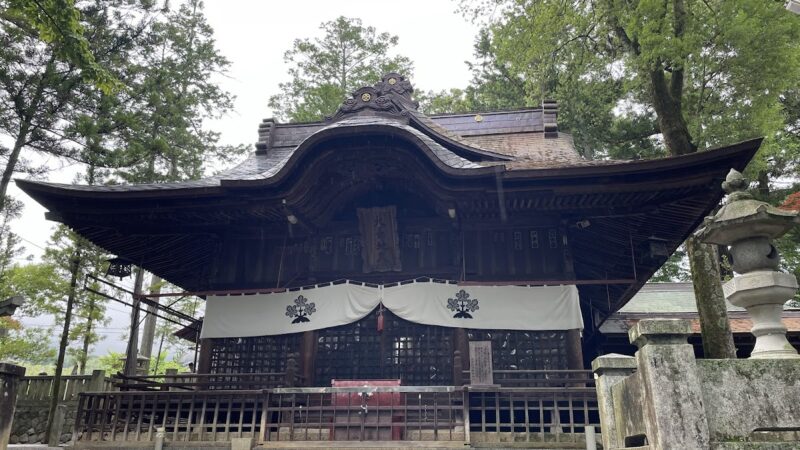
This shrine enshrines Amenoyagokoro-Omoikane-no-Mikoto, the god of wisdom who bestowed wisdom upon the gods during the opening of the Heavenly Rock Cave. It is the most easily accessible of the five Togakushi Shrines and boasts a large parking lot, attracting many visitors.
Within the shrine grounds are three cedar trees over 700 years old, popular as sacred trees for matchmaking. The area around Chusha Shrine is also home to many famous Togakushi soba restaurants, allowing visitors to enjoy Togakushi soba after their visit.
Hokosha Shrine | God of Pioneer Development and Safe Childbirth
Deity Enshrined: Amenouwaharu-no-Mikoto
Divine Virtues: Deity of pioneering, learning and arts, sewing, safe childbirth, and protection of women and girls
This shrine enshrines Amenouwaharu-no-Mikoto, the child of Ame-no-Yatsukane-no-Mikoto, the deity enshrined at the main shrine. The shrine building is located at the top of over 270 stone steps, and it is revered as the guardian deity of women and children.
Hokosha Shrine is located at the lowest elevation of the five shrines, and the stone steps leading to it are relatively gentle and easy to climb. The shrine building dates from the late Edo period and features elaborate carvings.
Hinomiko Shrine | God of Performing Arts and Matchmaking
Deity: Ame-no-Uzume-no-Mikoto
Divine Blessings: Improvement in Performing Arts, Matchmaking, Fire Prevention
This shrine enshrines Ame-no-Uzume-no-Mikoto, the goddess of performing arts who danced in front of the Heavenly Rock Cave. She is worshipped as the goddess of performing arts and dance, and is also known for her blessings in matchmaking.
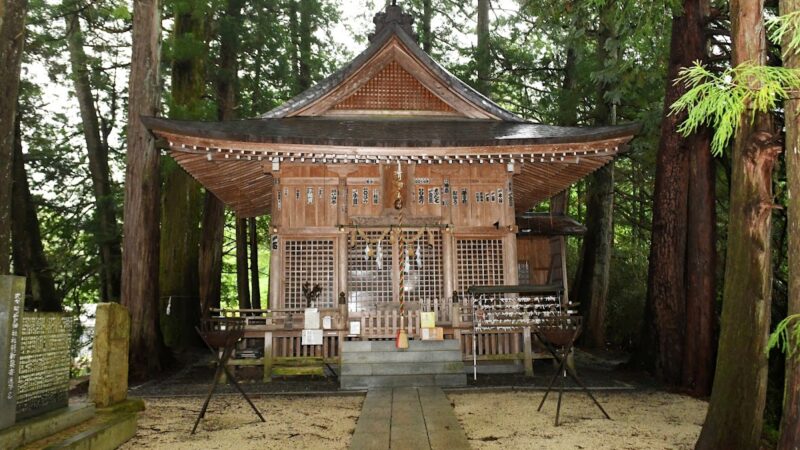
Hinomiko Shrine is the smallest of the five shrines, but its sanctuary nestled in a quiet forest is enveloped in a mystical atmosphere. Located between Hokosha and Chusha, it’s easily accessible during a pilgrimage to all five shrines.
Efficient Order and Model Course for Visiting the Five Shrines
The five shrines of Togakushi Shrine are scattered within a 3-kilometer radius, and visiting all of them on foot takes approximately 3 to 4 hours. To visit them efficiently, it’s important to plan the order and transportation in advance.
Recommended Order of Visiting the Shrines
Standard Course (by Car): Hokosha Shrine → Hinomikosha Shrine → Chusha Shrine → Okusha Shrine/Kuzuryusha Shrine
This order progresses from lower to higher elevations, minimizing physical strain and allowing for a natural flow of worship. Each shrine has a parking lot, making travel by car convenient.
Walking Course: Chusha Shrine → Okusha Shrine/Kuzuryusha Shrine → Hinomikosha Shrine → Hokosha Shrine
When walking, it is most efficient to visit the Chusha Shrine (the longest distance) and then the Okusha Shrine first, and then descend while visiting the other shrines.
Estimated Time Required
- Visiting All Five Shrines (by Car): 3 to 4 hours
- Visiting Only Okusha Shrine/Chusha Shrine (by Car): 2 to 2.5 hours
- Visiting All Five Shrines (on Foot): 5 to 6 hours
A minimum of 1 hour and 30 minutes is required for the round trip to Okusha Shrine alone. Please plan your time with ample leeway.
Seasonal Precautions
Spring (April-June): The approach to the shrine can be muddy during the snowmelt season. The inner shrine usually opens in late April.
Summer (July-September): This is the easiest season to visit, but it gets crowded on weekends and holidays. Early morning visits are recommended.
Autumn (October-November): This is a popular spot for viewing autumn foliage, and it gets especially crowded from mid-October to early November.
Winter (December-March): Due to snow, crampons or snow boots are necessary on the approach to the inner shrine. There are also winter closure periods, so prior confirmation is essential.
Access Methods | How to Get There by Car, Bus, or Train
Access by Car
From Tokyo:
- Approximately 3 hours to Nagano IC via Kan-Etsu Expressway and Joshin-Etsu Expressway
- Approximately 1 hour (approx. 30 kilometers) from Nagano IC to Togakushi Shrine Chusha
From Nagoya:
- Approximately 3 hours 30 minutes to Nagano IC via Chuo Expressway and Nagano Expressway
- Approximately 1 hour from Nagano IC to Togakushi Shrine Chusha
Parking Information:
- Okusha: Approximately 200 spaces (free) *Approximately 40 minutes on foot from the entrance to the shrine
- Chusha: Approximately 150 spaces (free)
- Hokosha: Approximately 50 spaces (free)
- Hinomikosha: Approximately 20 spaces (free)
During the autumn foliage season and on weekends, parking lots are often full, and the Okusha parking lot can be full even early in the morning.
Access by Public Transportation
JR, Shinano Railway, Nagano Electric Railway:
- Approximately 1 hour by Alpico Kotsu bus “Togakushi Kogen Line” from Nagano Station
- Get off at bus stops such as “Togakushi Chusha,” “Togakushi Hokosha,” or “Togakushi Okusha”
Bus Fare: Approximately 1,200 yen one way from Nagano Station to Chusha
Bus Frequency: Approximately 5-8 buses per day (varies depending on the season)
When using public transportation, please check the bus timetable in advance and plan your visit considering the return bus schedule.
Taxi/Rental Car
If you take a taxi from Nagano Station to Chusha, it takes about 1 hour and costs approximately 10,000 to 15,000 yen. There are many rental car companies around Nagano Station, allowing for more flexibility in your visit.
Goshuin Information | Goshuin and Distribution Locations for the Five Shrines
At Togakushi Shrine, you can receive a goshuin (shrine stamp) at each of the five shrines.
Goshuin Distribution Locations
- Okusha (Inner Shrine): Okusha Shrine Office (near the entrance to the approach)
- Kuzuryusha (Kuzuryu Shrine): Available at the Okusha Shrine Office
- Chusha (Middle Shrine): Chusha Shrine Office
- Hokosha (Hokosha Shrine): Hokosha Shrine Office
- Hinomikosha (Hinomikosha Shrine): Hinomikosha Shrine Office
Goshuin Offering Fee
The general fee is 500 yen per goshuin at each shrine. Collecting all five goshuin may entitle you to a commemorative gift.
Goshuin Notebook
Togakushi Shrine also offers original goshuin notebooks. The beautiful notebooks featuring designs of the cedar trees at Okusha and the shrine buildings of the five shrines are popular.
Togakushi Soba and Temple Lodgings | Enjoying the Charms of Togakushi Alongside Pilgrimage
Togakushi Soba | One of Shinshu’s Three Great Soba Noodles
Togakushi is famous as the production area of “Togakushi Soba,” and is counted as one of Shinshu’s three great soba noodles, alongside Shinshu Soba and Sarashina Soba. It is characterized by its unique serving style called “bocchi-mori,” and many soba restaurants line the area around the Chusha shrine.
Enjoying Togakushi Soba after visiting the shrine is one of the pleasures of visiting Togakushi. Especially during the new soba season (late October to November), many people visit seeking the fragrant new soba.
Temple Lodging Experience | Shojin Ryori (Vegetarian Cuisine) and Morning Service
Approximately 30 temple lodgings are still operating in Togakushi, and general pilgrims can stay there. At the temple lodgings, you can enjoy shojin ryori (vegetarian cuisine), participate in morning services, and experience the history of Shugendo (mountain asceticism).
Being able to visit the Okusha shrine in the quiet early morning hours is also a major attraction of staying at a temple lodging.
Annual Events and Festivals at Togakushi Shrine
Togakushi Shrine holds various festivals and events throughout the year.
Main Annual Events
January: New Year’s Day Festival, Dondo-yaki (bonfire festival)
February: Setsubun Festival
April: Okusha/Kuzuryusha Opening Ceremony
May: Togakushi Shrine Spring Grand Festival, Shikinen Grand Festival (held once every 6 years)
July: Hinomikosha Annual Festival
September: Togakushi Shrine Autumn Grand Festival
November: Niiname-sai (harvest festival)
The Shikinen Grand Festival, in particular, is the most important festival, held once every 6 years (in the Year of the Tiger and the Year of the Monkey), and features a grand procession of portable shrines and the dedication of traditional performing arts.
Summary | Points to Note When Visiting Togakushi Shrine
Togakushi Shrine is a sacred mountain shrine with a history of over 2,000 years, and each of its five shrines is a power spot with its own unique divine virtues. When visiting the shrines, please keep the following points in mind:
- Plan your pilgrimage to the five shrines with ample time (at least 3 to 4 hours)
- Keep in mind that the Okusha approach is a 2-kilometer round-trip mountain trail and prepare comfortable clothing and shoes.
- Understand the characteristics of each season (crowded with snow in winter, and with autumn foliage in fall)
- Aim to arrive early for parking (especially on weekends, holidays, and during the autumn foliage season)
- Enjoy Togakushi soba noodles and a temple lodging experience to experience the deeper charm of Togakushi.
Togakushi Shrine has developed as the setting for the myth of the opening of the Heavenly Rock Cave and as a sacred site for Shugendo (mountain asceticism). Its long history and rich natural environment create a mystical atmosphere that will cleanse the hearts of visitors and give them renewed vitality. Please take your time to visit all five shrines and experience the profound charm of Togakushi Shrine.