Togo Shrine Complete Guide | Harajuku’s Power Spot Dedicated to the God of Victory [How to Visit, Goshuin (Shrine Seal), Access]
Togo Shrine, located in Jingumae, Shibuya-ku, Tokyo, is a shrine dedicated to Admiral Togo Heihachiro, a naval admiral who was active from the Meiji to Taisho periods. Despite being in a prime location in the heart of Tokyo, just a 3-minute walk from Harajuku Station’s Takeshita Exit, the shrine grounds, enveloped in lush greenery and tranquility, are beloved by many worshippers seeking victory and sincerity.
This article comprehensively introduces information you should know before visiting Togo Shrine, including its history, the achievements of its enshrined deity, how to visit, available items, and access information.
What is Togo Shrine? | Harajuku’s Shrine Dedicated to the God of Victory
Togo Shrine is a shrine dedicated to Admiral Togo Heihachiro, Commander-in-Chief of the Combined Fleet, who achieved a historic victory in the Battle of Tsushima during the Russo-Japanese War. Founded in 1940, it has since been widely revered as the “God of Victory.”
Despite its location in Harajuku, the heart of youth culture, stepping onto the shrine grounds reveals a tranquil space that makes you forget the hustle and bustle of the city. While adjacent to Meiji-dori and Takeshita-dori, the vast 6,000-tsubo (approximately 20,000 square meters) grounds feature a sacred pond and the Togo Memorial Hall, creating a special place where history and nature harmonize.
Basic Information about Togo Shrine
Location: 1-5-3 Jingumae, Shibuya-ku, Tokyo
Founded: 1940 (Showa 15)
Deity Enshrined: Togo Heihachiro no Mikoto
Main Benefits: Good fortune in victory, prayers for victory, academic success, prayers for passing exams, safety at sea
Life and Achievements of the Enshrined Deity, Togo Heihachiro no Mikoto
Togo Heihachiro no Mikoto (1848-1934) was a naval officer from the Satsuma Domain (present-day Kagoshima Prefecture) and a representative figure of the Japanese Navy during the Meiji and Taisho periods. His life is closely intertwined with Japan’s modernization.
Early Training and Rise in the Navy
Born in 1848 (Kaei 1) as the fourth son of a Satsuma samurai, Togo Heihachiro participated in the Anglo-Satsuma War and the Boshin War during the turbulent Bakumatsu period. After the Meiji Restoration, he joined the navy and studied in England for seven years from 1871. He learned the latest naval technology and tactics, and upon his return to Japan, he dedicated himself to the modernization of the Japanese Navy.
He distinguished himself as captain of the “Naniwa” during the First Sino-Japanese War and continued to hold important positions thereafter. In 1903, he became Commander-in-Chief of the Combined Fleet.
Historic Victory at the Battle of Tsushima
The Battle of Tsushima, fought on May 27-28, 1905, solidified Togo Heihachiro’s name. Togo’s Combined Fleet, facing the Baltic Fleet, defeated the enemy fleet with a skillful tactic known as the “T-crossing maneuver.” They sank or captured 21 of the 38 Russian ships, while Japan suffered only three torpedo boat losses—an unprecedented and complete victory in the history of naval warfare.
This victory brought the Russo-Japanese War to an end with a Japanese win, and Togo was praised worldwide as the “Nelson of the East.”
Post-War Activities and Personality
After the war, Togo was promoted to Fleet Admiral and dedicated himself to naval education and the training of future generations. Known for his simple and upright character, his unwavering emphasis on “sincerity” earned him the respect of many.
He passed away in 1934 at the age of 86. To commemorate his achievements and character for future generations, Togo Shrine was founded in 1940.
History of Togo Shrine | From Founding to the Present
Circumstances of Founding
After the death of Fleet Admiral Togo Heihachiro, there was a growing call from across the country to create a shrine to honor his great achievements and character and to pass them on to future generations. On May 27, 1940 (Showa 15), coinciding with the anniversary of the Battle of Tsushima, Togo Shrine was founded in Jingumae, Shibuya Ward.
The founding site was originally the location of the residence where Admiral Togo spent his later years, a place he himself loved. The vast grounds, approximately 6,000 tsubo (about 20,000 square meters), include the shrine building, a sacred pond, and a memorial hall, making it a place visited by many worshippers.
Post-War Reconstruction and Development
Although the shrine building was destroyed by fire during World War II, it was rebuilt in 1964 (Showa 39). Since then, the grounds have been further developed, resulting in its current form.
Since the Heisei era, as a shrine located in Harajuku, a hub of youth culture, it has strived to appeal to new generations of worshippers while preserving its traditions. Its photogenic goshuin (shrine stamps) and amulets have also gained popularity, making it a shrine visited by a wide range of generations.
Benefits of Togo Shrine | The Power of Victory and Sincerity
Togo Shrine is widely known as the “God of Victory,” and many people visit to pray for various kinds of “victory.”
Main Benefits
Victory and Guaranteed Success: Inspired by the complete victory in the Battle of Tsushima, visitors can pray for victory in all kinds of competitions, including sports matches, business negotiations, and elections.
Success in Exams and Academic Achievement: Many students and their families visit the shrine to pray for success in exams. The shrine is especially crowded with visitors praying for success during exam season.
Job Hunting Success: The number of job-seeking students visiting the shrine to pray for success in the “battle” of job hunting is increasing.
Success in Love: Visitors also pray for success in love and relationships, believing the shrine will help them find a good partner.
Maritime Safety: As the shrine enshrines a Fleet Admiral, it is also revered by those involved in shipping and fishing as a place to pray for maritime safety.
Sincerity: Inspired by the spirit of “sincerity” that Admiral Togo upheld throughout his life, visitors also pray for an honest and sincere way of life.
Guide to Togo Shrine Grounds | Highlights and Spots
Shrine Building
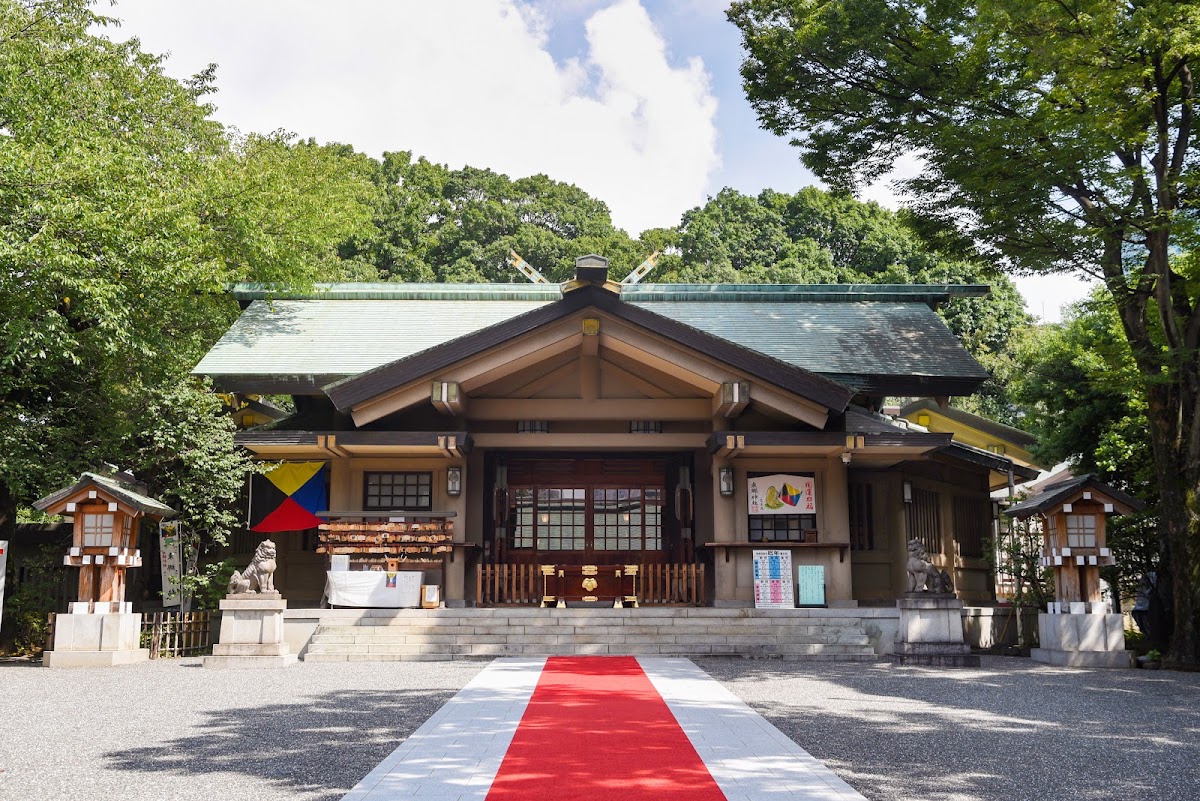
The main hall, rebuilt in 1964, is constructed in the traditional style of shrine architecture. Visitors pray at the worship hall using the two bows, two claps, and one bow ritual.
Sacred Pond (Shinchi)
At the center of the shrine grounds lies the lush, natural sacred pond. A walking path surrounds the pond, allowing visitors to enjoy the changing seasons while strolling. This tranquil space, which makes you forget you’re in the city center, soothes the hearts of visitors.
Z Flag
A replica of the famous “Z Flag” hoisted by Admiral Togo during the Battle of Tsushima is displayed on the shrine grounds. This historical signal flag, bearing the inscription “The fate of the Empire rests on this battle; each man must strive with all his might,” is a must-see.
Togo Memorial Hall
The Togo Memorial Hall is located on the shrine grounds and is used as a wedding venue and banquet hall. A wedding ceremony in this historic building will surely create special memories.
Sacred Tree
An ancient sacred tree stands on the shrine grounds and is a popular power spot for visitors.
How to Worship and Manners | Learn the Correct Etiquette
Knowing the correct etiquette for worship will enhance your experience when visiting Togo Shrine.
Basic Worship Procedure
- Passing Through the Torii Gate: Bow before passing through the torii gate. It is considered the path of the gods to walk along the sides of the path, as the center is considered the gods’ path. 2. Purifying at the Water Basin:
- Hold the ladle in your right hand and purify your left hand.
- Switch the ladle to your left hand and purify your right hand.
- Switch the ladle back to your right hand, receive water in your left hand, and rinse your mouth.
- Finally, hold the ladle upright and purify the handle.
- Worship at the Main Hall:
- Place your offering in the offering box.
- Ring the bell if there is one.
- Worship using the two bows, two claps, one bow ritual.
- Bow deeply twice.
- Clap your hands twice.
- Put your hands together and make your wish.
- Finally, bow deeply once.
- Departure: After exiting the torii gate, turn around and bow once.
Attire for Worship
There are no specific rules, but it is desirable to wear clothing that reflects the sacred nature of the place. If you are receiving a prayer, please dress appropriately and not too casually.
Shrine Goods and Amulets | Victory Amulets are Popular
Togo Shrine offers a variety of shrine goods.
Victory Amulet (Kachimamori)
The most popular amulet is the “Victory Amulet.” Designed with the Z flag flown during the Battle of Tsushima, it is believed to bring good fortune in all kinds of competitions. It is popular with a wide range of people, including students taking exams, athletes, and business professionals.
Victory Tags and Banners
“Victory tags” and “banners” are also available to pray for victory. Displaying them in your room or workplace allows you to pray for daily success.
Academic Achievement Amulet
This amulet is for students hoping for success in exams or academic improvement.
Matchmaking Amulet
This amulet is popular with those hoping for success in love or a good relationship.
Goshuin (Shrine Seals)
In addition to regular goshuin, Togo Shrine also offers seasonal and specially designed goshuin. The shrine’s collaborative goshuin (temple/shrine stamp) featuring Hello Kitty has become a hot topic, making it popular among visitors who collect goshuin.
Goshuin are available at the shrine office, and the offering fee is usually around 500 yen.
Prayer Information | For Life’s Milestones
At Togo Shrine, you can receive various prayers.
Main Types of Prayers
- Prayer for Success in Exams: A prayer especially common during exam season
- Prayer for Victory: Praying for success in sports, matches, business negotiations, etc.
- Exorcism: Praying for warding off evil during unlucky years
- Shichi-Go-San: Praying for the healthy growth of children
- Prayer for Safety: Praying for traffic safety, construction safety, etc.
- Business Prosperity: Praying for the development of your business
- Family Safety: Praying for the health and happiness of your family
Prayer Reception
Prayers can be requested by reservation or on the day. Especially during the New Year’s visit period and exam season, it gets very crowded, so we recommend making a reservation in advance. The prayer fee (hatsuho-ryo) varies depending on the prayer requested, but generally starts from 5,000 yen.
For more details, please check the official website of Togo Shrine or contact them by phone.
Annual Events | Seasonal Festivals
Togo Shrine holds various festivals throughout the year.
Main Annual Events
New Year’s Day: Saitansai (New Year’s Day Festival)
A festival celebrating the New Year. It is bustling with worshippers making their first shrine visit of the year.
May 27th: Reitaisai (Grand Festival)
The most important festival, coinciding with the anniversary of the Battle of Tsushima. Many devotees attend to honor the achievements of Admiral Togo.
Shichi-Go-San (Seven-Five-Three Festival): November
Shichi-Go-San celebrations are held to commemorate the growth of children.
New Year’s Eve: Grand Purification Ceremony & New Year’s Eve Festival
A ceremony to cleanse away the impurities of the past year and prepare for the New Year.
Access Information | 3-minute walk from Harajuku Station
Togo Shrine is located in Jingumae, Shibuya-ku, Tokyo, and is easily accessible from Harajuku Station.
Access by Train
JR Yamanote Line “Harajuku Station”: 3-minute walk from Takeshita Exit
This is the closest station, and you can reach the shrine by walking along Takeshita Street.
Tokyo Metro Chiyoda Line/Fukutoshin Line “Meiji-jingumae Station”: 5-minute walk from Exit 5
You will arrive at the shrine by walking along Meiji-dori Street.
Tokyo Metro Fukutoshin Line “Kita-sando Station”: 10-minute walk
This route goes from the back of Meiji Jingu Shrine.
Location and Map
Address: 1-5-3 Jingumae, Shibuya-ku, Tokyo 150-0001
Phone: 03-3403-3591
Located close to Meiji Jingu Shrine, many visitors come to both. It’s also recommended to visit in conjunction with shopping in Harajuku’s Takeshita Street or Omotesando.
Parking
There is a parking lot for visitors on the shrine grounds, but spaces are limited. Using public transportation is recommended.
Nearby Tourist Attractions | Harajuku/Omotesando Area
There are many tourist attractions around Togo Shrine.
Meiji Jingu Shrine
A shrine dedicated to Emperor Meiji and Empress Shoken, located about a 10-minute walk away. An urban oasis surrounded by a vast forest.
Takeshita Street
A street representing Harajuku’s youth culture. Lined with fashion, gourmet, and general goods stores.
Omotesando
A sophisticated area lined with stylish boutiques and cafes.
Yoyogi Park
A vast urban park where you can enjoy picnics and events.
Togo Shrine and Other Togo Shrines | Togo Shrines Nationwide
Besides the Togo Shrine in Tokyo, there are shrines dedicated to Togo Heihachiro throughout Japan.
Togo Shrine in Fukuoka
There is also a Togo Shrine in Fukutsu City, Fukuoka Prefecture. Located near Kyushu, Togo Heihachiro’s birthplace, it is deeply revered by the local community.
Other Togo Shrines
Togo Shrines and facilities dedicated to Admiral Togo can be found in various locations, including Hokkaido, Kyoto, and Kagoshima. Admiral Togo’s achievements are celebrated in each region.
Weddings at Togo Shrine | Togo Memorial Hall
You can hold a Shinto wedding ceremony at Togo Shrine. The Togo Memorial Hall on the shrine grounds is a popular and prestigious wedding venue.
The Charm of a Shinto Wedding Ceremony
A traditional Shinto wedding ceremony is a special experience where you pledge your eternal love in a solemn atmosphere. Vows exchanged before the god of victory will be a fitting start to your new life together.
Reception Venue
Togo Memorial Hall has a beautiful reception hall that blends Japanese and Western styles, accommodating both small and large groups.
For details about weddings, please contact Togo Memorial Hall directly.
Visitor Testimonials | Reviews and Experiences
Visitors who have come to Togo Shrine have shared a variety of comments.
“I bought a good luck charm before my exams and successfully passed my first-choice school. Holding the charm tightly during the exam gave me confidence.” (University student)
“Despite being in Harajuku, the shrine grounds are quiet and peaceful. Just walking around the sacred pond is refreshing.” (Woman in her 30s)
“I visit to pray for victory before sports competitions. I feel a sense of security knowing that the god of victory is watching over me.” (High school student)
“The design of the goshuin (shrine stamp) is wonderful, and I visit every season. It’s added to the enjoyment of collecting goshuin.” (Woman in her 20s)
Points to note when visiting Togo Shrine
Visiting Hours
While entry to the shrine grounds is generally free, there are set hours for the shrine office. If you wish to obtain a goshuin or charm, please visit during the reception hours. Generally, reception hours are from 9:00 AM to 5:00 PM.
Busy Seasons
The shrine is especially crowded during the New Year’s visit (January to the third day of the year), the annual festival (May 27th), and the exam season (January to March). If you want to visit at a leisurely pace, weekday mornings are recommended.
Photography
Photography is generally permitted on the shrine grounds, but please be considerate and avoid disturbing other worshippers or religious ceremonies. Photography inside the shrine buildings may be prohibited.
Manners
Remember that this is a sacred place and worship quietly. Please refrain from loud conversations and running around.
Summary | Pray for Victory at Togo Shrine
Togo Shrine, located in Jingumae, Shibuya-ku, Tokyo, is a shrine of victory and sincerity, dedicated to Togo Heihachiro, a hero of the Battle of Tsushima. Located in the prime city center of Harajuku, yet surrounded by lush nature and tranquility, the shrine grounds are a beloved destination for worshippers seeking various forms of “victory,” such as passing exams, achieving victory in competitions, and finding love.
Its excellent accessibility, just a 3-minute walk from Harajuku Station, is another attractive feature, making it easy to visit in conjunction with sightseeing and shopping. Before facing an important challenge in life, why not visit Togo Shrine and receive the blessings of the god of victory?
By following the proper etiquette of worship and praying with a sincere heart, you are sure to receive a positive outcome. We pray that your wishes will come true, along with the spirit of “utmost sincerity” that Admiral Togo upheld throughout his life.