Complete Guide to Tsurumi Shrine (Higashi-Osaka City, Osaka Prefecture) | History, Goshuin (Shrine Seal), and Access Information
Tsurumi Shrine is a venerable shrine listed in the Engishiki (ancient Japanese legal code) located in Arakawa, Higashi-Osaka City, Osaka Prefecture. It is affectionately known as “Fuse’s tutelary shrine” by local residents and is a historically significant shrine listed in the Engishiki Jinmyocho (a list of shrines compiled in the Heian period). This article provides a detailed explanation of Tsurumi Shrine’s history, enshrined deities, goshuin (shrine seal), highlights of the grounds, and access information.
Basic Information on Tsurumi Shrine
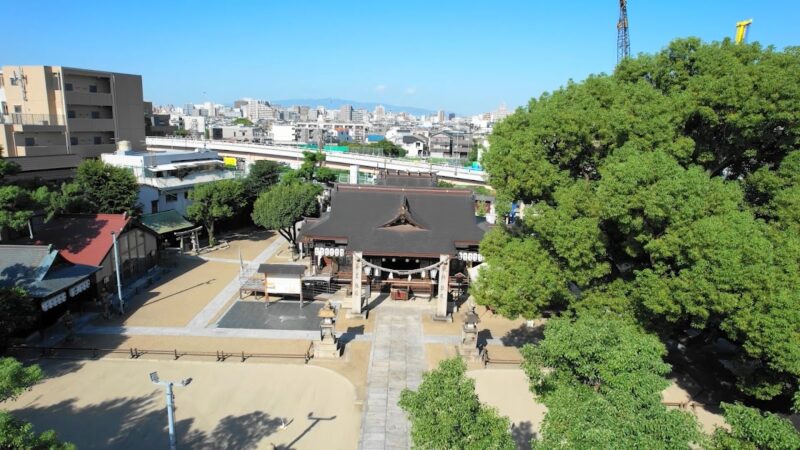
Tsurumi Shrine is located at 3-20-18 Arakawa, Higashi-Osaka City, Osaka Prefecture. It is a shrine listed in the Engishiki Jinmyocho as a Shikinaisha (minor shrine) in Shibukawa District, Kawachi Province. Although currently located in a residential area, the shrine grounds maintain a tranquil atmosphere, providing visitors with a peaceful space.
Shrine Rank and Historical Position
Tsurumi Shrine is a Shikinaisha (a shrine listed in the Engishiki Jinmyocho, a historical record of shrines in Japan) corresponding to “Kinai Shrine, Kawachi Province, Shibukawa District, Tsurumi Shrine,” and has been recognized as an important shrine since ancient times. Its former rank was Village Shrine, and it has a long history as a center of local faith. It is even mentioned in the national history in 886 AD, during the reign of Emperor Koko, the 58th emperor, demonstrating its deep historical significance.
Deities and Benefits
Main Deities: Hayaakitsuhiko-no-Mikoto and Hayaakitsuhime-no-Mikoto
The main deities of Tsurumi Shrine are the married couple Hayaakitsuhiko-no-Mikoto and Hayaakitsuhime-no-Mikoto. These two deities are known as water gods and gods of river mouths and harbors, appearing in the Kojiki and Nihon Shoki.
Hayaakitsuhiko-no-Mikoto and Hayaakitsuhime-no-Mikoto are deities born during Izanagi and Izanami’s creation of Japan, and have been particularly revered as guardians of water and rivers. The Tsurumi Shrine is known for its miraculous powers in bringing rain, and this is attributed to the divine virtues of these enshrined deities.
Deities Enshrined Together
In addition to the main deity, the following deities are enshrined together at Tsurumi Shrine:
- Susanoo-no-Mikoto: God of protection against misfortune and disease
- Toyouke-hime-no-Kami: God of abundant harvests and industry
- Sukunahikona-no-Mikoto: God of medicine and hot springs
- Takemikazuchi-no-Mikoto: God of military fortune and victory
- Ukemochi-no-Kami: God of food and agriculture
- Mihohiko-no-Mikoto: God of grains
- Empress Suiko: 33rd Emperor
- Sugawara no Michizane: God of Learning and Literature
Due to these enshrined deities, Tsurumi Shrine is revered as a shrine that bestows a variety of blessings, including matchmaking, business prosperity, protection from evil, traffic safety, and academic success.
History and Origins of Tsurumi Shrine
Founding and Ancient Records
The exact founding date of Tsurumi Shrine is unclear, but records indicate that it already existed during the reign of Emperor Koko in the second year of Ninna (886). This suggests that it was already recognized as an important shrine in the early Heian period.
Emperor Daigo and the Miracle of Rainmaking
The most important event in the history of Tsurumi Shrine is the rainmaking prayer in the tenth year of Engi (910). That year, a severe drought occurred, and Emperor Daigo dispatched imperial envoys to twelve shrines in Kawachi Province to pray for rain. Tsurumi Shrine was one of these twelve.
As a result of the prayers, the long-awaited heavy rain fell, and continued to fall steadily thereafter, resulting in bountiful harvests for several years. Deeply moved by this miraculous event, Emperor Daigo bestowed upon the shrine the name “Tsurumi Shrine” and the divine rank of Junior Fifth Rank, Upper Grade. This event is an important historical fact demonstrating the importance of Tsurumi Shrine to the imperial court.
From the Medieval to the Early Modern Period
While detailed records from the medieval period onward are limited, Tsurumi Shrine continued to attract worshippers as the local tutelary deity. There was a period when it was also called “Tenjin,” suggesting a strong devotion to Sugawara no Michizane.
Modern Transformations
Due to the reform of the shrine system during the Meiji era, Tsurumi Shrine was ranked as a village shrine. Its former location is believed to be Higashi-Ashidai Village, Shibukawa District, Kawachi Province (near present-day Ashidai, Higashi-Osaka City), but there are various theories regarding the timing and circumstances of its relocation to its current location. Currently situated in Arakawa, Higashi-Osaka City, it is revered by local residents as the tutelary deity of the Fuse area.
Highlights of the Shrine Grounds
Torii Gate and Approach
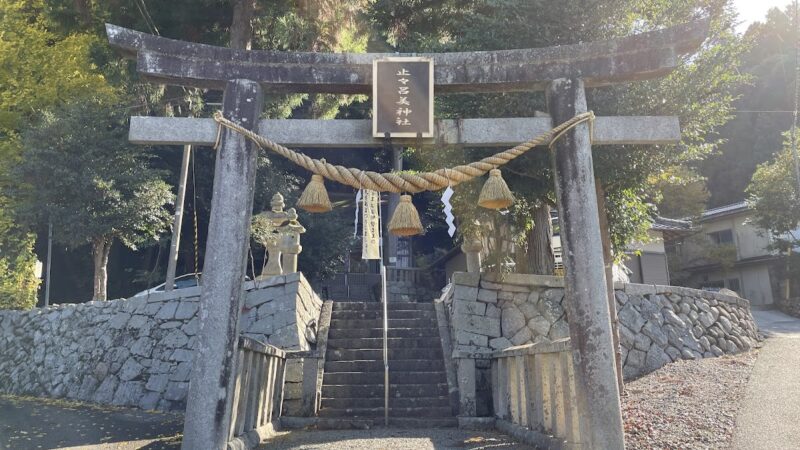
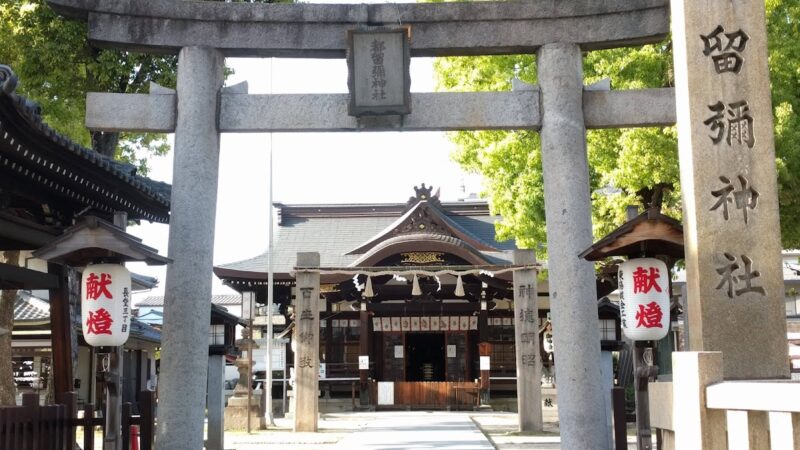
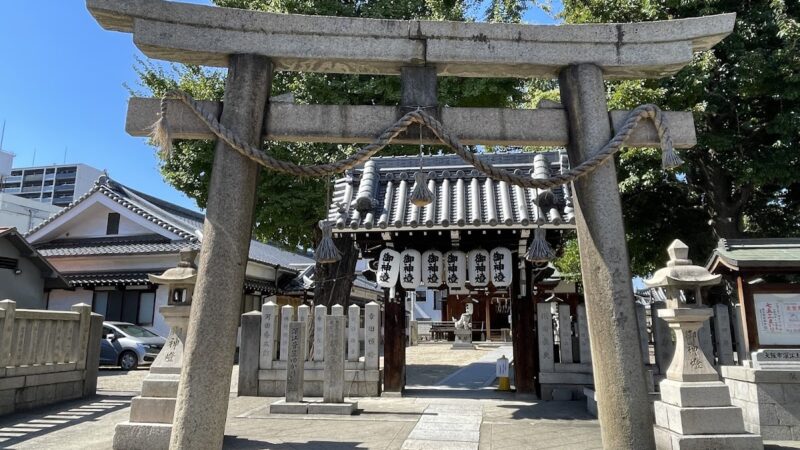
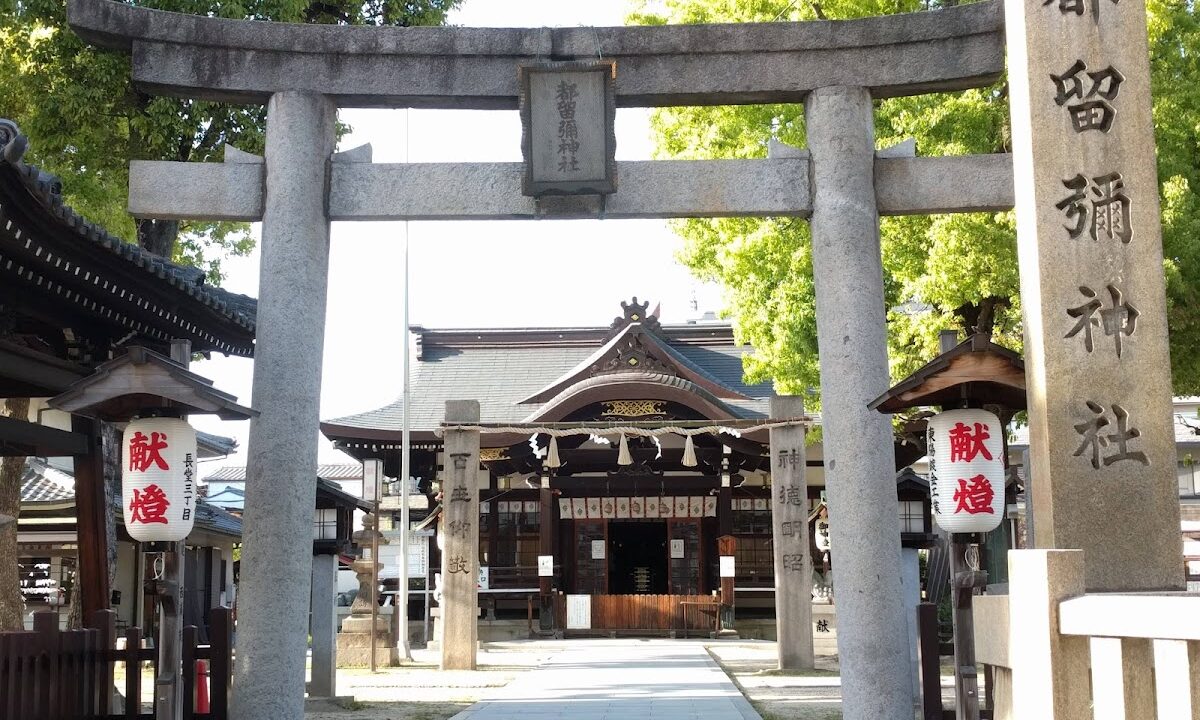
Although Tsurumi Shrine is located in a residential area, stepping onto the grounds reveals a tranquil space far removed from the hustle and bustle of the city. Passing through the torii gate, a well-maintained approach leads to the shrine buildings.
Worship Hall and Main Sanctuary
The worship hall is a traditional wooden shrine building, carefully maintained. The main sanctuary is located behind the worship hall and enshrines the deity. The entire shrine grounds are compact, but kept clean, providing a comfortable environment for worship. ### Shrines and Stone Monuments
Within the shrine grounds are several smaller shrines dedicated to the deities enshrined here, as well as stone monuments that tell the history of the shrine. In particular, several shrines that were formerly located nearby, such as Kashima Shrine, are enshrined here, preserving the history of local faith.
Seasonal Scenery
The grounds of Tsurumi Shrine offer beautiful scenery throughout the four seasons. Especially during the New Year’s pilgrimage and the annual festival, it is bustling with many worshippers, playing a central role in the local community.
Goshuin (Shrine Seal)
About Obtaining Goshuin
Tsurumi Shrine offers goshuin (shrine seals). Goshuin are popular among worshippers as a memento of their visit and proof of their shrine pilgrimage. Tsurumi Shrine’s goshuin sometimes includes the shrine’s name along with its history as a Shikinaisha (a shrine listed in the Engishiki, an ancient Japanese legal code).
How to Obtain a Goshuin
If you wish to receive a goshuin, please inquire at the shrine office. However, since the Shinto priest may not always be present, it is recommended to check the visiting hours in advance. Bringing your goshuincho (stamp book) and making a respectful request is considered proper etiquette when visiting.
Points for Goshuin Pilgrimage
Tsurumi Shrine is a Shikinaisha (a shrine listed in the Engishiki Jinmyocho), and is an important spot for pilgrims visiting Shikinaisha in Kawachi Province. Visiting it along with other Shikinaisha in Osaka Prefecture and shrines around Higashi-Osaka City will allow you to enjoy a deeper historical understanding and a more fulfilling shrine pilgrimage.
Access Information
Location
Address: 3-20-18 Arakawa, Higashi-Osaka City, Osaka Prefecture 577-0843
Access by Train
Tsurumi Shrine is easily accessible by public transportation.
- Approximately 10 minutes on foot from JR Osaka Higashi Line “JR Kawachi-Eiwa Station”
- Approximately 10 minutes on foot from Kintetsu Nara Line “Kawachi-Eiwa Station”
- Approximately 15 minutes on foot from Kintetsu Osaka Line/Nara Line “Fuse Station”
Fuse Station is a limited express stop and is easily accessible, about 10 minutes from Osaka Namba Station. The route from the station to the shrine goes through a residential area, but you can arrive without getting lost by using the signs and map apps.
Access by Car
If visiting by car, it’s about 10 minutes from the Hanshin Expressway Higashi Osaka Line “Takaida Exit”. However, since the shrine’s dedicated parking is limited, we recommend using public transportation. There are coin-operated parking lots nearby, but since it’s a residential area, some roads are narrow, so caution is needed when driving.
Visiting Hours
The shrine grounds are generally open all day, but the shrine office has limited hours. If you wish to receive a Goshuin (temple/shrine stamp) or prayer, it is recommended to check in advance.
Nearby Attractions
Fuse Ebisu Shrine
Fuse Ebisu Shrine is within walking distance of Tsurumi Shrine. Known as the god of business prosperity, it is bustling with many worshippers during the “Toka Ebisu” festival from January 9th to 11th every year. Visiting both Tsurumi Shrine and Fuse Ebisu Shrine will allow you to gain a deeper understanding of the religious culture of the Fuse area in Higashi-Osaka City.
History and Culture of Higashi-Osaka City
Higashi-Osaka City is known as a “manufacturing city” and is an industrial city with a concentration of small and medium-sized enterprises. It is also famous for being home to Hanazono Rugby Stadium, a sacred ground for rugby. It is recommended to experience the industry and culture of Higashi-Osaka City in conjunction with your visit to Tsurumi Shrine.
Pilgrimage to Shikinaisha Shrines in Kawachi Province
Tsurumi Shrine is a Shikinaisha shrine located in Shibukawa District, Kawachi Province, and other Shikinaisha shrines of Kawachi Province are scattered around the area. Those interested in visiting Shikinaisha shrines can experience ancient religious culture more deeply by visiting other Shikinaisha shrines in Kawachi Province, such as Hiraoka Shrine (Higashi-Osaka City) and Ishikiri Tsurugi Shrine (Higashi-Osaka City).
Annual Events and Festivals
Annual Festival
Tsurumi Shrine holds an annual festival every year. This is the most important festival for the shrine, where gratitude is expressed to the enshrined deity and prayers are offered for the prosperity of the region. Local residents participate, and traditional Shinto rituals are solemnly performed.
New Year’s Visit
During the first three days of the New Year, many visitors come to the shrine as the local guardian shrine. The shrine grounds are bustling with worshippers praying for good health, family safety, and business prosperity in the new year. While Tsurumi Shrine’s New Year’s visit may not be as crowded as larger shrines, it offers a warm, community-oriented atmosphere for welcoming the new year.
Other Annual Events
Various Shinto rituals are held throughout the year, including the Setsubun Festival and the Summer Purification Ceremony. For detailed schedules, please check during your visit or find information on local bulletin boards.
Faith and Divine Virtues of Tsurumi Shrine
Rainmaking and Abundant Harvests
The oldest form of worship at Tsurumi Shrine is the prayer for rain and abundant harvests. The main deities, Hayaakitsuhiko-no-Mikoto and Hayaakitsuhime-no-Mikoto, are water gods and have been revered as gods who control water, essential for agriculture. The miraculous rainmaking during the reign of Emperor Daigo exemplifies the core of this belief.
Matchmaking and Family Safety
Since Hayaakitsuhiko-no-Mikoto and Hayaakitsuhime-no-Mikoto are a married couple, the shrine is believed to bring blessings for matchmaking and marital harmony. Many visitors also come to pray for business prosperity and family safety.
Protection from Misfortune and Traffic Safety
Due to the divine virtues of Susanoo-no-Mikoto and Takemikazuchi-no-Mikoto, who are enshrined here, the shrine is also believed to offer blessings for protection from misfortune, disaster, and traffic safety. It is worshipped as a local guardian shrine, protecting the safety of daily life.
Academic Success
Since Sugawara no Michizane is enshrined here, visitors come to pray for academic success and passing entrance exams. The fact that it was formerly called “Tenjin” suggests that it is deeply rooted in the belief in it as a god of learning.
About the Name of Tsurumi Shrine
There are several theories regarding the origin of the shrine’s name, “Tsurumi.” The sound “Tsurumi” evokes legends related to cranes or a connection to the place name “Tsurumi,” but there is no definitive explanation.
Since the shrine’s name was bestowed by Emperor Daigo, it may have a meaning related to the miraculous power of rainmaking. Other interpretations include “staying in the capital (miyako)” or a theory that it originates from an archaic word representing the flow of water. Various interpretations have emerged along with the history of the shrine.
Manners and Etiquette for Visiting a Shrine
Basic Worship Etiquette
When visiting Tsurumi Shrine, please observe the following basic etiquette:
- Bow before passing through the torii gate.
- Avoid walking in the center of the path (the center is the path for the gods).
- Cleanse your hands and mouth at the purification fountain.
- Worship in front of the main hall using the “two bows, two claps, one bow” method.
- Behave quietly on the shrine grounds and be considerate of other worshippers.
Photography
Photography is generally permitted on the shrine grounds, but there may be times when it is inappropriate, such as inside the main hall or during religious ceremonies. Also, please be considerate of the privacy of other worshippers. If you have any questions, it is recommended to check with a shrine priest.
Tsurumi Shrine and the Local Community
Tsurumi Shrine has played a central role in the local community for many years as the “guardian shrine of Fuse.” Through festivals and annual events, the shrine serves as a place to deepen the bonds among local residents.
Even in modern times, Tsurumi Shrine plays an important role as a spiritual pillar of the community and as a cultural center that conveys history and tradition. The fact that it maintains a tranquil atmosphere despite being located in a residential area is a testament to the respect and affection that local residents have for the shrine.
Summary
Tsurumi Shrine is a prestigious shrine listed in the Engishiki Jinmyocho (a list of shrines compiled in the Heian period), boasting a history of over a thousand years. The shrine’s reputation for miraculous powers in rainmaking, bestowed upon it by Emperor Daigo, the faith in the water deities Hayaakitsuhiko-no-Mikoto and Hayaakitsuhime-no-Mikoto, and its deeply rooted local faith as the “guardian deity of Fuse” have been continuously passed down to the present day.
Despite its current location in a residential area of Higashi-Osaka City, Osaka Prefecture, the shrine grounds maintain a calm atmosphere, offering peace of mind to visitors. Tsurumi Shrine is beloved by a diverse range of people, from shrine enthusiasts seeking Goshuin (shrine stamps) to local residents who regularly visit it as their guardian deity.
Conveniently located near JR Kawachi-Eiwa Station and Kintetsu Fuse Station, it’s easily accessible from Osaka City. As part of a pilgrimage to the shrines listed in the Engishiki (ancient Japanese legal code) of Kawachi Province, or as part of a historical exploration of Higashi-Osaka City, be sure to visit Tsurumi Shrine. The ancient spirit of faith and the warm, community-rooted atmosphere will gently welcome visitors.