Zenpuku-ji Temple (Ukyo-ku, Kyoto Prefecture) Complete Guide | History, Access, and Goshuin (Temple Seal) Information
Located in Utano Fukuoji-cho, Ukyo-ku, Kyoto City, Zenpuku-ji Temple is a temple that carries on the traditions of the Jodo sect and has long been a center of local faith. In Ukyo-ku, where many famous temples such as Ninna-ji and Ryoan-ji are located, Zenpuku-ji maintains a tranquil atmosphere, offering a peaceful space for visitors. This article provides a detailed introduction to Zenpuku-ji Temple, including its historical background, highlights within the temple grounds, access methods, and surrounding area information.
Basic Information about Zenpuku-ji Temple
Zenpuku-ji Temple is a Jodo sect temple located at 91 Utano Fukuoji-cho, Ukyo-ku, Kyoto City. The Utano area is located in the northwestern part of Kyoto and is known as a relatively quiet residential area.
Basic Temple Data
- Official Name: Zenpuku-ji Temple
- Sect: Jodo-shu (Pure Land Buddhism)
- Location: 91 Utano Fukuoji-cho, Ukyo-ku, Kyoto City, Kyoto Prefecture
- Nearest Station: Keifuku Electric Railway Kitano Line “Utano Station”, JR “Hanazono Station”
- Parking: Please check (Please contact the temple before visiting)
Zenpuku-ji Temple has long been a temple deeply rooted in the community, attracting many worshippers, even among the temples in Ukyo-ku. The surrounding area has a tranquil atmosphere unique to the Utano district, offering a peaceful environment for worship away from the hustle and bustle of Kyoto.
History and Origins of Zenpuku-ji Temple
Establishment as a Jodo-shu Temple
Zenpuku-ji Temple has played a part in Kyoto’s Buddhist culture as a temple that transmits the teachings of the Jodo-shu sect. The Jodo sect, founded by Honen Shonin (1133-1212), teaches that anyone can attain rebirth in the Pure Land by chanting the Nembutsu, “Namu Amida Butsu.”
A key characteristic of the Jodo sect is that it teaches salvation through the easily understandable practice of Nembutsu, without requiring complex ascetic practices or academic study. This teaching was widely accepted by samurai and commoners from the Kamakura period onward, and many Jodo sect temples were built throughout Japan.
The Role of Temples in Ukyo Ward
Ukyo Ward in Kyoto City is known as an area where many famous temples, including the World Heritage sites of Ninna-ji, Ryoan-ji, and Tenryu-ji, are concentrated. Unlike these large temples, Zenpuku-ji has functioned as a place of daily faith for the local people.
Historically, the Utano area has been a place dotted with villas (villas) of nobles and monks since the Heian period, and has been cherished by people seeking a quiet environment. It is believed that Zenpuku-ji Temple, within this historical context, has played a role as a spiritual pillar for the region.
The Teachings of the Jodo Sect and Zenpuku-ji Temple
Basic Doctrines of the Jodo Sect
The Jodo Sect is a sect based on “exclusive recitation of the Buddha’s name.” In his *Senchaku Hongan Nembutsu Shu* (Collection of Selected Original Vows and Recitation of the Buddha’s Name), Honen Shonin taught that believing in Amida Buddha’s original vow and reciting the Buddha’s name is the most certain path to rebirth in the Pure Land.
The core of the Jodo (Pure Land) sect’s teachings lies in the following points:
- Reliance on Other Power: The belief that salvation is achieved not through one’s own power (self-power), but through the power of Amida Buddha’s original vow (other power).
- Exclusive Nembutsu Practice: The practice of devoting oneself solely to chanting “Namu Amida Butsu” (Homage to Amida Buddha).
- Equal Salvation: The teaching that all people, regardless of their level of education or ascetic practice, are saved through Nembutsu.
These teachings distinguished them from the aristocratic and scholarly Buddhism of the time, and had a significant impact as a form of Buddhism open to ordinary people.
Faith Practice at Zenpuku-ji Temple
At Zenpuku-ji Temple, religious services and events are conducted in accordance with the traditions of the Jodo sect. During daily services, the Amida Sutra is recited and Nembutsu is chanted, and worshippers can also chant along.
Jodo-shu temples generally observe the following annual events:
- Shōshō-e (January): A memorial service praying for safety in the new year
- Shunki Higan-e (March): A memorial service for ancestors
- Kōtan-e (April): A memorial service celebrating the birth of Honen Shonin
- Urabon-e (August): Ancestor memorial service during the Obon festival
- Shūki Higan-e (September): Ancestor memorial service in autumn
- Goki-e (December or January): A memorial service for Honen Shonin’s death anniversary
It is highly likely that these events are also held at Zenpuku-ji Temple. For details, we recommend contacting the temple directly.
Highlights and Features of the Temple Grounds
Main Hall and Principal Image
It is believed that the main hall of Zenpuku-ji Temple enshrines Amida Buddha, the principal image of Jodo-shu temples. Amida Buddha is the principal deity of the Western Pure Land, also known as “Amitabha Buddha” and “Amitabha Buddha,” and is worshipped as a Buddha possessing infinite life and radiant light.
In the main hall of a Jodo sect temple, the Amida Buddha statue is typically placed in the center, flanked by Kannon Bodhisattva and Seishi Bodhisattva, forming the “Amida Triad.” Statues of Honen Shonin and memorial tablets of successive head priests are also often enshrined.
Atmosphere of the Temple Grounds
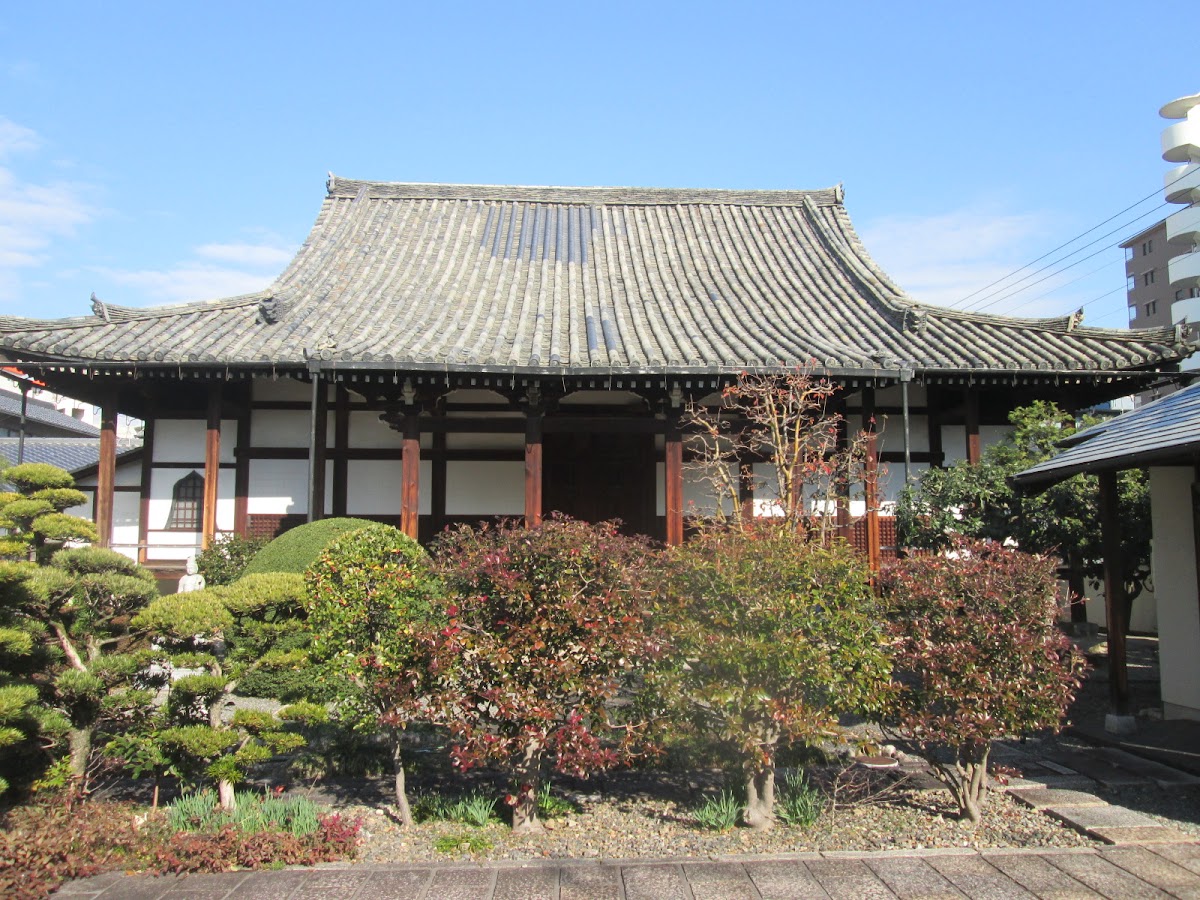
Located in the quiet environment of the Utano district, Zenpuku-ji Temple offers a tranquil atmosphere, far removed from the hustle and bustle of Kyoto city. While the grounds are relatively compact, well-maintained gardens and landscaping welcome visitors.
Like temples in Ukyo Ward, the temple offers an environment where one can feel the changing seasons, and the grounds are beautifully colored during the cherry blossom season in spring and the autumn foliage season.
Access and Transportation Information
Access by Public Transportation
The most convenient way to access Zenpuku-ji Temple is by using public transportation within Kyoto City.
If using Keifuku Electric Railway (Randen)
The nearest station is Utano Station on the Keifuku Electric Railway Kitano Line:
- From Arashiyama: Take the Kitano Line from Randen Arashiyama Station and get off at Utano Station (approx. 15 minutes)
- From Shijo-Omiya: Take the Kitano Line from Shijo-Omiya Station and get off at Utano Station (approx. 20 minutes)
- Approximately 10 minutes on foot from Utano Station
If using JR
Hanazono Station on the JR Sagano Line is also available:
- Approximately 12 minutes from Kyoto Station to Hanazono Station on the JR Sagano Line
- Approximately 15-20 minutes on foot from Hanazono Station, or by bus or taxi
If using City Buses
Several Kyoto City Bus routes also pass through the Utano area:
- From Kyoto Station: Take Kyoto City Bus Route 26 or similar and get off at the “Utano” bus stop.
- From Shijo Kawaramachi: Multiple bus routes are available.
For specific bus routes and timetables, please check the latest information on the Kyoto City Transportation Bureau website.
Access by Private Car
If visiting by private car:
- Meishin Expressway: Approximately 30 minutes from Kyoto Minami IC
- Parking: Please inquire with the temple in advance regarding the availability of parking.
Due to frequent traffic congestion in Kyoto city, especially during peak tourist season, we recommend using public transportation.
Precautions and Manners When Visiting a Temple
Basic Manners for Visiting a Temple
When visiting Zenpuku-ji Temple, please observe the following basic manners:
- Clothing: Avoid revealing clothing; clean and subdued attire is preferable.
- Photography: Photography is often permitted on the temple grounds, but it may be prohibited inside the main hall, so please check beforehand.
- Quietness: Please be quiet on the temple grounds and be considerate of other visitors.
- Smoking: Smoking is generally prohibited on the temple grounds.
- Pets: Whether or not pets are allowed varies by temple, so please check beforehand.
How to Visit a Jodo Sect Temple
Basic ways to visit a Jodo Sect temple:
- Bow at the temple gate before entering the grounds.
- Cleanse your hands and mouth at the water basin (chozuya).
- 1. Join your hands in prayer in front of the main hall and chant the Nembutsu, “Namu Amida Butsu.”
- Place your offering in the offering box and quietly join your hands in prayer.
- Bow once again at the temple gate when leaving.
In the Jodo sect, chanting the Nembutsu is considered the most important practice, so please chant it wholeheartedly when visiting.
About Goshuin (Temple Seals)
Significance of Goshuin
Goshuin are seals and calligraphy given as proof of visiting a temple or shrine. Originally, they were given as proof of offering a copied sutra, but nowadays they are popular as a memento of a visit.
Issuance of Goshuin at Zenpuku-ji Temple
Whether or not Zenpuku-ji Temple issues Goshuin depends on the size and policy of the temple. If you wish to receive a Goshuin (temple stamp):
- We recommend contacting the temple directly before your visit.
- Bring your Goshuincho (stamp book) and make a polite request.
- Understand that the Goshuin is proof of your visit, not a stamp rally.
- Prepare a donation (usually around 300-500 yen).
Some temples do not offer Goshuin; in such cases, please cherish the visit itself.
Nearby Tourist Attractions
Ninna-ji Temple (World Heritage Site)
Located approximately 2 kilometers from Zenpuku-ji Temple, Ninna-ji Temple is the head temple of the Omuro branch of Shingon Buddhism and a representative temple of Kyoto, registered as a World Heritage Site.
- Highlights: Main Hall (National Treasure), Five-Storied Pagoda, Omuro Cherry Blossoms
- Visiting Hours: 9:00-17:00 (Varies by season)
- Admission Fee: 500 yen
Ninna-ji Temple has deep ties to the Imperial family and was also known as “Omuro Gosho” (Omuro Imperial Palace). The Omuro cherry blossoms in spring are famous as one of Kyoto’s best cherry blossom viewing spots.
Ryoan-ji Temple (World Heritage Site)
Further east from Ninna-ji Temple lies Ryoan-ji Temple, world-renowned for its rock garden.
- Highlights: Rock Garden (Special Place of Scenic Beauty/Historic Site), Kyoyo Pond
- Visiting Hours: 8:00-17:00 (Varies by season)
- Admission Fee: 500 yen
Ryoan-ji Temple’s rock garden is a masterpiece of dry landscape gardening expressing the spirit of Zen, attracting many visitors from both Japan and abroad. ### Kinukake-no-michi
The Kinukake-no-michi walking path, approximately 2.5 kilometers long, connects Ninna-ji Temple, Ryoan-ji Temple, and Kinkaku-ji Temple. It’s a popular Kyoto sightseeing route. You can enjoy the changing seasons while visiting World Heritage sites.
Myoshin-ji Temple
To the southeast of Zenpuku-ji Temple lies Myoshin-ji Temple, the head temple of the Myoshin-ji branch of the Rinzai school of Zen Buddhism. Numerous sub-temples are scattered throughout its vast grounds, each preserving beautiful gardens and valuable cultural assets.
Temple Culture of Ukyo Ward
Characteristics of Ukyo Ward
Ukyo Ward in Kyoto City is an administrative district stretching from the western to northwestern parts of Kyoto City. It is the largest of Kyoto City’s 11 wards in terms of area. The ward includes historically important areas such as Saga-Arashiyama, Uzumasa, Omuro, and Utano.
Characteristics of Temples in Ukyo Ward:
- World Heritage Sites: Multiple World Heritage temples including Ninna-ji, Ryoan-ji, and Tenryu-ji
- Diverse Sects: Temples of various sects, such as Shingon, Rinzai, and Jodo, coexist
- Natural Environment: Located surrounded by rich nature, including Arashiyama and Kinugasayama
- Cultural Properties: Possesses numerous National Treasures and Important Cultural Properties
History of the Utano Area
The name Utano is said to originate from Emperor Uda of the Heian period. After abdicating, Emperor Uda became a monk and entered Ninna-ji Temple, becoming known as “Emperor Uda Hōō.” This area has deep ties to the imperial family and nobility, and has historically developed as a region of high status.
Modern Utano district, while developed as a quiet residential area, retains its historical atmosphere, possessing a calm charm that differs from other tourist-oriented areas of Kyoto.
Information Regarding Cemeteries and Memorial Services
About Temple Cemeteries
Zenpukuji Temple may manage a cemetery. Temple cemeteries have the following characteristics:
Advantages of Temple Cemeteries
- Religious Support: Memorial services and ceremonies can be held at the temple.
- Peace of Mind: Continuous management by the temple.
- History and Tradition: Memorial services are held at a temple with a long history.
- Access: Often located close to urban areas.
Points to Note Regarding Temple Cemeteries
- Parishioner System: Becoming a parishioner may be a requirement.
- Costs: Perpetual use fees, management fees, parishioner fees, etc. are required.
- Sect: Generally, you must follow the temple’s sect.
Inquiries Regarding Cemeteries
Please contact Zenpukuji Temple directly to inquire whether they provide cemetery information and whether there are any available plots. When considering a cemetery plot, it is important to check the following:
- Costs such as perpetual usage fees and annual maintenance fees
- Whether or not you need to become a temple parishioner
- The environment and sunlight of the cemetery plot
- Availability of memorial service facilities
- Availability of parking
These are important points to check.
Perpetual Memorial Services and Columbariums
In recent years, due to the declining birthrate, aging population, and changes in family structures, the demand for perpetual memorial services and columbariums has increased. Whether Zenpukuji Temple offers these services needs to be confirmed directly with the temple.
Characteristics of Perpetual Memorial Services:
- The temple will provide perpetual memorial services even without a successor
- Often less expensive than a typical cemetery plot
- There are communal and individual burial options
Information on Memorial Services and Funerals
Memorial Services at the Temple
Zenpukuji Temple may hold memorial services for parishioners and those with ties to the temple. Common Types of Memorial Services:
Annual Memorial Services
- First seven days, Forty-ninth day (end of mourning)
- First anniversary, Third anniversary
- Seventh anniversary, Thirteenth anniversary
- Seventeenth anniversary, Twenty-third anniversary
- Twenty-seventh anniversary, Thirty-third anniversary
- Fiftieth anniversary
Other Memorial Services
- Monthly memorial service
- Obon memorial service
- Higan memorial service
- Annual memorial service
About Funerals
Jodo-shu funerals are conducted as a ceremony to send the deceased to Amida Buddha’s Pure Land. Whether a funeral can be held at Zenpuku-ji Temple depends on the temple’s facilities and policies, so prior confirmation is necessary.
Characteristics of Jodo-shu funerals:
- Ceremony centered on chanting the Buddha’s name
- Ordination (granting of a posthumous Buddhist name)
- Dharma talk to guide the deceased
- Incense offering
How to contact Zenpuku-ji Temple
Things to check in advance
Things to check before visiting Zenpuku-ji Temple or using its services:
- Visiting hours: Hours when the temple is open for viewing
- Event schedule: Dates of special memorial services and events
- Goshuin (temple stamp): Availability and reception hours
- Parking: Availability
- Cemetery: Availability of available plots and costs
- Memorial service: Reservation method and costs
- Photography: Permitted areas
Etiquette when making inquiries
When contacting the temple, please note the following:
- Avoid calling early in the morning or late at night (9:00-17:00 is a good guideline)
- Avoid busy times such as during memorial services.
- Use polite language.
- Prepare necessary information in advance.
- If it’s not an emergency, consider visiting for a consultation.
Visiting Jodo Sect Temples in Kyoto
Major Jodo Sect Temples in Kyoto
When visiting Zenpuku-ji Temple, why not also visit other Jodo Sect temples in Kyoto?
Chion-in Temple (Head Temple)
Chion-in Temple, the head temple of the Jodo sect, is a large temple located in Higashiyama. Built on land associated with Honen Shonin, it boasts many attractions, including the national treasure Sanmon Gate and Miei-do Hall.
Konkai Komyoji Temple
Konkai Komyoji Temple, affectionately known as “Kurotani-san,” is said to be the place where Honen Shonin first built his hermitage. It also has a history of serving as the headquarters of the Kyoto Shugoshoku (Kyoto Guardian) during the late Edo period.
Seijōkain Temple
Located east of the Kyoto Imperial Palace, Seijōkain Temple is a Jōdo sect temple with deep ties to the Imperial family. It has a history of Honen Shonin preaching the teachings of Nembutsu at the residence of Emperor Go-Shirakawa.
How to Enjoy Visiting Jōdo Sect Temples
When visiting each temple:
- Goshuincho: Using a Jōdo sect-specific goshuincho creates a sense of unity.
- Understanding the Teachings: Learn about Honen Shonin’s teachings at each temple.
- Architectural Style: Observe the unique architectural style of Jōdo sect temples.
- Gardens: Appreciate the unique garden beauty of each temple.
- Seasons: Enjoy the changing scenery of each season.
Guidelines for Visiting Zenpukuji Temple
Significance of Visiting Temples
Visiting temples is not merely sightseeing; it is a religious act of self-reflection and seeking inner peace. At temples deeply rooted in the community, such as Zenpuku-ji Temple, one can particularly feel its original essence.
According to the teachings of the Jodo sect, when visiting a temple, one should:
- Chanting the Nembutsu: Chant “Namu Amida Butsu” with sincerity
- Gratitude: Express gratitude for daily blessings
- Ancestor Worship: Remember ancestors and those who have passed away
- Self-Reflection: Reflect on one’s daily actions
- Prayer for Peace: Pray for world peace
An Experience in Silence
At temples not commercialized for tourism, one can experience the true essence of Kyoto, a spiritual experience in tranquility. By visiting a temple like Zenpuku-ji Temple, you can:
- Find peace of mind away from the hustle and bustle
- Understand traditional Japanese faith and culture
- Recognize the role of temples as community hubs
- Secure time for self-reflection
These experiences will be invaluable opportunities in modern society.
Summary: The Charm of Zenpuku-ji Temple
Located in Utano Fukuoji-cho, Ukyo-ku, Kyoto City, Zenpuku-ji Temple is a temple that preserves the traditions of the Jodo sect while functioning as a place of worship for the local people. Unlike famous tourist temples such as Ninna-ji and Ryoan-ji, it is a valuable place where you can experience the true essence of a temple in a quiet environment.
By visiting Zenpuku-ji Temple:
- Jodo Sect Teachings: You can encounter the easily understandable teaching of salvation through chanting the Buddha’s name.
- Tranquil Environment: A calm atmosphere unspoiled by tourism.
- Local History: You can feel the history and culture of the Utano area.
- Nearby Sightseeing: Good access to the World Heritage sites of Ninna-ji and Ryoan-ji.
- Spiritual Peace: Peace of mind away from daily life.
When visiting Kyoto, try visiting not only famous tourist temples, but also locally rooted temples like Zenpuku-ji. There you will find the true face of Kyoto that is not found in tourist guides.
When you visit, please respect the temple’s policies and manners, and quietly and sincerely recite the Nembutsu, “Namu Amida Butsu,” while reflecting on the teachings of Honen Shonin. We hope that your experience at Zenpuku-ji Temple will bring peace to your heart.