Complete Guide to Seifuku-ji Temple (Atsuta Ward, Nagoya City, Aichi Prefecture) | History, Access, and Visiting Information
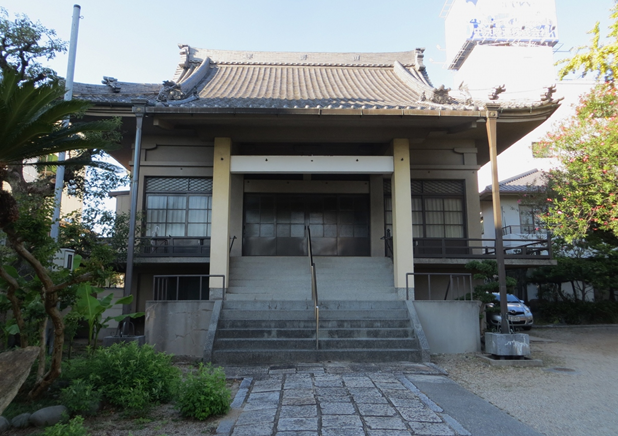
Located in Shiratori, Atsuta Ward, Nagoya City, Aichi Prefecture, Seifuku-ji Temple is a historic temple belonging to the Shinshu Otani sect. Situated within walking distance of Atsuta Shrine, it has long been a cherished center of local faith. This article comprehensively introduces information useful for those considering a visit to Seifuku-ji Temple, from basic information and history to access methods and nearby attractions.
Basic Information about Seifuku-ji Temple
Location and Contact Information
Seifuku-ji Temple is located at 3-10-21 Shiratori, Atsuta Ward, Nagoya City, Aichi Prefecture. The postal code is 456-0035. The telephone number is 052-671-3023, which handles inquiries regarding visits and consultations about memorial services.
Sect and Corporate Information
Seifuku-ji Temple is a temple of the Shinshu Otani sect (Higashi Honganji sect). The Shinshu Otani sect is a branch of Jodo Shinshu Buddhism, founded by Shinran Shonin and with Amida Buddha as its principal deity. It is registered as a formal religious corporation with corporate number 3180005000396.
A key characteristic of the Shinshu Otani sect is its teaching that through the chanting of “Namu Amida Butsu,” everyone is equally saved by the power of Amida Buddha’s vow. Saifuku-ji Temple also conducts services and sermons based on this Jodo Shinshu teaching.
How to Access Saifuku-ji Temple
Access by Train
Saifuku-ji Temple is conveniently accessible by public transportation within Nagoya City. There are several nearby stations, allowing visitors to choose based on their starting point.
The closest station is Atsuta-Jingu-Tenmacho Station on the Nagoya Municipal Subway Meijo Line, approximately a 5-minute walk (about 434m) from the station. Leaving the station and heading towards Shiratori, you’ll see Seifuku-ji Temple nestled in a residential area.
From Nagoya Municipal Subway Meijo Line “Jingū-Nishi Station” it’s about a 6-minute walk (approx. 496m). This route is relatively easy to follow and is a familiar path to local residents.
From Meitetsu Nagoya Main Line “Jingū-mae Station” it’s about an 8-minute walk (approx. 647m). Taking the route via Atsuta Shrine makes it possible to visit Seifuku-ji Temple in conjunction with a visit to the shrine.
Both stations are within walking distance, making it easily accessible from various locations in Nagoya. Because the Meijo Line is a loop line, it may be possible to access the temple from Nagoya Station and Sakae without transfers.
Access by Car
If visiting by car, the “Horita Exit” or “Yobitsugi Exit” of the Nagoya Expressway are convenient. However, the area around the temple is a residential area, and parking spaces may be limited. It is recommended to call ahead to check parking availability and operating hours before visiting.
There are several paid parking lots around Atsuta Shrine, so you can also choose to use one of those and walk to Saifuku-ji Temple.
History and Origins of Saifuku-ji Temple
Historical Background of the Shinshu Otani School
The Shinshu Otani School, to which Saifuku-ji Temple belongs, is a sect that follows the Jodo Shinshu tradition, founded by the Kamakura period monk Shinran Shonin (1173-1263). After training at Mount Hiei, Shinran Shonin became a disciple of Honen Shonin and deepened the teachings of exclusive recitation of the Buddha’s name.
During the Edo period, the sect split into Higashi Hongan-ji and Nishi Hongan-ji, and the Shinshu Otani School developed as a sect with Higashi Hongan-ji as its head temple. Even after the Meiji Restoration, it maintained a large number of followers and is now a large sect with approximately 8,900 temples nationwide.
History of Buddhist Temples in Atsuta Ward
Atsuta Ward in Nagoya City has long flourished as a temple town for Atsuta Shrine. While a center of Shintoism, many Buddhist temples were also built during the Edo period, fostering a culture of syncretism between Shinto and Buddhism. Even after the Meiji Restoration’s separation of Shinto and Buddhism, temples continued to play an important role as places of worship for the local people.
Nishifuku-ji Temple is also thought to have functioned within this historical context of Atsuta, serving as a family temple for local residents and a training ground for transmitting the teachings of Shin Buddhism. The Shiratori district is close to Atsuta Shrine and is an area with many long-established residential areas. Nishifuku-ji Temple is cherished as a spiritual pillar of the local community.
Features and Highlights of Nishifuku-ji Temple
Architectural Style of Shinshu Otani-ha Temples
Shinshu Otani-ha temples are generally characterized by a temple layout centered around the main hall. The main hall houses the principal image, a statue of Amida Buddha, and is divided into an inner and outer sanctuary. The decorations are relatively simple, and the space is designed to allow for concentration on the teachings of Nembutsu (recitation of Amida Buddha’s name).
Saifuku-ji Temple is believed to follow the traditional style of the Shinshu Otani sect, allowing visitors to chant Nembutsu and find peace of mind in a tranquil environment.
Connections with the Community
Saifuku-ji Temple, as a temple deeply rooted in the community, has strong ties with its parishioners. Through Buddhist services such as funerals, memorial services, and annual memorial services, it has been a part of the lives of local people at important milestones.
Furthermore, temples of the Shinshu Otani sect often hold regular Dharma talks and Buddhist lectures, and Saifuku-ji Temple may also offer opportunities for local residents to learn about Buddhist teachings. Please contact the temple directly for details.
Etiquette and Manners for Worship
How to Worship in the Shinshu Otani Sect
The Shinshu Otani sect has some differences in worship etiquette compared to other Buddhist sects. The basic flow of worship is as follows:
- Bow at the Temple Gate: When entering the temple, bow at the temple gate before entering the grounds.
- Visiting the Main Hall: When entering the main hall, remove your shoes and line them up neatly.
- Joining Hands in Prayer: Join your hands in prayer before the main image of Buddha and recite the Nembutsu, “Namu Amida Butsu.” In Shin Buddhism, clapping hands is not performed.
- Offering a Coin: An offering is an expression of gratitude. There are no set amounts.
- Bow Upon Exit: Bow when leaving the main hall and when leaving the temple gate.
Attire and Items to Bring When Visiting a Temple
For daily visits, clean and subdued attire is acceptable. However, when attending a memorial service, subdued colors such as black or navy blue are preferable.
Bringing a rosary (prayer beads) is recommended. In the Shinshu Otani sect, it is common to use double-strand prayer beads.
Nearby Attractions and Spots
Atsuta Shrine
Atsuta Shrine, located within walking distance of Saifuku-ji Temple, is a historic shrine dedicated to the Kusanagi-no-Tsurugi, one of the Three Sacred Treasures of Japan. It is known as one of Aichi Prefecture’s leading power spots, attracting approximately 7 million visitors annually.
The vast grounds contain numerous shrines, including the main shrine, the Hachiken-gu (separate shrine), and the Kamichigama Shrine, and a large camphor tree over a thousand years old is also a highlight. Visiting both Saifuku-ji Temple and Atsuta Shrine allows you to experience the faith and culture of both Shinto and Buddhism.
Shiratori Garden
Shiratori Garden, located in Atsuta Ward, Nagoya City, is a Japanese garden with a pond and strolling paths, modeled after the topography of the Chubu region. The approximately 3.7-hectare site features artificial hills, streams, waterfalls, and ponds, allowing visitors to enjoy the beauty of nature throughout the seasons. The “Seihutei” tea room offers an authentic tea ceremony experience and is a peaceful spot for relaxation. It’s about a 10-minute walk from Saifuku-ji Temple.
Nagoya City Museum
Located in Mizuho Ward, adjacent to Atsuta Ward, is the Nagoya City Museum, where you can learn about the history and culture of the Owari region. The permanent exhibition introduces the history of Nagoya from the Paleolithic period to the present day in chronological order, and special exhibitions are held regularly.
Shopping Streets and Food Culture of Atsuta Ward
Atsuta Ward retains its old-fashioned shopping streets, allowing you to experience the local lifestyle and culture. Kiyome Mochi is a well-known Atsuta specialty and a popular souvenir when visiting Atsuta Shrine.
Also, Miya Kishimen is another Nagoya specialty that can be enjoyed within the grounds of Atsuta Shrine. Enjoying these local delicacies before or after visiting Saifuku-ji Temple is highly recommended.
Temple Culture in Atsuta Ward, Nagoya City
Major Temples in Atsuta Ward
In addition to Seifuku-ji Temple, there are many other temples in Atsuta Ward, Nagoya City. Various temples of different sects, such as Seigan-ji Temple (Jodo sect), Hoji-ji Temple (Shingon sect), and Entsu-ji Temple (Soto sect), are deeply rooted in the community.
These temples each possess their own unique history and characteristics, shaping the diverse religious culture of Atsuta Ward. Visiting these temples allows for a deeper understanding of the diversity of Buddhism and the history of the region.
Major Shinshu Otani-ha Temples in Aichi Prefecture
Numerous Shinshu Otani-ha temples exist in Aichi Prefecture. Within Nagoya City, there are Shinshu Otani-ha temples in Naka Ward, Nakamura Ward, Kita Ward, and other areas, each serving as a center of local faith.
Group pilgrimages to Higashi Hongan-ji Temple (Kyoto City), the head temple of the Shinshu Otani-ha, are sometimes organized by these temples. It’s possible that similar activities are held at Saifuku-ji Temple, so those interested should inquire.
Memorial Services and Annual Events
Main Memorial Services of the Shinshu Otani School
Shinshu Otani School temples hold various memorial services throughout the year.
Gotan-e (Birth Celebration): A memorial service celebrating the birth of Shinran Shonin, held annually around May 21st.
Ho-on-ko (Memorial Service): A memorial service commemorating the anniversary of Shinran Shonin’s death, and the most important event in Shinshu Buddhism. Held annually around November 28th.
Gosho-ki (Anniversary Memorial Service): A memorial service for Shinran Shonin held in January at Higashi Hongan-ji Temple, the head temple.
These services are often held at individual temples, and at Saifuku-ji Temple, they provide an opportunity for parishioners to gather and reflect on the teachings of Shinran Shonin.
Obon and Higan
Obon (August) and Higan (the seven days centered around the spring and autumn equinoxes) are important times for honoring ancestors. At Saifuku-ji Temple, parishioners visit during these periods for grave visits and memorial services.
During Obon, the “Urabon-e” memorial service is held, and during Higan, the “Higan-e” service is held.
Funerals and Memorial Services
Shinshu Otani-ha Funerals
Funerals in the Shinshu Otani-ha sect are positioned as a ceremony to confirm that the deceased has attained rebirth in the Pure Land through the vow of Amida Buddha, and as a ceremony for the bereaved family to express gratitude for the Buddha’s grace.
Unlike other sects, the Shinshu sect’s fundamental idea is not to “pray for the deceased to attain Buddhahood,” but rather to “express gratitude to the deceased who has already become a Buddha.” Therefore, the meaning of funerals also differs from other sects.
Saifuku-ji Temple conducts funerals for its parishioners and accepts pre-funeral consultations. If you have concerns about funeral arrangements, costs, or preparations, we recommend consulting with us as soon as possible.
Memorial Services and Annual Memorial Services
In the Shinshu Otani sect, the following annual memorial services are held:
- First seven days, forty-ninth day (full mourning period)
- First anniversary, third anniversary
- Seventh anniversary, thirteenth anniversary
- Seventeenth anniversary, twenty-fifth anniversary
- Thirty-third anniversary, fiftieth anniversary
You can receive appropriate advice regarding the dates and preparations for memorial services by consulting with Saifuku-ji Temple.
The Parishioner System and Relationship with Temples
What it Means to Become a Parishioner
A parishioner is a family that provides financial and spiritual support to a specific temple. Becoming a parishioner allows you to receive priority in funeral and memorial services, and in some cases, you may also gain the right to use a cemetery plot.
On the other hand, temple parishioners also have certain obligations, such as annual maintenance fees (offerings) and participation in temple events. Those considering becoming a parishioner at Saifuku-ji Temple are advised to first consult with the temple and receive a detailed explanation.
Visiting by Non-Parishioners
Saifuku-ji Temple is open to non-parishioners as well. Anyone interested in Buddhism or Shin Buddhism, or those seeking a quiet place to calm their minds, is welcome to visit.
However, it is recommended to check with the temple in advance regarding viewing the interior of the main hall and participating in Dharma talks.
The Teachings of the Shinshu Otani School and Modern Society
The Modern Significance of Shinran Shonin’s Teachings
The core of Shinran Shonin’s teachings, as exemplified by the “theory of salvation for the wicked,” lies in the idea that ordinary people who cannot be saved by their own efforts are the very objects of Amida Buddha’s original vow.
This resonates with people in modern society who experience low self-esteem or feel a sense of unease, conveying the message, “It’s okay to be yourself.” In today’s society, where perfection is demanded, the teachings of Shin Buddhism can offer great solace.
Social Activities and the Shinshu Otani School
The Shinshu Otani School actively engages in various social activities, including peace movements, human rights advocacy, and environmental protection. This is an attempt to put Shinran Shonin’s teaching that “all people will be saved equally” into practice in modern society.
It is possible that Saifuku-ji Temple also practices this spirit of Shin Buddhism through its involvement with the local community.
Visitor Voices and Experiences
A Quiet and Peaceful Space
Many visitors to Saifuku-ji Temple appreciate its quiet and peaceful atmosphere. In contrast to the hustle and bustle of Atsuta Shrine, Saifuku-ji Temple, nestled quietly in a residential area, is cherished as a place to calm the mind and reflect on oneself.
Warmth Rooted in the Community
Local residents often say things like, “We’ve been taking care of them for generations,” and “The head priest is very kind and helpful.” Unlike large tourist temples, the warmth unique to a community-oriented temple is one of the charms of Seifuku-ji Temple.
Local Information for Atsuta Ward, Nagoya City
Overview of Atsuta Ward
Atsuta Ward in Nagoya City is located in the southern part of Nagoya City, with an area of approximately 8.2 square kilometers and a population of approximately 67,000 (as of 2024). It is a historical area that has developed since ancient times, centered around Atsuta Shrine, and is a mix of residential and commercial areas.
Convenient Transportation
Atsuta Ward is served by the Nagoya Municipal Subway Meijo Line, Meitetsu Nagoya Main Line, and JR Tokaido Main Line, making it a convenient area for transportation. It also has good access to Nagoya Station and Sakae, making it a popular and livable area.
Educational and Cultural Facilities
The ward has elementary and junior high schools, as well as educational institutions such as Aichi Prefectural Atsuta High School. It also boasts a wealth of cultural facilities, including Shiratori Garden, Nagoya City Museum, and Atsuta Shrine.
Practical Advice for Visiting Seifuku-ji Temple
Suitable Time and Season for Visiting
Seifuku-ji Temple is open for visits throughout the year, but if you wish to avoid dates of religious services or events, it is recommended to check in advance.
Spring (March-May): The temple grounds have a refreshing atmosphere with cherry blossoms and fresh greenery. There is a religious service during the Buddha’s Birthday period in May.
Summer (June-August): The temple may be crowded with parishioners during the Obon period (August).
Autumn (September-November): The temple offers a peaceful atmosphere during the autumn foliage season. An important religious service is held during the Hoonko period in November.
Winter (December to February): This is a time when there are relatively few visitors, allowing for a peaceful visit.
Regarding opening hours, temples are generally open from morning to evening, but if you wish to view the interior of the main hall, it is recommended to call ahead to confirm.
Items to bring
- Prayer beads (rosary): A double-strand prayer bead set from the Shinshu Otani sect is ideal.
- Offering money: Prepare small change to express your gratitude.
- Goshuincho (stamp book): Bring this if you wish to receive a Goshuin (stamp). (However, some Shinshu temples do not offer Goshuin.)
- Camera: If photography is permitted on the temple grounds, you can take commemorative photos.
Points to note when visiting
- Be quiet: Temples are places of prayer. Please refrain from loud conversations.
- Photography etiquette: Even in areas where photography is permitted, please be considerate of other visitors. – Smoking and Eating/Drinking: Smoking and eating/drinking are prohibited on the temple grounds in principle.
- Pet-Friendly: Pet-friendliness varies by temple, so please check in advance.
Relationship between Saifuku-ji Temple and Atsuta Jingu Shrine
History of Shinto-Buddhist Syncretism
In Japan, since ancient times, there has been a culture of “Shinbutsu-shugo,” where Shinto and Buddhism are fused. Many Buddhist temples were built around Atsuta Jingu Shrine, playing a role in protecting the shrine.
Although the Meiji-era separation of Shinto and Buddhism clearly separated shrines and temples, the awareness of valuing both shrines and temples remains in local religious culture.
Visiting Both Shinto and Buddhist Temples in Modern Times
Many modern Japanese people naturally practice “Shinbutsu-ryōmairi,” visiting both shrines and temples. By visiting Atsuta Jingu Shrine and Saifuku-ji Temple on the same day, you can experience the spirituality of both Shinto and Buddhism.
The practice of using shrines and temples differently depending on life’s milestones—for example, visiting a shrine for the first shrine visit of the year and a temple for a funeral—is a characteristic of Japanese religious culture.
Basic Knowledge of Buddhist Terminology
Terms Commonly Used in Shin Buddhism
Namu Amida Butsu: A chanting of Amida Buddha, meaning devotion to Amida Buddha. A central practice in Shin Buddhism.
Original Vow: The vow made by Amida Buddha to save all sentient beings.
Other-Power: The idea of being saved by the power of Amida Buddha’s original vow. This is contrasted with self-power (salvation through one’s own practice).
Rebirth: Being reborn in Amida Buddha’s Pure Land after death.
Repaying Gratitude: Expressing gratitude for the Buddha’s blessings. In Shin Buddhism, the chanting of gratitude is highly valued.
General Terminology Related to Temples
Main Hall (Hondo): The central building of a temple where the principal image of worship is enshrined.
Temple Gate (Sanmon): The main gate of a temple. The boundary separating the secular world from the sacred realm.
Chief Priest (Jushoku): The person responsible for managing the temple.
Parishioners (Danka): A family that provides financial and spiritual support to a particular temple.
Buddhist Memorial Service (Hoyo): A Buddhist ceremony. An event to commemorate the deceased or to praise the virtues of Buddha and the founders of Buddhism.
In Conclusion
Nishifuku-ji Temple in Atsuta Ward, Nagoya City, Aichi Prefecture, is a community-oriented temple that transmits the teachings of the Shinshu Otani sect. Its convenient location within walking distance of Atsuta Shrine is also an attractive feature, making it a great place to visit during Nagoya sightseeing.
Why not spend some time in a quiet and peaceful atmosphere, experiencing the teachings of Shinran Shonin and finding peace of mind? Visitors other than temple parishioners are welcome, so please feel free to visit if you are interested in Buddhism or Shin Buddhism.
When visiting, please refer to the access information and etiquette introduced in this article. For details regarding participation in memorial services and events, or inquiries about becoming a parishioner, please contact Saifuku-ji Temple directly.
May your visit to Saifuku-ji Temple be a time of peace and tranquility.
Frequently Asked Questions (FAQ)
Q1: Is there an entrance fee to Saifuku-ji Temple?
A1: There is no entrance fee for general visits. Offerings are optional, but we encourage you to offer one as a token of gratitude. If you wish to participate in a special memorial service or event, we recommend checking in advance.
Q2: Can I receive a Goshuin (temple stamp)?
A2: Some temples of the Shinshu Otani sect may not issue Goshuin for doctrinal reasons. Please contact Saifuku-ji Temple directly regarding their policy.
Q3: Is there parking available?
A3: We recommend calling the temple in advance to confirm the availability and number of parking spaces. There are also paid parking lots in the surrounding area, so please consider using those as well.
Q4: Is it okay for first-time visitors?
A4: Of course. Anyone can visit, even if you are not a temple parishioner. Please refer to this article for information on temple etiquette, and you can visit with peace of mind.
Q5: Are Dharma talks or Buddhist lectures held?
A5: Many Shinshu Otani sect temples regularly hold Dharma talks and Buddhist lectures. Please contact the temple directly for information on the schedule and availability at Saifuku-ji Temple.
Q6: Can I consult about funerals and memorial services?
A6: Saifuku-ji Temple conducts funerals and memorial services for its parishioners. Advance consultations are possible, so we recommend making a reservation by phone before visiting.
Q7: Can I visit both Atsuta Shrine and Saifuku-ji Temple?
A7: Yes, you can. Saifuku-ji Temple is within walking distance of Atsuta Shrine, so you can visit both on the same day. It’s a great opportunity to experience the culture of visiting both Shinto and Buddhist temples.
Q8: Is photography allowed?
A8: Rules regarding photography on temple grounds vary from temple to temple. Photography is restricted in some areas, such as inside the main hall, so please check before taking pictures or follow the instructions on the signs.