Inaho Shrine (Nagoya City, Aichi Prefecture) Complete Guide | History and Access to an Urban Shrine Just a 5-Minute Walk from Nagoya Station
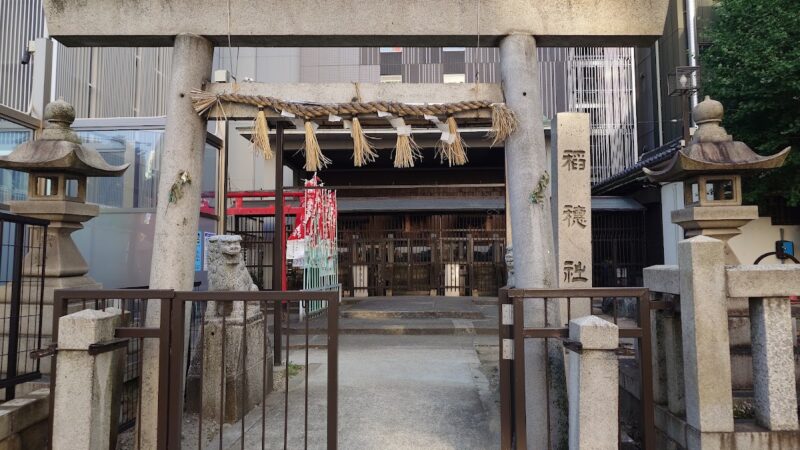
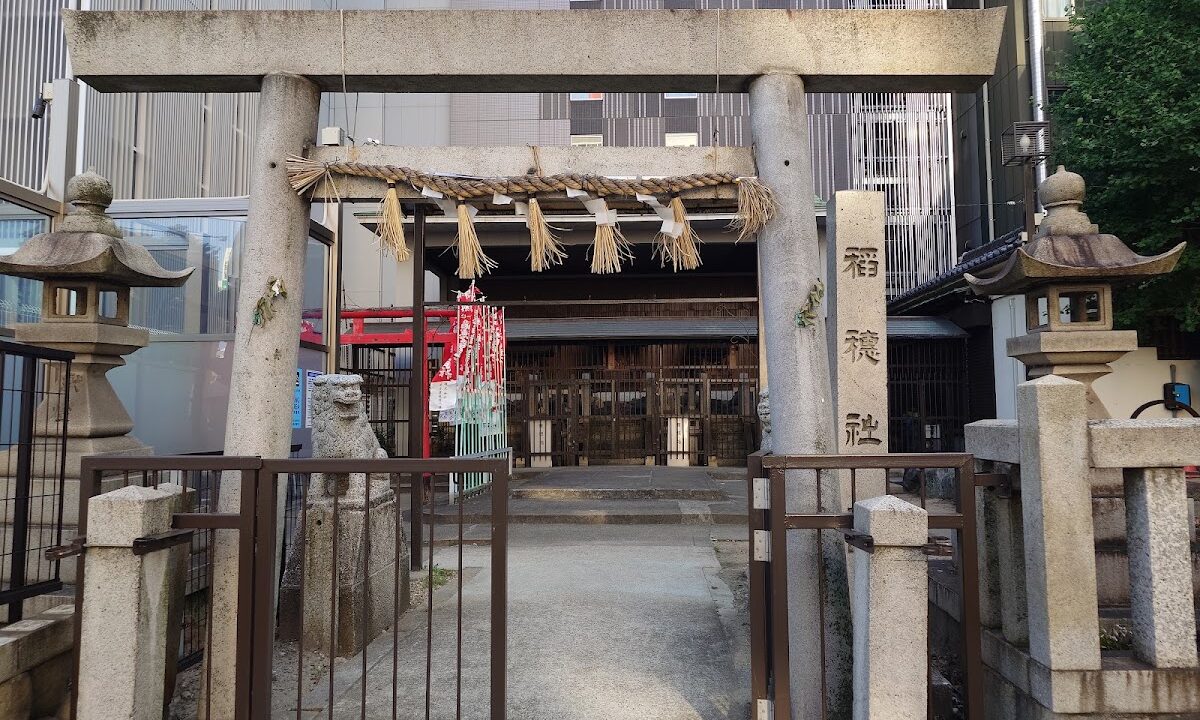
Just a 5-minute walk from the west exit of Nagoya Station, nestled quietly amidst the hustle and bustle of the city, lies Inaho Shrine. As an urban shrine surrounded by buildings, and with its unique appearance protected by iron bars, it leaves a strong impression on visitors.
This article comprehensively explains everything you want to know about Inaho Shrine, from its history, enshrined deities, grounds, detailed access information, to information on surrounding shrines.
What is Inaho Shrine? | A Historic Shrine in Front of Nagoya Station
Inaho Shrine is located at 18-5 Tsubaki-cho, Nakamura-ku, Nagoya City, Aichi Prefecture. Despite being within walking distance of Nagoya Station, one of Japan’s leading terminal stations, it is a valuable historical site dating back to the Meiji era.
A Place of Worship Preserved Amidst Urban Development
The area around Inaho Shrine today is a bustling commercial district lined with high-rise buildings and stores like Animate. However, this area was once a rural area consisting of villages such as Takaba and Oise. A map from 1898 (Meiji 31) shows that the Inaho Shrine was located at the southern edge of the settlement.
While many shrines were forced to relocate or merge as urban development progressed, the Inaho Shrine remained in its current location, continuing to uphold local faith.
Inaho Shrine’s Deities and History
About the Deities
Judging from its name, the Inaho Shrine is believed to enshrine deities deeply connected to rice cultivation. The name “Inaho” (rice stalk) is associated with the belief in abundant harvests and business prosperity.
Within the shrine grounds, the names “Inaho Inari Shrine” and “Inaho Akiba Shrine” can also be found, suggesting the possibility of the enshrinement of Inari (Ukanomitama-no-kami) and Akiba (the god of fire prevention) deities as well.
Shrine History and Changes
While there are limited documents regarding the exact founding date of the Inaho Shrine, it has been confirmed to have existed since the Meiji era. It has long been revered as the local tutelary deity and by people praying for commercial prosperity.
Of particular note is the arson fire that destroyed the main hall in 1997. It is believed that this incident led to the implementation of the strict iron grating protection seen today.
Inaho Shrine Grounds and Features
Main Hall Protected by Iron Gates
Many visitors to Inaho Shrine are surprised by the iron grates surrounding the main hall. These grates were installed to prevent intrusion by suspicious individuals and arson, but some say it looks as if “the gods are trapped in a cage.”
This scene can be seen as symbolic of the modern challenges faced by urban shrines, but at the same time, it is a manifestation of the strong will of the local people to protect this shrine.
Unique Landscape Surrounded by Buildings
High-rise buildings loom behind the shrine grounds, creating a scene commonly seen at urban shrines in Tokyo. Inaho Shrine is uniquely situated within a relatively rare urban area of Nagoya, surrounded by buildings.
The shrine grounds feature relatively new roof tiles, indicating continuous restoration and maintenance.
Shrine Facilities and Worship Procedures
Although small, the shrine grounds have basic facilities such as a main hall, worship hall, and torii gate. Worship is conducted from outside the iron gate, but you can offer a donation and perform the traditional two bows, two claps, and one bow ritual.
Regarding Goshuin (shrine stamps), there is no permanent shrine office, so they may not be able to provide them. Those wishing to receive a Goshuin are advised to check in advance.
Access to Inaho Shrine
Access from the Nearest Station
Inaho Shrine is easily accessible from Nagoya Station.
Walking Access from Nagoya Station:
- Approximately 5 minutes on foot from Nagoya Station West Exit (approximately 240-298m in a straight line)
- Approximately 10 minutes on foot from Nagoya Station Sakuradori Exit
Available Lines:
- Tokaido Shinkansen
- JR Chuo Main Line
- JR Tokaido Main Line
- JR Kansai Main Line
- Meitetsu Nagoya Main Line
- Kintetsu Nagoya Line
- Nagoya Municipal Subway Higashiyama Line
- Nagoya Municipal Subway Sakuradori Line
Detailed Directions
- Exit Nagoya Station West Exit
- With the station behind you, head south
- Walk straight for approximately 5 minutes towards Tsubaki-cho
- Arrive at 18-5 Tsubaki-cho, near Animate Nagoya Store
Since it is located on the way from Nagoya Station to Tsubaki Shinmei Shrine, there is a sign at Tsubaki Shinmei Shrine that reads “Inaho Shrine ↓ 440m”.
Access by Car and Parking
Inaho Shrine does not have its own parking lot. If you are visiting by car, you will need to use a coin-operated parking lot around Nagoya Station. However, parking fees around Nagoya Station are expensive, so we strongly recommend using public transportation.
Basic Information on Inaho Shrine
Name: Inaho Shrine
Address: 18-5 Tsubaki-cho, Nakamura-ku, Nagoya City, Aichi Prefecture
Access: 4-5 minute walk from Nagoya Station
Visiting Hours: Open all day (however, nighttime visits are not recommended)
Goshuin (Shrine Seal): Information wanted
Parking: None
Official Website: None
Map of Shrines and Temples Around Inaho Shrine
When visiting Inaho Shrine, we recommend also visiting the surrounding shrines and temples. There are surprisingly many temples and temples scattered around Nagoya Station.
Tsubaki Shinmei Shrine
This shrine is located about a 10-minute walk (440m) from Inaho Shrine. Like Inaho Shrine, it is protected by an iron fence and is located in Noritake 2-chome, Nakamura-ku, Nagoya City. It is a Shinto shrine dedicated to Amaterasu Omikami and has a larger precinct.
Inaho Shrine and Tsubaki Shinmei Shrine are thought to have a historical connection, and many worshippers visit both shrines in a “two-shrine pilgrimage.”
Susanoo Shrine
One of the shrines in the Nagoya Station area, it enshrines Susanoo-no-Mikoto.
Other Nearby Temples and Shrines
- Daiseiji Temple
- Gan’oji Temple
- Makino Shinmei Shrine
These temples and shrines are within walking distance of or close to Nagoya Station. There are approximately 160 temples and shrines in total in Nakamura-ku, Nagoya City.
Shrine Culture of Nakamura-ku, Nagoya City
Historical Background of Nakamura-ku
Nakamura-ku, Nagoya City, is a historical area known as the birthplace of Toyotomi Hideyoshi. It was once a rural area, but rapidly urbanized with the opening of Nagoya Station. Looking at a map from 1898 (Meiji 31), we see scattered settlements such as Takaba Village and Oise Village, each with a small shrine dedicated to its local guardian deity. Inaho Shrine is a valuable example of this village’s faith, preserving it to this day.
Urbanization and Changes in Shrines
Across Aichi Prefecture, there are approximately 8,961 shrines and temples. Nagoya City has 1,655, and Nakamura Ward has 160. However, urban development has forced many shrines to relocate or merge.
Shrines like Inaho Shrine, which remain in their current locations, can be considered important cultural assets that tell the story of the region’s history.
Points to Note and Manners When Visiting Inaho Shrine
Precautions When Visiting
- Worship from Outside the Iron Gate: The main shrine is surrounded by an iron gate, so worship from outside the gate.
- Consideration for the Surrounding Environment: As it is located in a busy area, please refrain from actions that may disturb others, such as shouting.
- Nighttime Worship: While there are people around Nagoya Station even at night, the area around the shrine can get dark, so daytime worship is recommended.
- Caution Regarding Suspicious Persons: Unfortunately, at shrines in urban areas, there are sometimes homeless people or suspicious individuals around the shrine grounds. Please take great care of your valuables.
Etiquette for Visiting a Shrine
Please observe basic shrine etiquette:
- Bow before passing through the torii gate.
- If there is a water basin, purify your hands and mouth (Inaho Shrine may not have one).
- Place your offering in the offering box.
- Worship with two bows, two claps, and one bow.
- Be quiet and respectful within the shrine grounds.
The Development of Inaho Shrine and Nagoya Station
History of Nagoya Station
Nagoya Station is a historic station that opened in 1886 (Meiji 19). Initially a small station, it developed into a major station on the Tokaido Main Line and the largest terminal station in the Chubu region.
Changes in the Area Around the Station and Inaho Shrine
Along with the development of Nagoya Station, the surrounding area has changed dramatically. From a rural area to a commercial district, and then to a modern high-rise building district. Amidst these changes, Inaho Shrine continues to exist as a place that preserves the memory of the region.
Currently, there are approximately 71 shrines and temples around Nagoya Station, with 7 located very close to the station itself. Among them, Inaho Shrine is one of the closest shrines to the station.
Goshuin Culture in Aichi Prefecture and Inaho Shrine
Goshuin Pilgrimage in Aichi Prefecture
Across Aichi Prefecture, 1,428 goshuin (shrine/temple stamps) have been confirmed. Within Nagoya City, there are 317, and in Nakamura Ward, there are 18. Collecting goshuin has become a popular hobby in recent years.
Goshuin Information for Inaho Shrine
Currently, there is no definitive information regarding goshuin at Inaho Shrine. Since there are no resident priests or a shrine office, it is highly likely that goshuin are not issued.
Those wishing to obtain a goshuin are advised to visit nearby shrines that do offer them, such as Tsubaki Shinmei Shrine.
Inaho Shrine Visitor Feedback and Reviews
Actual Visiting Experiences
Visitors to Inaho Shrine have shared the following impressions:
- “I visited after seeing the signs from Tsubaki Shinmei Shrine. I was surprised by its unexpected location near Animate.”
- “The main hall, surrounded by iron bars, seemed to symbolize the problems faced by shrines in urban areas.”
- “I visit every time I go to Nagoya Station. It’s a small oasis in the city.”
- “The area around the main hall is surrounded by iron bars to deter homeless people, but I’m grateful that I can still visit.”
Photography Tips
Although Inaho Shrine is small, it has a unique atmosphere as an urban shrine and is an interesting spot for photography:
- The contrast between the iron bars and the main hall
- The view with the towering skyscrapers in the background
- The urban landscape seen through the torii gate
However, please observe proper etiquette and be considerate of other visitors.
Shrine Pilgrimage Course Around Nagoya Station
We propose a shrine pilgrimage course starting from Inaho Shrine.
Half-Day Course (Walking)
- Departure from Nagoya Station
- Inaho Shrine (15-minute stay)
- 10-minute walk
- Tsubaki Shinmei Shrine (20-minute stay)
- 15-minute walk
- Other nearby temples and shrines
- Return to Nagoya Station
Total time required: Approximately 2-3 hours
This course allows you to easily visit shrines during transfer times at Nagoya Station or between sightseeing.
The Future and Challenges of Inaho Shrine
Maintenance and Management of Urban Shrines
Small urban shrines like Inaho Shrine face many challenges in maintenance and management:
- Absence of resident priests
- Decreasing number of parishioners
- Need for crime prevention measures
- Harmony with urban development
However, various efforts are being made to protect the history and faith of the region.
Cultural Value
Inaho Shrine is a valuable cultural heritage site that tells the story of the rapid urbanization around Nagoya Station. Beyond its architectural value, its significance lies in its role as a place that preserves the memory of the region.
Summary: Inaho Shrine is a Hidden Sacred Site in Front of Nagoya Station
Inaho Shrine is a hidden shrine, conveniently located just a 5-minute walk from Nagoya Station, yet largely unknown to many. Its unique appearance, protected by iron bars, its characteristics as an urban shrine surrounded by buildings, and its history dating back to the Meiji era are all noteworthy.
When visiting Nagoya, or if you have time to transfer at Nagoya Station, be sure to stop by Inaho Shrine. Even just a few minutes amidst the hustle and bustle of the city will offer a moment of peace and tranquility.
Aichi Prefecture boasts 8,961 shrines and temples, with 1,655 located within Nagoya City alone. While Inaho Shrine may be small among them, it remains a valuable shrine that conveys the history of the region and the faith of its people, and will undoubtedly continue to be carefully preserved.
If you have the opportunity to visit the area around Nagoya Station, be sure to stop by Inaho Shrine and experience this unique space where urban life and faith coexist.