Complete Guide to Tsubaki Shinmei Shrine (Nagoya City, Aichi Prefecture) | History, Deities, Access, and Information on the Shrine Grounds After the Linear Shinkansen Construction
Located in the area west of Nagoya Station, Tsubaki Shinmei Shrine is a historic shrine that maintains a tranquil atmosphere despite being in the heart of a bustling commercial district. Located at 2-4-10 Noritake, Nakamura-ku, Nagoya City, Aichi Prefecture, this shrine has a history as part of the sacred land of Ise Grand Shrine. This guide provides detailed information about the shrine.
Basic Information on Tsubaki Shinmei Shrine
Tsubaki Shinmei Shrine is conveniently located about a 5-minute walk from Nagoya Station, situated at the north corner of the Tsubaki Shrine intersection. Despite the waves of modern urban development, it continues to welcome many worshippers as a center of local faith.
Location: 2-4-10 Noritake, Nakamura-ku, Nagoya City, Aichi Prefecture
Former Shrine Rank: Village Shrine
Deity Enshrined: Toyoukehime-no-kami
Founding: Unknown (Recorded in the Kanbun era)
About the Deity Enshrined: Toyoukehime-no-kami
Toyoukehime-no-kami, enshrined at Tsubaki Shinmei Shrine, is a goddess of food and grains, known as the principal deity of the Outer Shrine of Ise Grand Shrine. It is believed that this shrine was established because it was once part of the sacred land of Ise Grand Shrine, and Toyoukehime-no-kami was enshrined here as a representation of the Outer Shrine.
Toyoukehime-no-kami is revered as the guardian deity of abundant harvests and food, and has been closely involved in the lives of local residents as a god who protects “food,” the foundation of life. During the Edo period, it was also called “Kami-no-miya” and attracted the faith of the people of Makino Village.
History and Origin of Tsubaki Shinmei Shrine
Founding and Records in Ancient Documents
The founding date of Tsubaki Shinmei Shrine is unknown, but the “Kanbun Village Records,” created during the Kanbun era (around 1661-1673), mentions “three shrines, including two Shinmei shrines and one Benzaiten shrine,” confirming its existence at least in the early Edo period. This is a valuable record indicating that Tsubaki Shinmei Shrine has a history of over 350 years.
The Camellia Forest and the Origin of the Shrine’s Name
During the Edo period, this area was called Makino Village and was known as the “Camellia Forest,” where many large camellia trees flourished. The shrine was named “Tsubaki-sha” (Camellia Shrine) after these large camellia trees, which is the origin of the current name, “Tsubaki Shinmei Shrine.” It is said that the shrine grounds at that time were filled with camellia trees, which bloomed beautifully in season.
History as part of Ise Grand Shrine’s territory
The most important historical feature of Tsubaki Shinmei Shrine is that it was once part of Ise Grand Shrine’s territory. The Makino Village area was managed as a manor of Ise Grand Shrine, and the river flowing through it was called “Goisegawa” (Ise River).
Due to its relationship with the Outer Shrine (Toyouke Daijingu) of Ise Grand Shrine, Tsubaki Shinmei Shrine was considered an “Outer Shrine” and came to enshrine Toyoukehime-no-kami. This historical background indicates that Tsubaki Shinmei Shrine is not merely a local guardian shrine, but a shrine deeply connected to Ise faith.
Changes since the Meiji era
In the Meiji era, Tsubaki Shinmei Shrine was elevated to the rank of a village shrine. The shrine name marker, donated in 1910 (Meiji 43), remains as the oldest surviving donation on the shrine grounds, conveying the state of faith at that time.
Shrine Grounds Improvements Due to the Chuo Shinkansen Line Construction
Changes in the Shrine Grounds and Reduction of Shrine Area
In the 2020s, Tsubaki Shinmei Shrine faced a major turning point. Due to the construction of the Chuo Shinkansen Line, a portion of the northern part of the shrine grounds was transferred as construction land. This made a reduction in the shrine’s grounds unavoidable.
Shrine Grounds Improvement Project from 2020 to 2022
From April 2020 to March 2022, Tsubaki Shinmei Shrine underwent large-scale grounds improvements. The following work was carried out during this project:
- Relocation and restoration of the shrine building
- Reconfiguration of the shrine grounds
- Improvement of the approach and grounds
- Relocation of stone monuments and donated items
Despite being affected by the large-scale project of the Linear Shinkansen construction, Tsubaki Shinmei Shrine has maintained its function as a place of worship for the community and welcomes visitors in a form adapted to the new era.
Modern Tsubaki Shinmei Shrine
After the construction of the Linear Shinkansen, Tsubaki Shinmei Shrine, although smaller in size than before, has been reborn as a well-maintained and clean space. Amidst the ongoing redevelopment around Nagoya Station, this historic shrine continues to watch over the changes in the city.
Highlights and Cultural Assets on the Shrine Grounds
Main Hall and Worship Hall
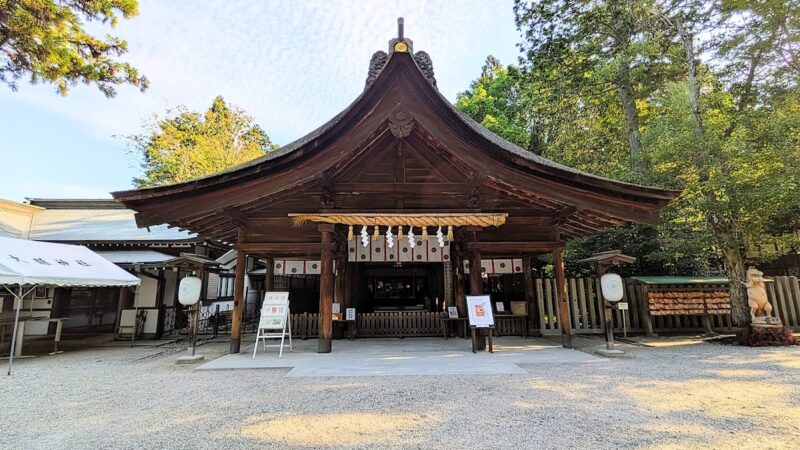
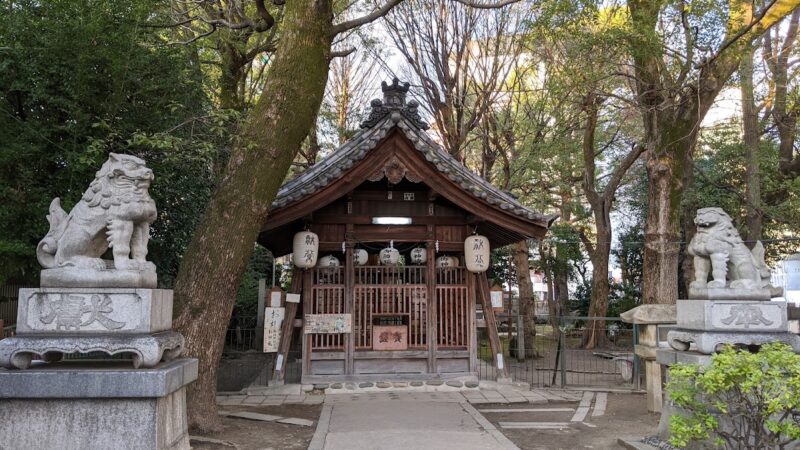
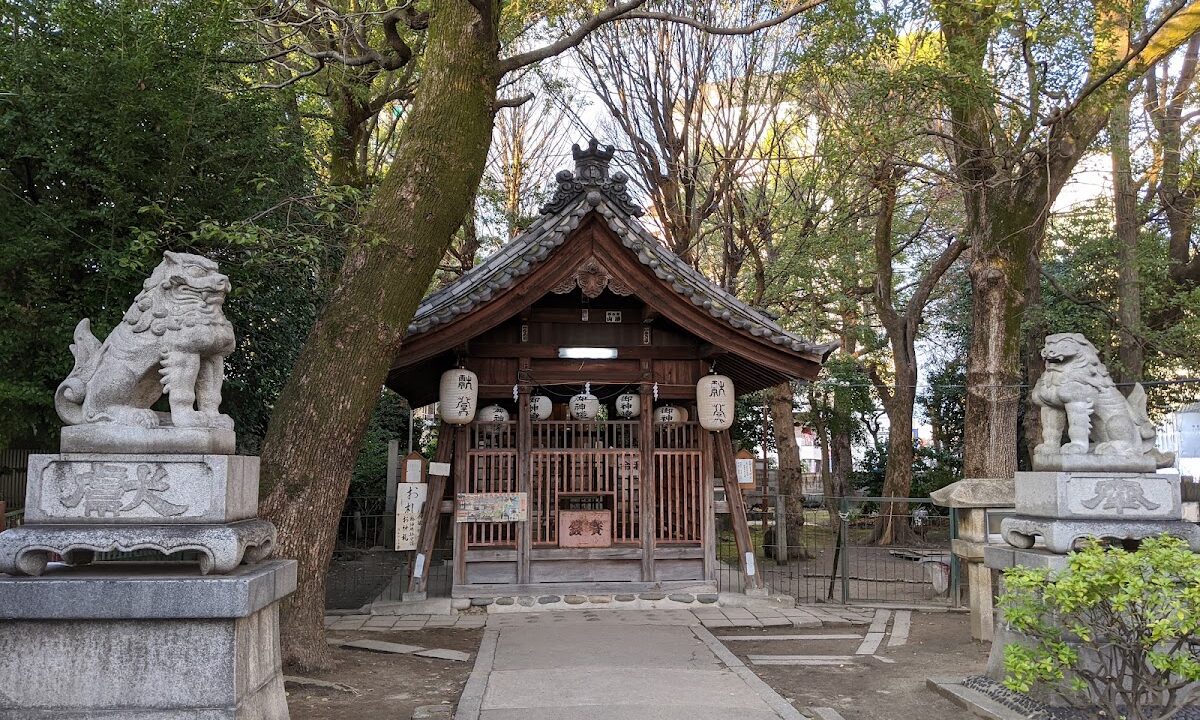
The shrine buildings of Tsubaki Shinmei Shrine were moved and restored as part of the Linear Shinkansen construction, but they retain the traditional Shinmei-zukuri style. Despite its compact size, it exudes a sense of dignity and is a valuable wooden building for a shrine in an urban area.
Shrine Name Marker from Meiji 43 (1910)
The shrine name marker remaining on the grounds, dating back to Meiji 43 (1910), is of historical value as the oldest surviving donated item on the grounds. The fact that this stone monument, over 100 years old, still remains is proof that the local people have cherished this shrine for generations.
Subsidiary Shrine: Inaho Shrine
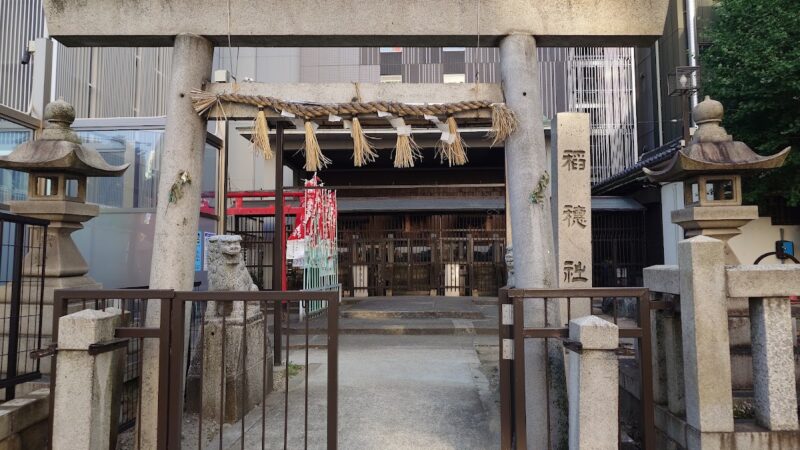
Within the grounds of Tsubaki Shinmei Shrine, there is also a subsidiary shrine called Inaho Shrine. Inaho Shrine is a shrine dedicated to the god of grain, and together with Toyoukehime-no-kami, it is an object of worship for praying for a bountiful harvest.
A Quiet Space in the City
Despite being located in the heart of the bustling downtown area, just a 5-minute walk from Nagoya Station, the grounds of Tsubaki Shinmei Shrine maintain a surprisingly tranquil atmosphere. Its convenient location allows for easy visits while waiting at traffic lights, yet it serves as a sanctuary for local residents, offering a respite from the hustle and bustle of the city.
How to Access Tsubaki Shinmei Shrine
Access by Train
Approximately 5 minutes on foot (approx. 381m) from JR, Meitetsu, Kintetsu, and Subway “Nagoya Station”
Exit from the Taiko-dori exit on the west side of Nagoya Station and proceed west along Meieki-dori. It is located at the north corner of the Tsubaki Shrine intersection, making it very easy to find. As one of the closest shrines to Nagoya Station, it is easily accessible for business trips and sightseeing.
Access by Car and Parking
Tsubaki Shinmei Shrine does not have its own parking lot. If you are visiting by car, you will need to use a nearby coin-operated parking lot. There are several coin-operated parking lots in the area west of Nagoya Station, but the fees are relatively high due to it being a busy commercial area.
Due to its very convenient location accessible by public transport, we recommend visiting by train.
Goshuin (Shrine Seal) Information
It appears that Tsubaki Shinmei Shrine does not currently offer goshuin. Multiple sources report that goshuin are not available.
However, some sources indicate that electronic goshuin are available, so we recommend checking upon your visit. The availability of goshuin may change, so please contact the shrine directly for the latest information.
Nearby Shrines and Temples
Makino Shinmei Shrine
Makino Shinmei Shrine is located approximately 700 meters northeast of Tsubaki Shinmei Shrine. It is also a shrine with a history in Makino Village, and many people visit both Tsubaki Shinmei Shrine and Makino Shinmei Shrine together.
Temples and Shrines Around Nagoya Station
There are several other shrines and temples around Nagoya Station, and you can visit several of them on foot, starting from Tsubaki Shinmei Shrine. The area west of Nagoya Station, while being in an urban area, is dotted with places of worship and is suitable for historical walks.
Connection to General Matsui Iwane
Tsubaki Shinmei Shrine is also known for its connection to General Matsui Iwane, who was a general in the Imperial Japanese Army. General Matsui was from Nakamura Ward in Nagoya City and had a deep connection to Makino-cho, where Tsubaki Shinmei Shrine is located.
This shrine, with its history from the pre-war and wartime periods, is an important place in telling the history of the region.
Points and Manners for Visiting
Visiting Hours
While the grounds of Tsubaki Shinmei Shrine are accessible 24 hours a day, the hours of operation for the shrine office may be limited. If you wish to obtain a Goshuin (shrine stamp) or other items, it is recommended to check in advance.
Proper Worship Etiquette
Shinmei-sha (Shinmei Shrine) is a shrine of the same lineage as Ise Grand Shrine, dedicated to Amaterasu Omikami. However, Tsubaki Shinmei-sha is a shrine of the Outer Shrine lineage, dedicated to Toyouke-hime no Kami. Worship should be conducted using the general shrine worship etiquette (two bows, two claps, one bow).
Photography
Photography is generally permitted on the shrine grounds, but please be considerate of other worshippers. It is considered good manners to refrain from photographing inside the shrine buildings.
Annual Events at Tsubaki Shinmei-sha
While specific information on annual events is limited, it is believed that the following festivals are held, similar to those at other shrines:
- New Year’s Day Festival (January 1st): A festival celebrating the New Year
- Spring Grand Festival: A festival giving thanks for the spring harvest
- Autumn Grand Festival: A festival giving thanks for the autumn harvest
- Monthly Festival: A regular monthly festival
For detailed dates and content, please contact the shrine directly.
The History of Nagoya as Told by Tsubaki Shinmei Shrine
From Makino Village to the West Side of Nagoya Station
The history of Tsubaki Shinmei Shrine is the very history of the development of the area around Nagoya Station. The rural area, once known as Makino Village, has experienced numerous transformations, from the opening of the railway in the Meiji era, to post-war urbanization, and the construction of the modern-day linear motor train.
The rural landscape where the camellia forest once stood has now transformed into a bustling commercial district lined with skyscrapers, but Tsubaki Shinmei Shrine is a living witness that has continued to observe these changes.
The Spread of Ise Faith
Its history as a sacred territory of Ise Grand Shrine demonstrates how Ise faith spread throughout Japan from the medieval to the early modern period. Tsubaki Shinmei Shrine functioned as part of a network connecting Ise Grand Shrine with local villages.
Coexistence of Urban Development and Shrines
Facing the Chuo Shinkansen linear motor train, one of the largest infrastructure projects of the 21st century, Tsubaki Shinmei Shrine continues to exist, even while ceding part of its grounds. This symbolizes the coexistence of urban development and traditional culture in modern Japan. ## How to Enjoy Visiting Tsubaki Shinmei Shrine
As Part of a Nagoya Station Stroll
Tsubaki Shinmei Shrine’s charm lies in its convenient location, just a 5-minute walk from Nagoya Station. It’s easily accessible during Shinkansen waiting times, business trips, or shopping trips. Its excellent accessibility, allowing you to visit even while waiting at a traffic light, makes it a valuable place for rest and relaxation for busy modern people.
Historical Walking Route
Starting from Tsubaki Shinmei Shrine, you can enjoy a historical walk visiting surrounding temples and shrines such as Makino Shinmei Shrine. A journey to discover the little-known history of the area west of Nagoya Station will reveal a new charm of Nagoya.
Experiencing Tranquility in the City
Despite being in the heart of the bustling city center, a surprisingly tranquil atmosphere permeates the shrine grounds. It offers a chance to escape the hustle and bustle of the city and find peace of mind.
The Future of Tsubaki Shinmei Shrine
With the opening of the Chuo Shinkansen (maglev train), the area around Nagoya Station is expected to undergo further development. While the area around Tsubaki Shinmei Shrine may undergo redevelopment, this shrine, with its history spanning over 350 years, will continue to play its role as a center of local faith and a valuable cultural asset that conveys the history of Nagoya.
After the renovation of its grounds, Tsubaki Shinmei Shrine has taken on a new form, demonstrating how a shrine can adapt to modern times while preserving tradition. If you have the opportunity to visit Nagoya, please be sure to stop by this historic little shrine.
Summary
Tsubaki Shinmei Shrine is a historic shrine located in Noritake, Nakamura-ku, Nagoya City, Aichi Prefecture. It originated in Makino Village, which was once part of the sacred territory of Ise Grand Shrine, and enshrines Toyoukehime-no-kami as its main deity. Built on land formerly known as Tsubaki-no-mori (Camellia Forest), the shrine maintains a tranquil atmosphere despite its convenient location just a 5-minute walk from Nagoya Station.
After the renovation of its grounds in conjunction with the construction of the Chuo Shinkansen (maglev train), Tsubaki Shinmei Shrine welcomes visitors in a form adapted to modern times, symbolizing the coexistence of urban development and traditional culture. When you visit Nagoya, be sure to stop by this small but historically significant shrine and experience the tranquility and weight of history amidst the city.