Complete Guide to Toyofuji Inari Shrine (Aichi Prefecture) | Goshuin (Shrine Seal), History, Battle of Okehazama, and the Sacred Site of Oda Nobunaga
Located in Sakunoyama-cho, Midori-ku, Nagoya City, Aichi Prefecture, Toyofuji Inari Shrine is a historically significant Inari shrine known for its connection to the Battle of Okehazama. Situated on a small hill on Asahiyama, it is a place of glory where Oda Nobunaga gathered 3,000 soldiers, and is also known for its sacred tree, “Fujiryu” (Wisteria Dragon), attracting many visitors. This article provides a detailed introduction to Toyofuji Inari Shrine, including its history, goshuin (shrine seal), highlights within the grounds, and access information.
History and Origins of Toyofuji Inari Shrine
Founding and Enshrinement of Toyofuji Daimyojin
While Toyofuji Inari Shrine is believed to have been founded in the early Kaei era (around 1848), the enshrinement of Toyofuji Daimyojin is said to date back to the early Nara period, specifically the Wado era (708-715). This signifies a history of over 1300 years, and it has been revered since ancient times as an Inari shrine supported by a unique faith.
Located on Asahiyama Mountain in the southeast direction of Nagoya, Toyofuji Shrine has long been revered as a guardian deity of the region. As an Inari shrine, it is believed to bring blessings such as abundant harvests, business prosperity, and family safety, and along with Ikutama Inari Shrine, it boasts one of the largest scales among Inari shrines in Nagoya City.
The Battle of Okehazama and Oda Nobunaga
Toyofuji Inari Shrine holds historical significance due to its deep connection to the Battle of Okehazama in May of Eiroku 3 (1560). It is said that during this battle, Lord Oda Nobunaga gathered approximately 3,000 soldiers on Asahiyama Mountain.
At that time, Imagawa Yoshimoto of Suruga invaded Owari with a massive army of 40,000 men. Despite being overwhelmingly outnumbered, Oda Nobunaga utilized Mount Asahi as a military base and achieved a miraculous victory against the Imagawa forces through a surprise attack. This victory marked a major turning point in Japanese history, and the grounds of Toyofuji Inari Shrine are still revered as a “place of glory.”
Within the shrine grounds, there are information boards and explanatory signs detailing this historical event, making it a pilgrimage site for history buffs and Oda Nobunaga fans.
Deities and Benefits
Deities Enshrined
Toyofuji Inari Shrine enshrines the following four deities:
Ukanomitama-no-Mikoto
Ukanomitama-no-Mikoto, the principal deity, is a representative deity of Inari shrines and is known as the god of abundant harvests, business prosperity, and industrial development. As the god who presides over food, he is believed to bring stability and prosperity to life.
Sarutahiko-no-Mikoto
Known as the god of opening paths, he is a deity who guides things in a positive direction. He is believed to show the right path when you stand at a crossroads in life, and brings good fortune, happiness, and safe travels.
Okuninushi-no-Mikoto
Widely worshipped as the god of matchmaking, business prosperity, and medicine. As the god of nation-building, he is a deity who wishes happiness and prosperity for the people.
Kotoshironushi-no-Mikoto
Known as the god of business prosperity and protection of fisheries, he is sometimes identified with Ebisu. He is worshipped as a god who brings good fortune.
Main Benefits
- Abundant Harvest and Business Prosperity
- Family Safety and Good Fortune
- Matchmaking and Successful Relationships
- Traffic Safety and Path Opening
- Business Prosperity and Industrial Development
- Luck in Competitions and Victory (In honor of the Battle of Okehazama)
Highlights of the Shrine Grounds
The Sacred Tree “Fuji-Ryu” (Wisteria Dragon)
One of the biggest highlights of Toyofuji Inari Shrine is the sacred tree known as “Fuji-Ryu” (Wisteria Dragon). A single wisteria tree has naturally twisted and grown, creating a very rare shape that resembles a dragon’s face.
This Fuji-Ryu is believed to possess mystical power, and many visitors come to take photographs. The phenomenon of the wisteria tree resembling a dragon is also considered a manifestation of divine power, making it a notable power spot. During the wisteria blooming season, it becomes an excellent photo spot where you can enjoy the beautiful wisteria flowers and the dragon’s form simultaneously.
Shrine Buildings and Worship Hall
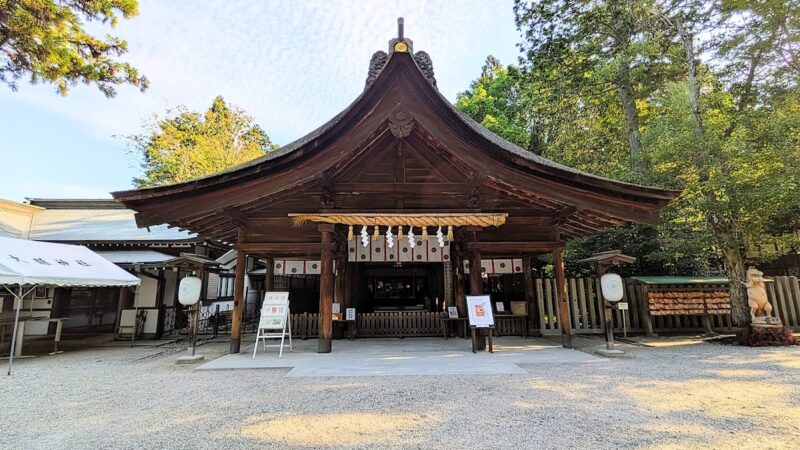
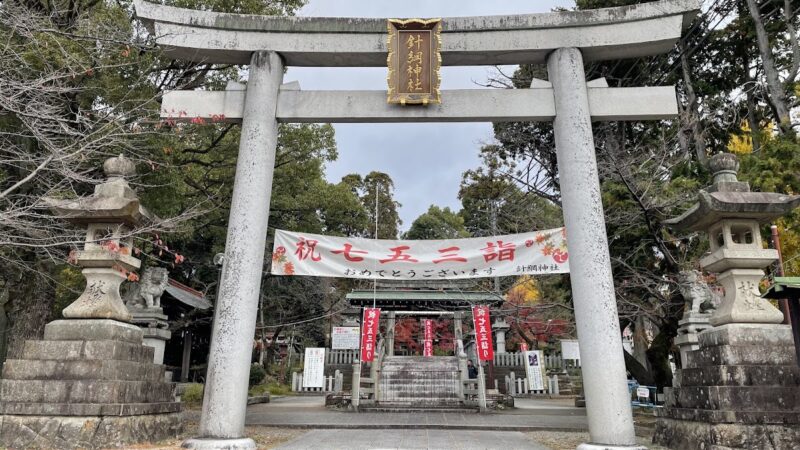
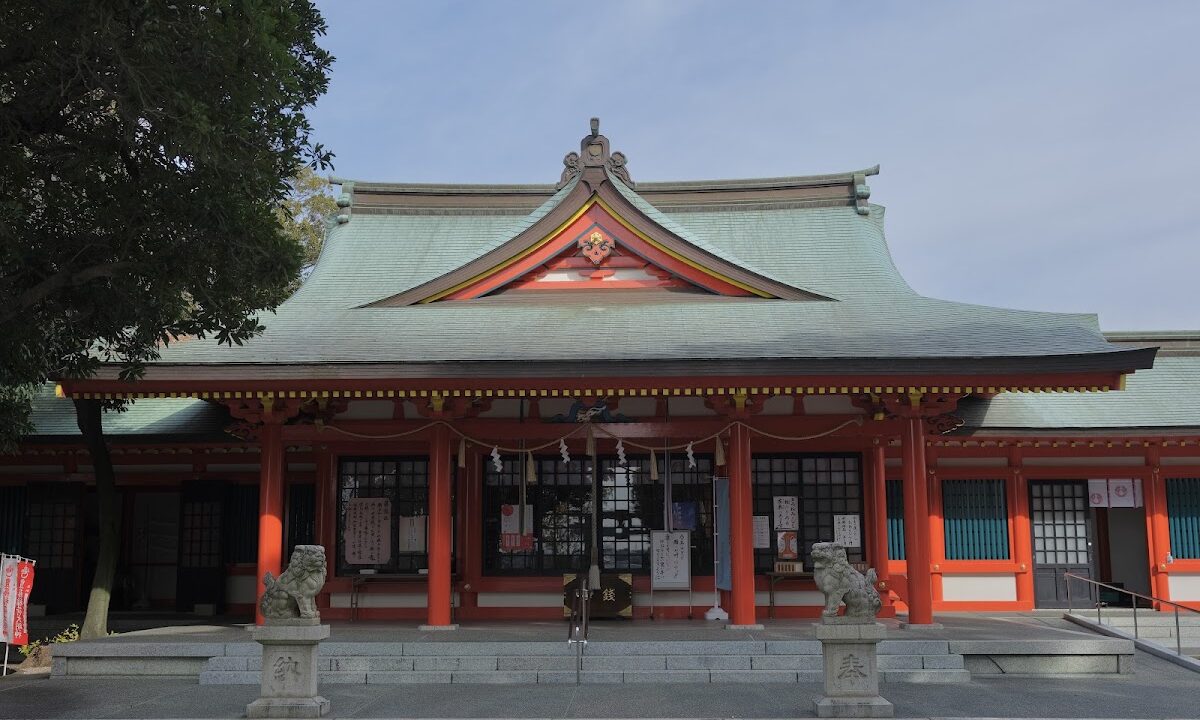
A large parking lot is located at the top of a small hill, leading to the shrine grounds. Passing through the vermilion torii gate, a well-maintained area unfolds, revealing a magnificent shrine building.
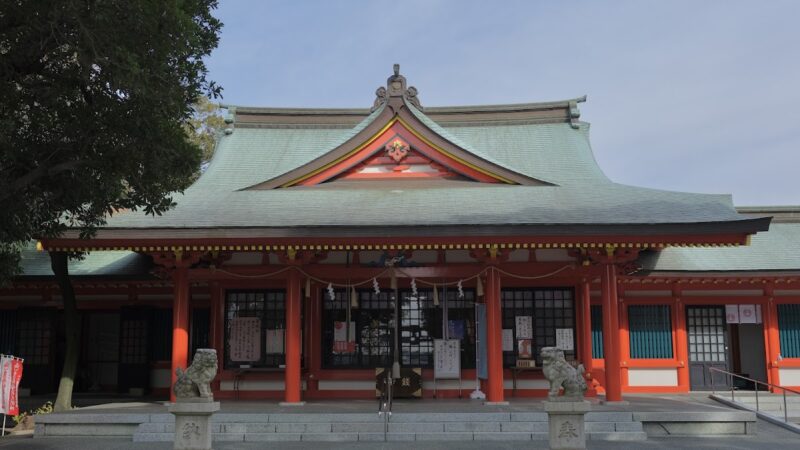
The worship hall is built in the traditional shrine architectural style, welcoming visitors with a solemn atmosphere. The grounds are kept clean, and seasonal flowers are planted throughout. The azaleas in front of the torii gate, in particular, bloom beautifully in spring, delighting visitors.
Shrine Facilities
The shrine grounds are relatively spacious, and in addition to the main hall and worship hall, facilities such as a purification fountain and shrine office are available. A parking lot is also provided, making it easily accessible by car. From the grounds, you can enjoy panoramic views of Nagoya city, a view unique to a shrine situated on a hilltop.
Goshuin (Shrine Seal) Information
Types of Goshuin and How to Obtain Them
Toyofuji Inari Shrine offers several types of goshuin.
Black Ink Goshuin (Shrine Seal)
This is a standard goshuin written in black ink, including the shrine name, date of visit, and the shrine’s seal.
Purple Goshuin (Shrine Seal)
There is also a goshuin written in a special purple ink, which is popular among visitors. Purple is considered a noble color, giving it a dignified finish.
Goshuin Reception Hours and Method
Goshuin are available at the shrine office. You will need to ring the intercom to be served. After your visit, please ring the intercom at the shrine office and request a goshuin.
Pre-printed goshuin may also be available, so if you wish to receive a handwritten one, it is recommended to visit with ample time. The offering fee is approximately 300 to 500 yen, similar to most shrines.
About Goshuincho (Shrine Seal Books)
Regarding the availability of original goshuincho, it is recommended to check with the shrine office upon your visit. Those visiting shrines in Aichi Prefecture should bring their own goshuincho (stamp book).
Annual Festivals and Events
Spring Grand Festival (Second Sunday of April)
Held annually on the second Sunday of April, the Spring Grand Festival is one of Toyofuji Inari Shrine’s important annual events. A ceremony is held to pray for a bountiful harvest and for the prosperity of the new year. Many parishioners and devotees attend, making the shrine lively.
Autumn Grand Festival (Second Sunday of November)
Held on the second Sunday of November, the Autumn Grand Festival is a ceremony to give thanks for the year’s harvest. As a celebration of the bountiful autumn, it is a beloved event for the local community to express gratitude to the gods.
Other Events
The shrine also holds other annual events such as Hatsumode (first shrine visit of the year), Setsubun Festival, and Natsukoshi no Oharae (summer purification ceremony). For detailed dates and information, it is recommended to contact the shrine directly or inquire during your visit.
Access Information
Basic Information
Address
180 Sakunoyama-cho, Midori-ku, Nagoya City, Aichi Prefecture 458-0038
Phone Number
052-892-1238 (or 052-891-0002)
Access by Train
Nearest Station: Narumi Station, Meitetsu Nagoya Main Line
- Approximately 19-20 minutes on foot from the north exit of Narumi Station (approx. 1.6 km)
- It’s a bit of a distance from the station, but you can enjoy a pleasant walk.
- If using a taxi, it’s about a 5-minute ride from the station.
Access by Car
Toyofuji Inari Shrine is located on a small hill, but there is a large parking lot at the top.
From Nagoya City
- Accessible via major roads such as National Route 1 and National Route 23
- Entering the address or phone number into your car navigation system is convenient
- Free parking is available
Visiting Hours
The shrine grounds are generally open all day, but there are limited hours for the shrine office and for receiving Goshuin (shrine stamps). If you want to be sure to receive a Goshuin, it is recommended to visit between 9:00 AM and 4:00 PM.
Nearby Tourist Attractions
Okehazama Battlefield Site
If you visit Toyofuji Inari Shrine, it is also recommended to visit the Okehazama Battlefield Site. Monuments and information boards have been erected at the actual battle site, allowing you to experience the historical stage.
Arimatsu Townscape
In Midori Ward, Nagoya City, there is the Arimatsu district, which retains the townscape of the Edo period. Known for Arimatsu Shibori (tie-dyeing), this traditional townscape has been designated a National Important Traditional Buildings Preservation District, making it perfect for a stroll.
Nearby Shrines and Temples
There are many other shrines and temples around Midori Ward in Nagoya City. Those who enjoy visiting shrines may want to combine their visit with a visit to the temples and temples around Narumi.
Manners and Points for Visiting Shrines
Basic Visiting Etiquette
- Bow Before Passing Through the Torii Gate
Bow before entering the sacred area, especially in front of the torii gate.
- Purify at the Water Basin
Purify your hands and mouth at the water basin before praying.
- Praying at the Main Hall
Pray using the two bows, two claps, and one bow ritual.
- Photography on the Shrine Grounds
While photography is permitted in some areas, such as the sacred tree “Fujiryu,” please refrain from taking pictures in areas where photography is prohibited, such as inside the shrine buildings.
Attire for Visiting Shrines
There are no specific dress code requirements, but it is desirable to wear clothing that reflects the sacred nature of a shrine. Please avoid revealing or overly flashy clothing.
Recommended Time to Visit
Spring (April-May)
The azaleas in front of the torii gate are in full bloom, and the sacred wisteria tree is also at its best. The Spring Grand Festival is also held.
Autumn (November)
The Autumn Grand Festival is held, and it’s a time to enjoy the autumn foliage.
New Year’s Visit
The shrine is bustling with many visitors during the New Year’s period.
Summary of the Charms of Toyofuji Inari Shrine
Toyofuji Inari Shrine is not just an Inari shrine; it is a shrine with multifaceted charm as a place associated with the Battle of Okehazama, which changed the course of Japanese history, and as a place where one can feel the mystery of nature with its sacred tree, “Fujiryu” (Wisteria Dragon).
Although located within Nagoya city, it is situated in a quiet environment on a small hill, offering wonderful views from the shrine grounds and a space where one can pray in peace. Standing on the historical stage where Oda Nobunaga gathered his troops, being moved by the mysterious appearance of the sacred tree, and receiving a carefully written goshuin (temple/shrine stamp)—these are some of the fulfilling experiences you can expect at Toyofuji Inari Shrine.
When you visit Midori Ward in Nagoya City, be sure to stop by Toyofuji Inari Shrine. You’ll be able to spend a special time where history, nature, and faith harmonize.
Visitor Voices
The following are comments from visitors who have actually visited Toyofuji Inari Shrine:
- “Located on a small hill, the shrine grounds were spacious and beautiful.”
- “The sacred wisteria tree truly resembled a dragon, and I was deeply moved.”
- “It’s a valuable place where you can feel the history of the Battle of Okehazama.”
- “I rang the intercom and received a courteous response, and was given a wonderful goshuin (shrine stamp).”
- “The parking lot was spacious, making it convenient to access by car.”
- “When I visited during azalea season, the flowers in front of the torii gate were beautiful and made for great photos.”
These comments show that Toyofuji Inari Shrine is a shrine beloved by its visitors.
Planning a Visit to Toyofuji Inari Shrine
Those planning a visit to Toyofuji Inari Shrine should keep the following points in mind:
Estimated Time Required
If you only wish to visit the shrine grounds, allow about 30 minutes. If you plan to receive a goshuin, allow about an hour.
What to Bring
- Goshuincho (stamp book) (if you wish to receive a Goshuin stamp)
- Camera (for photographing the sacred tree “Fujiryu”)
- Offering (for Goshuin stamps, amulets, etc.)
Inquiries
For detailed information regarding festival dates, Goshuin stamp availability, etc., please contact the shrine directly.
Telephone: 052-892-1238
Toyofuji Inari Shrine in Midori-ku, Nagoya City, Aichi Prefecture, is a fascinating shrine where history, nature, and faith are intertwined. Located at the site of the Battle of Okehazama, a crucial turning point in Japanese history, you can trace the footsteps of Oda Nobunaga, experience the mystical beauty of the sacred tree “Fujiryu,” and offer heartfelt prayers—a truly special experience awaits you. Please come and visit us.