Izuna-dera Temple (Isumi City, Chiba Prefecture) Complete Guide | The Masterpiece of Nami no Ihachi and the History of Tengu Worship
Located in the Taito Cape area of Isumi City, Chiba Prefecture, Izuna-dera Temple is an ancient Tendai sect temple overlooking the magnificent Pacific Ocean. Known as the “Temple of Tengu,” it houses the transom carving of “Tengu and Ushiwakamaru,” considered the masterpiece of Nami no Ihachi, a renowned Edo period sculptor. This article comprehensively introduces everything you need to know before visiting Izuna-dera Temple, from its history and highlights to access information.
What is Izuna-dera Temple? | An Ancient Temple with Tengu Worship and the Sculptures of Nami no Ihachi
Izuna-dera Temple is a Tendai sect temple located in Izumi, Misaki-cho, Isumi City, Chiba Prefecture. Its official name is “Myōōzan Mudōin Iizuna-ji,” and it is said to have been founded in 808 AD by Jikaku Daishi Ennin.
Initially, it was called “Manzō-ji,” but influenced by the Iizuna faith introduced by the Takeda clan during the Sengoku period and later passed down to the Toki clan, it was renamed “Iizuna-ji” in the early Edo period, with Iizuna Daigongen as its principal deity. Iizuna Daigongen is depicted as a tengu (a mythical creature), and for this reason, the temple is also affectionately known as “Tengu Temple.”
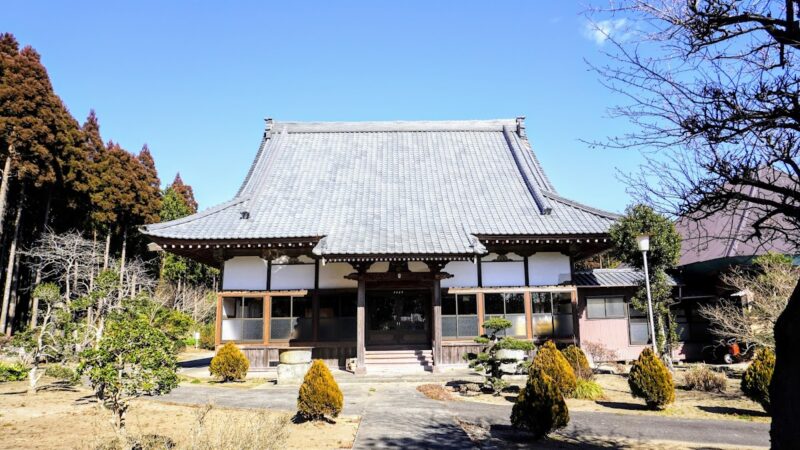
During the Edo period, it became a directly managed temple of Ueno Kan’ei-ji and flourished as a center of syncretic Shinto-Buddhist belief. Even today, many buildings constructed during the Edo period remain on the temple grounds, making it a valuable space where one can strongly feel the atmosphere of the Edo period.
History of Iizuna-ji Temple | From Founding by Jikaku Daishi to the Iizuna Faith
From Founding to the Middle Ages
Iizuna-ji Temple is said to have been founded in 808 AD (Daido 3), by Jikaku Daishi Ennin, a high-ranking priest of the Tendai sect. Jikaku Daishi served as the third head priest of Enryaku-ji Temple on Mount Hiei and is known for founding many temples, mainly in the Tohoku region.
Initially, the temple was called “Manzo-ji” and enshrined Fudo Myoo as its principal deity. Given its location on Taito Cape overlooking Kujukuri Beach, it is believed to have also functioned as a temple for praying for the safety of maritime traffic.
Introduction of the Iizuna Faith and Change of Temple Name
During the Sengoku period (Warring States period), the Iizuna faith, which originated on Mount Iizuna in Shinshu (present-day Nagano Prefecture), spread to various regions through the Takeda clan. The Iizuna faith is a belief system that worships Iizuna Daigongen, a deity depicted as a tengu (a mythical creature), and was widely accepted by samurai seeking victory in battle and lasting military fortune.
This Iizuna faith spread to Taito Cape, and Manzo-ji Temple came to function as a betto-ji (a temple attached to a shrine) of Iizuna Daigongen. In the early Edo period, when Iizuna Daigongen was officially welcomed as the principal deity, the temple’s name was changed to “Iizuna-ji.”
Prosperity in the Edo Period
In the Edo period, Iizuna-ji became a temple directly controlled by Ueno Kan’ei-ji Temple and received the patronage of the Tokugawa shogunate. During this period, the main buildings that remain today, such as the main hall and the Niomon gate, were constructed.
In particular, around 1816 (Bunka 13), the then head priest commissioned the first Nami no Ihachi (Takeshi Ihachiro Nobuyoshi), a renowned sculptor from Kamogawa, to carve the transoms of the main hall. This is the transom carving of “Tengu and Ushiwakamaru,” currently considered one of Ippachi’s greatest masterpieces.
Chiba Prefecture Designated Cultural Property | Architectural Beauty of Iizuna-ji Temple’s Main Hall
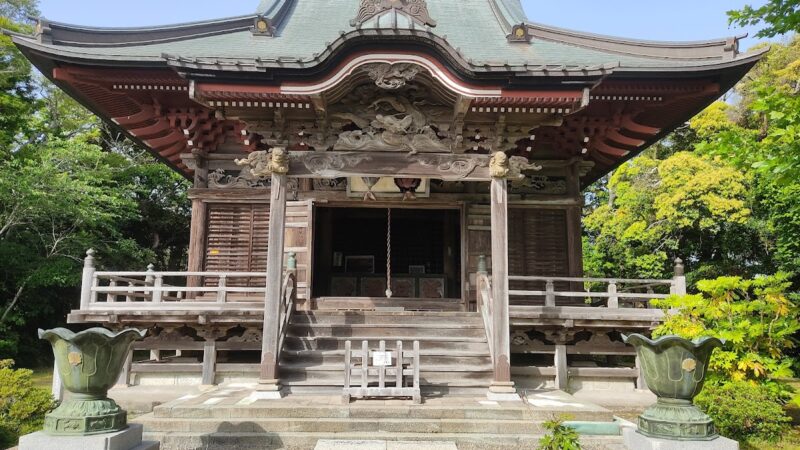
The main hall of Iizuna-ji Temple is a valuable building designated as a Chiba Prefecture Designated Tangible Cultural Property. It is highly regarded as an important historical building that preserves the architectural style of the mid-Edo period.
Architectural Style of the Main Hall
The main hall is a hip-and-gable roofed building, characterized by its imposing presence. While possessing the solemn atmosphere typical of a Tendai sect temple, it also has a friendly feel characteristic of a local temple.
Inside, the principal image, Iizuna Daigongen, is enshrined, and visitors can view it directly from within the hall. Iizuna Daigongen, in the form of a Tengu, exudes both a majestic and mystical atmosphere.
Artistic Value of the Transom Carvings
The greatest highlight of the main hall is undoubtedly Ippachi’s wave carvings on the transom. This carving, carved from a single zelkova wood panel, depicts the scene of Ushiwakamaru (later Minamoto no Yoshitsune) confronting a Great Tengu.
Nami no Ippachi was a sculptor renowned as “the best in the world at carving waves,” and he excelled particularly in depicting them. In this transom carving, rough waves are depicted in the background, and the dynamic composition and exquisite carving technique are beautifully combined.
The three-dimensionality of the carving is astonishing, with even the Tengu’s wings and the folds of Ushiwakamaru’s clothing rendered with delicate detail. Because its appearance changes depending on how the light hits it, visiting at different times of day will give you a different impression.
Nami no Ippachi’s Masterpiece: “Tengu and Ushiwakamaru”
One of the main reasons to visit Iizuna-ji Temple is to admire Nami no Ippachi’s transom carving, “Tengu and Ushiwakamaru.” This work is considered one of Ippachi’s greatest masterpieces, and attracts many art lovers and researchers.
About Nami no Ihachi
The first Nami no Ihachi (1751-1824), whose real name was Takeshi Ihachiro Nobuyoshi, was a temple sculptor from Awa Province (present-day Kamogawa City, Chiba Prefecture). He was renowned as “the best in the world at carving waves,” and left behind numerous sculptural works in temples and shrines, primarily on the Boso Peninsula.
Ihachi’s sculptures are characterized by their dynamic compositions and exquisite carving techniques. His depiction of waves, in particular, is highly original, and the sculpting of the rough wave crests is breathtaking. It is said that his technique later influenced Hokusai’s “The Great Wave off Kanagawa.”
The Narrative of “Tengu and Ushiwakamaru”
The transom carving depicts a scene from the legend of Ushiwakamaru, who trained on Mount Kurama and learned martial arts from a great tengu. This is a story that has been cherished by people since ancient times, an anecdote about the young Minamoto no Yoshitsune acquiring superhuman martial arts skills.
The carving features a majestic large tengu with outstretched wings in the center, with the young Ushiwakamaru, sword in hand, depicted before it. Rough waves are carved in the background, symbolizing the rigor and mystique of ascetic training.
Points to Note
At Iizuna-ji Temple, you can view this transom carving up close (admission fee: 300 yen). Photography is prohibited, but this allows you to carefully examine the artwork and observe every detail.
When viewing the artwork, please pay attention to the following points:
- Three-dimensionality: The depth and three-dimensionality are incredible, considering it was carved from a single piece of wood.
- Representation of waves: The exquisite beauty of the rough waves, a hallmark of Ippachi’s work.
- Detailed carving: The delicate details of each feather of the Tengu and the folds of the clothing.
- Compositional balance: A dynamic yet stable composition.
- Light and shadow: The richness of expression created by the changes in light and shadow from natural light.
Iizuna-ji Temple Grounds and Highlights
Besides the transom carvings on the main hall, there are many other highlights within the grounds of Iizuna-ji Temple. The Edo period architecture is well-preserved, making it ideal for a historical stroll.
Niomon Gate
The Niomon Gate, standing at the entrance to the temple grounds, is a beautiful gate with a thatched roof. Kongo Rikishi statues are enshrined on either side, welcoming visitors. The thatched roof is regularly re-thatched, demonstrating that traditional architectural techniques are still being passed down.
Passing through the Niomon Gate, you enter a temple grounds enveloped in a tranquil atmosphere. The approach to the temple, surrounded by ancient trees, displays different expressions throughout the seasons.
Bell Tower and Bell
The temple grounds also have a bell tower, where an Edo-period temple bell hangs. It is rung on New Year’s Eve as the New Year’s Eve bell, a local annual event.
Garden and Stone Structures
The temple grounds feature a well-maintained garden, where seasonal flowers delight visitors. Stone structures, such as stone lanterns and water basins dating back to the Edo period, are scattered throughout, conveying a sense of history.
The Faith of Iizuna Daigongen
The main hall enshrines the principal deity, Iizuna Daigongen. This deity, depicted in the form of a Tengu (a mythical mountain spirit), was originally worshipped by Shugendo practitioners on Mount Iizuna in Shinshu (present-day Nagano Prefecture). It is believed to grant blessings for victory in battle, family safety, and business prosperity.
At Iizuna-ji Temple, the devotion to Iizuna Daigongen is still deeply cherished, and it remains a spiritual anchor for the local people.
Goshuin (Temple Seal) Information
You can receive a Goshuin at Iizuna-ji Temple. When paying the entrance fee at the main hall, simply request a Goshuin.
The Goshuin features the calligraphy of “Iizuna-ji” and the temple seal, characterized by its simple yet powerful style. If you bring your Goshuincho (stamp book), it can be written directly on it.
Receiving a Goshuin is recommended as a memento of your visit or as part of a temple pilgrimage.
Access and Visiting Information
Location
2933 Izumi, Misaki-cho, Isumi City, Chiba Prefecture 299-4503
Transportation Access
By Train/Bus
- Approximately 30 minutes on foot from JR Sotobo Line “Chojamachi Station”
- Approximately 25 minutes on foot from JR Sotobo Line “Taito Station”
- Approximately 15 minutes by taxi from Isumi Railway “Kuniyoshi Station”
By Car
- Approximately 40 minutes from Ken-O Expressway “Ichihara Tsurumai IC” via National Routes 297 and 128
- Free parking available (approximately 10 regular cars)
Visiting Information
- Visiting Hours: 9:00 AM – 4:00 PM (may vary depending on the season)
- Admission Fee: 300 yen (viewing of the main hall interior and transom carvings)
- Holidays: Irregular (advance confirmation recommended)
- Estimated Time Required: 30 minutes to 1 hour
Notes on Visiting
- Photography is prohibited inside the main hall.
- Visits may not be possible if the head priest is absent.
- We recommend calling ahead to confirm.
- Please maintain quiet within the temple grounds and be considerate of other visitors.
Nearby Tourist Attractions
When visiting Iizuna-ji Temple, combining your visit with a tour of nearby tourist attractions will make your trip even more fulfilling.
Taito Cape
Located about a 5-minute drive from Iizuna-ji Temple, Taito Cape offers a spectacular panoramic view of the vast Pacific Ocean. A lighthouse stands at the tip of the cape, and it is known as a scenic spot located at the southern end of Kujukuri Beach.
Ohara Fishing Port and Morning Market
At Ohara Fishing Port, where fresh seafood is available, the “Morning Market” is held every Sunday (except the third Sunday of the month). You can purchase locally caught seafood and agricultural products, and also enjoy breakfast.
Isumi Railway
The Isumi Railway, offering a scenic local train journey, is a popular tourist train that runs through tranquil rural landscapes. In spring, rapeseed flowers bloom along the line, making it a popular photo spot.
Gyogenji Temple
Gyogenji Temple, also located in Isumi City, is a temple that preserves sculptures by Ippachi Nami. Visiting it together with Iizuna-ji Temple allows you to trace the evolution of Ippachi’s work.
Reasons to Visit Iizuna-ji Temple
Iizuna-ji Temple is a temple with the following attractions:
- Ippachi Nami’s Masterpiece: A rare opportunity to admire the essence of Edo period sculpture up close.
- Edo Period Architecture: The main hall, a prefectural designated cultural property, and other buildings from that era are well-preserved.
- History of Tengu Worship: It preserves a unique form of worship dedicated to Iizuna Daigongen.
- Tranquil Atmosphere: A calm and peaceful environment for worship, not overly commercialized.
- Location Overlooking the Pacific Ocean: A scenic location near Kujukuri Beach and Taito Cape.
When visiting the Minami-Boso area of Chiba Prefecture, be sure to visit Iizuna-ji Temple. By experiencing the artistry of Ippachi Nami and the history of faith that has continued since the Edo period, you will surely feel the depth of Boso’s culture.
Summary
Iizuna-ji Temple is an ancient Tendai sect temple located in Isumi City, Chiba Prefecture. It is known for its history as a temple founded by Jikaku Daishi and for its Tengu (mythical mountain spirit) worship of Iizuna Daigongen. Its greatest highlight is the transom carving “Tengu and Ushiwakamaru,” considered the masterpiece of Nami no Ihachi, attracting many visitors due to its high artistic value.
The temple boasts well-preserved Edo-period architecture, including the main hall (a prefectural designated cultural property) and the thatched-roof Niomon gate, making it ideal for historical walks. Its location in the Taito Cape area overlooking the Pacific Ocean is also appealing, and visiting it in conjunction with other nearby tourist spots will make for a more fulfilling trip.
Experience the history of Edo-period art and faith in its tranquil grounds will undoubtedly create lasting memories.