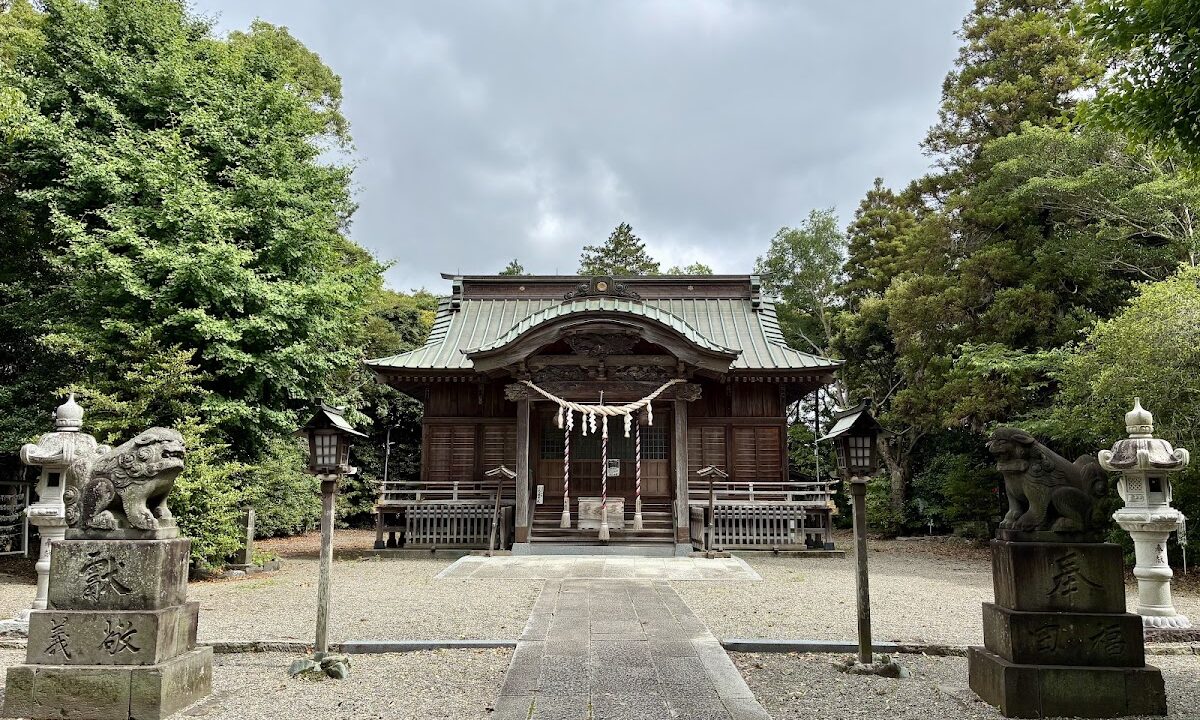
Shimaana Shrine (Ichihara City, Chiba Prefecture) Complete Guide | History, Goshuin (Shrine Seal), and Access Information
Shimaana Shrine, located in Shimano, Ichihara City, Chiba Prefecture, is a venerable shrine known as a Shikinaisha (shrine listed in the Engishiki) with a history of over 1000 years. This guide will introduce all the charms of Shimaana Shrine, from its founding story related to the legend of Yamato Takeru’s eastern expedition, to its history of worshipping the wind god, and the current state of the shrine grounds, which are beloved by the local people.
Overview of Shimaana Shrine
Shimaana Shrine is located at 1129 Shimano, Ichihara City, Chiba Prefecture. It boasts a distinguished history as a Shikinaisha (minor shrine) listed in the Engishiki Jinmyocho (a list of shrines compiled in the Heian period). Under the modern shrine ranking system, it was ranked as a prefectural shrine and positioned as one of the important shrines in Kazusa Province.
The main deity enshrined here is Shinatsuhiko-no-Mikoto, the god of wind, with Yamato Takeru-no-Mikoto and Yamato Hime-no-Mikoto enshrined alongside him. As a god who calms the winds, he has been worshipped since ancient times, and has received particularly deep reverence from people involved in agriculture and navigation.
Basic Information
- Location: 1129 Shimano, Ichihara City, Chiba Prefecture
- Deities Enshrined: Shinatsuhiko-no-Mikoto (Main Deity), Yamato Takeru-no-Mikoto, Yamato Hime-no-Mikoto
- Shrine Rank: Shikinaisha (Engishiki Minor Shrine), Former Prefectural Shrine
- Founding: 40th year of Emperor Keiko’s reign (Traditionally 114 AD)
- Annual Festival: October 17th
- Telephone: 0436-21-2522
History and Origins of Shimaana Shrine
Founding Legend and Yamato Takeru’s Eastern Expedition
Shimaana Shrine’s founding is said to date back to the 40th year of Emperor Keiko’s reign (Traditionally 114 AD). A founding legend deeply related to Yamato Takeru’s eastern expedition, as recorded in the Kojiki and Nihon Shoki, is preserved.
According to shrine tradition, when Prince Yamato Takeru was on his eastern expedition, he encountered a storm while sailing from Hashirimizu (present-day Yokosuka City, Kanagawa Prefecture) to Kazusa Province. At this time, Princess Ototachibana threw herself into the sea to appease the sea god’s anger, allowing the group to safely land in Kazusa.
Having escaped this peril, Prince Yamato Takeru, inheriting Princess Ototachibana’s will and expressing gratitude for the protection of the Tatsuta god (wind god), enshrined Shinatsuhiko-no-Mikoto, the wind god, in this location. This is considered the origin of Shimaana Shrine. The enshrinement of the wind god gave rise to a belief in praying for safe voyages and protection from wind damage.
Status as a Shikinaisha Shrine
Shimaana Shrine is listed as “Shimaana Shrine” in the section for the Tokaido, Kazusa Province, and Kaijo District in the Engishiki Jinmyocho (completed in 927), a compilation of shrines from the Heian period, and is recognized as a Shikinaisha shrine. This indicates that it is a historically significant shrine officially recognized by the imperial court at the time, and its existence has been confirmed for over 1000 years.
There are only 2861 Shikinaisha shrines nationwide (492 major shrines and 2369 minor shrines), and only a limited number of shrines in Chiba Prefecture have received this honor. While Shimaana Shrine is classified as a minor Shikinaisha, it has played an important role as one of the centers of faith in Kazusa Province.
Promotion of Divine Rank and History from the Medieval Period Onward
From the Heian period to the medieval period, Shimaana Shrine was granted divine ranks by the imperial court, increasing its status. According to records, it was granted the divine rank of Senior Fifth Rank, Upper Grade, Fifth Class, which indicated a considerable position among shrines at the time.
Detailed records from the medieval to early modern periods are fragmentary, but various documents confirm that the shrine continued to be worshipped as a guardian deity of the region’s winds and agriculture. During the Edo period, it became the general guardian shrine of the region, attracting the faith of people in Shimano Village and surrounding areas.
Changes Since the Meiji Era
With the establishment of the modern shrine ranking system during the Meiji era, Shimaana Shrine was ranked as a local shrine in 1873 (Meiji 6), and subsequently elevated to a prefectural shrine in 1885 (Meiji 18). This represents a high status among shrines in Chiba Prefecture.
In 1907 (Meiji 40), nearby Dosojinja shrines were merged with it, establishing the current form of the shrine. This merger allowed it to take on a role as a center of faith in a wider region.
After the war, the shrine ranking system was abolished, but its historical value as a Shikinaisha (a shrine listed in the Engishiki) and its role as a center of faith in the region remain unchanged, and it continues to welcome many worshippers today.
About the Deity
Main Deity: Shinatsuhiko-no-Mikoto
Shinatsuhiko-no-Mikoto is the god of wind in Japanese mythology. In the creation myths of Japan found in the Kojiki and Nihon Shoki, Shinatsuhiko-no-Mikoto is one of the nature gods born from Izanagi-no-Mikoto and Izanami-no-Mikoto.
“Shina” is an archaic word meaning “wind,” and Shinatsuhiko-no-Mikoto is considered the male god who controls the wind. In agriculture, wind greatly influences crop growth, and in navigation, wind direction was a matter of life and death. Therefore, the worship of wind gods has been prevalent since ancient times.
According to the traditions of Shimaana Shrine, Shinatsuhiko-no-Mikoto is said to be the husband or younger brother of Shinatobe-no-Mikoto, the deity enshrined at Anesaki Shrine (Anesaki, Ichihara City). This tradition is interesting as it illustrates the network of wind god worship in Kazusa Province.
Deities Enshrined Together: Yamato Takeru and Yamato Hime
Yamato Takeru was a prince of Emperor Keiko, the 12th emperor of Japan, and a legendary hero recorded in the Kojiki and Nihon Shoki. He is said to have conquered various regions through westward and eastward expeditions, and many legends about him remain, especially in the eastern provinces. He is enshrined as a deity directly involved in the founding legend of Shimaana Shrine.
Yamato Hime was Yamato Takeru’s aunt and a miko (shrine maiden) who served as the Saigu (high priestess) of Ise Grand Shrine. She is known for bestowing the Kusanagi-no-Tsurugi (Grass-Cutting Sword) upon Yamato Takeru as he embarked on his eastward expedition, and is worshipped as an important figure who supported Yamato Takeru’s eastward journey.
These three deities are deeply connected to the founding legend of Shimaana Shrine and are believed to possess divine virtues such as wind calming, safe voyages, and long-lasting military fortune.
Highlights of the Shrine Grounds
Shrine Buildings and Grounds Layout
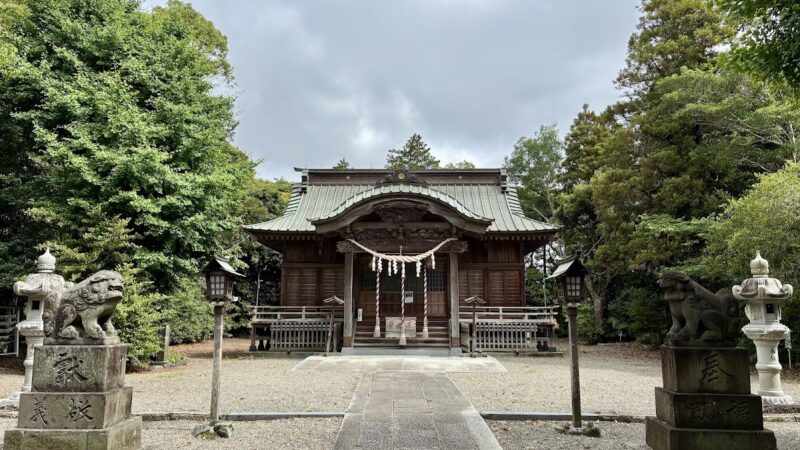
The grounds of Shimaana Shrine are nestled in a quiet residential area, possessing a solemn atmosphere surrounded by ancient trees. As you proceed along the approach, you are greeted by a torii gate, beyond which lie the worship hall and main shrine.
The shrine buildings maintain traditional shrine architectural styles while being properly maintained, giving them an appearance befitting a Shikinaisha (a shrine listed in the Engishiki, an ancient Japanese legal code). Ancient trees and stone monuments, telling the story of its long history, are scattered throughout the grounds, conveying the profound history of the shrine to visitors.
Subsidiary Shrines and Stone Monuments
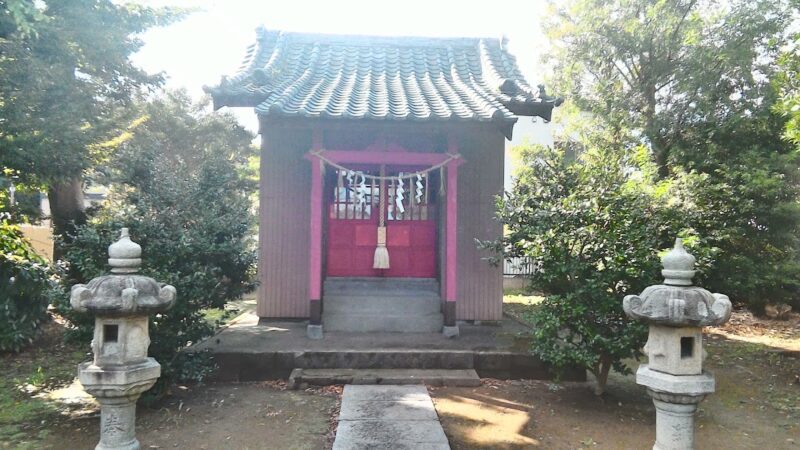
Within the grounds are several subsidiary shrines, including the Dosojinja (a shrine dedicated to the guardian deity of the area). These were moved to the grounds of Shimaana Shrine during the Meiji era’s consolidation, and each bears a part of the local faith history.
Furthermore, stone monuments recording the history and donated memorials are erected within the grounds, providing valuable resources for understanding the shrine’s history and its connection to the local community. The shrine’s information board contains detailed information about the shrine’s history, which is highly recommended for visitors.
Natural Environment and Seasonal Scenery
The trees surrounding the shrine grounds, including sacred trees that have grown over many years, create a sacred atmosphere befitting a divine place. In spring, the fresh greenery is beautiful, and in autumn, the autumn leaves color the grounds.
The opportunity to worship in a tranquil environment, feeling the sound of the wind, is a unique experience only available at Shimaana Shrine, which enshrines the god of wind. In the increasingly urbanized city of Ichihara, it is a precious space where nature and history harmonize.
About Goshuin (Shrine Seals) and Other Items
Goshuin (Shrine Seals)
Shimaana Shrine offers goshuin. Goshuin are given by shrines as proof of worship, and in recent years, the number of visitors enjoying goshuin pilgrimages has increased.
Shimaana Shrine’s goshuin is simple yet dignified, with the shrine’s name and date of visit written in ink, and stamped with the shrine’s seal. The Goshuin (seal impression) of Shimaana Shrine, a shrine with a history as a Shikinaisha (a shrine listed in the Engishiki, an ancient Japanese legal code), will be a valuable item for those visiting shrines in Chiba Prefecture.
If you wish to receive a Goshuin, please speak to the shrine office staff. The chief priest or his family will assist you. However, they may not always be available, so if you want to be sure to receive a Goshuin, it is recommended to call ahead to confirm.
Items Available
Shimaana Shrine also offers items such as amulets and talismans. These include items related to the shrine’s divine virtues as a god of wind protection and safe voyages, as well as general amulets for traffic safety and family safety.
For details on the items available, please inquire at the shrine office during your visit. You may also have the opportunity to hear detailed explanations about the shrine’s history and divine virtues from the chief priest, providing a deeper understanding of the shrine.
Annual Events and Festival
Shimaana Shrine’s annual festival is held every year on October 17th. The annual festival is the most important ceremony for the shrine, a Shinto ritual to express gratitude for the past year and pray for the peace and prosperity of the community.
During the annual festival, Shinto priests solemnly perform rituals, and parishioners and devotees attend. It is an important event that preserves and passes down local traditions and is still carefully preserved today.
In addition, various other festivals are held throughout the year, such as the New Year’s Day Festival and the Setsubun Festival. When planning your visit, checking the dates of these festivals will allow for a more fulfilling experience.
Access Information
Access by Train
The nearest station to Shimaana Shrine is Goi Station on the JR Uchibo Line. The shrine is approximately 4 kilometers from Goi Station, and it takes about 50 minutes on foot.
Using Public Transportation:
- Get off at Goi Station on the JR Uchibo Line.
- Approximately 10 minutes by taxi from the station.
- Alternatively, take a local bus (please check the Kominato Railway bus routes for details).
Access by Car
Access by car is convenient. Access from the Tokyo metropolitan area is also good, and the following routes are common:
Access from Major Roads:
- Approximately 20 minutes from Soga IC on the Keiyo Expressway
- Approximately 25 minutes from Ichihara Tsurumai IC on the Ken-O Expressway
- Approximately 15 minutes from Ichihara IC on the Tateyama Expressway
Car Navigation Settings:
- Address: 1129 Shimano, Ichihara City, Chiba Prefecture
- Phone Number: 0436-21-2522
Parking
There is parking space for visitors within or around the shrine grounds. However, congestion is expected during events such as festivals, so it is recommended to visit with plenty of time to spare.
Nearby Attractions
Anesaki Shrine
We recommend visiting Anesaki Shrine (Anesaki, Ichihara City), which is said to have a deep connection with Shinatsuhiko-no-Mikoto, the deity enshrined at Shimaana Shrine. Visiting both shrines will give you a deeper understanding of the spread of wind god worship in Kazusa Province.
Historical Sites in Ichihara City
Ichihara City has many historical sites that tell the history of ancient Kazusa Province, such as the ruins of Kazusa Kokubunji Temple and Kazusa Kokubun-niji Temple. By visiting these historical sites in conjunction with your visit to Shimaana Shrine, you can experience the history of Kazusa Province from ancient times.
Manners and Etiquette for Shrine Visits
Basic Shrine Visit Etiquette
Please observe the basic shrine visit etiquette and strive for a sincere visit.
- Bow before passing through the torii gate: This is a courtesy before entering the sacred area.
- Purify your body and mind at the water basin: Purify your left hand, then your right hand, then your mouth.
- Avoid walking in the center of the approach to the shrine: The center is considered the path of the gods.
- Proper etiquette in front of the main hall: The basic procedure is two bows, two claps, one bow (two bows, two claps, one bow).
Respect for a Shikinaisha Shrine
Shimaana Shrine is a Shikinaisha shrine with a history of over 1000 years. Please show respect for its history and tradition, and strive for a quiet and peaceful visit. Please refrain from loud conversations within the shrine grounds and from entering the sacred area without permission.
Photography is generally permitted, but consideration is needed, such as refraining from taking pictures inside the shrine or during Shinto rituals. If you have any questions, it is recommended to check with the chief priest.
Divine Virtues and Faith at Shimaana Shrine
Wind Protection and Maritime Safety
Since the main deity, Shinatsuhiko-no-Mikoto, is a god of wind, the shrine has been believed since ancient times to possess the divine virtue of wind protection (protection from wind damage). It has attracted the faith of people involved in agriculture as a god who protects crops and houses from typhoons and strong winds.
Furthermore, due to its founding history related to the legend of Yamato Takeru’s eastern expedition, the shrine is also deeply revered for its divine virtue of maritime safety. Even today, it is worshipped as a guardian deity of all kinds of traffic safety.
Long-lasting Military Fortune and Good Luck
Because the shrine enshrines Yamato Takeru and Yamato Hime-no-Mikoto, it is also believed to possess the divine virtues of long-lasting military fortune, good luck in competitions, and good luck. Many people visit the shrine at important turning points in their lives or when embarking on new challenges.
Summary: A Recommendation to Visit Shimaana Shrine
Shimaana Shrine, located in Ichihara City, Chiba Prefecture, is a venerable shrine boasting a history of over 1000 years as a Shikinaisha (a shrine listed in the Engishiki, an ancient Japanese legal text). Its founding story, related to the legend of Yamato Takeru’s eastern expedition, its devotion to the wind god Shinatsuhiko-no-Mikoto, and its prestigious history as a prefectural shrine are major attractions.
Visiting the shrine in its tranquil grounds, while listening to the sound of the wind, allows you to reflect on the history of faith that has continued since ancient times. For those touring Shikinaisha shrines in Chiba Prefecture or shrines associated with Yamato Takeru, Shimaana Shrine is an essential stop.
When visiting Ichihara City, be sure to visit Shimaana Shrine and experience its history, tradition, and serene atmosphere. If you have the opportunity to hear about its history directly from the chief priest, you will gain an even deeper understanding and appreciation.
Shimaana Shrine offers a peaceful time under the protection of the wind god. May your visit to the shrine be fruitful.