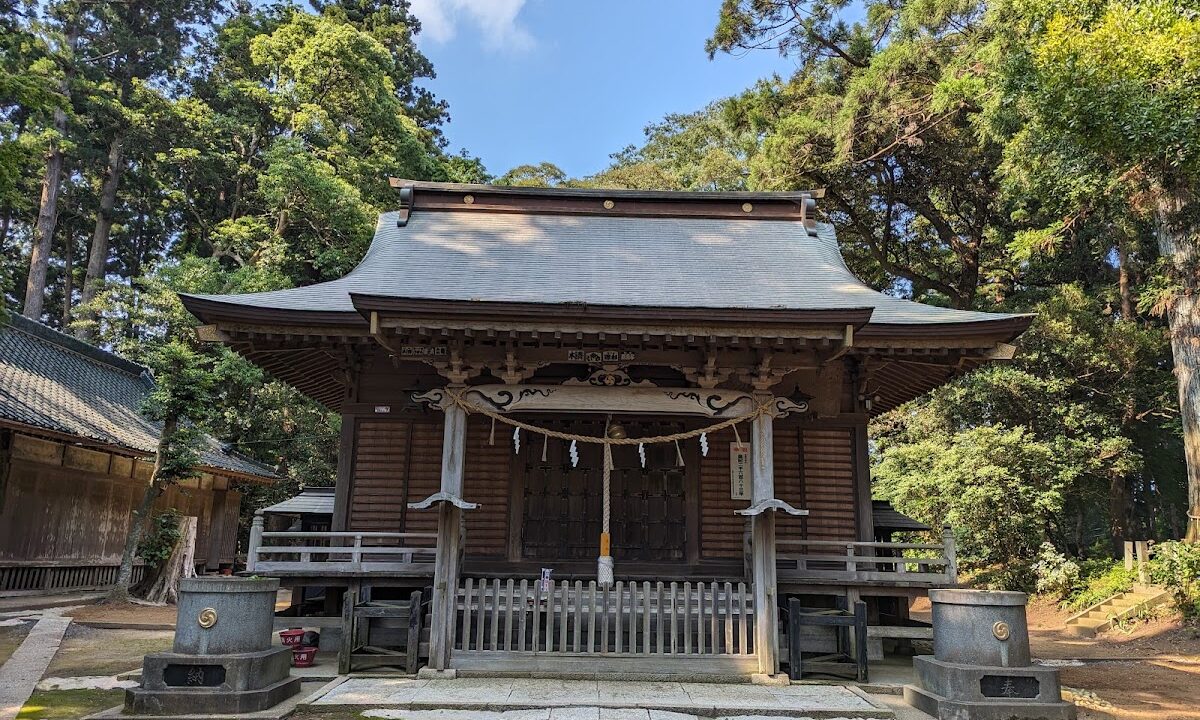
Complete Guide to Kinouchi Daijin Shrine (Katori City, Chiba Prefecture): History, Kagura, Goshuin (Shrine Seal), and Access Information
Kinouchi Daijin Shrine, located in Kinouchi, Katori City, Chiba Prefecture, is a historic shrine said to have been founded during the Daido era (806-809). It has a history of enshrining Toyouke-hime no Mikoto from the Outer Shrine of Ise Grand Shrine, and is known for the traditional “Kinouchi Kagura” dance, which has been performed there since the Edo period, every year on March 3rd.
This article will introduce all the charms of Kinouchi Daijin Shrine, from its detailed history and highlights to information on the Kagura dance, goshuin (shrine seal), and access methods.
History and Origins of Kinouchi Daijin Shrine
Founding and Deities
Kinouchi Daijin Shrine is said to have been founded during the Daido era (806-809) in the early Heian period. The enshrined deity is Toyouke-hime no Mikoto, who was invited from the Outer Shrine of Ise Grand Shrine. Toyouke-hime no Mikoto is known as the goddess of food and grains, and is worshipped as a deity of abundant harvests and industrial development.
Changes in Name
Kinouchi-Ōkami has been called by various names throughout history. During the Tenshō era (1573-1592), it was called “Amanomiya,” and during the Edo period, it was called “Kinouchi Daimyōjin.” The current name, “Kinouchi-Ōkami,” reflects its history as a center of local faith.
Protection and Development in the Middle Ages
The warlords of the Kamakura period played a crucial role in the history of Kinouchi-Ōkami.
In 1186 (Bunji 2), when Shijō Takafusa, a Senior Second Rank Dainagon, acquired this area as his territory, he protected the shrine. Later, during the Kamakura period, Kinouchi Taneaki, the second son of Higashi Taneyori, one of the six branches of the Chiba clan, ruled the area around Kinouchi and constructed a shrine. It is said that Kinouchi Taneaki donated land to the shrine and deeply revered Kinouchi Okami as a place of prayer for his family.
Thanks to this protection from the samurai class, Kinouchi Okami developed into a center of faith in the region.
Kinouchi Kagura: A Traditional Performing Art Continuing from the Edo Period
The most distinctive feature of Kinouchi Okami is the “Kinouchi Kagura,” performed annually on March 3rd. This kagura is a valuable folk cultural asset of Chiba Prefecture and is still carefully preserved by the local people.
History of Kinouchi Kagura
The history of Kinouchi Kagura is long, with records indicating that it was already being performed in Genbun 5 (1740) during the mid-Edo period. However, it was discontinued once in Kansei 2 (1790). Later, in Bunsei 12 (1829), Kagura was revived through transmission from the neighboring Yonenoi district. Records show that 11 Kagura masks were repaired or newly made at this time, conveying the strong desire of the local people to revive Kagura.
Another record indicates that it was already being performed during the Bunka era (1804-1818), confirming that Kagura was definitely being offered as a dedication during the late Edo period.
Changes in Tradition
Before the Meiji era, the nearest Shinto priests gathered to perform Kagura. However, from around the early Meiji period, Kagura began to be performed by local young people, strengthening its character as a folk art rooted in the community.
Currently, the Twelve-Seat Kagura is being preserved by the Kinouchi Kagura Preservation Society, an organization of local volunteers. Thanks to the dedicated efforts of the preservation society members, this tradition of over 200 years has been passed down without interruption.
Contents of the Twelve-Seat Kagura
Kinouchi Kagura, also known as “Twelve-Seat Kagura,” consists of multiple performances. The Kagura is performed to pray for the safety and well-being of the parishioners, a bountiful harvest, and business prosperity.
Performance Date and Time: Every year on March 3rd, 12:00 PM – 5:00 PM
Various performances are presented over approximately five hours, captivating local residents and worshippers. The date of March 3rd, which heralds the arrival of spring, is a meaningful choice, related to the beginning of agriculture.
Cultural Value of Kagura
Kinouchi Kagura, a valuable folk performing art that has continued since the Edo period, holds cultural value as a cultural asset of Chiba Prefecture. It is an important cultural heritage that conveys the history and traditions of the region to the present day, and is also attracting attention as a tourist resource in Katori City.
The way the community is united through Kagura and how traditions are passed down to the next generation is a very valuable example in modern society.
Grounds and Highlights of Kinouchi Shrine
Worship Hall and Main Shrine
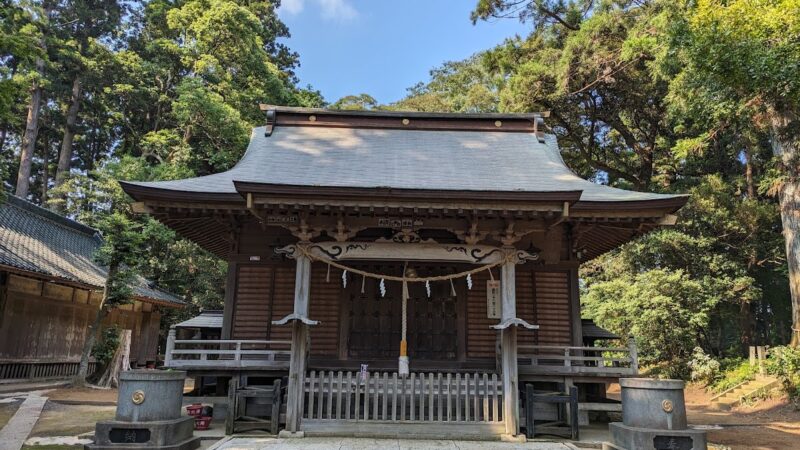
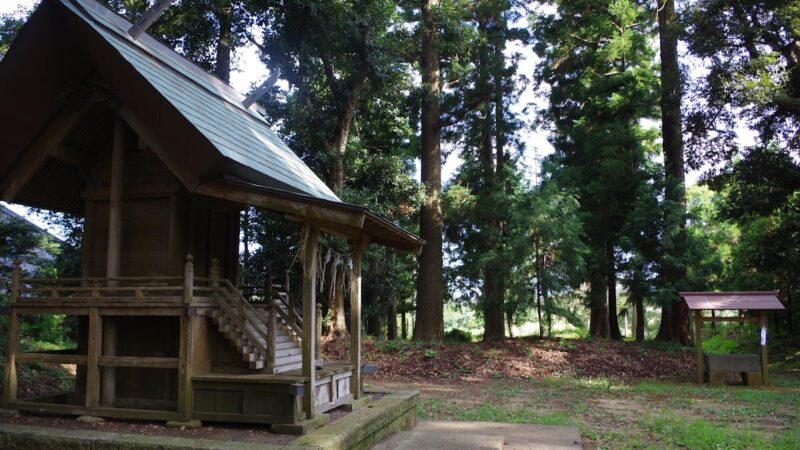
The grounds of Kinouchi Shrine are enveloped in a quiet and pleasant atmosphere. Many visitors comment on its secluded yet comforting nature, describing it as a “peaceful shrine” and noting a “good energy permeating the air.”
The worship hall, though simple, exudes a solemn presence, reflecting its long history. The main shrine, located behind the worship hall, enshrines Toyouke-hime no Mikoto.
Attractiveness as a Power Spot
Kinouchi Shrine is recognized locally as a power spot known to those in the know. The tranquil atmosphere of the grounds and the energy of its long history as a place of worship seem to provide healing and vitality to visitors.
In particular, it enjoys strong devotion from those involved in agriculture and commerce, with a constant stream of visitors coming to pray for bountiful harvests and business prosperity.
Kagura Masks and Cultural Assets
Kinouchi Shrine possesses valuable cultural assets, including Kagura masks repaired in 1829 (Bunsei 12). These Kagura masks are actually used during the Kagura performance on March 3rd, preserving the tradition from the Edo period.
Goshuin (Shrine Seal) Information
How to Obtain a Goshuin
Kinouchi Shrine offers pre-printed Goshuin. Since there is often no resident priest, pre-printed Goshuin are placed near the main hall, and visitors can receive them upon offering a donation.
The Goshuin features the calligraphy of “Kinouchi Shrine” and the shrine’s seal, creating a simple yet dignified design.
Notes on Receiving a Goshuin (Temple Stamp)
- Since pre-printed goshuin are the norm, direct writing into goshuin notebooks is generally not done.
- The offering fee is generally around 300 yen (in some cases, it may be a voluntary offering).
- Please follow the signs on the temple grounds regarding the location of the goshuin and how to pay the offering fee.
- Please observe proper etiquette and receive the goshuin with gratitude.
Access and Parking Information
Basic Information
Location: 1166 Kiuchi, Katori City, Chiba Prefecture
Nearest Station:
- Approximately 41 minutes on foot from Omigawa Station on the JR Narita Line (approx. 3.3 km)
- Approximately 43 minutes on foot from Suigo Station on the JR Narita Line (approx. 3.5 km)
Nearest Bus Stop:
- Approximately 10 minutes on foot from Shimizu Kannon Iriguchi bus stop (approx. 789 m)
Access by Car
Kiuchi Okami is easily accessible by car. Since it is a distance from the nearest station, we recommend visiting by car.
Access from major roads:
- Approximately 20 minutes from the Daiei Interchange on the Higashi-Kanto Expressway
- Accessible from National Route 356
Parking Information
While Kinouchi Shrine does not have a dedicated parking lot, there is space along the road in front of the shrine where approximately 2-3 cars can park. However, on days when congestion is expected, such as during the Kagura performance on March 3rd, please try to arrive early or consider using public transportation.
When parking, please be considerate of local residents and park in a location that does not obstruct traffic.
Manners and Precautions for Visiting a Shrine
Basic Worship Etiquette
- Bow Before Passing Through the Torii Gate: As a sign of respect before entering the sacred area, bow before the torii gate.
- Walking Along the Path: The center of the path is considered the path of the gods, so it is polite to walk along the sides.
- Purification at the Water Basin: If there is a water basin, purify your hands and mouth before praying.
- Worship at the Main Hall: The basic etiquette is two bows, two claps, and one bow.
Regarding Photography
Photography is generally permitted on the shrine grounds, but please note the following:
- Refrain from photographing sacred areas such as the main hall.
- Be considerate of other worshippers.
- When photographing Kagura performances, choose a position that does not obstruct the performers.
- When posting on social media, remember to show respect to the shrine and the local community.
Nearby Tourist Attractions
When visiting Kiuchi-Okami, why not also explore the tourist attractions around Katori City?
Katori Shrine
This is the representative shrine of Katori City and the head shrine of approximately 400 Katori Shrines nationwide. It is about a 15-minute drive from Kiuchi-Okami, and many people visit both.
Suigo Sawara
The Sawara district, which retains the townscape of the Edo period, is known as “Little Edo of Northern Chiba.” It boasts many attractions, including the picturesque scenery along the Ono River and the Ino Tadataka Memorial Museum.
Michi-no-Eki Mizu-no-Sato Sawara
A roadside station where you can purchase fresh local agricultural products and specialty goods. It’s also an ideal rest stop.
Annual Events at Kiuchi-Okami
March 3rd: Grand Festival and Kiuchi Kagura Performance
The most important event at Kiuchi-Okami is the Grand Festival, held every year on March 3rd. On this day, the Kiuchi Kagura dance is performed from 12:00 to 17:00, attracting many worshippers and tourists.
This Kagura dance, performed to pray for a bountiful harvest and business prosperity, has become a major local event and a valuable opportunity to experience traditional culture.
Other Events
Besides the annual festival, various other festivals are held throughout the year at Kiuchi Shrine. For details, please check local information or notices posted at the shrine.
Points to Note When Visiting Kiuchi Shrine
Recommended Time to Visit
March 3rd, the day of the Kagura performance is the best day to experience the charm of Kiuchi Shrine. It’s a rare opportunity to witness this traditional performing art, which has continued since the Edo period, live, so we strongly recommend visiting on this day.
However, crowds are expected on this day, so please aim to arrive early. The Kagura dance begins at 12:00, but if you want to watch from a good spot, arriving in the morning is advisable.
For a regular visit, the seasons from spring to autumn are most pleasant. Especially during the seasons of fresh greenery and autumn leaves, the natural beauty of the shrine grounds makes for a pleasant visit.
Estimated Time Required
- Regular visit only: Approximately 20-30 minutes
- Leisurely stroll through the grounds: Approximately 30-45 minutes
- Including Kagura performance (March 3rd): Approximately 2-5 hours
What to Bring and Wear
- Comfortable walking shoes (some areas of the grounds are unpaved)
- Seasonal clothing (take precautions against heat in summer, and warm clothing in winter)
- Goshuincho (stamp book) (for those who wish to receive a Goshuin stamp)
- Camera (for those who wish to take commemorative photos)
- Small change for offerings
Connection to the Community
Kinouchi-Okami Shrine has a history of functioning not merely as a tourist spot, but as a center of the local community.
Activities of the Kiuchi Kagura Preservation Society
The Kiuchi Kagura Preservation Society, organized by local volunteers, plays a central role not only in the transmission of Kagura (traditional Shinto dance) but also in regional cultural preservation activities. They are involved in passing on techniques to younger generations and the preservation and management of cultural assets such as Kagura masks, continuing their activities as a source of pride for the community.
Faith with Local Residents
Kiuchi Okami has been cherished as the guardian deity of the local community. Given the region’s thriving agriculture, prayers for a bountiful harvest are particularly important, and many local residents still regularly visit the shrine.
Summary of the Charms of Kiuchi Okami
Kiuchi Okami boasts a long history, dating back to the Daido era (1008-1011), and is a valuable shrine that preserves the living traditional culture of Kiuchi Kagura, which has continued since the Edo period.
Main Attractions:
- Historical Value: Founded in the early Heian period and protected by the samurai class during the Kamakura period.
- Traditional Culture: Dedication of the Kinouchi Kagura, a dance that has continued for over 200 years.
- Tranquil Atmosphere: A charming power spot with a pleasant atmosphere.
- Local Character: A place of worship deeply rooted in the local community.
- Access: Conveniently located for those traveling by car.
When visiting Katori City, be sure to visit Kinouchi Shrine. Especially on March 3rd, the day of the Kagura dedication, it offers a rare opportunity to experience a traditional performing art that has continued since the Edo period.
The time spent praying to Toyouke-hime no Mikoto in the quiet shrine grounds for a bountiful harvest and business prosperity will be a precious moment that allows you to forget the hustle and bustle of everyday life.
Practical Information for Visiting Kiuchi-Okami Shrine
Contact Information
For detailed information about Kiuchi-Okami Shrine and the latest information on Kagura performances, please contact:
- Katori City Tourism and Commerce Division
- Katori City Tourism Association
Checking for the Latest Information
Events such as Kagura performances may be changed due to weather or other circumstances. We recommend checking the latest information on the official Katori City tourism website or the tourism association website before your visit.
Accessibility Information
Kiuchi-Okami Shrine is a historical shrine, and accessibility facilities are limited. Those wishing to visit in a wheelchair are advised to consult with the Katori City Tourism Division in advance.
Conclusion
Kiuchi-Okami Shrine is a treasure trove of history and tradition that Katori City, Chiba Prefecture, is proud of. Its long history dating back to the Daido era, the Kiuchi Kagura dance passed down from the Edo period, and the deep faith of the local people all come together to form the unique charm of this shrine.
Escape the hustle and bustle of the city and find peace of mind in the tranquil grounds. Experiencing the deeply rooted local culture will bring new discoveries and inspiration to visitors.
When visiting Katori City, be sure to stop by Kinouchi Shrine and experience its history, traditions, and peaceful atmosphere. The Kagura performance on March 3rd, in particular, is a wonderful cultural experience well worth seeing.
We hope that Kinouchi Shrine will continue to be cherished by the local community and remain a place that provides healing and vitality to many worshippers.