Yamakura Daijin Shrine (Katori City, Chiba Prefecture) Complete Guide | History, Salmon Festival, Goshuin (Shrine Seal), and Access Information
Yamakura Daijin, situated on a small hill in the Yamakura district of Katori City, Chiba Prefecture, is a historic shrine founded in 811 AD during the early Heian period. As the head shrine of the Dairokutenno Shrines, it has long been revered and remains a beloved place for local residents. In particular, the “Yamakura Salmon Festival,” held in December, is designated as an Intangible Folk Cultural Property of Chiba Prefecture and is known nationwide as a rare festival where salmon are offered as a sacrifice.
This article comprehensively introduces all the information you need to know before visiting Yamakura Daijin Shrine, including its history, enshrined deities, highlights, details of the annual Salmon Festival, goshuin information, and access methods.
History and Origins of Yamakura Okami Shrine
Founding and History as a Dairokutenno Shrine
Yamakura Okami Shrine is said to have been founded in 811 AD (Kōnin 2). Its origins are believed to lie in the early Heian period, during the reign of Emperor Saga, when Dairokuten was enshrined to pray for the eradication of plagues. Dairokuten are deities of the Tenbu (heavenly beings) in Buddhism, and were particularly worshipped as important protective deities in Esoteric Buddhism.
Yamakura Okami Shrine, as the head shrine of Dairokutenno Shrines, attracted widespread devotion, mainly in the Kanto region. Until the Edo period, Yamakura-san Kanfuku-ji Temple of the Shingon sect managed the shrine as its supervising temple, maintaining a syncretic Shinto-Buddhist structure and occupying a religiously significant position.
Separation of Shinto and Buddhism and Renaming in the Meiji Era
In the Meiji era, the new government issued a decree separating Shinto and Buddhism, and the separation of shrines and temples progressed nationwide. Yamakura Okami Shrine was also affected by this, and underwent a major transformation in 1871 (Meiji 3).
The Dairokutenno, which had been enshrined there until then, was moved to Kanfuku-ji Temple, and the shrine was renamed “Yamakura Okami.” At the same time, the enshrined deities were also changed, and it came to enshrine the current three deities: Takamimusubi no Okami, Takehayasusano no Okami, and Omononushi no Okami.
This change meant that the shrine shed its Buddhist influence and began a new chapter in its history as a purely Shinto shrine.
Construction and Architectural Style of the Current Main Hall
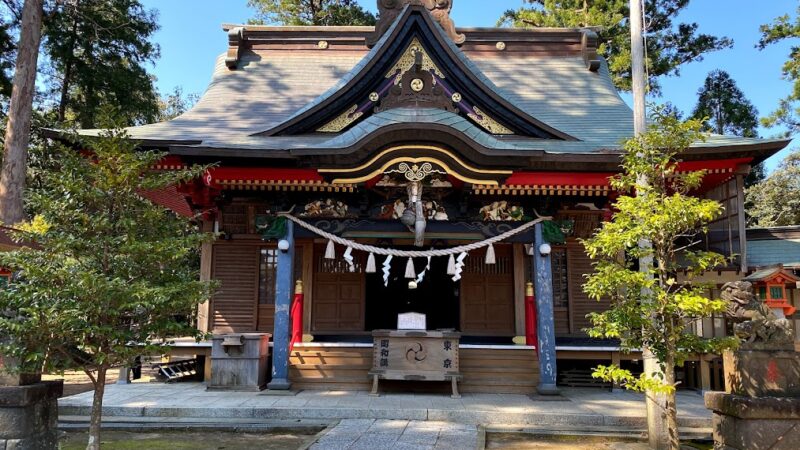
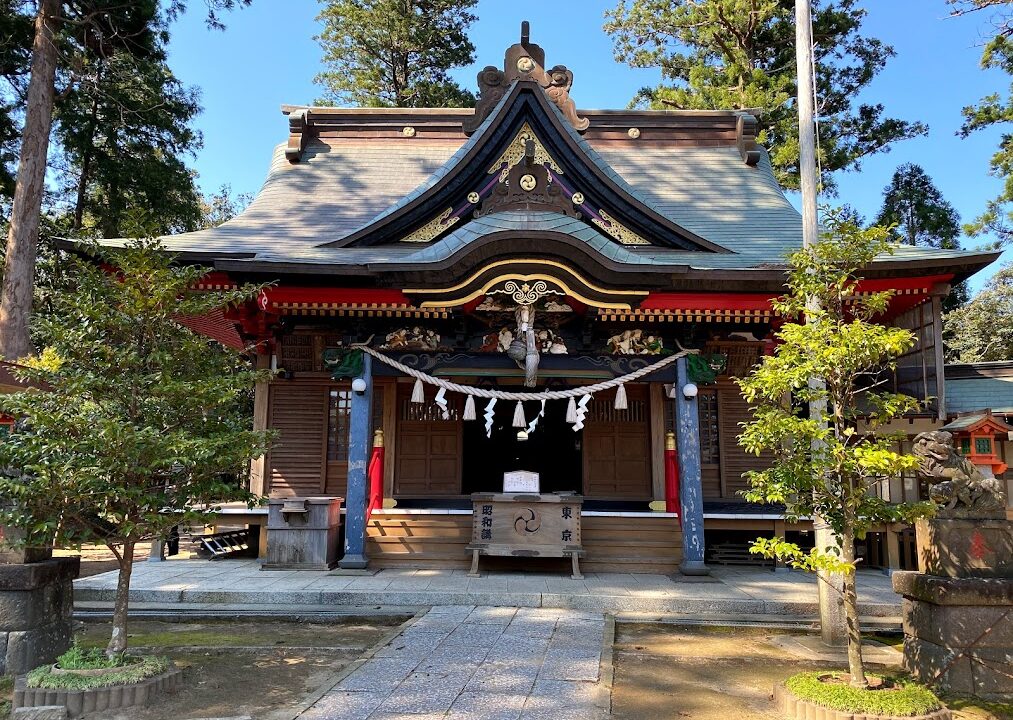
The current main hall was built in 1778 (An’ei 7), making it a valuable structure with over 200 years of history. Its architectural style is Gongen-zukuri, and it is a wooden structure with a copper roof, measuring 4.5 meters in both width and depth.
The main hall is characterized by its intricate carvings and beautiful joinery. The craftsmanship of the mid-Edo period is evident throughout, conveying the high level of architectural technology of that time. It also incorporates the style of a one-bay nagare-zukuri (flowing roof) structure, giving it a dignified appearance despite its compact size.
Deities and Divine Virtues
We will introduce the characteristics and divine virtues of the three deities enshrined at Yamakura Okami.
Takamimusubi no Okami
One of the three creation gods who appeared at the time of the creation of heaven and earth, this deity is believed to possess the spiritual power to generate all things. “Musubi” means connection or creation, and this deity is believed to have divine virtues such as matchmaking, prosperity of descendants, and abundant harvests.
Takehayasusano Okami
Known as the heroic god who defeated Yamata no Orochi, this deity is worshipped as a god of protection against evil, disaster, and epidemics. This deity is deeply connected to the history of Yamakura Shrine, which was founded to pray for the eradication of plagues.
Ōmononushi-no-Ōkami
This deity is considered an alternative name for Ōkuninushi-no-Kami, or perhaps his benevolent spirit (nigimitama), and is revered as the god of nation-building, business prosperity, and medicine. He is also known as the principal deity of Ōmiwa Shrine in Nara.
Through these three deities, Yamakura Shrine attracts worshippers as a shrine with a wide range of divine blessings, including protection from evil, prayers for good health, family safety, and abundant harvests.
“Yamakura Salmon Festival” – Chiba Prefecture Intangible Folk Cultural Property
An essential part of discussing Yamakura Shrine is the “Yamakura Salmon Festival, held every December. This festival, designated as a Chiba Prefecture Intangible Folk Cultural Property in 2005, is a historical and traditional event.
The Origin and History of the Salmon Festival
The Salmon Festival is a traditional event with a history of over 1000 years, believed to have begun around the mid-Heian period. Originally called the “Hatsu-Usai” (First Rabbit Festival), it was held on the first Rabbit day of the 11th month of the lunar calendar, the day the shrine was founded.
Currently, it is held on the first Sunday of December and attracts many worshippers. The most distinctive feature of this festival is the offering of salmon to the gods, and the distribution of fresh salmon to worshippers.
Why Salmon?
Some may wonder why salmon is offered at a shrine in Katori City, located inland. There are several theories, but it is believed that salmon migrated upstream in the Tone River system, and that the word “salmon” (sake) sounds similar to “sakeru” (to avoid), making it an important amulet to ward off illness and misfortune.
The salmon distributed are highly valued as cold medicine and amulets for warding off evil, and worshippers take them home praying for good health throughout the year. This custom has been passed down through generations and is the most distinctive form of worship at Yamakura Shrine.
Festival Flow and Highlights
On the day of the Salmon Festival, Shinto rituals are performed from early morning. After solemn ceremonies including the recitation of prayers by Shinto priests and the performance of sacred dances by shrine maidens, the distribution of salmon to worshippers begins.
Stalls line the shrine grounds, and it becomes lively with local people and worshippers from afar. Yamakura Shrine, usually quiet, is enveloped in a vibrant atmosphere on this day.
During the Salmon Festival, special goshuin (shrine stamps) that are not normally given out are sometimes distributed, making it a valuable opportunity for goshuin collectors.
Yamakura Shrine Grounds and Highlights
Approach and Torii Gate
Yamakura Shrine is located on a small hill, and the approach leads up to the shrine grounds. The sign at the entrance features a salmon illustration, making it immediately clear that this shrine is famous for its salmon festival.
Climbing the stone steps, you’ll come to a torii gate, marking the beginning of the sacred area. The quiet approach, surrounded by trees, offers a peaceful atmosphere that makes you forget the hustle and bustle of the city.
Architectural Beauty of the Main Hall
As mentioned earlier, the main hall is a historical building constructed in 1778 (An’ei 7). It beautifully blends the aesthetic beauty of the Gongen-zukuri style with the sculptural techniques of the mid-Edo period.
Particularly noteworthy are the intricate carvings adorning the main hall. Designs of dragons, lions, flowers, and birds demonstrate the high level of skill of the craftsmen of the time. The structural elements are also beautiful, making it a must-see for anyone interested in architecture.
Shrine Precincts and Stone Monuments
Several shrine precincts and stone monuments are located around the main shrine building. These are valuable historical materials that tell the story of Yamakura Okami’s long history, and are well worth taking the time to carefully examine.
Old Approach Road and Surrounding Historical Buildings
Along the old approach road to Yamakura Okami, Western-style inn buildings remain as remnants of the bustling area once frequented by worshippers. These were built from the Taisho to the early Showa period and are valuable cultural assets that convey the prosperity of Yamakura Okami at that time.
When visiting, paying attention not only to the shrine but also to the surrounding historical landscape will allow you to feel the history of Yamakura Okami more deeply.
Goshuin (Shrine Seal) Information
Regarding the Issuance of Goshuin
Goshuin are available at Yamakura Okami, but please note that the shrine office is not always open. The chief priest may be absent, especially on weekdays and days other than festival days.
If you definitely want to receive a Goshuin (temple/shrine stamp), it is recommended to call ahead to confirm or visit on the day of the annual festival (Salmon Festival). The shrine office is open on the day of the Salmon Festival, and you can receive the Goshuin directly from the chief priest.
Goshuin Design
The Goshuin of Yamakura Okami is simple yet dignified in design. The basic form features the calligraphy of “Yamakura Okami” in the center, the date of worship on the right, and the shrine seal on the left.
During the Salmon Festival, pre-printed Goshuin may also be available. Many worshippers receive them as a memento of this special day.
Etiquette for Receiving a Goshuin
A Goshuin is not merely a stamp rally; it is proof of worship. Always visit the main shrine first, and then politely request one at the shrine office. Having a Goshuin notebook and the offering fee (usually around 300-500 yen) ready will make the process smoother.
Detailed Information & Access
Basic Information
Official Name: Yamakura Daijin
Location: 2347 Yamakura, Katori City, Chiba Prefecture 289-0426
Phone Number: 0478-79-2345
Founded: 811 AD (Kōnin 2)
Deities Enshrined: Takamimusubi no Ōkami, Takehaya Susanoo no Ōkami, Ōmononushi no Ōkami
Annual Festival: First Sunday of December (Yamakura Salmon Festival)
Shrine Rank: Former Village Shrine
Access by Train
The nearest station is JR Narita Line “Omigawa Station”. It is approximately 4 kilometers from the station to Yamakura Daijin, taking about 50 minutes on foot.
If you take a taxi from the station, it will take about 10 minutes. The fare is approximately 1,500 yen. If you are visiting with multiple people, especially on the day of the Salmon Festival, taking a taxi is recommended.
There are also bus routes, but they are infrequent, so it is recommended to check the timetable in advance.
Access by Car
Access by car is the most convenient. It is about 15 minutes from the Higashi-Kanto Expressway “Sawara-Katori IC” or about 20 minutes from the “Daiei IC”.
For car navigation, it is recommended to enter the address “2347 Yamakura, Katori City, Chiba Prefecture” or the phone number “0478-79-2345”.
Parking
There is parking space for visitors on the temple grounds, but the number of spaces is limited. Especially on the day of the Salmon Festival, many visitors come, so it is recommended to arrive early. Temporary parking may be set up in the surrounding area.
Visiting Hours
Entry to the temple grounds is generally free, but the temple office has limited hours. If you wish to obtain a Goshuin (temple stamp) or amulet, it is recommended to check by phone in advance.
The general guideline for visiting is from sunrise to sunset. Avoid visiting at night.
Nearby Tourist Attractions
Katori Shrine
Located about 15 minutes by car from Yamakura Shrine, Katori Shrine is one of the most prominent ancient shrines in the Kanto region, known as the Ichinomiya (first-ranked shrine) of Shimosa Province. It is the head shrine of approximately 400 Katori shrines nationwide, and enshrines Futsunushi-no-Okami, the god of martial arts.
The vermilion-lacquered gate and main hall are designated as important national cultural properties, exuding a solemn atmosphere. Visiting both Yamakura Shrine and Katori Shrine will allow you to fully enjoy a tour of the shrines in the Katori region.
Sawara Townscape
Sawara, known as “Little Edo of Northern Chiba,” is charming for its historical townscape that retains the atmosphere of the Edo period. Merchant houses and storehouses line the Ono River, and it has been designated as an important traditional building preservation district.
There are plenty of attractions, including boat tours and visits to the Ino Tadataka Memorial Museum. It’s about a 20-minute drive from Yamakura Shrine, making it ideal for combining with sightseeing.
Suigo Tsukuba Quasi-National Park
The Suigo area of the Tone River system is a scenic spot with abundant nature. It’s especially beautiful during the fresh greenery of spring and the autumn foliage season, making it perfect for driving or cycling.
Guidelines for Visiting Yamakura Shrine
Clothing and Items to Bring
While no special attire is required for visiting the shrine, please dress neatly and cleanly. Since the shrine grounds have stone steps and gravel paths, comfortable walking shoes are recommended.
In summer, insect repellent is recommended, and in winter, warm clothing is advisable. If you wish to receive a Goshuin (shrine stamp), please prepare a Goshuincho (stamp book), writing utensils, and offering.
Etiquette for Worship
Bow before passing through the torii gate, and walk along the path, avoiding the center. Before proceeding to the main shrine, purify your hands and mouth at the water basin.
The basic method of worship at the main shrine is “two bows, two claps, one bow.” Place your offering in the offering box, ring the bell, bow deeply twice, clap twice, and finally bow once.
Regarding Photography
Photography is generally permitted on the shrine grounds, but please refrain from taking pictures inside the main shrine or during religious ceremonies. It is also important to be considerate of other worshippers.
When posting on social media, please remember that this is a sacred place and act with moderation.
The Four Seasons of Yamakura Shrine
Spring (March-May)
In the season of fresh greenery, the trees on the shrine grounds bud, and the air is refreshing. There is no spring festival, but it is an ideal time for quiet worship.
Summer (June-August)
The greenery deepens, and the shade of the trees provides coolness. The sound of cicadas fills the shrine grounds, creating a summery atmosphere. However, since this is also a time when insects are abundant, insect repellent is essential.
Autumn (September-November)
This is a beautiful season for autumn foliage. The trees on the shrine grounds change color, creating a peaceful atmosphere for worship. The weather is mild, making it an ideal time for sightseeing.
Winter (December-February)
The Salmon Festival on the first Sunday of December is the busiest time at Yamakura Shrine. A solemn Shinto ritual is performed in the crisp winter air. Be sure to dress warmly when you visit.
Summary
Yamakura Shrine, located in Katori City, Chiba Prefecture, is a historical shrine founded in 811 AD. It was revered as the head shrine of the Dairokutenno Shrines, and after the separation of Shinto and Buddhism during the Meiji era, it took its current form.
Its most distinctive feature is the “Yamakura Salmon Festival,” which is designated as an Intangible Folk Cultural Property of Chiba Prefecture. This festival, held annually on the first Sunday of December, involves the offering of salmon to the gods and the distribution of fresh salmon to worshippers. It’s a traditional event that has been passed down for over 1000 years, serving as a charm to “ward off” illness and misfortune.
The main shrine, built in 1778, boasts a beautiful Gongen-zukuri architectural style and intricate carvings. While obtaining a Goshuin (shrine stamp) can be difficult at other times, it’s guaranteed on the day of the Salmon Festival.
Access is approximately 10 minutes by taxi from Omigawa Station on the JR Narita Line, or about 15 minutes by car from the Sawara-Katori Interchange on the Higashi-Kanto Expressway. There are also plenty of other tourist attractions nearby, such as Katori Shrine and the townscape of Sawara.
Yamakura Okami, with its rich history, tradition, and unique form of worship, is a place you should definitely visit, especially during the Salmon Festival, to experience this valuable cultural heritage of Chiba Prefecture.