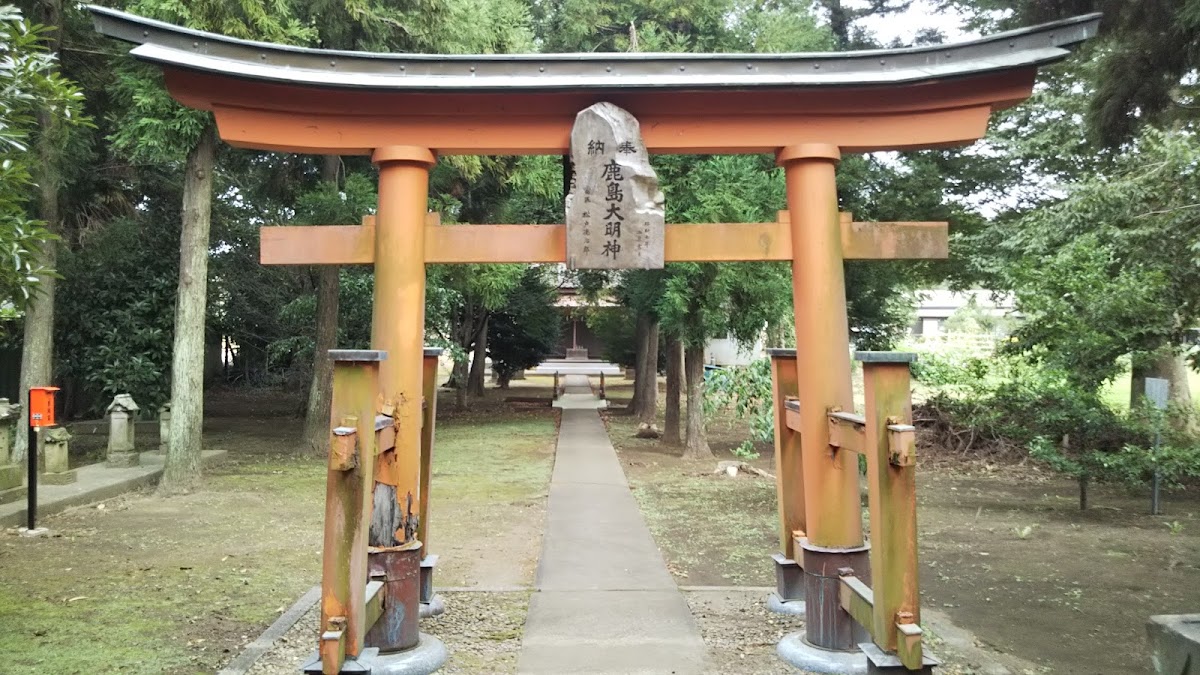
Kashima-Okami (Chiba Prefecture) Complete Guide | History, Benefits, and a List of Kashima-related Shrines in Chiba Prefecture
Numerous shrines called “Kashima-Okami” or “Kashima Shrine” are located throughout Chiba Prefecture. These are shrines of the Kashima lineage, with Kashima Jingu Shrine in Kashima City, Ibaraki Prefecture, as their head shrine, and they enshrine Takemikazuchi-no-Okami, known as a god of war, as their main deity. This article provides a detailed introduction to Kashima-Okami in Chiba Prefecture, including its historical background, characteristics of its faith, benefits, and a list of Kashima-related shrines scattered throughout the prefecture.
What is Kashima-Okami? | Basic Knowledge of Kashima Faith
Kashima Jingu Shrine and the Origin of Kashima Faith
At the heart of Kashima faith is Kashima Jingu Shrine, located in Kashima City, Ibaraki Prefecture. It is said to have been founded in the first year of Emperor Jimmu’s reign (660 BC) and is known as one of the oldest shrines in Japan. Kashima Shrine, as the Ichinomiya (first-ranked shrine) of Hitachi Province, has been revered by the imperial court since ancient times.
There are approximately 600 Kashima shrines throughout Japan, many of which were founded by inviting deities from Kashima Shrine. Chiba Prefecture, bordering Ibaraki Prefecture, is one of the regions where Kashima worship is particularly prevalent.
The Divine Status and Mythology of Takemikazuchi-no-Okami
Takemikazuchi-no-Okami is a warrior god who plays an important role in Japanese mythology. According to the Kojiki and Nihon Shoki, he is depicted as a god who, at the command of Amaterasu-Omikami, descended to Izumo Province along with Futsunushi-no-Kami of Katori Shrine, and successfully negotiated the transfer of the land from Okuninushi-no-Kami.
From this myth, Takemikazuchi-no-Okami came to possess diverse divine attributes:
- God of Martial Arts and Arts: As the god of the sword, he is revered by warriors.
- God of Good Fortune in Competition: As the god who successfully negotiated, he brings good fortune in battle.
- God of National Protection: As the god who pacified the land, he is the guardian deity of the country.
- God of Thunder: The name “Mikazuchi” means thunder, and he controls the power of nature.
Relationship with the Nakatomi and Fujiwara Clans
Takemikazuchi-no-Okami, along with Futsunushi-no-Kami of Katori Shrine, was considered the tutelary deity of the Nakatomi clan (later the Fujiwara clan). The Nakatomi clan was a family that presided over religious ceremonies since ancient times, and as the Fujiwara clan came to play a central role in politics, Kashima worship became widely practiced among the imperial court and central nobility.
This historical background is a major factor in the spread of Kashima shrines throughout Japan. It is believed that Kashima-related shrines in Chiba Prefecture were established and enshrined in various locations as a result of the spread of this faith.
Major Kashima-Okami and Kashima Shrines in Chiba Prefecture
Numerous Kashima-related shrines are located throughout Chiba Prefecture. Here, we introduce some representative shrines by area.
Kashima-related Shrines in the Chiba City Area
Kashima-Okami (Wakamatsu-cho, Wakaba-ku, Chiba City)
Location: 2219 Wakamatsu-cho, Wakaba-ku, Chiba City, Chiba Prefecture
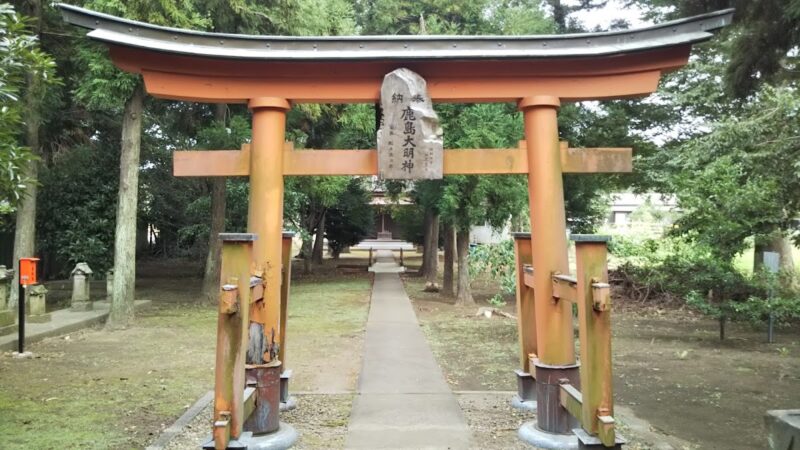
Kashima-Okami, located in Wakaba-ku, Chiba City, has long been revered as the local guardian deity. The shrine grounds, quietly nestled within a residential area, serve as a spiritual haven for local residents.
Kashima Shrine (Higashiterayama-cho, Wakaba-ku, Chiba City)
Location: 288 Higashiterayama-cho, Wakaba-ku, Chiba City, Chiba Prefecture
This Kashima Shrine, also located in Wakaba-ku, is cherished as a guardian deity of the region. Welcoming visitors in a tranquil environment.
Kashima-related shrines in the Hokuso area
Kashima Shrine (Nakane, Noda City)
Location: 32 Nakane, Noda City, Chiba Prefecture
The Kashima Shrine in Noda City is located within the faith area of the Tone River basin and has deep ties to water transport.
Kashima Shrine (Kimagase, Noda City)
Location: 1545 Kimagase, Noda City, Chiba Prefecture
Also located in Noda City, this Kashima Shrine has been worshipped as the guardian deity of rural areas.
Kashima Shrine (Tsuchimuro, Narita City)
Location: 372 Tsuchimuro, Narita City, Chiba Prefecture
The Kashima Shrine in Narita City is located in the area known for Naritasan Shinshoji Temple and forms its own unique faith area.
Kashima Shingu Shrine (Katori, Katori City)
Location: 1697 Katori, Katori City, Chiba Prefecture
Located in Katori City, at the foot of Katori Jingu Shrine, Kashima Shingu Shrine is an interesting shrine situated at the intersection of the two major war god worships: Kashima Jingu and Katori Jingu. The name “Shingu” (new shrine) signifies a shrine newly established from the main shrine (Kashima Jingu).
Kashima-related shrines in the Kujukuri/Sotobo area
Kashima Shrine (Kuriyama, Yokoshibahikari-machi, Sanbu-gun)
Location: 3210 Kuriyama, Yokoshibahikari-machi, Sanbu-gun, Chiba Prefecture
Located in the agricultural area of the Kujukuri Plain, it has also functioned as a place of prayer for a bountiful harvest.
Kashima Shrine (Tonodai, Sanmu City)
Location: 436 Tonodai, Sanmu City, Chiba Prefecture
Kashima Shrine in Sanmu City is a shrine deeply intertwined with the local history.
Kashima Shrine (Okitsu, Katsuura City)
Location: 1181-1 Okitsu, Katsuura City, Chiba Prefecture
Kashima Shrine, located in a fishing village area on the outer coast of Chiba, is also revered as a guardian deity of the region, which thrives on fishing and agriculture.
Kashima Shrine (Ohara, Isumi City)
Location: 1595 Ohara, Isumi City, Chiba Prefecture
Kashima Shrine in Isumi City is also worshipped as the guardian deity of a region where fishing and agriculture are prominent.
Kashima-related Shrines in the Minamiboso Area
Kashima Shrine (Kawaguchi, Chikura-cho, Minamiboso City)
Location: 523 Kawaguchi, Chikura-cho, Minamiboso City, Chiba Prefecture
Located near the southern tip of the Boso Peninsula, Kashima Shrine attracts local devotion in a warm climate.
Kashima Shrine (Yanaka, Sodegaura City)
Location: 289 Yanaka, Sodegaura City, Chiba Prefecture
Located on the Tokyo Bay coast, Kashima Shrine in Sodegaura City is one of the centers of Kashima worship in the Uchibo region.
Benefits and Characteristics of Kashima-Okami’s Faith
Main Benefits
The following benefits are worshipped at Kashima-Okami and Kashima Shrines in Chiba Prefecture.
Long-lasting Military Fortune and Good Luck in Competitions
As Takemikazuchi-no-Okami is a god of war, worshippers visit to pray for success in all kinds of competitions, including improvement in martial arts and sports, passing exams, and successful business negotiations. He is particularly revered by martial artists and athletes, with many visiting to pray for victory before competitions.
Protection from Misfortune and Worship of Directions
Takemikazuchi-no-Okami is also known for the legend of the keystone that held down the giant catfish that caused earthquakes, and is worshipped as a god who calms calamities. Prayers are offered for protection from misfortune during unlucky years and for protection from bad directions when moving or traveling in unfavorable directions.
Business Prosperity and Commerce
As a god who successfully negotiated the transfer of the land, many business owners and merchants visit to pray for business success and development.
Family Safety and Community Protection
Kashima Shrine, enshrined as the local guardian deity, has a deeply rooted belief in praying for family safety and community peace. Local festivals are held throughout the year, and the shrine plays a central role in the community.
Characteristic Elements of Kashima Faith
Keystone Belief
Kashima Shrine has a “keystone” (kanameishi) believed to be buried deep underground, holding down the head of a giant catfish that causes earthquakes. This belief has influenced Kashima-related shrines in Chiba Prefecture, and is sometimes passed down as a belief in earthquake protection.
Deer as Divine Messengers
At Kashima Shrine, deer are considered divine messengers and are kept on the shrine grounds. This tradition is related to the legend that when Kasuga Taisha Shrine in Nara (the tutelary shrine of the Fujiwara clan) was established from Kashima Shrine, deer were brought along with it. Deer motifs can also be seen at Kashima-related shrines in Chiba Prefecture.
The Relationship Between the Three Eastern Shrines and Chiba Prefecture
What are the Three Eastern Shrines?
Kashima Shrine, along with Katori Shrine in Katori City, Chiba Prefecture, and Ikisu Shrine in Kamisu City, Ibaraki Prefecture, are known as the “Three Eastern Shrines.” These three shrines have long been centers of faith in the Kanto region and have a special relationship.
Geographical Arrangement of the Three Eastern Shrines
The three shrines are located in an area centered around the Tone River system and were connected by water transport. This geographical relationship greatly influenced the formation of the faith sphere. Northern Chiba Prefecture is influenced by both Katori Shrine and Kashima Shrine, making it an interesting area where the faiths of both shrines coexist.
Pilgrimage to the Three Eastern Shrines
During the Edo period, the custom of visiting the three shrines, known as the “Pilgrimage to the Three Eastern Shrines,” spread among the common people. This was considered the second most popular pilgrimage route after the Ise Shrine pilgrimage, attracting many worshippers from all over the Kanto region. Even today, pilgrimages visiting these three shrines remain popular as a form of power spot exploration.
The Connection Between the Mifune Festival and Chiba Prefecture
At Kashima Shrine, the “Mifune Festival” is held only once every twelve years, in the Year of the Horse. This is a magnificent festival in which a fleet of boats carrying a portable shrine (mikoshi) enshrining a divided spirit of Takemikazuchi-no-Okami travels through the Tone River waterway to Katozu in Katori City, Chiba Prefecture, where it meets a fleet of boats carrying priests from Katori Shrine on the water.
This festival symbolizes the deep connection between Kashima Shrine, Katori Shrine, and both prefectures, and holds significant meaning when considering Kashima faith within Chiba Prefecture.
Historical Development of Kashima Faith in Chiba Prefecture
The Spread of Kashima Faith in Ancient Times
In ancient times, the area of Chiba Prefecture was divided into Shimosa Province, Kazusa Province, and Awa Province. Shimōsa Province, in particular, bordered Hitachi Province (present-day Ibaraki Prefecture) and was a region strongly influenced by Kashima Shrine.
Under the ancient Ritsuryo system, provincial and district offices were established, and it is believed that the officials assigned to these offices spread the Kashima faith throughout the region. Furthermore, as the Nakatomi and Fujiwara clans established manors in various locations, it is likely that Kashima deities were often enshrined as their guardian deities.
Medieval Samurai Clans and Kashima Faith
In the medieval period, samurai clans, including the Chiba clan, rose to prominence in the Chiba Prefecture area. The faith in Takemikazuchi-no-Ōkami, the god of war, became an important spiritual pillar for these samurai.
The Chiba clan, as a powerful samurai clan in Shimōsa Province, contributed to the establishment of the Kamakura Shogunate by supporting Minamoto no Yoritomo’s uprising. It is thought that the fact that these samurai enshrined Kashima deities in their territories and prayed for lasting military fortune is one reason why there are so many Kashima shrines in Chiba Prefecture.
Popular Beliefs in the Edo Period
During the Edo period, Kashima worship spread widely not only among samurai but also among commoners. In rural areas, Kashima shrines were worshipped as guardian deities praying for abundant harvests and regional peace, while in fishing villages, they were worshipped as deities praying for maritime safety and bountiful catches.
Furthermore, in the late Edo period, travel became popular among commoners, and pilgrimages to the three major shrines of eastern Japan gained popularity. Kashima shrines in Chiba Prefecture may have also functioned as stops for these pilgrims.
Changes Since the Modern Era
With the Meiji-era separation of Shinto and Buddhism and the introduction of the shrine ranking system, many shrines were reorganized. Kashima-related shrines were no exception, and shrine ranks such as village shrines and regional shrines were established.
After World War II, with the establishment of the Association of Shinto Shrines, many Kashima-related shrines became affiliated with the Association, and this continues to the present day. Each shrine has followed its own unique history, either as a local guardian deity or as an object of specific worship.
How to Worship and Etiquette at Kashima Shrine
Basic Worship Etiquette
The basic etiquette for visiting Kashima-type shrines is the same as for other shrines.
- Bow before passing through the torii gate: As a courtesy before entering the sacred area.
- Purify yourself at the water basin: Purify your left hand, right hand, and mouth in that order, and finally purify the handle of the ladle.
- Walk along the edge of the path: The center is considered the path of the gods.
- Bow twice, clap twice, and bow once in front of the main hall: Bow deeply twice, clap twice, and finally bow once.
- Bow after leaving the torii gate: As a courtesy when leaving the sacred area.
How to Pray
When praying to Takemikazuchi-no-Okami, it is good to recite the following in your heart.
- State your name and address
- Express your gratitude
- State your specific wish (e.g., success in competitions, protection from evil)
- Promise to return to give thanks when your wish is granted
Amulets and Goshuin (Shrine Seals)
Many Kashima-style shrines offer amulets related to the blessings of Takemikazuchi-no-Okami, such as victory amulets and military fortune amulets. Many shrines also offer Goshuin (shrine seals), which are a nice memento of your visit.
If you are visiting the three shrines of the Eastern Provinces, you can collect a Goshuin from each of the three shrines to complete the three-shrine amulet.
Visiting Kashima-style Shrines in Chiba Prefecture
Recommended Pilgrimage Routes
Here are some suggested routes for efficiently visiting Kashima-style shrines in Chiba Prefecture.
Northern Chiba Route
This route visits Kashima-style shrines in northern Chiba Prefecture, including Noda City and Narita City. You can also visit these shrines as an extension of your pilgrimage to the three major shrines of Eastern Japan, in combination with Katori Shrine and Kashima Shrine.
Kujukuri Route
This route takes you around the Kashima-style shrines scattered throughout the Kujukuri Plain, including Sanmu City and Yokoshibahikari Town. It can be enjoyed in combination with a scenic drive along the coastline.
Boso Peninsula Loop Route
If you have ample time, a trip around the Boso Peninsula, visiting various Kashima-style shrines, is also appealing. This route, starting from the outer Boso Peninsula, then to the southern Boso Peninsula and the inner Boso Peninsula, allows you to experience the unique characteristics of each region during your visit.
Points to Note When Visiting
Pre-Visit Confirmation
For smaller shrines, there may not be a resident priest. If you wish to receive a Goshuin (shrine stamp), it is recommended to confirm in advance.
Visiting Hours
Many shrines are open from sunrise to sunset, but the reception hours of the shrine office may be limited. Generally, it is from 9:00 AM to around 5:00 PM.
Clothing and Belongings
While no special attire is required for visiting a shrine, clean and respectful clothing is desirable. Comfortable walking shoes are recommended, and appropriate clothing for the season is advised, such as a hat or parasol in summer and warm clothing in winter.
Kashima Faith and Chiba Prefecture’s Culture
Local Festivals
Kashima-related shrines in Chiba Prefecture hold various festivals throughout the year. These include the spring grand festival and the autumn harvest festival, functioning as important community events.
Some shrines also feature the dedication of traditional performing arts such as portable shrine processions, lion dances, and Kagura (sacred music and dance), serving as venues for the transmission of local culture.
Syncretism with Folk Beliefs
In Kashima-related shrines in Chiba Prefecture, examples of syncretism between Kashima faith and local folk beliefs can be seen. In some cases, unique forms of belief have developed, linked to agricultural rituals, fishing rituals, and the worship of Dōsojin (roadside deities).
Role in Modern Times
Even in modern times, Kashima shrines play an important role in local communities. They are cherished by many as places for life rituals such as New Year’s visits, Shichi-Go-San (a traditional rite of passage for children), and exorcisms, as well as for community building through local festivals.
In recent years, influenced by the power spot boom, the number of younger visitors has also increased. Seeking the blessings of Takemikazuchi-no-Okami for success in competitions, a wide range of people, including students, athletes, and business professionals, visit the shrines.
Summary | Visiting Kashima Shrines in Chiba Prefecture
The numerous Kashima shrines located throughout Chiba Prefecture are valuable examples of the spread of Kashima faith, which has Kashima Jingu Shrine in Ibaraki Prefecture as its head shrine. The faith in Takemikazuchi-no-Okami, a powerful warrior god, has been a source of spiritual support for many people from ancient times to the present day.
Kashima-style shrines, scattered throughout Chiba Prefecture, including Kashima-Okami in Wakaba Ward, Chiba City, as well as in Noda City, Narita City, Katori City, Sanmu City, Katsuura City, Isumi City, Minamiboso City, and Sodegaura City, have each cultivated their own unique history and faith in their respective regions.
Many worshippers visit these shrines today seeking various blessings, such as good fortune in competitions, protection from evil, business prosperity, and family safety. Why not visit Kashima-Okami as part of a pilgrimage to the three major shrines of eastern Japan, or as part of a shrine tour within Chiba Prefecture?
You will be able to experience the history of Kashima faith that has continued since ancient times and feel the powerful protection of Takemikazuchi-no-Okami. A quiet visit to a locally rooted shrine will be a precious time away from the hustle and bustle of modern society.
Kashima-Okami and Kashima Shrines in Chiba Prefecture are fascinating spots where history, culture, and faith intersect. We hope this article will be helpful for your shrine visits and pilgrimages.