Complete Guide to Chiba Prefecture Gokoku Shrine | History, Goshuin (Shrine Seals), Access, and Festival Information
Chiba Prefecture Gokoku Shrine is a shrine located in Sakuragi, Wakaba Ward, Chiba City, Chiba Prefecture. It is a Gokoku Shrine dedicated to war and national martyrs from Chiba Prefecture. Founded in 1878 (Meiji 11), it boasts a history of over 140 years, and was relocated to a new site in 2022 (Reiwa 4). This article provides a detailed introduction to Chiba Prefecture Gokoku Shrine, including its history, enshrined deities, worship methods, goshuin (shrine seals), and access information.
Overview of Chiba Prefecture Gokoku Shrine
Chiba Prefecture Gokoku Shrine is a shrine dedicated to national and war martyrs from Chiba Prefecture, from the Boshin War to the Pacific War (Greater East Asia War), as guardian deities of the nation. As of February 2022, the number of enshrined deities totals 57,828.
Basic Information
Official Name: Chiba Prefecture Gokoku Shrine
Divine Emblem: Cherry Blossom in a Circle
Former Shrine Rank: Former Designated Gokoku Shrine (Designated by the Minister of Home Affairs, Equivalent to a Prefectural Shrine)
Deities Enshrined: 57,828 Martyrs of the Nation and War from Chiba Prefecture
Location: 3-27-1 Sakuragi, Wakaba-ku, Chiba City, Chiba Prefecture
Founded: January 27, 1878 (Meiji 11)
Former Name: Chiba Prefecture Shokonsha Shrine
The divine emblem, the “Cherry Blossom in a Circle,” symbolizes the heroic spirits who bravely sacrificed themselves for their country, like falling cherry blossoms. Many cherry trees are planted on the shrine grounds.
Historical Periods of the Enshrined Deities
The heroic spirits enshrined at Chiba Prefecture Gokoku Shrine are those who sacrificed themselves for the nation during the following periods and wars:
- Late Edo Period: National Crisis from 1853 onwards
- Boshin War: 1868-1869
- Satsuma Rebellion: 1877
- First Sino-Japanese War: 1894-1895
- Russo-Japanese War: 1904-1905
- World War I: 1914-1918
- Manchurian Incident: From 1931 onwards
- Second Sino-Japanese War (China Incident): From 1937 onwards
- Pacific War (Greater East Asia War): Showa 16-20 (1941-1945)
This shrine enshrines the spirits of those from Chiba Prefecture who sacrificed their precious lives during this war, which spanned approximately a century.
History of Chiba Prefecture Gokoku Shrine
Chiba Prefecture Gokoku Shrine has been relocated several times before settling in its current location. Its history began with the profound wishes of Emperor Meiji.
1878: Founded as Chiba Prefecture Shokonsha
On January 27, 1878 (Meiji 11), at the behest of Emperor Meiji, the first Governor of Chiba Prefecture, Kazuo Shibahara, initiated the establishment of the “Chiba Prefecture Shokonsha” within the Chiba Prefectural Government Park. This facility was intended to permanently honor the meritorious service of those who sacrificed their lives for the nation and to comfort their spirits.
Shōkonsha shrines are memorial facilities for war dead established throughout Japan after the Meiji Restoration. In Chiba Prefecture, one was created as a culmination of the reverence and gratitude of the prefectural residents.
Taisho Period: Relocation to Chiba Shrine Grounds
After its founding, the Chiba Prefecture Shōkonsha shrine was relocated to the grounds of Chiba Shrine. During this period, the shrine became a spiritual center for the people of Chiba Prefecture, attracting many worshippers.
Showa 14 (1939): Renamed to Chiba Prefecture Gokoku Shrine
In 1939 (Showa 14), the shrine was renamed from “Chiba Prefecture Shōkonsha” to “Chiba Prefecture Gokoku Shrine” by designation of the Minister of Home Affairs. This coincided with the nationwide renaming of Shōkonsha shrines to Gokoku Shrines. Gokoku Shrines were given a clearer position as facilities that enshrine those who sacrificed their lives for the nation as “Gods of the Nation.”
1943: Relocation to Inohanayama
In 1943 (Showa 18), Chiba Prefecture Gokoku Shrine was relocated to Inohanayama. Inohanayama was a historical site, the location of the Chiba clan’s castle, situated on a hill overlooking Chiba City.
1967: Relocation to a site adjacent to Chiba Park
In 1967 (Showa 42), the shrine was relocated from Inohanayama to Benten, Chuo Ward, Chiba City, adjacent to the west side of Chiba Park. The Chiba Prefecture War Memorial Tower was also erected at this site, and it was developed as a central site for commemorating war dead.
For over half a century, many citizens and bereaved families have visited this site, offering gratitude to the war dead and prayers for peace.
Relocation to Sakuragi, Wakaba Ward, 2022
On the evening of February 25, 2022 (Reiwa 4), Chiba Prefecture Gokoku Shrine relocated from Benten, Chuo Ward, Chiba City, to its new location at 3-27-1 Sakuragi, Wakaba Ward, Chiba City. This is its current location.
The new shrine grounds boast a larger area, and a modern, clean-looking shrine building has been constructed. The grounds are neatly maintained, creating a solemn atmosphere for worship. Befitting the name Sakuragi (cherry blossom tree), cherry trees are planted on the grounds, offering beautiful scenery in spring.
Highlights of the Shrine Grounds
Shrine Building
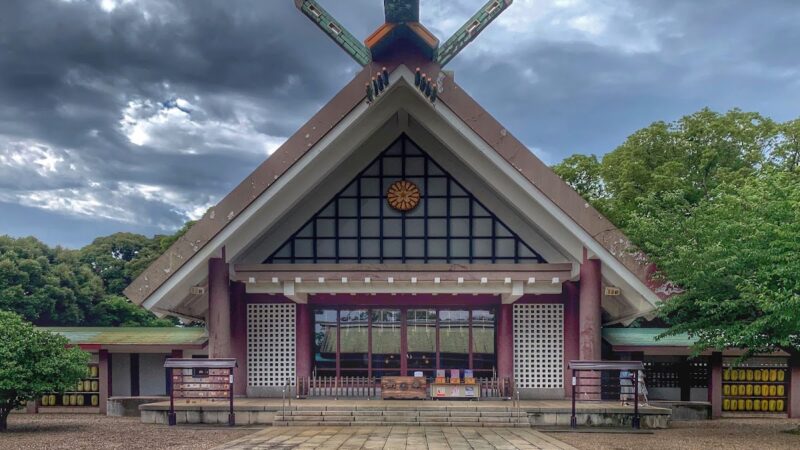
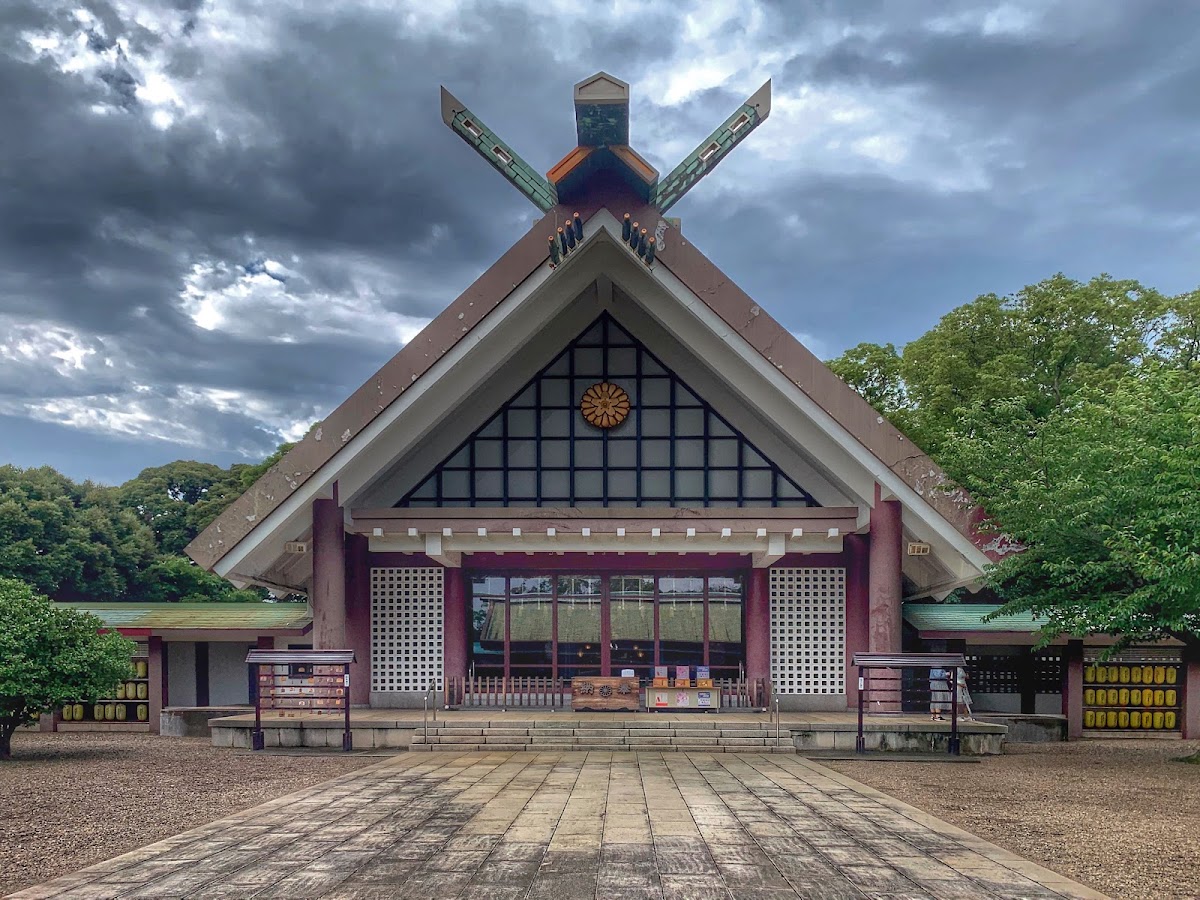
The new shrine building, completed in 2022 (Reiwa 4), features a modern and clean design. While adhering to the traditional style of shrine architecture, it is designed to convey a sense of cleanliness and tranquility.
A solemn atmosphere permeates the shrine, commemorating those who died in war, allowing visitors to quietly offer their prayers. Inside, the spirits of the fallen soldiers are enshrined, and memorial services are regularly held by bereaved families and related parties.
Cherry Blossoms on the Shrine Grounds
Because the shrine’s crest is a “circle with a cherry blossom,” many cherry trees are planted on the grounds. During the spring blooming season, the cherry blossoms are in full bloom, creating a beautiful landscape that seems to comfort the spirits of the fallen soldiers. The cherry blossom, with its graceful fall, is considered a symbol of the samurai spirit, making it a fitting flower for a Gokoku Shrine.
Memorials and Monuments
Within the shrine grounds, memorials and monuments for each battle and unit are erected. These were donated by bereaved families’ associations and related organizations, serving to pass on to future generations the achievements of those from Chiba Prefecture in each battle.
Annual Festivals and Events
Chiba Prefecture Gokoku Shrine holds various festivals and memorial events throughout the year. ### Spring Grand Festival
The Spring Grand Festival, held every spring, is one of the most important festivals of Chiba Prefecture Gokoku Shrine. Bereaved families, related parties, and citizens of Chiba Prefecture attend, and a solemn ceremony of gratitude and remembrance for the war dead is held.
Autumn Grand Festival
An annual festival is also held in autumn, and like the Spring Grand Festival, it attracts many attendees. It serves as an opportunity to renew gratitude to the war dead at the change of seasons.
Mitama Festival
The “Mitama Festival” is held in summer. This is a summer festival to comfort the spirits of the war dead, and includes the dedication of lanterns and memorial services. Modeled after the Mitama Festival at Yasukuni Shrine, it is a lively event attracting many worshippers.
Monthly Festival
A monthly festival (Tsukinami-sai) is held every month, continuing the ongoing remembrance of the war dead.
Special Memorial Service
Special memorial services are held on the anniversary of the end of the war (August 15th) and other anniversaries of each war. These services are organized by bereaved families’ associations and related organizations to commemorate those who died in the war.
About Goshuin (Shrine Seals)
Chiba Prefecture Gokoku Shrine offers goshuin to visitors.
Features of Goshuin
The goshuin features the calligraphy of “Chiba Prefecture Gokoku Shrine” and a red seal of the shrine’s crest, the “Maru ni Sakura Mon” (a circle with a cherry blossom crest). The date is also written in calligraphy, making it a memento of your visit.
Goshuin are available at the shrine office, and the offering fee is the same as for most shrines. You can bring your own goshuin book or receive a pre-printed goshuin.
Goshuin Reception Hours
Goshuin reception hours are the same as the shrine office’s opening hours. While the shrine is open for relatively long hours on festival days, weekends, and holidays, weekday hours may be limited, so it is recommended to check the official website in advance.
Visiting Etiquette
Gokoku Shrine is a sacred place dedicated to war dead. When receiving a Goshuin (shrine stamp), it is customary to first visit the main hall, offering gratitude and prayers for the war dead before visiting the shrine office.
Access Information
Here are the main ways to access Chiba Prefecture Gokoku Shrine.
Location
Address: 3-27-1 Sakuragi, Wakaba-ku, Chiba City, Chiba Prefecture 264-0028
Access by Train
Nearest Stations:
- JR Sobu Main Line “Chiba Station”
- Chiba Urban Monorail “Chiba Park Station” or “Sakusabe Station”
From Chiba Station, it’s about a 20-25 minute walk, or taking a bus is convenient. It’s also within walking distance from Chiba Park Station and Sakusabe Station, but a bit further.
Access by Bus
If using the bus from JR Chiba Station East Exit, take the Chiba Inland Bus or Chiba Chuo Bus bound for “Sakuragicho,” get off at the nearest bus stop, and it’s a few minutes’ walk from there. Bus routes and timetables may change, so please check in advance.
Access by Car
Access from Major Roads:
- Approximately 10 minutes from the Keiyo Expressway “Anagawa IC”
- Approximately 15 minutes from the Higashi-Kanto Expressway “Chiba Kita IC”
Parking is available on the shrine grounds or nearby. While there is parking space for visitors, on days when congestion is expected, such as festival days, we recommend using public transportation.
Nearby Facilities
Chiba Park and Chiba Prefectural Memorial Tower are nearby and can be visited together. Chiba Park is a vast urban park where you can enjoy nature throughout the seasons.
Etiquette for Worship
Worship at Gokoku Shrine follows the general etiquette for visiting shrines.
Basic Worship Procedure
- Bow before passing through the torii gate: Bow before entering the sacred area, in front of the torii gate.
- Purify at the water basin: Purify your hands and mouth at the water basin.
- Proceed along the approach: Since the center of the approach is considered the path of the gods, walk along the sides.
- Worship in front of the main hall: Worship using the two bows, two claps, and one bow ritual.
- Bow upon leaving: Turn around and bow when leaving the torii gate.
Mindset specific to Gokoku Shrines
Gokoku Shrines are shrines dedicated to those who died in war, so it is important to worship with feelings of remembrance and gratitude. Remember that the peace we have today is built upon the sacrifices of the war dead, and quietly put your hands together in prayer.
Chiba Prefecture Gokoku Shrine and the History of Chiba Prefecture
Chiba Prefecture played a crucial role from the Edo period through the Meiji Restoration and the formative period of modern Japan.
Chiba Prefecture in the Late Edo Period
After Commodore Perry’s arrival in 1853, the Boso Peninsula became the front line of defense for Edo Bay. Many people from Chiba Prefecture dedicated themselves to national defense and the Meiji Restoration during the turbulent late Edo period.
Modern Japan and Chiba Prefecture
During the modernization process after the Meiji Restoration, Chiba Prefecture developed as part of the Tokyo metropolitan area. At the same time, many residents of the prefecture were sent to war and sacrificed their lives in foreign wars, including the Sino-Japanese and Russo-Japanese Wars.
The Pacific War and Chiba Prefecture
During the Pacific War, many military facilities were located within Chiba Prefecture, and it suffered damage from air raids. Many soldiers from various parts of the prefecture perished on the battlefield, their numbers reaching tens of thousands.
Chiba Prefecture Gokoku Shrine is closely intertwined with the history of Chiba Prefecture and plays a vital role in preserving the historical memories of its residents.
Significance and Role of Gokoku Shrine
Role as a Place of Remembrance
Gokoku Shrine is a place to comfort the souls of those who died in war and a source of solace for bereaved families. Many bereaved families visit every year to reflect on their lost loved ones.
Place for Peace Education
As memories of war fade, Gokoku Shrine also plays an educational role in conveying the history of war and the preciousness of peace. It provides opportunities for younger generations to visit and learn about the tragedy of war and the importance of peace.
Core of the Local Community
Through festivals and events, Gokoku Shrine also strengthens the bonds of the local community. It serves as a central hub for the activities of bereaved families’ associations and related organizations, fostering intergenerational exchange.
Related Facilities and Shrines
Chiba Prefecture Memorial Tower
The Chiba Prefecture Memorial Tower is a memorial facility closely associated with the Chiba Prefecture Gokoku Shrine. Erected within Chiba Park, it is a beloved memorial tower for those who died in the war in Chiba Prefecture.
Yasukuni Shrine
Located in Chiyoda Ward, Tokyo, Yasukuni Shrine is a central facility for enshrining war dead from all over Japan. Many of the spirits enshrined at the Chiba Prefecture Gokoku Shrine are also enshrined at Yasukuni Shrine.
Gokoku Shrines Nationwide
Throughout Japan, Gokoku Shrines are located in each prefecture. They enshrine the war dead of their respective regions and conduct memorial activities rooted in the local community.
Summary
The Chiba Prefecture Gokoku Shrine is a historical shrine that has continued to enshrine war dead from Chiba Prefecture for over 140 years since its founding in 1878 (Meiji 11). After several relocations, the shrine was moved to its new location in Sakuragi, Wakaba Ward, Chiba City in 2022, ushering in a new era.
This shrine, which enshrines 57,828 war dead, is not merely a tourist attraction, but a place that conveys the history of war and contemplates the preciousness of peace. The modern and clean shrine buildings, the orderly grounds, and the beautiful cherry blossoms that bloom in spring welcome visitors.
Many different people visit Chiba Prefectural Gokoku Shrine, including those seeking Goshuin (shrine stamps), history students, and bereaved families. With their own thoughts in mind, they can quietly offer their gratitude to the war dead and their prayers for peace.
When visiting Chiba Prefecture, be sure to visit Chiba Prefectural Gokoku Shrine and experience the history of Chiba Prefecture and the spirit of the war dead. It is easily accessible, and visiting it in conjunction with nearby facilities such as Chiba Park will make for a fulfilling experience.