Complete Guide to Hachakuji Temple (Kanazawa City, Ishikawa Prefecture) | History and Highlights of an Ancient Temple Associated with Hakusan Faith and the Maeda Family
Hachakuji Temple, located in Ishibiki, Kanazawa City, Ishikawa Prefecture, is an ancient temple of the Koyasan Shingon sect that preserves the history of Hakusan faith. It is said to have been founded by Taicho Daishi during the Jinki era (724-729) and played an important role as a place of prayer for the Maeda family, the lords of the Kaga Domain. This article provides a detailed explanation of Hachakuji Temple’s history, highlights, goshuin (temple stamp) information, and access methods.
History and Origin of Hachakuji Temple
Founding by Taicho Daishi and Origin of the Temple Name
The founding of Hachakuji Temple dates back to the Jinki era (724-729). It is believed to have begun when Taicho Daishi, who opened up Mount Hakusan, built a temple in Ichijodani, Fukui Prefecture (present-day Fukui City).
The unique name of the temple, “Hachakuji,” originates from its location at the time of its founding. It is said that when the Asuwa River flooded, the waves would reach the temple, hence the name “Hachakuji” (Wave-Reaching Temple). This name is a valuable historical record that conveys the relationship between the temple and the natural environment of that time.
The temple’s mountain name has several names, including Hakusan, Taichozan, and Hakuryuzan, all of which indicate a deep connection to the Hakusan faith.
Development as a Center of Hakusan Faith
Since its founding, Hachakuji has flourished as a temple of Hakusan faith. Mount Hakusan has long been revered as a sacred mountain and has attracted many practitioners and pilgrims as a holy site for Shugendo (mountain asceticism). Hachakuji played an important role as one of the centers of Hakusan faith established by Taicho Daishi.
As a temple of the Koyasan Shingon sect, it has a history of functioning as a center of local faith while preserving and transmitting the teachings of esoteric Buddhism.
Deep Ties with the Maeda Family
The Relationship Between Maeda Toshiie and Hachakuji Temple
The connection between Hachakuji Temple and the Maeda family of the Kaga Domain dates back to the time of the first lord, Maeda Toshiie. During his time residing in Echizen-Fuchu (present-day Echizen City, Fukui Prefecture), Toshiie used Hachakuji Temple as his place of prayer. This connection would significantly alter the fate of Hachakuji Temple.
Maeda Toshiie is known as a Sengoku period warlord who laid the foundation for the Kaga Domain’s million-koku rule, but he was also deeply religious and cherished his relationship with Hachakuji Temple.
Relocation to Kanazawa and Maeda Toshitsune
In 1619 (Genna 5), during the time of Maeda Toshitsune, the third lord of the Kaga Domain, Hachakuji Temple was relocated to its current location in Ishibiki, Kanazawa City. This was because Toshitsune, valuing the connection with Hachakuji Temple from Toshiie’s time as a place of prayer, invited Hachakuji Temple to Kanazawa.
With its relocation to its current location, Hachakuji Temple established itself as an important prayer site for the Kaga Domain and as the ancestral temple of the Maeda family. Under the patronage of the feudal lord, the temple flourished greatly.
Prosperity in the Edo Period
During the Edo period, under the patronage of the Maeda family, Hachakuji Temple prospered greatly. Records indicate that its grounds were vast, spanning 10,000 tsubo (approximately 33,000 square meters). With numerous halls and a large number of monks, it became a major temple and one of Kanazawa’s religious and cultural centers.
As a prayer site for the Kaga Domain, it hosted important ceremonies and prayers for the domain, and also functioned as a temple for commemorating the Maeda family.
Highlights of Hachakuji Temple
Main Hall and Principal Image
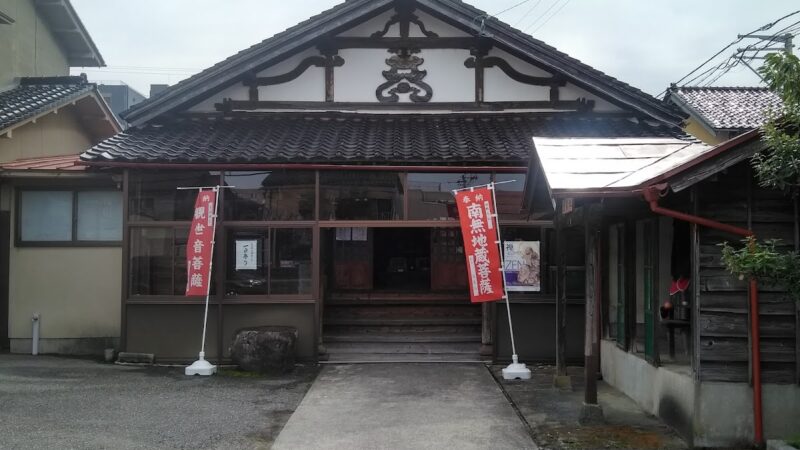
The main hall of Hachakuji Temple houses an eleven-faced Kannon statue as its principal image. The Eleven-Faced Kannon, as a manifestation of Kannon Bodhisattva who watches over all directions and saves all sentient beings, is an important object of worship in Shingon Buddhism.
The plaque above the main hall bears the characters “Hakusan,” conveying the temple’s history as a Hakusan worship temple. This plaque is an important cultural asset that shows the temple’s origins.
Historical Sites Related to the Kaga Rebellion
Hachakuji Temple also preserves historical sites related to the “Kaga Rebellion,” which occurred during the Edo period. The Kaga Rebellion was a historical event known as a family dispute within the Kaga Domain, a complex power struggle involving figures such as Otsuki Denzo.
The temple contains graves and monuments of people involved in this rebellion, preserved as valuable historical sites that tell the history of the Kaga Domain. This is a particularly interesting point for history buffs.
Nature and Bodhi Trees on the Temple Grounds
While the current grounds of Hachakuji Temple are smaller than their vast Edo-period size of 10,000 tsubo (approximately 33,000 square meters), they still exude a sense of history and tranquility.
Bodhi trees are planted on the grounds, displaying different appearances with each season. Especially in early summer, the Bodhi trees bloom, filling the grounds with their unique fragrance. It is a place cherished by locals as a quiet haven away from the hustle and bustle of the city.
Annual Events at Hachakuji Temple
Major Buddhist Services and Events
As a temple of the Koyasan Shingon sect, Hachakuji Temple holds various Buddhist services and events throughout the year.
In spring, the Spring Equinox Service is held, and in autumn, the Autumn Equinox Service, attracting many parishioners and visitors for ancestral rites. During the Obon period, the Urabon-e service is held, a memorial service to remember the deceased.
Regular memorial services are held to coincide with the anniversary of Kobo Daishi’s death, an important event in the Shingon sect, demonstrating the continuation of the faith’s traditions.
Special Prayers and Memorial Services
Hachakuji Temple accepts individual prayers and memorial services. From prayers for worldly benefits such as family safety, business prosperity, and academic success, to memorial services for ancestors and stillborn children, a variety of religious needs are addressed.
In particular, due to its history as a prayer site associated with the Maeda family, many visitors come to pray for good fortune and protection from evil.
Goshuin (Temple Seal) Information
Goshuin of Hachakuji Temple
Hachakuji Temple offers goshuin (temple seals) to visitors. The goshuin features the temple name “Hachakuji” and the principal image “Eleven-faced Kannon” in calligraphy and a red seal, making it a popular memento of the visit.
Goshuin (temple stamps) are given after visiting the main hall. You can bring your own goshuincho (stamp book) or receive a pre-printed goshuin from the temple.
Points to Note When Receiving a Goshuin
When receiving a goshuin, it is basic etiquette to first visit the main hall and offer your prayers to the principal image of Buddha. Goshuin are not part of a stamp rally, but are given as proof of your visit, so please be respectful.
The hours for receiving goshuin are generally from 9:00 AM to 5:00 PM, but this may not be possible during religious services or events. If you want to be sure to receive a goshuin, it is recommended to call ahead to confirm.
Access Information
Basic Information
Address
2-18-1 Ishibiki, Kanazawa City, Ishikawa Prefecture 920-0935
Phone Number
076-221-1437
Sect
Koyasan Shingon Buddhism
Principal Image
Eleven-faced Kannon
Mountain Name
Hakusan (Taichozan, Hakuryuzan)
Access by Public Transportation
From JR Kanazawa Station
- Take the Hokutetsu Bus bound for “Kodatsuno,” get off at the “Ishibiki” bus stop, and walk for approximately 3 minutes.
- Approximately 10 minutes by taxi.
Hokuriku Railway Ishikawa Line
- Approximately 30 minutes on foot from Nomachi Station, or approximately 10 minutes by taxi.
Located in a convenient location easily accessible from the center of Kanazawa City, and relatively close to Kenrokuen Garden and Kanazawa Castle Park. Situated in the quiet residential area of Ishibiki, it offers a peaceful environment for worship.
Access by Car and Parking
Hokuriku Expressway
- Approximately 20 minutes from Kanazawa-Nishi IC
- Approximately 15 minutes from Kanazawa-Higashi IC
Regarding parking, there is some space on the temple grounds, but the number of spaces is limited, so we recommend using public transportation. There are also coin-operated parking lots nearby, so you can use those if you are visiting by car.
Nearby Tourist Attractions
Kenrokuen Garden
Kenrokuen Garden, located about a 15-minute walk from Hachakuji Temple, is a special scenic spot known as one of Japan’s three most beautiful gardens. It is a strolling garden where you can enjoy the beautiful scenery of each season, and is a classic spot for sightseeing in Kanazawa. It is an ideal place to visit in conjunction with a visit to Hachakuji Temple.
Kanazawa Castle Park
This park was developed on the site of Kanazawa Castle, which was the residence of the Maeda family. Considering that Hachakuji Temple was a place of prayer for the Maeda family, it is a place where you can stroll while feeling the historical connection.
Temples and Shrines around Ishibiki
In addition to Hachakuji Temple, there are many other temples and shrines scattered around the Ishibiki area. The Teramachi temple district is nearby, making this an excellent area for enjoying temple and shrine visits. You can experience Kanazawa’s history and culture in a tranquil atmosphere.
Etiquette for Visiting Hachakuji Temple
Basic Etiquette for Visiting Temples
Hachakuji Temple is a Shingon Buddhist temple, so please follow the basic etiquette for visiting Buddhist temples.
- Bow at the temple gate before entering the grounds.
- If there is a water basin, purify your hands and mouth.
- In front of the main hall, place your offering, clasp your hands together, and bow.
- In Shingon Buddhism, you may also chant “Namu Daishi Henjo Kongo.”
- After visiting, bow again when leaving the temple gate.
Regarding Photography
Photography is generally permitted on the temple grounds, but photography inside the main hall or of Buddha statues may be prohibited. It is important to check before taking pictures or to take pictures with moderation.
Also, please be mindful of taking pictures quietly so as not to disturb religious services or other visitors.
Information on Hachakuji Temple and Perpetual Memorial Services/Cemetery
About Perpetual Memorial Services
Hachakuji Temple offers perpetual memorial services that meet modern needs. For those facing difficulties in inheriting graves due to declining birth rates, an aging population, and the rise of nuclear families, this system allows the temple to take responsibility for providing perpetual memorial services.
Those considering perpetual memorial services can inquire directly with the temple for detailed information and costs.
Cemetery and Columbarium
Hachakuji Temple also has a cemetery, which may be available to non-parishioners under certain conditions. Despite its location near the center of Kanazawa City, it is gaining interest as a peaceful resting place.
For information on cemetery availability and usage conditions, telephone inquiries are recommended.
Summary: The Charm of Hachakuji Temple
Hachakuji Temple is one of Ishikawa Prefecture’s leading ancient temples, boasting a history of nearly 1300 years since its founding during the Jinki era. Founded by Taichō Daishi, this temple boasts a multifaceted history, having developed as a center of Hakusan worship and serving as a place of prayer and ancestral worship for the Maeda family. It stands quietly in Kanazawa today.
As a temple of the Koyasan Shingon sect, it preserves and transmits traditional Buddhist culture while also possessing the flexibility to meet the faith and memorial needs of modern people. When sightseeing in Kanazawa, why not visit this historic temple in conjunction with classic spots like Kenrokuen Garden and Kanazawa Castle?
As you offer your prayers in the tranquil grounds, you will feel the power of faith cultivated over a long history and the dignity befitting an ancient temple associated with the Maeda family. Receiving a temple stamp (Goshuin) will surely be a valuable experience of connecting with Kanazawa’s history and culture.