Makiyama Shrine (Iga City, Mie Prefecture) Complete Guide | History, Noh Stage, and Festival Highlights
Makiyama Shrine, located in Makiyama, Iga City, Mie Prefecture, is a venerable shrine with a history of over 1300 years. It is said to have been founded in 710 AD (Wado 3), and is known for its thatched Noh stage built during the Edo period and the Noh performances dedicated there every spring. This article provides detailed information you should know before visiting Makiyama Shrine, including its history, cultural assets, annual festival, and access methods.
History and Origins of Makiyama Shrine
From Founding to the Present
Makiyama Shrine is said to have been founded in 710 AD (Wado 3). This was also the year the capital was moved to Heijo-kyo, indicating its deep connection to the history of ancient Japan. It has been revered as a guardian deity of the region alongside the development of the Iga area.
The area of Makiyama in Iga City, Mie Prefecture, has flourished as a transportation hub since ancient times. Located along the road from Nara to Ise Grand Shrine, it was a place where many travelers passed through. Makiyama Shrine, a historical shrine that has watched over the lives of the people of this region, is still cherished by the locals today.
Deep Connection to Noh Theater
There is an intriguing legend concerning the connection between Makiyama Shrine and Noh theater. One day, a Noh performer from Nara, on his way from Kyoto to Ise Grand Shrine, was struck by severe abdominal pain in the village of Makiyama. Suffering, he stopped at Makiyama Shrine and prayed for recovery, and miraculously, his pain subsided.
Grateful, the Noh performer offered a Noh performance on the spot, and since then, the custom of offering Noh performances at the annual spring festival has begun. This tradition is said to have officially started during the Hoei era (1704-1711) and has continued for over 300 years.
Thatched Noh Stage Built in 1822
Value as a Precious Cultural Asset
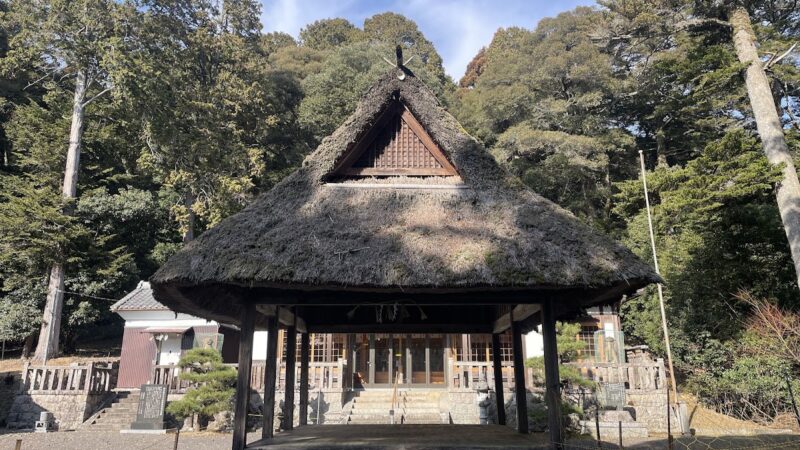
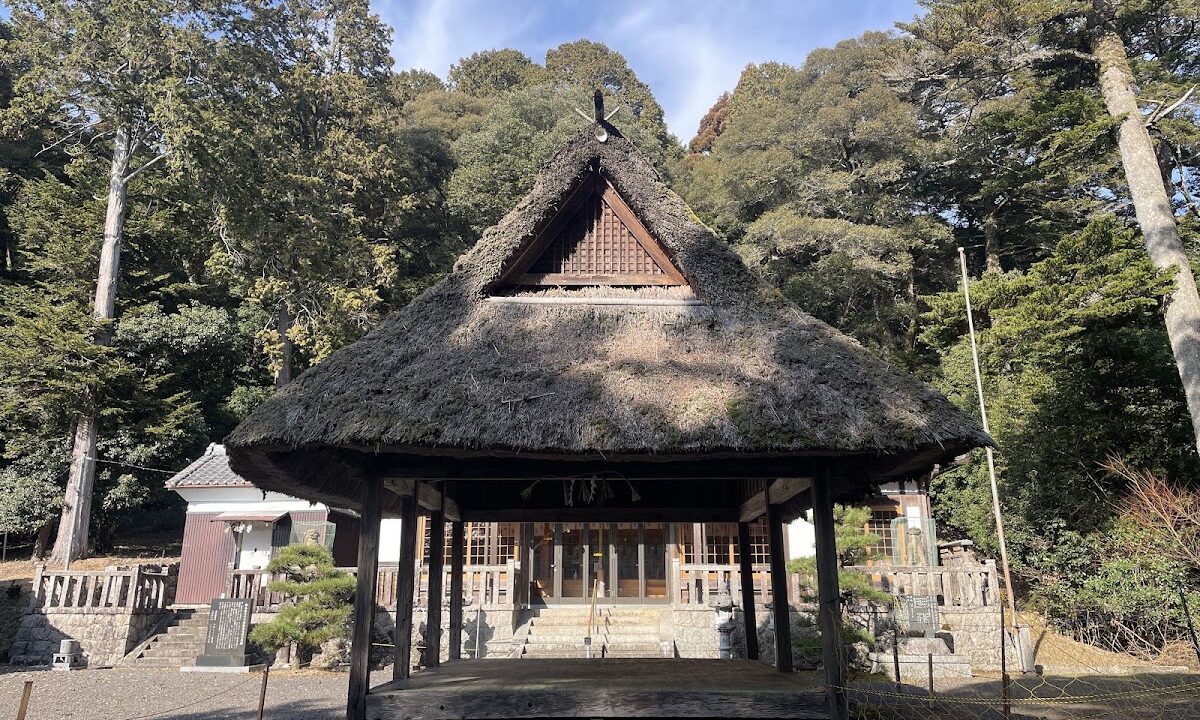
One of the greatest attractions of Makiyama Shrine is the thatched Noh stage located within its grounds. Built in 1822 (Bunsei 5), this stage is a valuable cultural asset with a history of over 200 years.
Constructed in the late Edo period, this Noh stage is an important structure that conveys the architectural techniques and aesthetic sensibilities of the time. The elegant curves of the thatched roof and the unique structure of a Noh stage are preserved, making it a highly valuable historical Noh stage, one of the few remaining in Mie Prefecture.
Architectural Features of the Noh Stage
The Noh stage at Makiyama Shrine is built faithfully in the style of a traditional Noh stage. It has all the necessary elements for Noh performance, including the main stage, bridge, and mirror board, and is still used for Noh performances today.
The thatched roof requires periodic re-thatching and is carefully maintained by local residents. The Noh performances on this stage are by the Konparu school, and highly formal plays are offered as a dedication.
Spring Grand Festival and Noh Performance
Grand Festival on April 18th
The Makiyama Shrine’s Spring Grand Festival is held every year on April 18th. This day is one of the most important annual events for the shrine, attracting many worshippers from both within and outside the region.
At the Grand Festival, after the solemn Shinto rituals are performed, Noh performances of the Konparu school are offered on the thatched Noh stage. This Noh performance is the most distinctive feature of the Makiyama Shrine’s Grand Festival and, as a traditional event that has continued for over 300 years, can be considered a valuable intangible cultural asset of Mie Prefecture.
Highlights of the Noh Performance
The Noh performances offered at the Spring Grand Festival are performed by Noh performers of the Konparu school. The Konparu school is the oldest of the five Noh schools, and is characterized by its dignified and refined performances.
The Noh performances held on the thatched-roof Noh stage within the shrine grounds have a unique charm, combining the open-air atmosphere with the historical setting. It’s a precious opportunity to appreciate this comprehensive art form—the integration of Noh masks, costumes, chanting, and music—on a stage unchanged since the Edo period.
In recent years, performances have been canceled due to the impact of the COVID-19 pandemic, but in 2024, the Noh performance was revived after a five-year hiatus, attracting approximately 300 spectators who witnessed the continuation of this tradition.
Grounds and Facilities of Makiyama Shrine
Main Hall and Worship Hall
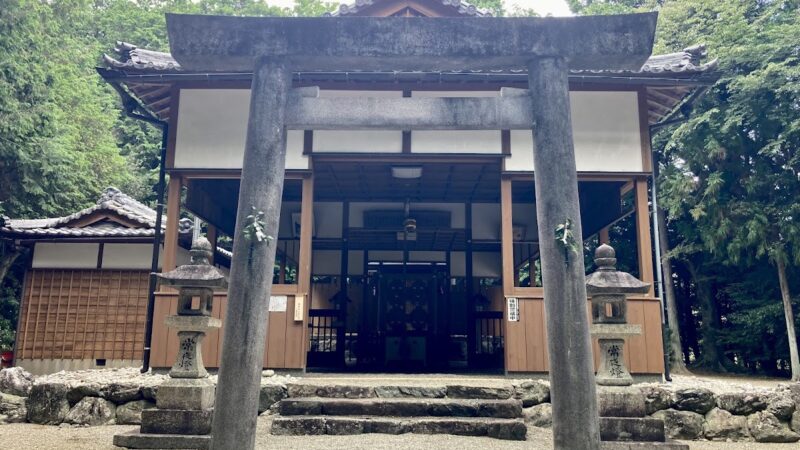
The main hall of Makiyama Shrine retains the traditional architectural style of shrines in the Iga region. The layout, from the worship hall to the main hall, is designed to guide worshippers into a sacred space.
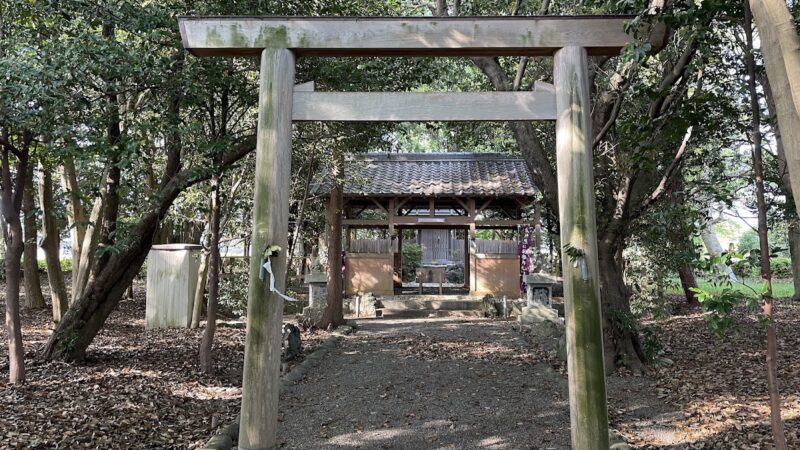
The shrine grounds are surrounded by a quiet forest, offering a peaceful atmosphere far removed from the hustle and bustle of the city. Ancient trees stand guard over the sacred grounds, allowing visitors to experience the changing seasons.
Highlights of the Shrine Grounds
Besides the Noh stage, the grounds are dotted with historical stone monuments and lanterns. Walking along the approach to the shrine, you can feel the history of faith that has continued since the Edo period.
The shrine grounds, which show different expressions with each season—cherry blossoms in spring, fresh greenery in summer, autumn leaves in fall, and tranquility in winter—are also popular as a photography spot. Especially during the annual festival, the thatched Noh stage and spring flowers create a beautiful contrast.
Makiyama Shrine as a New Year’s Visit Spot
Information on Visiting Shrines at the Beginning of the Year
Makiyama Shrine is a popular New Year’s visit spot for locals. From New Year’s Day to the third day of the year, worshippers visit to pray for safety and prosperity in the new year.
Unlike the crowds of famous shrines in large cities, it offers a calm atmosphere where you can worship at your own pace. This is a hidden gem of a New Year’s visit spot, where you can renew your spirits as you welcome the new year in a quiet forest.
Weather and Clothing for the New Year
Iga City, Mie Prefecture, has a climate typical of a basin, and winters are severely cold. When visiting for your first shrine visit of the year, it is recommended to check the latest weather forecast and take thorough precautions against the cold.
Especially on the early morning of New Year’s Day, temperatures can drop below freezing, so warm clothing such as a thick coat, gloves, and a scarf is necessary. Since the shrine grounds are located in a nature-rich area, it is advisable to wear comfortable shoes for walking.
Access and Surrounding Information
Location and Basic Information
Address: 3238-2 Makiyama, Iga City, Mie Prefecture
Makiyama Shrine is located in the Makiyama area, a little distance from the city center of Iga City. It is situated in a nature-rich environment, offering a peaceful setting for worship.
Access by Car
Access by car is the most convenient. It is located approximately 15 minutes from the Nakase Interchange on the Meihan Expressway and approximately 20 minutes from the Ueno Interchange.
There is parking space for visitors on the shrine grounds, but congestion is expected during events such as the annual festival, so it is recommended to visit with plenty of time to spare. When using a car navigation system, searching for “Makiyama Shrine” or the address will provide accurate directions.
Access by Public Transportation
If using public transportation, the most practical option is to take a taxi from either Ueno-shi Station on the Iga Railway or Iga-Kambe Station on the Kintetsu Line. Bus routes are limited, so it is recommended to check the latest timetables and service information in advance.
Nearby Tourist Attractions
When visiting Makiyama Shrine, it is recommended to also visit other tourist attractions in Iga City. Iga City is known as the home of ninjas, and there are attractions such as the Iga-ryu Ninja Museum and Ueno Castle.
Furthermore, there are Iga ware pottery kilns and restaurants where you can enjoy Iga beef, allowing you to enjoy the unique culture and cuisine of the Iga region of Mie Prefecture.
Annual Events at Makiyama Shrine
Spring Grand Festival (April 18th)
As mentioned above, the Spring Grand Festival on April 18th is the most important event at Makiyama Shrine. It features Noh theater performances, along with various Shinto rituals and events organized by local residents.
Other Annual Events
Besides the Spring Grand Festival, Makiyama Shrine holds various Shinto rituals throughout the year. These rituals, praying for a bountiful harvest and family safety, are deeply intertwined with the lives of the local people.
Seasonal events such as the New Year’s visit, Setsubun festival, and autumn harvest festival also play a role in strengthening community bonds.
Manners and Precautions for Visiting the Shrine
Basic Shrine Visiting Etiquette
When visiting Makiyama Shrine, follow the general shrine visiting etiquette. Bow before passing through the torii gate, and avoid walking in the center of the path. After purifying your hands and mouth at the water basin, proceed to the main hall.
At the main hall, worship using the “two bows, two claps, one bow” ritual. Place your offering, ring the bell, bow deeply twice, clap your hands twice, and bow deeply one last time.
Considerations for Photography
Photography is generally permitted on the shrine grounds, but please show respect to the performers during Shinto rituals and Noh performances by refraining from using flash photography or making loud noises.
Especially during the annual festival’s Noh performance, which is a sacred offering, quiet appreciation is required. Even when photography is permitted, please be considerate of other worshippers and spectators.
Precautions on the Shrine Grounds
Makiyama Shrine is located in a rich natural environment, so insect repellent and appropriate clothing for the season are recommended. In the summer, there are many mosquitoes and other insects, so it’s a good idea to bring insect repellent spray.
Also, since there may not be trash cans on the shrine grounds, please be sure to take your trash with you. It is important to visit with a respectful attitude towards nature and history.
Cultural Value of Makiyama Shrine
Preservation of Local Culture
Makiyama Shrine is not merely a tourist spot, but an important place for preserving local culture and traditions. The Noh performances, which have continued for over 300 years, have been preserved through the efforts of local people.
In recent years, as the preservation of traditional culture has become a challenge, the annual festival of Makiyama Shrine has become a valuable opportunity to convey the charm of Noh to younger generations. Its educational value is also recognized, with local elementary and junior high school students visiting to observe.
Positioning as a Cultural Property of Mie Prefecture
Mie Prefecture has many shrines, including Ise Grand Shrine, but shrines like Makiyama Shrine, where an Edo-period Noh stage still exists and Noh performances are actually offered, are rare.
As a cultural property of Iga City and a historical asset of Mie Prefecture, the preservation and utilization of Makiyama Shrine is an important issue for the region. Efforts are underway to pass on the site to future generations while balancing its value as a tourist resource with its protection as a cultural asset.
The Charm of Makiyama District, Iga City
A Landscape of Rich Nature in a Rural Mountain
The Makiyama district, where Makiyama Shrine is located, is a particularly nature-rich area within Iga City. Rural landscapes and rural mountains spread out, preserving a beautiful scenery that can be called the original landscape of Japan.
You can enjoy the changing seasons: cherry blossoms and fresh greenery in spring, deep green in summer, autumn leaves in fall, and snowscapes in winter. It is a place where visitors can relax and unwind, away from the hustle and bustle of the city.
The Warmth of the Local Community
Although Makiyama district is not a densely populated area, the bonds of the local community are strong, and community activities centered around Makiyama Shrine are active.
Local people cooperate to protect the shrine, from preparing for the annual festival to maintaining the Noh stage. If you have the opportunity to interact with the locals during your visit, you may receive warm hospitality and hear valuable stories about the region’s history.
Summary: The Value of Visiting Makiyama Shrine
Makiyama Shrine is an ancient shrine with a history of over 1300 years, located in Makiyama, Iga City, Mie Prefecture. Since its founding in 710 AD, it has been cherished by the people as a center of local faith.
The main highlights are the thatched-roof Noh stage built in 1822 AD and the Konparu-ryu Noh performances dedicated at the annual spring festival on April 18th. This tradition, which has continued for over 300 years, has been preserved through the efforts of the local people and holds high value as a precious cultural asset of Mie Prefecture.
It is also a popular spot for New Year’s visits, and its charm lies in the peaceful environment where you can worship at your leisure. Located in the rich natural environment of Iga City, you can enjoy the beautiful scenery of each season.
When visiting Iga City, why not also visit Makiyama Shrine, in addition to famous tourist spots like the Ninja Museum and Ueno Castle? It’s sure to be a memorable experience, allowing you to connect with history, tradition, and the warmth of the local people.
Located at 3238-2 Makiyama, Iga City, Mie Prefecture, Makiyama Shrine is a must-visit spot, and we encourage you to check the latest information beforehand. Especially during the annual festival on April 18th, it offers a rare opportunity to witness a precious Noh performance that you won’t see anywhere else.