Takayama Shrine (Mie Prefecture) Complete Guide | The Guardian Deity of Tsu City, Dedicated to Todo Takatora: History, Goshuin (Shrine Seal), and Access Information
Located in the heart of Tsu City, Mie Prefecture, on the site of Tsu Castle, Takayama Shrine is a historic shrine dedicated to Todo Takatora, a renowned general of the Edo period. It continues to attract fervent devotion as the guardian deity of Tsu City’s commerce and industry, and the tutelary deity of its citizens, making it a popular destination not only for locals but also for visitors from all over Japan.
This article will comprehensively introduce the charms of Takayama Shrine, including its historical background, the achievements of its enshrined deity, Todo Takatora, highlights of the grounds, cultural assets, goshuin information, and access methods.
Basic Information about Kozan Shrine
Shrine Overview
Official Name: Kozan Shrine
Location: 27-25 Marunouchi, Tsu City, Mie Prefecture (within the Tsu Castle Ruins)
Main Deity: Todo Takatora no Mikoto
Founded: Meiji 10 (1877)
Shrine Rank: Former Special Imperial Shrine
Annual Festival Day: Second Sunday of October
Kozan Shrine is located near Tsu City Hall and maintains a tranquil atmosphere despite being in the heart of the city. The name “Kozan” originates from the posthumous Buddhist name “Kozan-ko” of Lord Todo Takatora, and it is affectionately known as “Kozan-san” by locals.
About the Deity Enshrined: Todo Takatora
Todo Takatora (1556-1630) was a samurai who was active from the Sengoku period to the early Edo period, and is known as a master of castle construction. Born in Omi Province (present-day Shiga Prefecture), he served many lords, including Asai Nagamasa, Toyotomi Hideyoshi, and Tokugawa Ieyasu, and rose to prominence through his exceptional talent.
In 1608, Lord Takatora was transferred from Imabari in Iyo Province to Tsu as a daimyo with a domain of 220,000 koku in Ise and Iga Provinces. He undertook a major renovation of Tsu Castle and dedicated himself to developing the castle town. He is deeply revered by the citizens even after his death as the founder who laid the foundation for the development of Tsu City.
Lord Takatora’s castle construction techniques were considered unparalleled in his time, and he is said to have been involved in the layout of not only Imabari Castle, Iga Ueno Castle, and Tsu Castle, but also Edo Castle and Nagoya Castle. Furthermore, he enjoyed the deep trust of Tokugawa Ieyasu and, despite being an outside daimyo (feudal lord), was a rare figure who participated in important policies of the shogunate.
History of Takayama Shrine
Circumstances of its Founding
Takayama Shrine was founded in 1877 (Meiji 10). From the late Edo period to the early Meiji period, a movement to build shrines to enshrine the founders of each domain spread throughout Japan. Takayama Shrine was one such shrine dedicated to the founders of each domain.
In the Tsu Domain, it was decided to build a shrine on the site of the main keep of Tsu Castle to honor the virtues of Lord Todo Takatora and pass on his achievements to future generations. It was named “Takayama Shrine” after Lord Takatora’s posthumous Buddhist name, “Takayama-ko,” and became a guardian deity of Tsu City’s development.
Development during the Meiji Period
Initially, Takayama Shrine was maintained through the efforts of local volunteers. In 1882 (Meiji 15), it was designated a prefectural shrine, establishing its status as an official shrine. Later, in 1912 (Meiji 45), it was elevated to the rank of a Special Imperial Shrine, gaining national recognition as an important shrine.
A Special Imperial Shrine is a rank bestowed upon shrines that enshrine individuals who have made significant contributions to the nation, placing it on par with shrines such as Minatogawa Shrine (enshrining Kusunoki Masashige) and Toyokuni Shrine (enshrining Toyotomi Hideyoshi). This elevation signifies that the achievements of Todo Takatora were recognized nationally.
From the Post-War Period to the Present
After World War II, the system of Special Imperial Shrines was abolished due to reforms in the shrine system. However, Takayama Shrine continues to attract unwavering devotion as the tutelary deity of Tsu citizens and the guardian deity of commerce and industry.
Even today, the shrine is bustling with many worshippers during New Year’s visits and annual festivals, and a constant stream of people visit to pray for the safety of local businesses and for business prosperity. It also plays an important role as a place to learn about the history of Tsu City, making it a popular spot for tourists and history enthusiasts.
Highlights of the Shrine Grounds
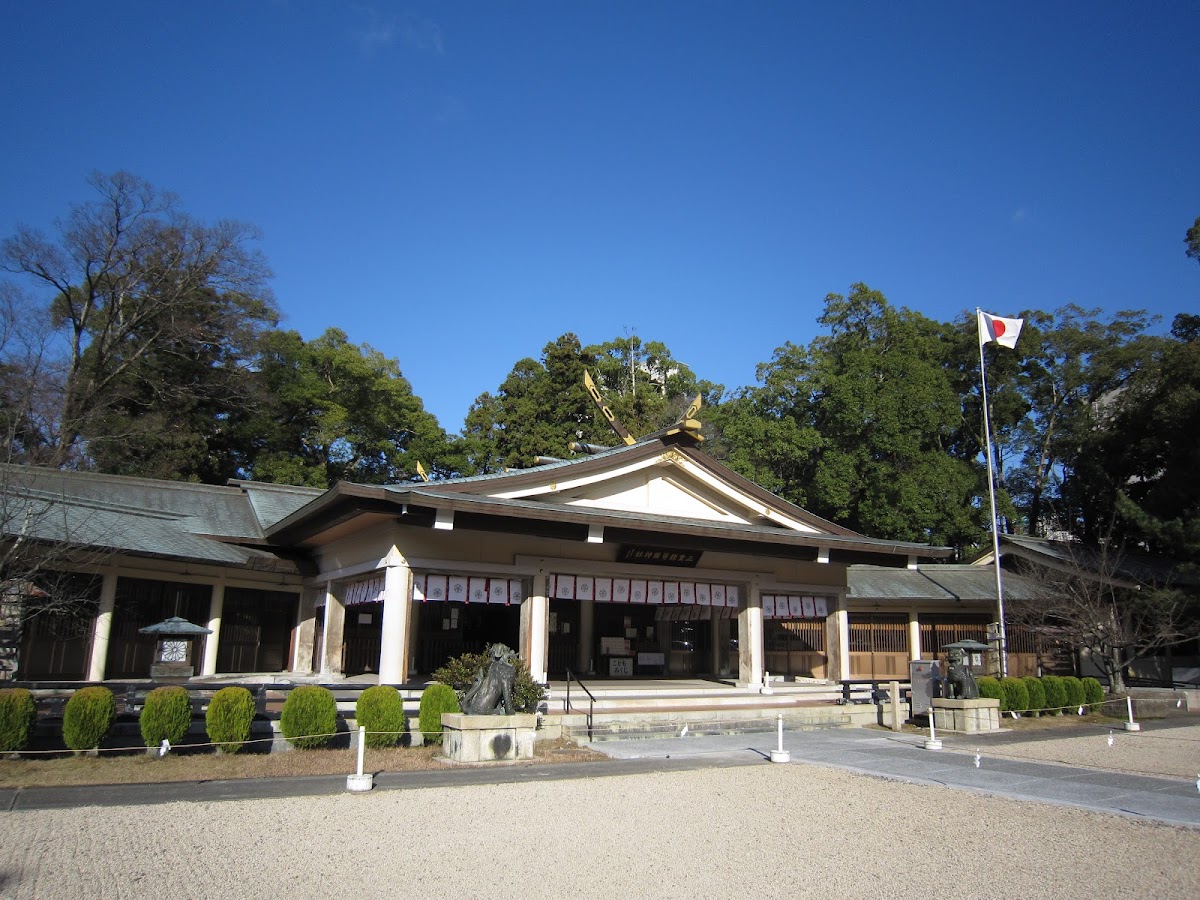
Main Hall and Worship Hall
The main hall and worship hall of Takayama Shrine are valuable structures that strongly retain the characteristics of shrine architecture from the Meiji period. Their simple yet dignified construction seems to reflect the upright and robust character of Lord Todo Takatora.
A magnificent shimenawa (sacred rope) hangs in front of the worship hall, instilling a sense of solemnity in worshippers. The main hall has a cypress bark roof and adopts the traditional Shinmei-zukuri style.
Integration with Tsu Castle Ruins
The Tsu Castle ruins, where Takayama Shrine is located, are the remains of a castle extensively renovated by Lord Todo Takatora. Currently, parts of the stone walls and moats remain, and a walking path has been developed leading from the shrine grounds to the castle ruins park.
Particularly impressive are the high stone walls, a specialty of Lord Takatora. The stone walls of Tsu Castle were constructed using a technique called “uchikomi-hagi,” where small stones were packed between the larger stones to increase their strength. This technique is a valuable legacy that conveys the essence of Lord Takatora’s castle-building skills.
Stone Monuments and Memorials on the Shrine Grounds
Within the shrine grounds, several stone monuments commemorating the achievements of Lord Todo Takatora and historical memorials related to the Tsu Domain have been erected. Reading the inscriptions on these monuments allows for a deeper understanding of the history of Tsu City and Lord Takatora’s accomplishments.
Of particular note is the stone monument inscribed with Lord Takatora’s last words. The phrase, “Never forget, whether awake or asleep, the kindness of your lord and your parents,” succinctly expresses Lord Takatora’s philosophy of life and offers a valuable lesson for us living today.
Tsu City Designated Cultural Properties and Shrine Treasures
Overview of Cultural Properties
Takayama Shrine houses valuable cultural properties related to Lord Todo Takatora and telling the story of the Tsu Domain’s history. Some of these are protected as Tsu City designated cultural properties and are occasionally displayed to the public on special occasions.
Materials Related to Todo Takatora
The shrine preserves a portrait (copy), letters, and furnishings bearing the Todo family crest of Lord Takatora. These are important primary sources for the study of the Tsu Domain’s history and are highly valued academically.
In particular, the letters attributed to Lord Takatora himself are valuable historical materials that reveal his high level of education through his elegant calligraphy and demonstrate his high level of practical ability as a Sengoku period warlord.
Votive Items and Ema (Picture Tablets)
Numerous votive tablets (ema) dedicated from the Edo period to the Meiji period, as well as votive items donated by Tsu merchants, remain. These are valuable resources for understanding the economic situation and religious practices of Tsu at that time.
Annual Events at Takayama Shrine
Annual Festival (Takayama Festival)
The annual festival, held on the second Sunday of October each year, is the largest event at Takayama Shrine. It is a festival commemorating the virtues of Lord Todo Takatora and praying for the development of Tsu City and the peace and well-being of its citizens. Many worshippers visit the shrine.
The festival includes solemn prayers by Shinto priests, the dedication of Kagura (sacred dance) by shrine maidens, and the offering of sacred branches by parishioners’ representatives and guests. Local traditional performing arts and a Tsu City product exhibition are also held, making it a place for regional cultural exchange.
New Year’s Visit
Many worshippers visit the shrine for their first visit of the New Year, praying for business prosperity and family safety. In particular, many local business owners and shopkeepers can be seen visiting to pray for business success throughout the year.
From New Year’s Day through the third day, a temporary office is set up on the shrine grounds, where lucky charms such as amulets, protective arrows, and rakes are distributed.
Other Festivals
In addition to the spring and autumn festivals, various festivals are held throughout the year, including monthly festivals (1st and 15th of each month), New Year’s Day festival (January 1st), Setsubun festival (February 3rd), summer purification ceremony (June 30th), and year-end purification ceremony (December 31st).
Goshuin (Shrine Seal) Information
Features of the Goshuin
Takayama Shrine offers goshuin to visitors. The goshuin features the calligraphy of “Takayama Shrine” and the shrine’s seal. The calligraphy is powerful, reflecting the spirit of Todo Takatora as a warrior.
Distribution Time and Location
Goshuin are distributed at the shrine office. The usual hours for receiving goshuin (temple/shrine stamps) are from 9:00 AM to around 4:00 PM, but these may change during festivals and events, so it is recommended to check in advance.
The offering fee is a typical amount (around 300 to 500 yen), and the stamps are either written directly into your goshuincho (stamp book) or given as pre-printed stamps.
Original Goshuincho
Takayama Shrine also distributes original goshuincho featuring designs of Todo Takatora and Tsu Castle (availability varies depending on the season). The designs evoke the history of Tsu City and are popular as souvenirs.
Faith as the Guardian Deity of Commerce and Industry
Why is he worshipped as the god of commerce and industry?
The reason Todo Takatora is worshipped as the guardian deity of commerce and industry is due to his contributions to the development of Tsu’s castle town and the promotion of industry. When constructing Tsu Castle, Takatora systematically developed the castle town, creating merchant and artisan districts, and improving roads to revitalize logistics.
Furthermore, the development of traditional crafts such as “Tsu’s Chinese kites” and “Tsu’s Japanese umbrellas,” which are specialties of Tsu, is said to have been founded during the time of Lord Takatora. Due to these achievements in industrial development, Lord Takatora came to be revered as the guardian deity of commerce and industry.
Religion in Modern Times
Even today, business owners and shopkeepers in Tsu City visit Takayama Shrine to pray for the success of new ventures, business prosperity, and the safety of their companies. Especially during founding anniversaries and fiscal year-ends, visits by entire companies are frequently seen.
In addition, there is an increasing number of young people aspiring to start businesses and business owners facing a turning point in their operations who visit the shrine to learn from and gain courage from Lord Takatora’s way of life: “Even after changing lords seven times, he always lived positively.”
Access and Visiting Information
Access by Train
From JR/Kintetsu Tsu Station
- Walking: Approximately 20 minutes
- Bus: Get off at “Mie Kaikan-mae” bus stop (Mie Kotsu Bus), approximately 5 minutes on foot
- Taxi: Approximately 10 minutes
From Tsu Station, the easiest and most recommended route is to head west along Phoenix Street towards Tsu City Hall.
Access by Car
Ise Expressway
- Approximately 15 minutes from Tsu IC
National Route 23
- Follow the signs in central Tsu City towards Tsu City Hall.
Parking
Since the shrine’s dedicated parking is limited, we recommend using nearby public parking lots (such as Tsu City Municipal Parking). There are also parking spaces around Tsu Castle Ruins Park.
Visiting Hours
Entry to the shrine grounds is generally free, but the shrine office is open from 9:00 AM to approximately 4:00 PM. If you wish to receive prayers or a Goshuin (temple stamp), please visit during these hours.
Accessibility Information
The temple grounds are relatively flat, but there are some steps. If you wish to visit in a wheelchair, we recommend contacting the shrine office in advance.
Nearby Tourist Attractions
Tsu Castle Ruins (Castle Park)
Adjacent to Takayama Shrine, Tsu Castle Ruins are the remains of a castle built by Todo Takatora. It is now a park where you can stroll while viewing the stone walls and moats. It is also known as a famous cherry blossom viewing spot in spring, attracting many visitors.
Tsu City Central Children’s Center
Located near Tsu Castle Ruins, this children’s facility is ideal for family sightseeing. It’s a convenient place to stop by with children after visiting Takayama Shrine.
Mie Prefectural Museum (MieMu)
Located west of Tsu Station, this museum offers a comprehensive look at Mie Prefecture’s nature, history, and culture. It also features exhibits related to Todo Takatora and the Tsu Domain, making a visit before or after visiting Takayama Shrine a valuable experience.
Tsu Kannon (Eijitsuzan Kannon-ji Temple)
An ancient temple located in the heart of Tsu City, it is considered one of Japan’s three most important Kannon temples (though there are differing opinions). It’s within walking distance of Takayama Shrine, making it a popular spot for visitors to combine the two.
Tsu Nagisamachi
A multi-purpose commercial complex facing Tsu Port, offering seafood and local cuisine. Located approximately 15 minutes by car from Takayama Shrine, it’s ideal for dining and shopping after your visit.
The History of Tsu City and Todo Takatora
Establishment of the Tsu Domain
In 1608 (Keicho 13), Todo Takatora was transferred from Imabari in Iyo Province (120,000 koku) to Ise and Iga Provinces (220,000 koku, later increased to 320,000 koku). This led to the establishment of the Tsu Domain, and Lord Takatora began a major renovation of Tsu Castle and the development of the castle town.
Development of the Castle Town
Lord Takatora positioned Tsu as a key point for maritime transport in Ise Bay and focused on developing the port. Furthermore, because the Ise Kaido, a side road of the Tokaido, passed through Tsu, he also strengthened its function as a post town.
With this established position as a transportation hub, Tsu developed as a commercial city and continued to prosper throughout the Edo period.
The Todo Family’s Rule
Even after the death of Todo Takatora, the Todo family continued to rule the Tsu Domain until the Meiji Restoration. The successive lords of the Tsu domain followed the teachings of Lord Takatora and strived for the welfare of their people and the promotion of industry, resulting in relatively stable rule for the Tsu domain.
Guidelines for Visiting Takayama Shrine
Etiquette for Visiting a Shrine
The basic etiquette for visiting a shrine is “two bows, two claps, one bow.”
- Bow before passing through the torii gate
- Cleanse your hands and mouth at the water basin
- Place your offering in front of the main hall
- Bow deeply twice (two bows)
- Clap your hands twice at chest height (two claps)
- Offer your prayer
- Bow deeply once (one bow)
Contents of Prayers
At Takayama Shrine, you can pray for various things such as business prosperity, success in business, family safety, and protection from evil. Many visitors come to Takayama Shrine hoping to receive the blessings of Lord Todo Takatora’s “strength to overcome difficulties” and “courage to forge new paths.”
Regarding Photography
Photography is generally permitted on the shrine grounds, but please refrain from taking photos inside the main hall or during religious ceremonies. Also, please be considerate of other visitors.
Summary: The Charm of Takayama Shrine
Takayama Shrine in Tsu City, Mie Prefecture, is a historic shrine dedicated to Lord Todo Takatora, known as a master castle builder. Remembering the virtues of Lord Takatora, who laid the foundation for the development of Tsu City, it continues to attract fervent devotion as the guardian deity of commerce and industry and the tutelary deity of the city’s residents.
Nestled in the historical space of the Tsu Castle ruins, Takayama Shrine is not merely a tourist spot, but an integral part of Tsu City’s identity. A visit to the shrine grounds will allow you to feel the history of Tsu, which has continued since the time of Lord Takatora.
For business owners praying for prosperity, tourists interested in history, shrine enthusiasts collecting Goshuin (temple/shrine stamps), and local residents alike, Takayama Shrine is a special place. When you visit Tsu City, be sure to stop by this historic shrine and experience the achievements of Lord Todo Takatora and the history of Tsu.
As you pray in the tranquil grounds, you might hear a message for us living in the modern age, stemming from the powerful life of Lord Takatora, who survived a turbulent era.