Oni Shrine (Tsu City, Mie Prefecture) Complete Guide | History, Goshuin (Shrine Seal), and Access Information
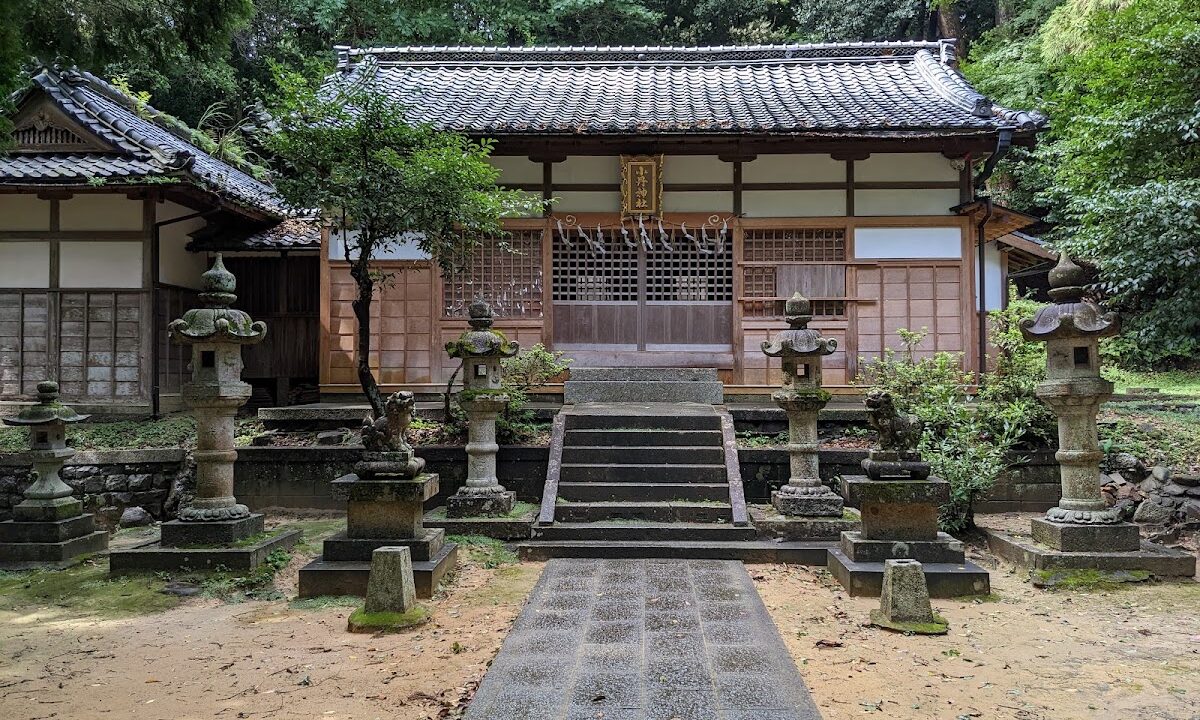
Oni Shrine, located in Kamihama-cho, Tsu City, Mie Prefecture, is a historically significant shrine listed in the Engishiki Jinmyocho (a list of shrines compiled during the Heian period). Situated on a hillside at the mouth of the Shidomogawa and Anogawa rivers, the shrine, quietly standing at the top of a steep stone staircase, evokes a sense of history in visitors.
This article comprehensively introduces information useful for visiting Oni Shrine, including its detailed history, the origin of its enshrined deities, highlights of the grounds, goshuin information, and access methods.
Basic Information about Oni Shrine
Shrine Name: Oni Shrine
Location: 6-56-1 Kamihama-cho, Tsu City, Mie Prefecture (Some sources state 1-160 Kamihama-cho)
Former Shrine Rank: Village Shrine
Engishiki-listed Shrine: Oni Shrine, Ano District, Ise Province
Main Deity: Haniyasuhime-no-Mikoto
Enshrined Deities: Oyamatsumi-no-Kami, Susanoo-no-Mikoto, Homutawake-no-Mikoto (Emperor Ojin), Tsukuyomi-no-Mikoto
Oni Shrine is pronounced “Oni-no-Jinja” and is affectionately known as “Oni-san” by locals. While maintaining its status as an Engishiki-listed shrine, it has also been revered as a local tutelary deity.
History and Origins of Kotani Shrine
Founding and Ancient Form
According to shrine tradition, the founding of Kotani Shrine dates back to the reign of Emperor Keiko. Emperor Keiko was the 12th emperor and an ancient emperor known as the father of Yamato Takeru. If this tradition is true, Kotani Shrine would have a history of nearly 2000 years.
The “Engishiki Jinmyocho” (compiled in 927) lists “Kotani Shrine” as one of the thirteen shrines in Ano District, Ise Province, indicating that it was already a prestigious shrine recognized by the imperial court during the Heian period.
History of Relocation Due to Great Flood
The most important event in the history of Kotani Shrine is the relocation due to the great earthquake and tsunami of Meio 7 (1498).
According to shrine tradition, Kotani Shrine was originally located on the eastern coast of Obuta Village. However, the shrine buildings were submerged in the sea by a massive tsunami caused by the Meio Earthquake (Tokai Earthquake) on August 25, 1498 (Meio 7). This Meio Earthquake was an estimated magnitude 8 earthquake that caused immense damage along the Ise Bay coast.
After the submersion, the shrine was relocated to Shioya, on the north bank of the Shidomogawa River estuary. This area has since been known as “Oni no Shioya” (Demon’s Salt House), a place name that continues to this day, suggesting a connection to the “Oni” (demon) reading of Kotani Shrine.
Later, the shrine was moved to its current location on a hill in Kamihama-cho, where it remains today. The current location, situated on a hill approximately 2 km inland from the coast, is thought to be a result of a site selection based on lessons learned from past tsunami damage.
From the Edo Period to the Modern Era
Throughout the Edo period, Kotani Shrine was revered as the local tutelary deity. Under the Meiji era’s shrine ranking system, it was designated a village shrine, maintaining its position as a central shrine in the local community.
Following the post-war reforms to the shrine system, it is now maintained as a religious corporation by local parishioners and devotees.
Deities and Divine Virtues
Main Deity: Haniyasuhime-no-Mikoto
The main deity of Kotani Shrine is Haniyasuhime-no-Mikoto. According to the Kojiki (Records of Ancient Matters), Haniyasuhime-no-Mikoto is a goddess of earth who was formed from the excrement of Izanami-no-Mikoto when she became ill after giving birth to Kagutsuchi-no-Kami, the god of fire.
Divine Virtues:
- Protection of land and soil
- Abundant harvests in agriculture and grains
- Protection of pottery and ceramics
- Safety in construction and civil engineering
- Stability of the earth and protection from earthquakes
Haniyasuhime-no-Mikoto, as a goddess of earth, has been deeply revered by people involved in agriculture and construction. The area around Tsu City, in particular, has long been a thriving agricultural region, and the worship of Haniyasuhime-no-Mikoto was closely intertwined with the lives of the local people.
Enshrined Deities and Their Significance
In addition to the main deity, the following deities are enshrined at Kotani Shrine:
Oyamatsumi-no-Kami: Known as the god of mountains, he is also worshipped as the guardian of forests and the god of sake brewing. His enshrinement is thought to reflect the geographical characteristics of Tsu City, surrounded by the sea and mountains.
Susanoo-no-Mikoto: A god widely worshipped as a protector against misfortune and disaster. It is presumed that he was enshrined at Kotani Shrine, which has a history of tsunami damage, in order to pray for protection from disasters.
Honda-wake-no-Mikoto: The divine name of the 15th Emperor Ojin, he is worshipped as Hachiman-shin, the god of military fortune, victory, and national protection.
Tsukuyomi-no-Mikoto:
This is the god of the moon, and as the deity who governs the calendar and the tides, it is a fitting deity to enshrine at a shrine located near the coast.
The enshrinement of these multiple deities tells the story of the shrine’s history of relocation and consolidation, as well as the changes in local beliefs.
Highlights of the Shrine Grounds
Shrine Name Marker and Entrance to the Approach
Near the Mie Prefectural Cultural Center, in a residential area, lies the entrance to Kotani Shrine. The shrine name marker is inscribed with “Shikinai Kotani Shrine,” indicating its status as a shrine listed in the Engishiki (an ancient Japanese legal code).
After passing through the torii gate, a steep stone staircase immediately appears. This staircase is known as a “very steep staircase,” a challenge for worshippers. Elderly people and those with mobility issues are advised to climb slowly, taking breaks as needed.
Stone Staircase and Hillside Shrine Grounds
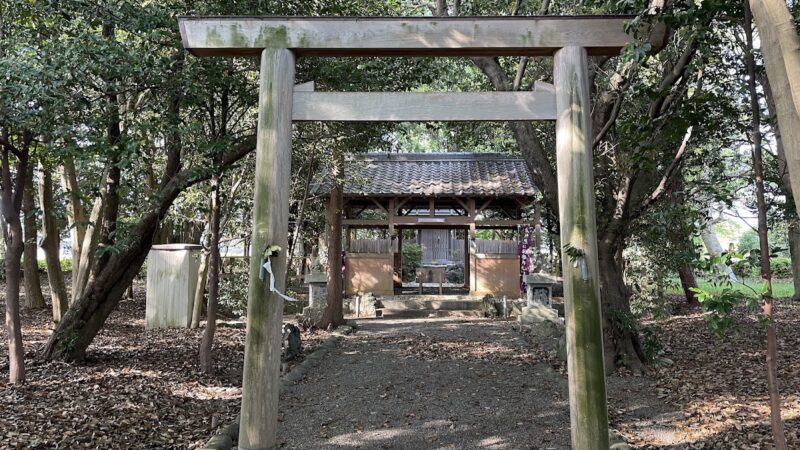
After climbing the stone staircase, the shrine grounds open up on the hillside. The tranquil space surrounded by trees maintains a solemn atmosphere befitting a sacred site, despite being located in an urban area.
From the shrine grounds, one can overlook the cityscape of Tsu, giving a real sense of its former importance as a strategic location near the coast.
Shrine Buildings
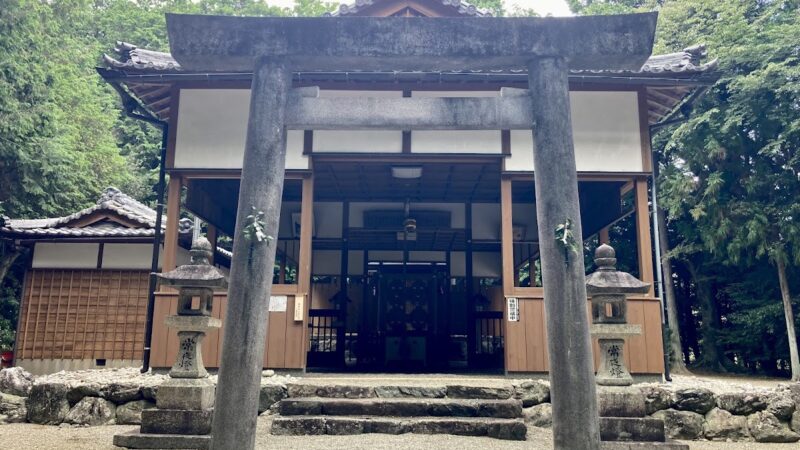
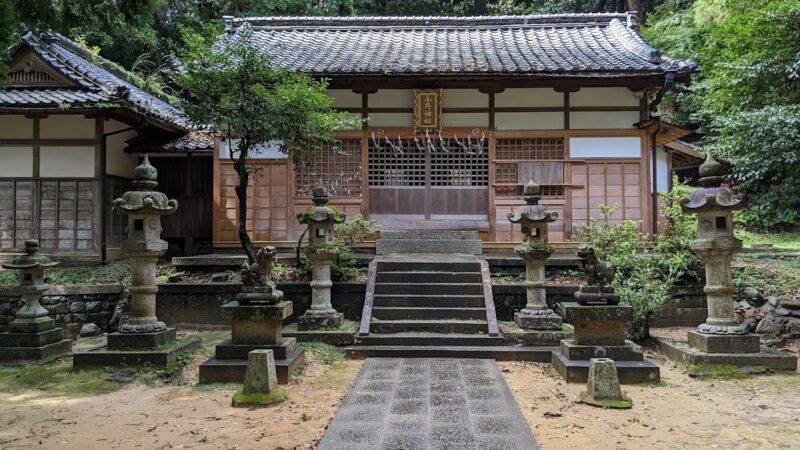
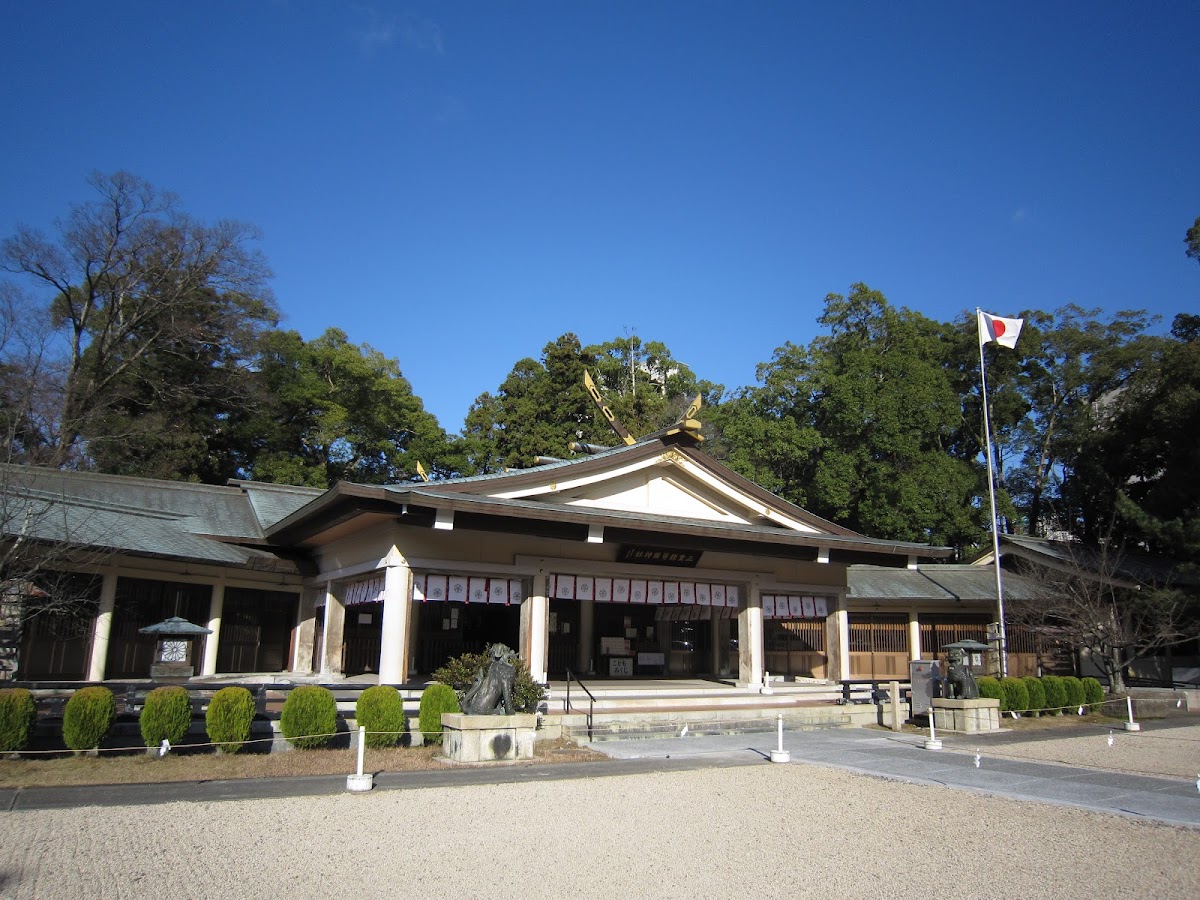
Worship Hall: The worship hall, where worshippers offer their prayers, is simple yet meticulously maintained. The local parishioners’ thorough cleaning and maintenance create a refreshing welcome for visitors.
Main Sanctuary: The main sanctuary, situated behind the worship hall, enshrines the deity. While the architectural style and details of the main sanctuary are not visible to the general public, it maintains the form of traditional shrine architecture.
Subsidiary Shrines and Smaller Shrines
Small subsidiary shrines and minor shrines are also enshrined within the grounds, demonstrating the diversity of local beliefs. These smaller shrines are thought to be the culmination of small shrines that were once scattered throughout the surrounding area.
Information on Goshuin (Shrine Seals) at Kotani Shrine
About the Issuance of Goshuin
Kotani Shrine offers goshuin (shrine seals). However, since there is often no permanent shrine office or priest present, it is recommended that those wishing to receive a goshuin check in advance.
According to some visitor records, goshuin are sometimes available as pre-printed seals. If the shrine office is closed during your visit, you can inquire through nearby affiliated shrines or the Association of Shinto Shrines.
Characteristics of the Goshuin
The goshuin of Kotani Shrine features the calligraphy of “Shikinai Kotani Shrine” or “Kotani Shrine” and the shrine’s seal. While simple, it conveys the prestige of a shrine listed in the Engishiki (an ancient Japanese legal code).
Many people visit with the purpose of collecting goshuin, but it is important to first visit with respect for the shrine, and to view the goshuin as proof of your visit.
Annual Events and Festivals
Kotani Shrine holds the following festivals throughout the year. Annual Festival: This is the most important festival of the shrine, held on a fixed date each year. Local parishioners gather, and events such as a portable shrine procession and Kagura (sacred dance) performances may take place.
Monthly Festival: This is a regular festival held on the 1st or 15th of each month.
Niiname-sai (Harvest Festival): This is a harvest thanksgiving festival held around November 23rd. It is considered particularly important because Haniyasuhime-no-Mikoto is the goddess of agriculture.
Specific festival dates and content may change from year to year, so it is recommended to check before visiting.
Access and Transportation Information
Access by Train
Nearest Station:
- Approximately 6 minutes on foot (approx. 480m) from JR Kisei Main Line/Kintetsu Nagoya Line “Tsu Station”
- Approximately 7-9 minutes on foot (approx. 750m) from Kintetsu Nagoya Line “Edobashi Station”
Access from Tsu Station is the most convenient. Tsu Station is a major station where express trains also stop, offering good access from Nagoya and Ise.
Walking Route from Tsu Station:
- Exit Tsu Station’s East Exit and head towards National Route 23.
- Head towards the Mie Prefectural Cultural Center.
- The entrance to the shrine is located in a residential area just before the center.
- Using a car navigation system or smartphone map app is recommended for more reliable directions.
Access by Bus
Nearest Bus Stop:
Approximately 3 minutes on foot (approx. 200m) from the “Kamihamacho 6-chome” bus stop.
Mie Kotsu buses are available, but the number of services is limited, so it is recommended to check the timetable in advance.
Access by Car
Parking:
There may not be a dedicated parking lot at Kotani Shrine. If visiting by car, you will need to use the parking lot at the nearby Mie Prefectural Cultural Center or a coin-operated parking lot.
The parking lot at the Mie Prefectural Cultural Center is paid, but it is spacious and easy to use. However, please note that the center can get crowded on days when events are being held.
Car Navigation Settings:
Please search using the address “6-56-1 Kamihama-cho, Tsu City, Mie Prefecture” or “1-160 Kamihama-cho, Tsu City, Mie Prefecture.” Some car navigation systems may display a torii gate icon.
Nearby Facilities
Mie Prefectural Cultural Center:
A large cultural facility within walking distance, housing a library, art museum, and hall. It’s a good idea to visit it in conjunction with your visit to Kotani Shrine.
Tsu City Center:
The area around Tsu Station has many restaurants and commercial facilities, making it convenient for meals and shopping before or after your visit.
Manners and Precautions for Visiting the Shrine
About the Stone Steps
As mentioned above, the stone steps at Kotani Shrine are quite steep. Please pay attention to the following points.
- Wear comfortable shoes (avoid heels and sandals).
- Be especially careful in rainy weather as the grounds can be slippery.
- Use handrails if available.
- Climb at your own pace without overexerting yourself.
- Exercise extra caution if you are elderly or with small children.
Etiquette for Worship
- Bow before passing through the torii gate.
- Avoid walking in the center of the path. (The center is the path for the gods.)
- Purify yourself at the water basin. (If there is one.)
- Bow twice, clap twice, and bow once in front of the main hall.
- Visit the subsidiary shrines within the grounds.
- Bow again at the torii gate when leaving.
Photography
Photography is generally permitted on the shrine grounds, but please consider the following points.
- Do not photograph restricted areas such as the interior of the main shrine.
- Be considerate of other worshippers.
- Refrain from using flash photography.
- When posting on social media, remember to show respect to the shrine.
The Charm of Kotani Shrine and the Significance of Visiting It
A Space Where You Can Feel the Weight of History
The greatest charm of Kotani Shrine lies in its long history as a shrine listed in the Engishiki (an ancient Japanese legal code) and its dramatic past of relocation due to a great flood. Standing in the quiet grounds today, you can feel the history of faith spanning over 1500 years and the thoughts of our ancestors who faced natural disasters.
A Sacred Preservation Despite Being in an Urban Area
Despite its location close to the center of Tsu City, the shrine’s tranquil preservation is maintained by utilizing its hilly terrain. It is cherished by local people as a place to escape the hustle and bustle of everyday life and find peace of mind.
A Shrine that Conveys Lessons from Disaster Prevention
The history of being submerged in the sea and relocated due to a tsunami caused by the Meio earthquake teaches us the importance of disaster prevention even today. Since the Great East Japan Earthquake, with increased concern about tsunamis, the history of Kotani Shrine is being re-evaluated not merely as a past event, but as a lesson for living in the present day.
Nearby Attractions and Tourist Spots
Shrines and Temples in Tsu City
Yuki Shrine: One of Tsu City’s representative shrines, also known as a famous spot for plum blossoms.
Shitennoji Temple: An ancient temple in Tsu City, associated with Prince Shotoku.
Takada Honzan Senshuji Temple: The head temple of the Shinshu Takada sect, a famous temple with a national treasure building. It can be visited with a short trip from Tsu City.
Tourist Attractions in Tsu City
Tsu Castle Ruins (Castle Park): The site of Tsu Castle, built by Todo Takatora, now developed as a park.
Gotemba Coast: A coast facing Ise Bay, where you can enjoy clam digging and swimming. This is a place where you can truly feel the history of Kotani Shrine, which was once located near the coast.
Sakakibara Onsen:
A famous hot spring located in the suburbs of Tsu City, known as a “beauty-enhancing hot spring.”
Summary: A Recommendation to Visit Kotani Shrine
Kotani Shrine is a valuable cultural heritage site in Tsu City, Mie Prefecture, boasting the status of an Engishiki-listed shrine and a dramatic history of relocation due to a tsunami. The quiet grounds, reached by climbing steep stone steps, maintain a solemnity befitting a sacred place despite being in an urban area, offering visitors a sense of historical weight and peace of mind.
Its convenient location within walking distance of Tsu Station is also a major draw, making it a shrine you should definitely visit when sightseeing in Tsu City. Offering prayers to the enshrined deities, including Haniyasuhime-no-Mikoto, and reflecting on its more than 1500-year history will be a precious experience for us living in the modern age.
When visiting Mie Prefecture, why not explore not only Ise Grand Shrine and the Kumano Kodo pilgrimage route, but also local shrines like Kotani Shrine, which are deeply rooted in the community, and experience the profound depth of Japanese shrine culture?
May your visit to Kotani Shrine be a fulfilling and enriching one.