Tenman Shrine (Kinugawa, Otsu City, Shiga Prefecture) Complete Guide | History, Deities, and Access Information
Tenman Shrine, located in Kinugawa 3-chome, Otsu City, Shiga Prefecture, is a historic shrine dedicated to Sugawara no Michizane, known as the god of learning. Situated on the southeastern edge of the Katata Hills, on a hill overlooking Lake Biwa, this shrine has a long history as a center of local faith. This article provides a detailed explanation of Tenman Shrine’s history, enshrined deities, highlights within the grounds, and access information.
Basic Information about Tenman Shrine
Location: 3-4-1 Kinugawa, Otsu City, Shiga Prefecture
Deity Enshrined: Sugawara no Michizane
Divine Emblem: Maru ni Umebachi (Plum Blossom in a Circle)
Shrine Rank: Former Village Shrine (Added in 1876)
Nearest Station: JR Kosei Line, Katata Station (Approx. 16-minute walk, approx. 1km)
Tenman Shrine is a shrine registered with the Shiga Prefectural Shrine Association and is affectionately known as “Kinugawa no Tenjin-san” by local residents. The shrine grounds are situated on a small hill, with the Tenjin River flowing to the south and offering scenic views of the Katata plain and Lake Biwa to the east.
Deities and Divine Virtues
About Sugawara no Michizane
Sugawara no Michizane (845-903), the deity enshrined at Tenman Shrine, is known as a scholar and politician of the Heian period. He possessed exceptional talent in Chinese and Japanese poetry and rose to the position of Minister of the Right. However, due to political intrigue, he was exiled to Dazaifu, where he died. After his death, he was enshrined as Tenjin and is revered as the god of learning at Tenmangu and Tenjin shrines throughout Japan.
Divine Virtues
Tenman Shrine is believed to bestow the following divine virtues:
- Academic Achievement: Passing exams, improving academic performance
- Improved Writing: Improving calligraphy and writing skills
- Improvement in Performing Arts: Flourishing talent in poetry, music, etc.
- Protection from Misfortune: Protection from disasters, safety for the family
- Sincerity: The virtue of honesty and integrity
Especially during exam season, local students and their parents can be seen visiting the shrine to pray for success.
History and Origins of Tenman Shrine
Circumstances of Founding
While there are clear records of the founding of Tenman Shrine, its origins date back to the Muromachi period. According to its history, the shrine’s origins date back to Tenbun 6 (1537), when Ashikaga Yoshiharu, the 12th Shogun of the Muromachi Shogunate, ordered his retainer Sasaki Danjo Sadayori to relocate and enshrine the sacred image of Sugawara no Michizane from Kannonji Castle in Gamo District to this location.
This period was the early Sengoku period, and the Rokkaku clan held power in Omi Province (present-day Shiga Prefecture). Kannonji Castle was the Rokkaku clan’s base, and the fact that the sacred image of Michizane was moved from there to Kinugawa speaks to the strategic importance of this region and the depth of faith.
Changes since the Meiji Era
In Meiji 9 (1876), Tenman Shrine was designated a village shrine, officially recognized as a local shrine. This was part of the Meiji government’s reform of the shrine system, and it marked a time when the position of shrines within local communities became clearer.
Furthermore, in 1955 (Showa 30), the nearby Momoe Shrine was merged with the Tenman Shrine. Momoe Shrine was dedicated to Mitsukubi Momoe, believed to be the father of Dengyo Daishi (Saicho), the founder of the Tendai sect. This merger made Tenman Shrine a shrine that enshrines both Michizane, the god of learning, and the father of a figure of great importance in the history of Japanese Buddhism.
Connection to Kinugawa Tenmangu Fort
Historical research suggests that the hilly area where Tenman Shrine is located may have once been the site of a fortress called “Kinugawa Tenmangu Fort.” Its location at the southeastern edge of the Katata Hills was militarily important, a strategic point overlooking the Tenjin River to the south and Lake Biwa and the Katata Plain to the east.
While no clear castle remains can be found within the current shrine grounds, the shrine’s location itself suggests its character as a defensive base during the Sengoku period (Warring States period). The shrine’s history, including its founding during the Muromachi period with the involvement of Ashikaga Yoshiharu, is likely not unrelated to this military background.
Highlights of the Shrine Grounds
Main Hall
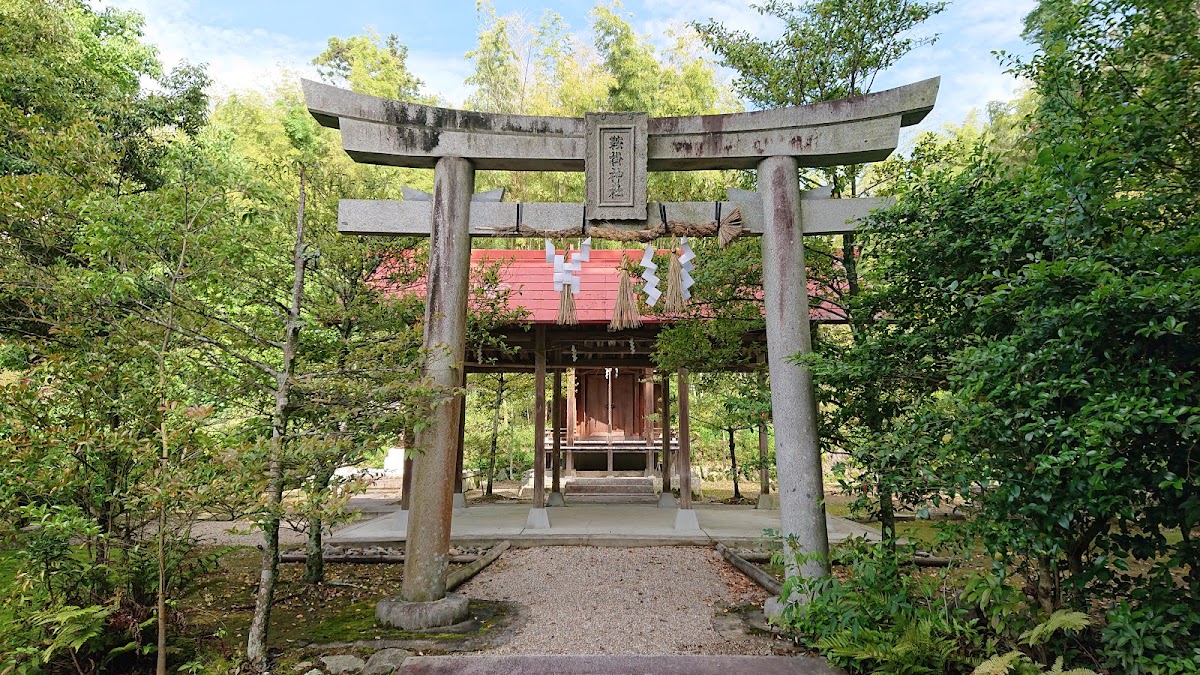
The main hall of Tenman Shrine is built in the Ikkensha Nagare-zukuri architectural style. Though small in scale, with a frontage of approximately 1 ken (about 1.8m) and a depth of approximately 1 ken, it is a dignified structure protected by a protective structure. Nagare-zukuri is a representative style of shrine architecture, characterized by its long, extended front roof.
The shrine’s crest, “Maru ni Umebachi” (a plum blossom in a circle), originates from Sugawara no Michizane’s love of plum blossoms and is a common emblem used at Tenmangu shrines throughout Japan.
Worship Hall
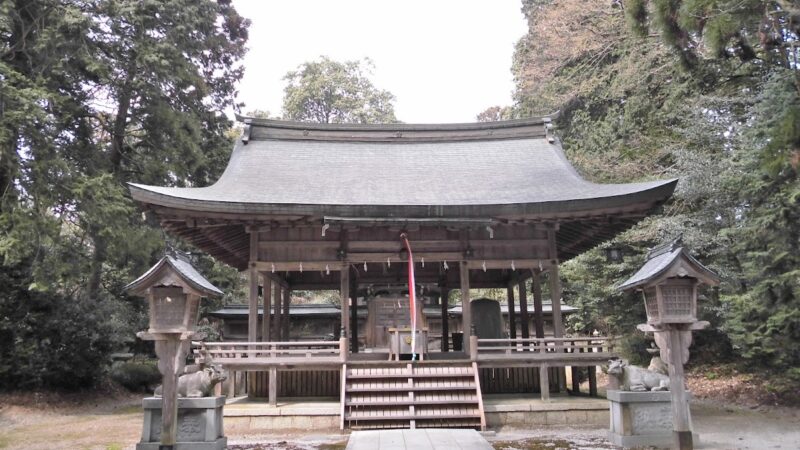
The worship hall is built in the Irimoya-zukuri style, with a frontage of 2 ken and a depth of 2 ken. It is located in front of the main hall as a place for worshippers to offer prayers to the gods. The hip-and-gable roof style is considered a highly prestigious roof style in traditional Japanese architecture.
Water Basin
To the right of the shrine grounds is a water basin where you can purify your body and mind before praying. The correct procedure at the water basin is as follows:
- Take the ladle with your right hand and purify your left hand.
- Switch the ladle to your left hand and purify your right hand.
- Take the ladle back into your right hand, receive water in your left hand, and rinse your mouth.
- Purify your left hand once more.
- Stand the ladle upright, purify the handle, and return it to its original place.
Remote Worship Area
To the right of the main shrine is a remote worship area. A remote worship area is a place for praying to distant sacred sites or shrines. It may be interesting to observe which direction the remote worship area at Tenman Shrine faces during your visit.
Views from the Shrine Grounds
Tenman Shrine is located on the top of a small hill, offering panoramic views of Lake Biwa and the town of Katata from its grounds. Especially on clear days, the beautiful scenery of Lake Biwa unfolds, making it a place where you can enjoy the beauty of nature while praying.
Access
Access by Train
Katata Station on the JR Kosei Line is the nearest station.
- Approximately 16 minutes on foot from the Katata Station exit (approximately 1 km)
- Head southwest from the station
Katata Station is approximately 30 minutes from Kyoto Station on the Kosei Line, and approximately 50 minutes from Osaka on the Special Rapid Service. The path from the station to the shrine is a gentle uphill slope, passing through a residential area before reaching the hilly terrain.
Detailed Walking Route
- Exit Katata Station and head southwest.
- Follow Prefectural Road 558.
- Pass through the residential area of Kinugawa.
- Follow the signs to the hilly area.
- Arrive at Tenman Shrine.
Access by Car
If using the Meishin Expressway:
- Approximately 30 minutes from Kyoto East IC
- Approximately 25 minutes from Ritto IC
If accessing from National Route 161:
- Enter Prefectural Road 558 from the Katata direction
- Follow the signs in the Kinugawa area.
*We recommend checking the availability of parking before visiting.
Address and Map Information
〒520-0244 3-4-1 Kinugawa, Otsu City, Shiga Prefecture
Searching for “Tenman Shrine, Otsu City, Kinugawa” on Google Maps or Yahoo! Maps will provide detailed location information and route guidance. Navigation from your current location is also possible using a smartphone map app. ## Manners and Etiquette for Visiting a Shrine
Basic Etiquette for Visiting a Shrine
When visiting Tenman Shrine, please observe the following basic etiquette:
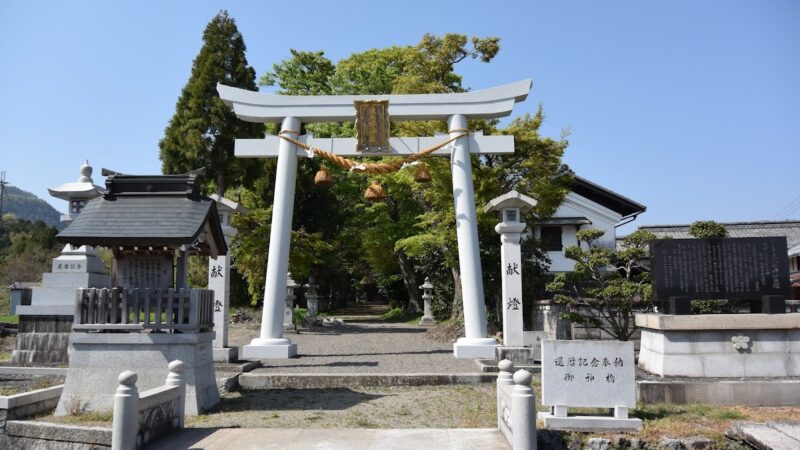
- Bow before passing through the torii gate.
- Avoid walking in the center of the approach to the shrine. (The center is the path for the gods.)
- Purify your body and mind at the water basin.
- Perform “Two Bows, Two Claps, One Bow” in front of the main hall.
- Bow deeply twice.
- Clap your hands twice.
- Pray sincerely.
- Bow deeply once.
- Bow again at the torii gate when leaving.
Appropriate Attire for Visiting a Shrine
There are no particularly strict dress code regulations, but it is desirable to wear clothing that is mindful of the sacred nature of the place. Avoid extremely revealing clothing and overly casual footwear such as sandals.
Photography
Photography is generally permitted within the shrine grounds, but it is considered good manners to refrain from taking pictures inside the main hall or in other sacred areas. Also, please be considerate of other worshippers.
Annual Events and Festivals
Various Shinto rituals are performed at Tenman Shrine throughout the year. Tenmangu and Tenjin shrines generally hold the following events:
Main Annual Events
- New Year’s Day Festival (January 1st): A festival celebrating the New Year
- Hatsutenjin (January 25th): The first Tenjin festival of the new year
- Setsubun Festival (around February 3rd): A ritual to ward off evil spirits by scattering beans
- Plum Blossom Festival (February or March): A festival to admire the plum blossoms loved by Sugawara no Michizane
- Summer Purification Ceremony (June 30th): A purification ceremony to cleanse away the sins and impurities accumulated over the past six months
- Tenjin Festival (July or August): A major summer festival, varying by region
- Autumn Grand Festival (Autumn): A prayer for gratitude for the harvest and for the prosperity of the region
- Year-End Purification Ceremony (December 31st): A purification ceremony to cleanse away the sins and impurities accumulated over the past year
For specific dates and details, it is recommended to check with the Shiga Prefectural Shrine Association or local information. ## Nearby Shrines and Temples
Around Tenman Shrine, there are several other shrines and temples worth visiting.
Umemiya Shrine
Located in the Kinugawa area, this shrine, along with Tenman Shrine, is a center of local faith.
Kakushōji Temple (Yakushizan Kongōshōin)
A temple located in the Kinugawa area, it is one of the centers of Buddhist faith in the region. Its official name is Yakushizan Kongōshōin Kakushōji.
Temples and Shrines around Katata
Katata is a historic town located on the shores of Lake Biwa, and is home to many temples and shrines, including Ukimido (Kaimonzan Mangetsuji). When visiting Tenman Shrine, you can also enjoy strolling around Katata.
History and Culture of the Kinugawa Area
Origin of the Place Name Kinugawa
There are several theories about the origin of the place name Kinugawa, but one theory is that it was named because the clean water of the Tenjin River flowing through the area was suitable for washing clothes. ### Relationship with Katata
The Kinugawa district is adjacent to Katata, a town that flourished from the medieval to early modern periods due to water transport on Lake Biwa. Katata has a unique history, possessing a self-governing organization called the “Katata-shu” and monopolizing fishing rights on Lake Biwa.
Connection with Kannonji Castle
Kannonji Castle, which appears in the history of Tenman Shrine, was the residence of the Rokkaku clan in Gamo District, Omi Province (present-day Azuchi-cho, Omihachiman City), and was a famous castle counted as one of Japan’s five great mountain castles. The history of the transfer of the sacred image of Sugawara no Michizane from Kannonji Castle demonstrates the connection between faith and politics in Omi Province during the Muromachi period.
How to Enjoy Visiting Tenman Shrine
Praying for Academic Success
Tenman Shrine is a shrine dedicated to the god of learning, making it ideal for students and those preparing for exams. Especially during exam season, the number of visitors praying for success increases. Let us offer our prayers with all our hearts and pledge our daily efforts.
Worship in Silence
Unlike large shrines in urban areas, Tenman Shrine is located on a hill in a quiet residential area, allowing for a peaceful atmosphere during worship. You can escape the hustle and bustle of everyday life and have time to offer your prayers in tranquility.
Enjoying the View of Lake Biwa
From the shrine grounds, you can overlook Lake Biwa and the townscape of Katata. After your visit, it is recommended to take some time to calm your mind while gazing at this beautiful scenery.
Exploring History
Tenman Shrine is filled with many historical elements, including its history dating back to the Muromachi period, its connection to a castle from the Sengoku period, and its joint enshrinement with Momoe Shrine. History buffs will find their visit even more profound if they understand this background.
Scenery of the Four Seasons
Because Tenman Shrine is located on a hillside, you can enjoy the changing seasons and the beauty of nature. Especially during the plum blossom season (late February to March), you may be able to admire the plum blossoms associated with Sugawara no Michizane.
Points to Note When Visiting
Access
It’s about a 16-minute walk from the station, so it’s a bit of a distance. Especially during the summer or on rainy days, it’s recommended to allow plenty of time for your visit. Also, since there is an uphill slope on a hillside, please wear comfortable shoes.
Visiting Hours
The shrine is generally open for worship at any time during the day, but the surrounding area may become dark in the early morning or after sunset. Visiting during daylight hours is safer.
Consideration for the Community
The area around Tenman Shrine is a residential area. When visiting, please be considerate of the lives of the local residents and behave quietly. Please avoid parking on the street and be mindful of proper etiquette during your visit.
Tenmangu and Tenjin Shrines in Shiga Prefecture
Besides Tenman Shrine (Kinugawa, Otsu City), there are several other shrines in Shiga Prefecture that enshrine Sugawara no Michizane.
Major Tenmangu and Tenjin Shrines
- Nagahama Tenmangu (Nagahama City): A Tenmangu shrine associated with Toyotomi Hideyoshi
- Otsu Tenmangu (Otsu City): Located in the center of Otsu City
- Tenjin Shrines in Various Locations: Small Tenjin shrines are scattered throughout the prefecture.
Each shrine has its own unique history and characteristics, making shrine hopping an enjoyable experience.
Summary
The Tenman Shrine located in Kinugawa 3-chome, Otsu City, Shiga Prefecture, is a historical shrine founded in 1537 by order of Ashikaga Yoshiharu. It enshrines Sugawara no Michizane, the god of learning, and is believed to grant divine blessings for academic success and passing exams.
Located at the southeastern edge of the Katata Hills, it offers beautiful views of Lake Biwa, and its historical background, including the former site of a fortress, is also intriguing. In 1955, Momoe Shrine was merged with this shrine, giving it the aspect of also enshrining the father of Dengyo Daishi.
Tenman Shrine, located about a 16-minute walk from Katata Station on the JR Kosei Line, offers a peaceful environment for worship. It’s a shrine worth visiting not only for students praying for success in exams, but also for those seeking historical insights or enjoying the scenery of Lake Biwa.
When visiting Shiga Prefecture, or exploring the Katata area, be sure to stop by Tenman Shrine. Along with praying to the god of learning, you’ll feel the weight of history that dates back to the Muromachi period.
When visiting, please observe basic shrine etiquette and be considerate of the local community. A heartfelt visit is sure to bring you good fortune.