Kitazawa Hachiman Shrine (Setagaya Ward, Tokyo) Complete Guide | History, Goshuin (Shrine Seals), Access, and Grounds Information
Kitazawa Hachiman Shrine, located in Daizawa, Setagaya Ward, Tokyo, is a venerable Hachiman shrine boasting a history of approximately 550 years as the guardian shrine of the Shimokitazawa area. Founded as a guardian against evil influences for Setagaya Castle, it has long been revered by the local community as the “Number One Honorary Hachiman Shrine of the Seven Sawas and Eight Shrines.” This article provides a detailed explanation of Kitazawa Hachiman Shrine’s history, goshuin (shrine seals), highlights of the grounds, and access information.
Basic Information about Kitazawa Hachiman Shrine
Official Name: Kitazawa Hachiman Shrine
Common Name: Kitazawa Hachimangu
Address: 3-25-3 Daizawa, Setagaya-ku, Tokyo
Phone Number: 03-3422-1370
Main Deities: Emperor Ojin, Himegami, Empress Jingu, Emperor Nintoku
Shrine Rank: Former Village Shrine
Annual Festival Date: Second Saturday and Sunday of September
Goshuin (Shrine Seal) Reception Hours: 10:00 AM – 4:00 PM (Weekdays, Saturdays, Sundays, and Holidays)
Nestled in a quiet residential area, the shrine grounds offer a tranquil space that allows visitors to forget the hustle and bustle of the city, and are cherished by worshippers and local residents alike.
History and Origins of Kitazawa Hachiman Shrine
Circumstances of its Founding and its Relationship to Setagaya Castle
Kitazawa Hachiman Shrine is believed to have been founded during the Bunmei era (1469-1487). It began when Kira Yoriyasu, the lord of Setagaya Castle at the time, enshrined Hachiman Daibosatsu, a god of war, as the guardian deity of the castle’s northeast (the “demon’s gate” direction).
Setagaya Castle was a medieval castle located around the present-day Gotokuji Temple and Setagaya Castle Ruins Park. The Kira clan ruled this region from the Muromachi period to the Sengoku period. Kitazawa Hachiman Shrine is thought to have played an important role as a defensive and spiritual guardian of the castle.
Status as the “Number One Hachiman Shrine of the Seven Sawas”
Kitazawa Hachiman Shrine was known as the “Number One Hachiman Shrine of the Seven Sawas.” This indicates that it is the most prestigious Hachiman shrine among the seven Hachiman shrines scattered throughout the Setagaya area (including Daizawa, Kitazawa, and Ikezawa). This title speaks to the shrine’s importance and the deep faith it enjoys in the community.
From the Edo Period to the Present
Throughout the Edo period, Kitazawa Hachiman Shrine served as the guardian shrine of Shimokitazawa Village (then known as “Kitazawa Village”), attracting the faith of the local community. For the villagers engaged in agriculture, it was an indispensable place to pray for abundant harvests and family safety.
The current main hall is said to have been rebuilt in 1852 (Kaei 5). Even during the turbulent period of the late Edo period, the magnificent shrine building was maintained through the faith of the local people.
In 1978 (Showa 53), a large-scale reconstruction of the shrine building took place, resulting in its current majestic appearance. The old main hall is preserved as a historically valuable building.
Highlights and Cultural Assets of the Shrine Grounds
Main Hall and Worship Hall
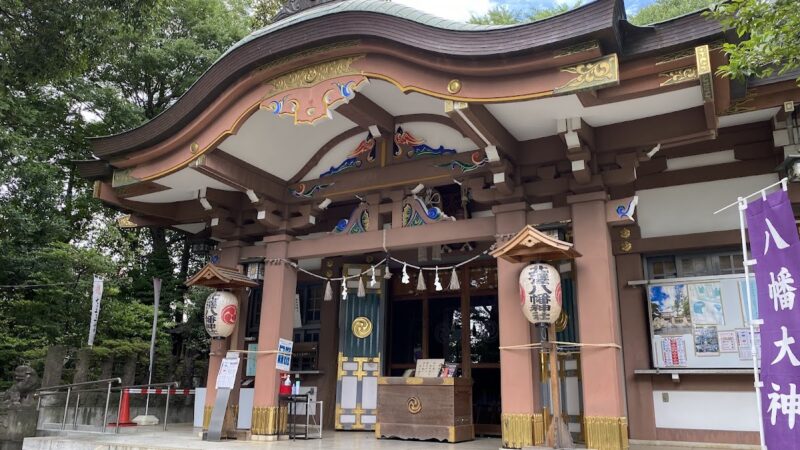
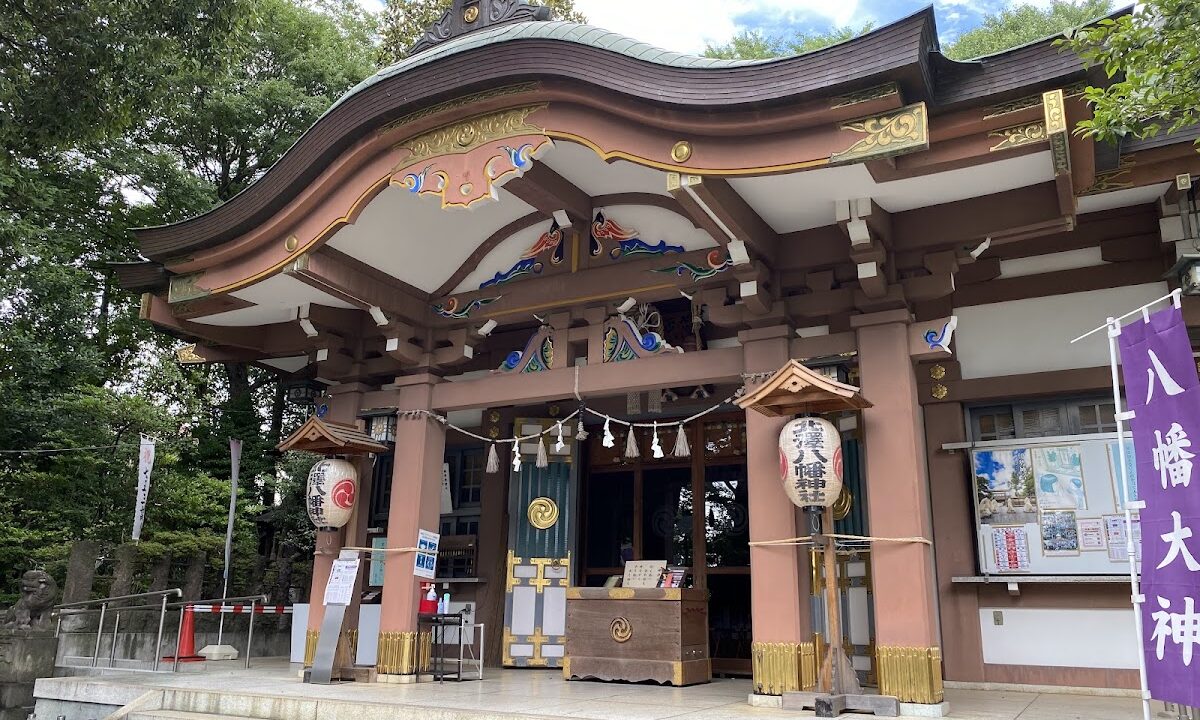
The main hall of Kitazawa Hachiman Shrine is a magnificent shrine building in the Gongen-zukuri style. Constructed in 1978, it retains the beauty of traditional shrine architecture while also possessing modern durability. The worship hall features intricate carvings, instilling a sense of solemnity in worshippers.
The contrast between the vermilion pillars and white walls is beautiful, creating a landscape that harmonizes with the greenery of the shrine grounds. A sacred tree stands tall behind the main hall, evoking a sense of long history.
Kagura Hall and Cultural Value
The shrine grounds also feature a magnificent Kagura Hall, where Kagura (sacred dance) and dedication performances are held during the annual festival. This Kagura Hall is also known for its appearance in the popular basketball manga “Slam Dunk,” attracting attention as a pilgrimage site for fans.
The Kagura Hall has an open design and is sometimes used for local community activities, symbolizing the connection between the shrine and the community.
Shrines within the Precincts and Subsidiary Shrines
Within the grounds of Kitazawa Hachiman Shrine, several subsidiary shrines are enshrined.
Kōra Tamatare Shrine: This shrine enshrines Kōra Tamatare-no-Mikoto, worshipped as a god of war and guardian deity.
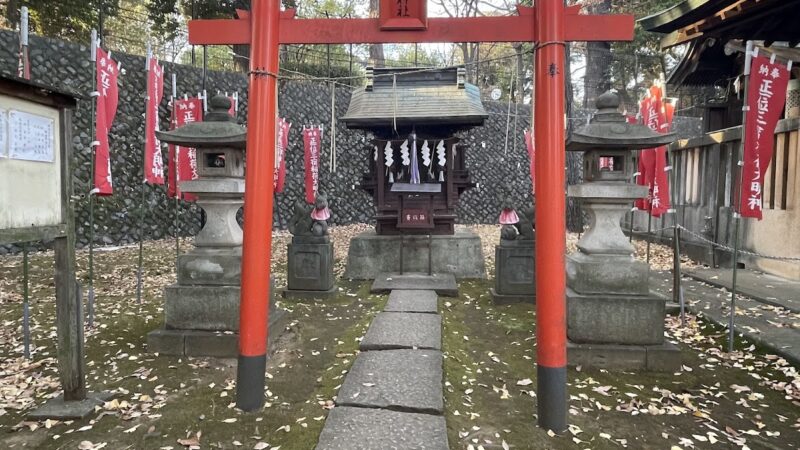
Enkai Inari Shrine: This shrine enshrines Inari, worshipped as the god of business prosperity and abundant harvests. It is characterized by its vermilion torii gate.
Ubusuna Shrine: This shrine enshrines the local guardian deity, protecting the peace and security of the region.
Benten Shrine: This shrine enshrines Benzaiten, the goddess of performing arts and learning. While Benten shrines are often located near water, at this shrine, it is situated in a corner of the precincts.
These subsidiary shrines within the grounds demonstrate the worship of various deities beyond Hachiman, embodying the multi-layered nature of deities in Japanese Shinto.
Fujizuka and Mount Fuji Worship Site
Kitazawa Hachiman Shrine has a Fujizuka, known as a place where one can worship Mount Fuji from afar. During the Edo period, Fuji-ko (Fuji pilgrimage groups) were popular, and Fujizuka were built in various locations for people who found it difficult to actually climb Mount Fuji.
On clear days, Mount Fuji can be seen from this worship site, making it a valuable spot to worship the sacred Mount Fuji despite being in the heart of the city.
Goshuin and Offerings
Types and Characteristics of Goshuin
Kitazawa Hachiman Shrine offers several types of goshuin.
Standard Goshuin: A traditional goshuin with “Kitazawa Hachiman Shrine” written in ink and stamped with the shrine’s seal. Characterized by its powerful brushstrokes, it is a popular souvenir for visitors.
Limited Edition Goshuin (Shrine Seals): During annual festivals and special events, limited-edition goshuin are sometimes offered. These feature designs related to seasonal flowers and festivals, making them highly collectible.
Paper-Cut Goshuin: Created to commemorate the 555th anniversary of the shrine’s founding, this paper-cut goshuin is popular for its high artistic quality, utilizing delicate paper-cutting techniques.
Recovery Prayer Goshuin: In times of disaster, such as the Noto Peninsula Earthquake, recovery prayer goshuin are sometimes offered, demonstrating the shrine’s social role.
Goshuin are available from 10:00 AM to 4:00 PM at the shrine office. The offering fee is usually around 300-500 yen, but may vary for special goshuin.
Original Goshuin Notebooks
Kitazawa Hachiman Shrine also offers original design goshuin notebooks. Designed with the shrine’s crest and scenery, these notebooks are popular as souvenirs of visits. ### Other Items Offered
Amulets: Various types of amulets are offered, including those for traffic safety, protection from evil, academic success, and family safety.
Ema (votive tablets): Ema, on which people write their wishes and offer them, are also popular. As befits a Hachiman Shrine, there are also ema related to military success and good fortune in competitions.
Hama-ya (demon-repelling arrows): During the New Year, Hama-ya are offered to ward off evil spirits.
Goshinfuda (amulets): Goshinfuda, to be placed on household altars, are also offered, allowing people to pray for family safety, business prosperity, and other blessings.
Annual Festivals and Events
Grand Festival (September)
The most important festival at Kitazawa Hachiman Shrine is the Grand Festival, held annually on the second Saturday and Sunday of September. It is a grand festival involving the entire community, with various events such as a portable shrine procession, Kagura (sacred dance) performances, and stalls.
The portable shrine is paraded through the parish area, accompanied by spirited shouts and prayers for the peace and prosperity of the community. Traditional Kagura (sacred dance and music) is performed at the Kagura Hall, attracting many worshippers.
New Year’s Visit (January)
Many worshippers visit the shrine for their first shrine visit of the new year. From New Year’s Day to the third day, the shrine grounds are bustling with people praying for family safety, business prosperity, academic success, and more. Sweet sake is offered, and protective arrows and rakes are distributed.
Other Annual Events
Setsubun Festival (February): Bean-throwing ceremonies are held to ward off evil and pray for good fortune.
Shichi-Go-San Festival (November): Shichi-Go-San ceremonies are held to pray for the healthy growth of children.
Monthly Festival: Monthly festivals are held regularly each month to pray for the peace and well-being of the parishioners.
Access and Surrounding Information
Access by Train
Nearest Station: Keio Inokashira Line “Ikenoue Station” (approx. 5-minute walk)
Ikenoue Station is the closest. Exit from the South Exit and head southeast through the residential area to reach the shrine. The route from the station is relatively flat, and there are directional signs.
Other Accessible Stations:
- Odakyu Odawara Line/Keio Inokashira Line “Shimokitazawa Station” (approx. 10-minute walk from the Southwest Exit, approx. 650m)
- Keio Inokashira Line “Shindaita Station” (approx. 12-minute walk)
From Shimokitazawa Station, the route goes through a shopping street and into a residential area. Visiting the shrine in conjunction with a stroll through Shimokitazawa is recommended.
Access by Bus
The Setagaya Ward community bus “Setamaru” is also available. The shrine is a few minutes’ walk from the nearest bus stop.
Access by Car and Parking
The shrine has a parking lot for visitors, but the number of spaces is limited (only a few). During busy times such as festivals, it is often full, so we recommend using public transportation.
There are also coin-operated parking lots nearby, but parking spaces are limited due to it being a residential area.
Nearby Tourist Attractions
Shimokitazawa: A shopping street in Shimokitazawa, known as a hub of youth culture. It’s home to vintage clothing stores, cafes, and live music venues, offering a unique atmosphere.
Exploring the Daizawa/Daita Area: This quiet residential area retains a Showa-era retro atmosphere, making it perfect for a leisurely stroll.
Nearby Shrines and Temples: Other temples and shrines, such as Moriganji Temple and Awashima Shrine, are within walking distance, making temple and shrine hopping possible.
Benefits and Divine Virtues of Kitazawa Hachiman Shrine
Divine Virtues of Hachiman
Emperor Ōjin, the main deity enshrined here, is worshipped as Hachiman, the god of war and victory. Known as the tutelary deity of the Minamoto clan, he is believed to bring blessings of long-lasting military fortune, success in competitions, and career advancement.
Family Safety and Protection from Evil
Due to its history as a guardian against evil influences from the northeast of Setagaya Castle, the shrine is also deeply revered for its blessings of protection from evil and misfortune. It is a beloved shrine for the local community, protecting family safety and peace.
Child-Rearing and Safe Childbirth
Empress Jingū is also known as the goddess of safe childbirth and child-rearing. Many families visit the shrine to pray for safe childbirth, first shrine visits for newborns, and Shichi-Go-San (a traditional Japanese rite of passage for children).
Kitazawa Hachiman Shrine and Notable Figures
The Service of Hiroyuki Ehara
The fact that Hiroyuki Ehara, known as a spiritualist, once served at Kitazawa Hachiman Shrine is recounted as part of the shrine’s history. Because of this connection, some people visit the shrine as a power spot.
Cultural Figures Associated with Shimokitazawa
The Shimokitazawa area is known as a town where many cultural figures and entertainers have lived, and Kitazawa Hachiman Shrine has also formed part of the area’s cultural background.
Manners and Etiquette for Worship
Basic Worship Etiquette
- How to Pass Through the Torii Gate: When passing through the torii gate, bow before entering. Since the center of the approach is considered the path of the gods, walk to either the left or right side.
- Purification at the Water Basin: Purify your hands and mouth at the water basin. Take the ladle with your right hand, purify your left hand, switch the ladle to your left hand and purify your right hand, then switch it back to your right hand, receive water in your left hand, and rinse your mouth. Finally, hold the ladle upright and purify the handle.
- Worship at the Main Hall: The basic procedure at the main hall is “two bows, two claps, one bow.” Place your offering, ring the bell, bow deeply twice, clap twice while praying, and finally bow once.
Regarding Photography
Photography is generally permitted on the temple grounds, but please refrain from taking photos inside the main hall or in sacred areas, or obtain permission before taking pictures. Remember to be considerate of other worshippers.
Regarding Attire
While casual attire is acceptable for worship, somewhat formal attire is preferable when receiving prayers or performing a formal worship service.
A Summary of the Charms of Kitazawa Hachiman Shrine
Kitazawa Hachiman Shrine is a venerable Hachiman shrine with a history of approximately 550 years, nestled in a quiet residential area of Setagaya Ward, Tokyo. Founded as a guardian against evil influences for Setagaya Castle, it has long been revered by the local community as the “Number One Honorary Hachiman Shrine of the Seven Hachiman Shrines.”
It boasts numerous attractions, including a magnificent main shrine building, historical subsidiary shrines, and a worship area offering views of Mount Fuji. The shrine also offers a variety of goshuin (shrine stamps), with seasonal and special designs being particularly popular among visitors.
Despite being located in Shimokitazawa, a vibrant area known for its youth culture, Kitazawa Hachiman Shrine maintains a tranquil and solemn atmosphere, making it an oasis in the city. Why not pay a visit during your stroll through Shimokitazawa?
The lush greenery of the grounds, the historical shrine buildings, and the warm, community-oriented atmosphere will surely soothe the hearts of visitors. Kitazawa Hachiman Shrine continues to be loved by many people, both as a place to visit at important life events such as New Year’s Day, annual festivals, and Shichi-Go-San (a traditional rite of passage for children), and as a place to relax and unwind in everyday life.