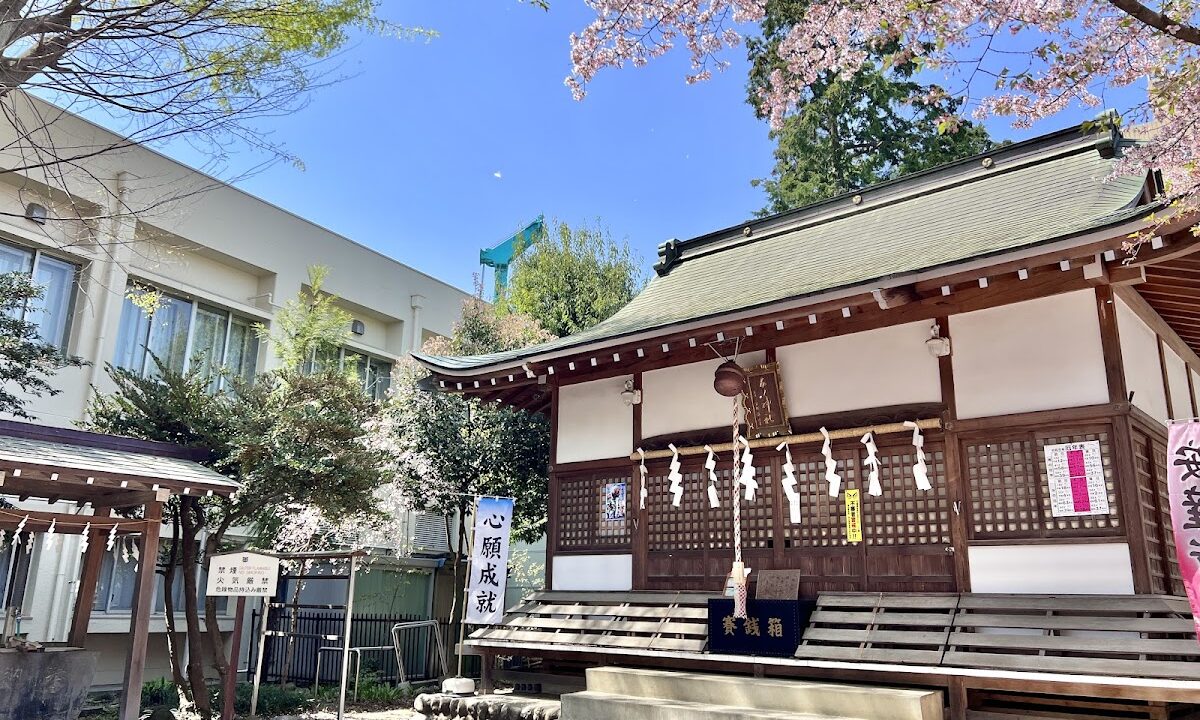
Gonojinja Shrine (Hamura City, Tokyo) Complete Guide | Maimai-zu Well, History, Goshuin (Shrine Seal), and Access Information
Gonojinja Shrine, located in Hamura City, Tokyo, is an ancient shrine said to have been founded in the 9th year of Emperor Suiko’s reign (601 AD). Despite its convenient location just a 2-minute walk from the east exit of Hamura Station on the JR Ome Line, it maintains a quiet and solemn atmosphere, making it a beloved shrine among locals. Within the shrine grounds is the “Maimai-zu Well,” a nationally designated historical site, attracting many worshippers and history enthusiasts as a culturally valuable artifact.
History and Origins of Gonojinja Shrine
History from the Time of Emperor Suiko
Gonojinja Shrine is said to have been founded in the 9th year of Emperor Suiko’s reign (601 AD), making it an ancient shrine with a history of over 1400 years. Initially worshipped under a different name, it came to be called “Kumano Shrine” after the enshrinement of the Kumano Gosha Daigongen during the Hoki era (770-780 AD). This connection to the Kumano faith is believed to be the origin of the current place name, “Gonokami.”
From Kumano Shrine to Gonokami Shrine
During the Edo period, it was known as “Kumano-sha” or “Kumano Gongen-sha” and attracted local devotion. Due to the Meiji-era separation of Shinto and Buddhism, the name was changed from the strongly Buddhist name Kumano Gongen to “Gonokami Shrine.” This name change originates from the place name “Gonokami,” demonstrating the deep connection between the region and the shrine.
The place name Gonokami in Hamura City itself originates from the existence of this shrine, reflecting a history of the shrine and the region developing together.
Deities and Divine Virtues
Deities Enshrined
The following five deities are enshrined at Gonokami Shrine:
Amaterasu Omikami
The supreme deity in Japanese mythology, and the sun goddess considered the ancestral deity of the Imperial family. These deities are believed to bestow blessings of national peace and prosperity, as well as good fortune and happiness.
Susanoo-no-Mikoto
The younger brother of Amaterasu-Omikami, this god is known for his courageous and daring character. He is known for his blessings of warding off evil, protecting against disaster, and for matchmaking.
Amenokoyane-no-Mikoto
The god who presides over rituals and is the ancestral deity of the Nakatomi clan (Fujiwara clan). He is believed to bestow blessings of academic success and career advancement.
Izanami-no-Mikoto
The mother goddess who gave birth to the land of Japan and many gods. She is worshipped for her blessings of matchmaking, safe childbirth, and fertility.
Kotosaka-no-O-no-Mikoto
A god believed to be the son of Izanami-no-Mikoto and Susanoo-no-Mikoto, he is known as a god who resolves disputes.
One theory suggests that the name “Gonojinja” (Five Shrines) comes from the fact that these five deities are enshrined here.
Benefits
The following benefits can be expected at Gonojinja:
- Family Safety and Protection from Evil and Good Fortune: The powerful protective power of Susanoo-no-Mikoto
- Matchmaking and Marital Harmony: The divine virtues of Izanami-no-Mikoto
- Academic Success and Passing Exams: The power of Amenokoyane-no-Mikoto as the god of learning
- Safe Childbirth and Conception: The divine virtues of Izanami-no-Mikoto as the mother goddess
- Business Prosperity and Abundant Harvest: The benevolent power of Amaterasu-Omikami
Maimai-zu Well | A Valuable Cultural Asset Designated as a National Historic Site
What is the Maimai-zu Well?
The most famous feature of the grounds of Gonojinja is the “Maimai-zu Well.” This well, registered as a Tokyo Metropolitan Government-designated historical site (and some sources as a nationally designated historical site), is a very rare type of well believed to have been constructed during the Kamakura period.
“Maimaizu” is a Kanto dialect word meaning snail, and the well was given this name because its shape resembles a snail’s shell in a spiral.
Structure and Characteristics
The Maimaizu well has a unique structure.
- Diameter at ground surface: Approximately 16 meters
- Diameter at bottom: Approximately 5 meters
- Depth of bowl-shaped depression: Approximately 4.3 meters
- Diameter of central well: Approximately 1.2 meters
- Depth of well: Approximately 5.9 meters (from the bottom of the bowl)
The structure consists of a spiral passage leading down a bowl-shaped depression, with the well dug in the center.
Why is it this shape?
The Musashino Plateau has its water sources deep underground, and from ancient to medieval times, the technology for digging deep, vertical wells was not sufficiently developed. Therefore, a method was adopted where slopes were created from the surface and excavated to reach the water veins. This method reduced the effort required to draw water and made well maintenance easier.
Furthermore, it is believed that the large, bowl-shaped structure resulted from the creation of a gentle slope to prevent collapse.
Historical Value
The Maimai-zu well is a valuable historical relic that conveys the civil engineering technology and practical wisdom of the medieval period. Several Maimai-zu wells still exist in the Kanto region, but the one at Gonojinja Shrine is highly valued for its excellent state of preservation and well-preserved original structure.
Although the water has dried up and it no longer functions as a well, it is carefully preserved as a historical and cultural asset.
Highlights of the Shrine Grounds
Main Hall and Worship Hall
The main hall of Gonojinja Shrine is a wooden building that retains the architectural style of the late Edo period. The worship hall was renovated during the Meiji era and boasts a simple yet dignified design. The carvings on the main hall are intricately decorated, showcasing the high level of skill of the craftsmen of the time.
Shrine Precincts
Several smaller shrines are also enshrined within the grounds. Small shrines and stone monuments, reflecting the local faith, are scattered throughout, telling the story of the layered accumulation of various beliefs over a long history.
Sacred Trees and Nature
The grounds are home to many ancient trees, creating a tranquil space far removed from the hustle and bustle of the city. Large zelkova and ginkgo trees, in particular, are cherished as sacred trees that have watched over the history of the shrine.
The nature within the grounds, which displays different expressions with each season, provides peace and tranquility to visitors.
Goshuin (Shrine Seal) Information
Regarding the Issuance of Goshuin
Goshuin (shrine seals) are available at Gonojinja Shrine. You can receive a handwritten goshuin if you visit during the shrine office’s opening hours.
The Goshuin (temple/shrine stamp) features the calligraphy of “Gonojinja” and the shrine’s seal. The simple yet powerful calligraphy of the Goshuin makes it a popular memento for many visitors.
Issuance Hours
The Goshuin issuance hours are the same as the shrine office’s opening hours. Since the office may be closed on weekdays, it is recommended to call ahead or visit on weekends or festival days if you want to be sure to receive a Goshuin.
During the New Year’s period and festivals such as the annual grand festival, the shrine office is definitely open and Goshuin are available.
Offering Fee
The offering fee for the Goshuin is a typical amount (around 300-500 yen). It is best to prepare the exact amount to avoid needing change.
Annual Events and Festivals
Annual Grand Festival
The annual grand festival of Gonojinja is held grandly every autumn. The festival features a procession of portable shrines and devotional performances, making it an important event where local people gather. The portable shrines parade through the parish area, praying for a bountiful harvest and peace in the community.
New Year’s Visit
Many worshippers visit the shrine for their first shrine visit of the new year. Its convenient location near Hamura Station makes it bustling with people from New Year’s Day through the third day. Sweet rice wine is served, and lucky charms are distributed.
Other Annual Events
- Saitansai (January 1st): A festival celebrating the New Year
- Setsubunsai (around February 3rd): Events such as bean-throwing
- Natsukoshi no Oharae (June 30th): A Shinto ritual to purify oneself of sins and impurities accumulated over the past six months
- Shichi-Go-San (around November 15th): A celebration of children’s growth
- Toshikoshi no Oharae (December 31st): A Shinto ritual to purify oneself of sins and impurities accumulated over the past year
Access and Visiting Information
Access by Train
Nearest Station: JR Ome Line, Hamura Station
- Approximately 2 minutes on foot from the east exit of Hamura Station (approximately 100 meters)
- Located right outside the station rotary, making it very easily accessible.
Access from Other Stations
- Approximately 28 minutes on foot from the west exit of Fussa Station on the JR Ome Line
- JR Ome Line Approximately 32 minutes on foot from the west exit of Ozaku Station
Access by Car
Access from Major Roads
- Approximately 10 minutes from National Route 16
- Approximately 15 minutes from the Ken-O Expressway “Ome IC”
Parking
Since the shrine’s dedicated parking is limited, we recommend using public transportation when visiting. If you visit by car, you will need to use a nearby coin-operated parking lot.
Visiting Hours
The shrine grounds are generally open 24 hours a day for worship, but the shrine office has limited opening hours. If you wish to obtain a Goshuin (shrine stamp) or other items, please refer to the following hours.
- Shrine Office Opening Hours: Approximately 9:00 AM to 5:00 PM (Irregular)
- Recommended Visiting Time: Daytime with plenty of daylight
Basic Information
- Official Name: Gonokami Shrine
- Reading: Gonokami-sha
- Address: 1-1-6 Gonokami, Hamura City, Tokyo 205-0011
- Phone Number: Varies by shrine (Please check)
- Official Website: None (Information can be found on local information websites)
Nearby Tourist Attractions
Hamura City Local History Museum
Located within walking distance of Gonokami Shrine, the Hamura City Local History Museum offers insights into the history and culture of Hamura City. It also features detailed exhibits on the Maimai-zu well, and visiting in conjunction with a visit to Gonokami Shrine will provide a deeper understanding of the region’s history.
Hamura Weir
Built during the Edo period as an intake for the Tamagawa Aqueduct, the Hamura Weir is known as a historical civil engineering heritage site. Located about a 15-minute walk from Gonojinja Shrine, it’s also famous for its cherry blossoms.
Hamura City Zoo
This small but well-equipped zoo is very popular. It’s a great place to visit when you’re going to the shrine with your family.
Manners and Points for Visiting a Shrine
Basic Worship Etiquette
- Bow before passing through the torii gate: This is a courtesy before entering the sacred area.
- Walk along the edge of the path: The center is considered the path of the gods.
- Purify yourself at the water basin: Left hand → Right hand → Mouth → Handle of left hand in that order.
- Etiquette at the main hall: Two bows, two claps, one bow is the basic procedure.
Precautions for Visiting the Maimai-zu Well
- It is possible to descend into the well, but please be careful of your footing.
- It is especially slippery during and after rain, so extra caution is needed.
- As it is a cultural property, please be considerate and do not damage or deface it.
- Photography is permitted, but please be considerate of other visitors.
Regarding Photography
Photography is generally permitted within the shrine grounds. The Maimai-zu Well is a particularly popular photo spot, but please note the following points.
- Please refrain from taking photos inside the main shrine.
- Please refrain from taking photos during festivals or prayers.
- Please be considerate and avoid including other worshippers in your photos.
- Please avoid using tripods during crowded times.
Summary of the Charms of Gonojinja Shrine
Gonojinja Shrine boasts a long history, founded in the 9th year of Emperor Suiko’s reign, yet offers modern accessibility, being just a 2-minute walk from Hamura Station.
Its greatest highlight, the “Maimai-zu Well,” is a valuable cultural asset that conveys the civil engineering techniques of the Kamakura period and is a historically significant structure. Combined with worship at the main shrine, which enshrines five deities, it is a valuable place to experience the wisdom and ingenuity of people from the Middle Ages.
It is easily accessible from the city center, making a day trip perfectly feasible. The quiet grounds are a place to escape the hustle and bustle of everyday life and find peace of mind, making it a beloved spot not only for locals but also for worshippers from afar.
When you visit Hamura City, be sure to visit Gonojinja Shrine and experience its over 1400 years of history and valuable cultural assets.
Frequently Asked Questions
Q1: When can I get a Goshuin (shrine stamp) at Gonojinja Shrine?
A1: You can get one during the shrine office’s opening hours (generally 9:00 AM to 5:00 PM), but the office may be closed on weekdays. If you want to be sure to get a Goshuin, we recommend visiting on weekends or festival days. It’s best to call ahead to confirm.
Q2: Can I enter the Maimai-zu Well?
A2: Yes, the Maimai-zu Well is open to visitors, and you can descend the spiral-shaped passageway to get close to the well. However, some areas are uneven, so we recommend wearing comfortable shoes. It’s especially slippery during and after rain, so please be careful.
Q3: Is there parking?
A3: There is limited parking available for the shrine. Located just a 2-minute walk from Hamura Station, it’s easily accessible by public transport. If you’re arriving by car, please use the nearby coin-operated parking lots.
Q4: When is the annual festival of Gonojinja Shrine held?
A4: The annual festival is held every autumn. The specific date may vary from year to year, so we recommend checking Hamura City’s tourist information or notices posted at the shrine. You can see traditional local events such as the portable shrine procession and devotional performances.
Q5: What is the origin of the name of Gonojinja Shrine?
A5: Originally called “Kumano-sha,” it was established during the Hoki era (770-780) when the Kumano Gosha Daigongen was enshrined there. The place name “Gonokami” originated from this Kumano faith, and it is believed that the name became “Gonojinja” during the Meiji era’s separation of Shinto and Buddhism. There is also a theory that the name is related to the fact that five deities are enshrined there.