Abita Shrine (Minoh City, Osaka Prefecture) Complete Guide | History, Goshuin (Shrine Seals), Access, and Annual Events Explained in Detail
Abita Shrine, located in Sakuragaoka, Minoh City, Osaka Prefecture, is a venerable shrine boasting a history of over a thousand years. As a Shikinaisha (shrine listed in the Engishiki Jinmyocho), compiled in the 5th year of the Engi era (927 AD), it has been deeply revered by the local people. This article comprehensively introduces information you should know before visiting Abita Shrine, including its history, enshrined deities, goshuin information, access methods, and annual events.
About Abita Shrine
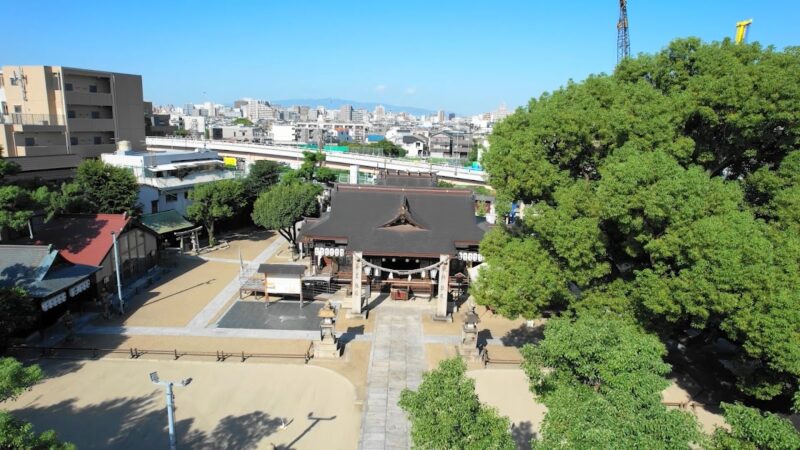
Abita Shrine is an ancient shrine located in Toyoshima District, Settsu Province, and is listed in the Engishiki Jinmyocho as “Abita Shrine, Toyoshima District, Settsu Province.” Located in present-day Sakuragaoka, Minoh City, Osaka Prefecture, its sacred grove, spreading amidst a residential area, is a valuable natural space in the increasingly urbanized Hokusetu region. There are various theories about the origin of the shrine’s name, “Abita,” but it remains in the place name as evidence of its long history of worship in this region. During the Edo period, it was called “Gozu Tenno” and was revered as a god who wards off epidemics.
Deity and Benefits
The deity enshrined at Abita Shrine is Susanoo-no-Mikoto. In Japanese mythology, Susanoo-no-Mikoto is known as a brave god who defeated Yamata-no-Orochi, and is believed to offer benefits such as protection from evil, warding off epidemics, matchmaking, and abundant harvests.
Because he is identified with Gozu Tenno, many worshippers visit the shrine, especially to pray for recovery from illness and good health, and it is cherished as a guardian deity of the region. It is also believed to offer benefits for matchmaking, and the number of young worshippers hoping for good relationships is increasing.
History of Abita Shrine
Founding and Listing in the Engishiki Jinmyocho
The exact founding date of Abita Shrine is unknown, but since it is listed in the Engishiki Jinmyocho, compiled in the 5th year of the Engi era (927 AD), it can be confirmed that it already existed at least by the mid-Heian period. The Engishiki Jinmyocho is a register that recorded important shrines throughout the country recognized by the imperial court at the time, and shrines listed in it are called “Shikinaisha.”
While there were several Shikinaisha in Toshima District, Settsu Province, Abita Shrine is recorded as a shrine with the status of receiving offerings at the monthly festival (Tsukinami-sai) and the harvest festival (Niiname-sai), suggesting a deep connection with the imperial court from ancient times.
Changes in Divine Rank
From ancient times to the Middle Ages, Abita Shrine was repeatedly granted divine ranks. A divine rank is a rank bestowed by the imperial court upon the deity enshrined in a shrine, indicating the shrine’s status.
According to historical records, in the first year of the Jōgan era (859), the shrine was granted the divine rank of Junior Fifth Rank, Lower Grade, and continued to receive promotions thereafter. This is evidence that the imperial court at the time considered Abita Shrine important, and it indicates that it played a central role in local religious beliefs.
The Worship of Gozu Tennō in the Edo Period
During the Edo period, Abita Shrine became widely known as “Gozu Tennō Shrine.” Gozu Tennō was worshipped as the god who controlled epidemics, and many worshippers visited the shrine, especially during epidemics.
During this period, due to the influence of syncretism of Shinto and Buddhism, Susanoo-no-Mikoto and Gozu Tennō were generally treated as the same deity. Following the Meiji-era separation of Shinto and Buddhism, the shrine was formally established as a shrine dedicated to Susanoo-no-Mikoto, resulting in its current form.
Changes Since the Modern Era
Since the Meiji era, Abita Shrine has maintained its traditions as the local tutelary shrine and a Shikinaisha (a shrine listed in the Engishiki, an ancient Japanese legal code). While the surrounding environment has changed significantly due to post-war urbanization, the natural environment within the shrine grounds has been preserved, and it continues to be a beloved spiritual center for local residents.
Currently, the shrine attracts many worshippers for life-changing rituals such as Hatsumode (first shrine visit of the year), Shichi-Go-San (a traditional rite of passage for children), and Yakuyoke (a ritual to ward off evil), as well as for annual events such as Setsubun-sai (a festival marking the beginning of spring) and Tondo-yaki (a traditional bonfire).
Highlights of the Shrine Grounds
Main Hall and Worship Hall
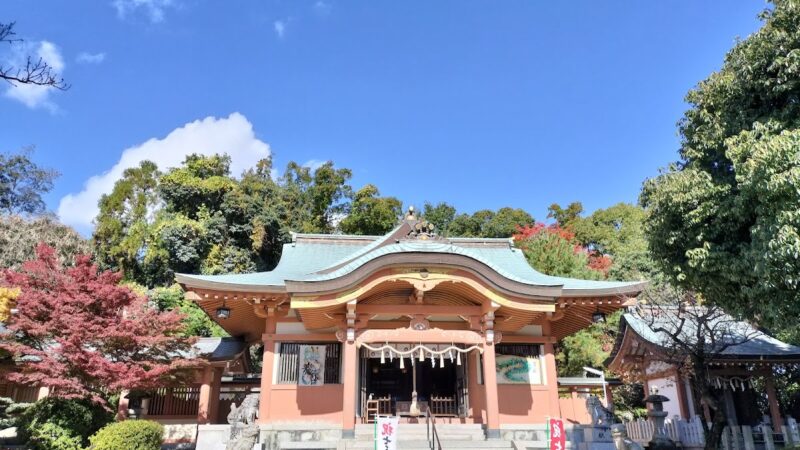
The main hall of Abita Shrine is built in the traditional shrine architectural style, creating a solemn atmosphere. Daily prayers and rituals are performed in the worship hall, where worshippers can quietly offer their prayers.
Among the buildings, stone structures bearing dates from the Edo period to the Meiji period have been confirmed through research by the Minoh City Local History Museum, conveying the long history of the shrine to the present day.
The Sacred Grove and Nature
The shrine grounds retain abundant nature, making it a valuable green space for the region, known as the “sacred grove.” Visitors can enjoy the scenery of each season, with cherry blossoms in spring, fresh greenery in summer, autumn leaves in fall, and a serene snowscape in winter, each offering a different view.
In the increasingly urbanized city of Minoh, this nature-rich space provides peace and tranquility to worshippers, and is cherished as a place to soothe the soul.
Yuzu Fortune Slips
A well-known specialty of Abita Shrine is the “Yuzu Fortune Slip.” Minoh City has long been known as a production area for yuzu (a type of citrus fruit), and taking advantage of this local characteristic, cute fortune slips shaped like yuzu are available.
Due to their cute appearance, the Yuzu Fortune Slips are particularly popular with young women and children, and have become a topic of conversation on social media. After drawing a fortune slip, you can take it home as a yuzu (citrus fruit) ornament, making it a popular souvenir.
Goshuin (Shrine Seal) Information
About the Issuance of Goshuin
Abita Shrine offers goshuin to visitors. Goshuin have become popular in recent years as proof of worship and a way to forge a connection with the shrine.
The goshuin features the calligraphy and red seal of “Abita Shrine,” creating a simple yet dignified design. It also includes the shrine’s history as a Shikinaisha (a shrine listed in the Engishiki), making it popular with history buffs.
Issuance Time and Location
Goshuin are issued at the shrine office. Issuance hours are generally from 9:00 AM to 5:00 PM, but times may change during festivals and events. If you wish to be sure to receive a goshuin, it is recommended to inquire with the shrine in advance.
Phone Number: 072-721-2096
About Goshuincho (Stamp Books)
Abita Shrine offers its own original goshuincho, featuring a design that reflects the shrine’s unique characteristics. It’s recommended for those starting their goshuin collection for the first time.
Annual Events
New Year’s Visit (January 1st-3rd)
Many worshippers, including local parishioners, visit the shrine for their first visit of the new year. The tradition of praying for safety and happiness throughout the year and welcoming the new year at the shrine continues.
Food stalls are sometimes set up on the shrine grounds, creating a lively atmosphere for worshippers.
Tondo-yaki (January 15th)
Every year on January 15th, the “Tondo-yaki” event is held. This traditional event involves burning New Year’s decorations, old amulets, and talismans to pray for good health and protection from illness throughout the year.
It’s a well-established local event, attracting many families and community members. The sight of flames rising high into the sky is spectacular and is a beloved New Year’s tradition.
Setsubun Festival (February 3rd)
The Setsubun Festival at Abita Shrine is held grandly every year on February 3rd. One of its highlights is the “Goma-taki” (fire ritual), which is lit around 1 PM, and prayers for warding off evil are offered amidst the rising smoke.
Bean-throwing also takes place, with lucky beans being scattered to worshippers while chanting “Good fortune in, demons out!” As a shrine dedicated to Susanoo-no-Mikoto, the god of warding off disease, this is an important festival attracting many worshippers seeking protection from evil.
Shichi-Go-San (November)
During the autumn Shichi-Go-San season, the shrine grounds are bustling with families celebrating their children’s growth. Abita Shrine accepts Shichi-Go-San prayers, allowing visitors to pray for the healthy growth of their children.
A designated area for commemorative photos is also available, allowing you to capture precious family memories.
Other Festivals
Various festivals are held throughout the year, including the Spring and Autumn Grand Festivals. These festivals are important opportunities for preserving the region’s traditional culture, and parishioners and local residents work together to support the shrine.
Access
Access by Train
The most convenient way to reach Abita Shrine is by using the Hankyu Railway.
Walking Route from the Nearest Station:
- Approximately 15 minutes on foot from Hankyu Minoo Line “Minoo Station”
- Exit Minoo Station and head southwest. After passing through a residential area, you will arrive at the shrine.
- Approximately 16 minutes on foot from Hankyu Minoo Line “Makiochi Station”
- The shrine is also within walking distance from Makiochi Station, and this route can also be used.
The path from the station to the shrine is a quiet route through a residential area. While there are signs, first-time visitors will find it easier to use a smartphone map app.
Access by Car and Parking
If you are visiting by private car, the shrine has parking spaces for visitors. However, congestion is expected during events such as New Year’s Day and Setsubun Festival, so using public transportation is recommended.
If using a car navigation system, please set your destination to “4-16-3 Sakuragaoka, Minoh City, Osaka Prefecture.”
Surrounding Environment
Abita Shrine is located in a residential area of Minoh City, but there are also many nature-rich tourist spots nearby, such as Minoh Falls and Minoh Park. You can enjoy the nature of Minoh in addition to visiting the shrine.
It is also known as the hometown of actor Masaki Suda, and fans sometimes visit.
Manners and Etiquette for Visiting a Shrine
Basic Etiquette for Visiting a Shrine
When visiting a shrine, please observe the following basic etiquette.
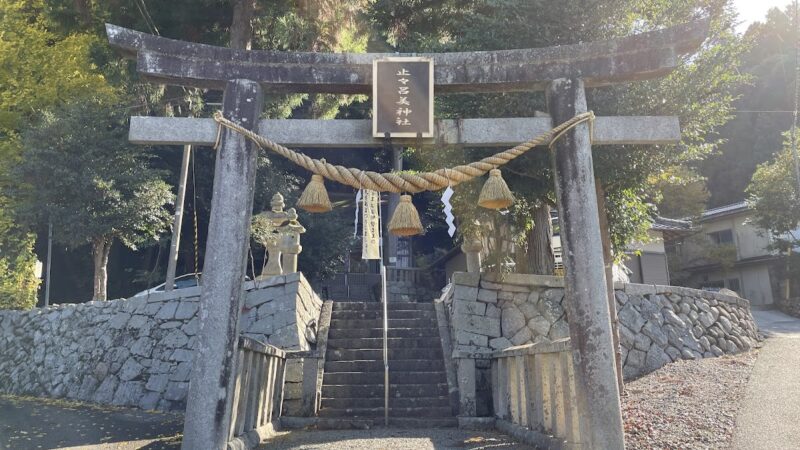
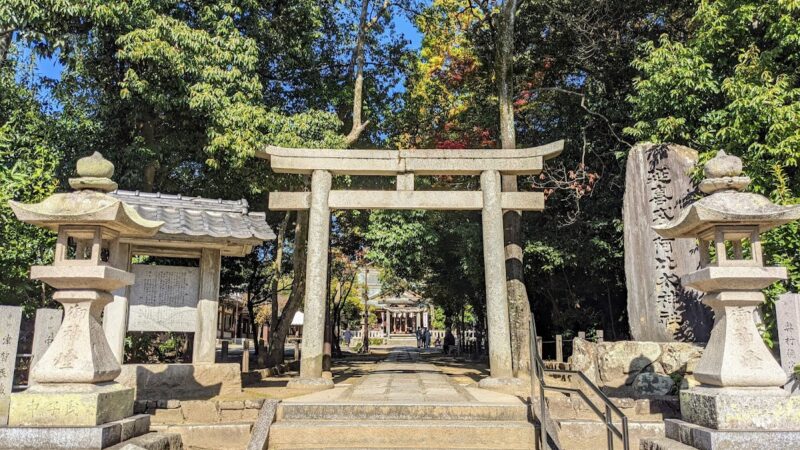
- Bow before passing through the torii gate: Before entering the sacred area, bow as a sign of respect.
- Purify yourself at the water basin: Purify your left hand, then your right hand, then your mouth, and finally wash your left hand.
- Avoid the center of the path: The center of the path is considered the path of the gods, so walk along the sides.
- Two bows, two claps, one bow: In front of the main hall, bow deeply twice, clap your hands twice, and finally bow once.
For those wishing to receive prayers
For those wishing to receive various prayers, such as protection from misfortune, safety prayers, family safety prayers, or prayers for business prosperity, it is recommended to contact the shrine office in advance. Please contact the shrine directly regarding prayer reception hours and offering fees.
The Four Seasons of Abita Shrine
Spring: Cherry Blossom Season
In spring, the cherry blossoms in the shrine grounds bloom in profusion, delighting visitors. True to its name, Sakuragaoka (Cherry Blossom Hill), it’s known as a famous cherry blossom viewing spot, bustling with people who come to worship while enjoying the blossoms.
Summer: Lush Greenery
In summer, the shrine grounds are enveloped in deep green, creating a cool and refreshing atmosphere. It’s the perfect season to escape the hustle and bustle of the city and worship in peace.
Autumn: The Beauty of Autumn Leaves
In autumn, the trees in the shrine grounds change color, allowing visitors to enjoy the beautiful autumn foliage. Coinciding with the Shichi-Go-San (children’s festival) season, the atmosphere is vibrant and festive.
Winter: Silent Shrine Grounds
In winter, the shrine grounds are enveloped in silence, further enhancing the solemn atmosphere. It’s also a time when the shrine is bustling with New Year’s events such as Hatsumode (first shrine visit of the year) and Tondo-yaki (bonfire festival).
Nearby Tourist Attractions
Minoo Great Waterfall
Located about a 10-minute drive from Abita Shrine, Minoo Great Waterfall is a famous waterfall selected as one of Japan’s Top 100 Waterfalls. It’s also famous for its autumn foliage, attracting many tourists in the fall.
Katsuoji Temple
Katsuoji Temple, known as the “Temple of Good Fortune,” is another representative tourist spot in Minoo City. Famous for its Daruma dolls, it’s a popular destination for those praying for success in exams and victory.
Minoo City Local History Museum
This museum offers insights into the history and culture of Minoo. It also displays materials related to Abita Shrine, making it ideal for those who want to learn more about the shrine’s history.
Summary
Abita Shrine, located in Minoo City, Osaka Prefecture, boasts a history of over a thousand years as a venerable shrine listed in the Engishiki Jinmyocho (a list of shrines compiled in the Heian period). This shrine enshrines Susanoo-no-Mikoto as its main deity and is believed to offer blessings for protection against misfortune, eradication of disease, and matchmaking.
The shrine grounds retain abundant nature, making it a precious sanctuary in today’s increasingly urbanized world. Yuzu fortune-telling slips and Goshuin (shrine stamps) are popular, and various events are held throughout the year, including New Year’s visits, Setsubun festivals, and Tondo-yaki (a traditional New Year’s bonfire).
It’s easily accessible, within walking distance of Minoo Station or Makiochi Station on the Hankyu Minoo Line, making it a convenient stop during Minoo sightseeing. Please visit Abita Shrine, where history, nature, and the faith of the local people thrive.
Abita Shrine Basic Information
- Address: 4-16-3 Sakuragaoka, Minoh City, Osaka Prefecture
- Phone: 072-721-2096
- Access: Approximately 15 minutes on foot from Hankyu Minoh Line “Minoh Station”, approximately 16 minutes on foot from “Makiochi Station”
- Deity enshrined: Susanoo-no-Mikoto
- Shrine rank: Shikinaisha (listed in the Engishiki Jinmyocho)