Atago Shrine (Tsuchizaki-minami, Akita City, Akita Prefecture) Complete Guide
Atago Shrine, located in Tsuchizaki-minami, Akita City, Akita Prefecture, is a historic shrine that has been cherished by the local people for centuries. This article provides detailed information you should know before visiting Atago Shrine, including its history, blessings, highlights within the grounds, festivals and events, and access methods.
Basic Information about Atago Shrine
Atago Shrine is located in Tsuchizaki-minami, Akita City, and has a long history as a center of faith for the local residents. Tsuchizaki Port flourished as the outer port of the Akita Domain, and within this historical context, Atago Shrine has played an important role as the guardian deity of the region.
Location and Contact Information
- Location: Tsuchizaki-minami, Akita City, Akita Prefecture
- Nearest Station: JR Ou Main Line/Uetsu Main Line “Tsuchizaki Station”
- Parking: Parking available on the shrine grounds or nearby (details recommended upon arrival)
The Tsuchizaki-minami area is located in the northern part of Akita City and has a history of developing as a port town facing the Sea of Japan.
History and Origins of Atago Shrine
What is Atago Faith?
Atago Shrine is one of the shrines based on Atago faith that are enshrined throughout Japan. Atago faith has its head shrine at Mount Atago in Kyoto and has been revered primarily as a god of fire prevention. During the Edo period, it was widely worshipped, mainly within the samurai class, and Atago shrines were established in various locations.
The Origins of Atago Shrine in Tsuchizaki
Tsuchizaki Port flourished as an important outer port of the Akita Domain during the Edo period and was also known as a port of call for Kitamae ships. In an environment densely populated with wooden houses typical of a port town, fire was a constant threat. Therefore, it is believed that the shrine dedicated to Atago-jin, the god of fire prevention, was cherished by the local people.
Atago Shrine has been protected for many years as a place of faith for people praying for the safety and prosperity of the region. Even after the changes in the shrine system during the Meiji era and the social changes after the war, the fervent faith of the local residents has been passed down to this day.
Deities and Benefits
Main Deities
The main deities enshrined at Atago Shrine are generally the following gods:
- Homusubi-no-kami: Known as the god of fire, the god who controls fire.
- Izanami-no-mikoto: The goddess of creation in Japanese mythology.
While the deities enshrined may vary depending on the region, their role as gods of fire prevention is common.
Main Benefits
The main benefits believed to be bestowed at Atago Shrine are as follows:
- Fire Protection: This is the most representative benefit, believed to protect homes and businesses from fire.
- Family Safety: Protection of family safety and peaceful living.
- Business Prosperity: Due to the history of Tsuchizaki as a thriving port town, there is also a belief in praying for commercial prosperity.
- Maritime Safety: Prayers for safety at sea, unique to a port town.
- Exorcism: Protection from various calamities.
It is said that many people, especially those in professions involving fire and business owners such as restaurants, visit the shrine.
Highlights of the Shrine Grounds
Shrine Building
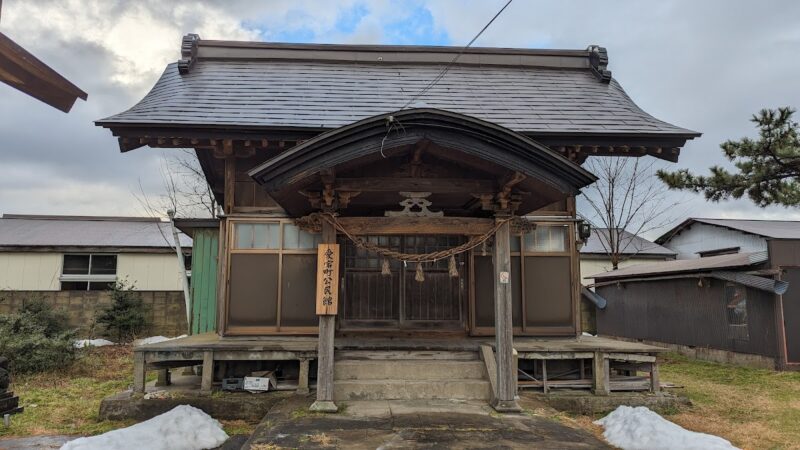
The shrine building of Atago Shrine is a typical example of a local shrine. Although not large in scale, the carefully maintained building reflects the deep faith of the local people.
Atmosphere of the Shrine Grounds
Located in the residential area of Tsuchizaki-minami, Atago Shrine has a friendly atmosphere that blends seamlessly into the community. The grounds are meticulously clean, quietly welcoming visitors.
The grounds display different expressions with each season; cherry blossoms and fresh greenery adorn the grounds in spring, while autumn leaves color the landscape. It also functions as a place of relaxation for local residents, and visitors can often be seen stopping by during their walks.
Stone Monuments and Memorials
Like many local shrines, Atago Shrine likely has stone monuments and memorials that tell the story of the region’s history. These are valuable resources for understanding the local history.
Annual Events and Festivals
Grand Festival
Atago Shrine holds its annual Grand Festival. This is the most important festival for the shrine, providing an opportunity for local people to gather and offer thanks to the gods.
Specific dates vary by shrine, but many Atago Shrines hold their festivals in the summer. During the festival, Shinto rituals are performed, and prayers are offered for the safety and prosperity of the community.
Relationship with the Tsuchizaki Port Float Festival
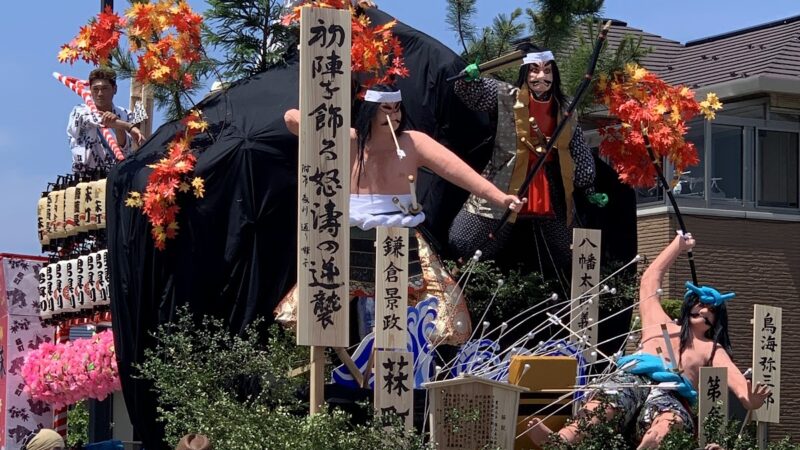
Every July, the Tsuchizaki district holds the “Tsuchizaki Port Float Festival” (one of the UNESCO Intangible Cultural Heritage “Mountain, Float, and Procession Events”). While this festival is the festival of Tsuchizaki Shinmei Shrine, it is deeply intertwined with the local shrine worship, including that of Atago Shrine, as a festival for the entire community.
New Year’s Visit
At the start of the new year, local residents visit the shrine for their first shrine visit of the year, praying for safety and happiness throughout the year. While not as crowded as large shrines, it is an important New Year’s event for the local people.
Other Annual Events
- Setsubun Festival: Events such as bean-throwing may be held.
- Natsukoshi no Harae (Summer Purification Ceremony): A Shinto ritual to purify oneself of impurities accumulated over the past six months.
- Shichi-Go-San (Seven-Five-Three Festival): A visit to celebrate children’s growth.
- Monthly Festival: Regularly held monthly festivals.
We recommend checking in advance for specific event details and dates.
Etiquette and Manners for Visiting a Shrine
Basic Etiquette for Visiting a Shrine
Here are the basic etiquette rules for visiting Atago Shrine:
- Bow before passing through the torii gate: As a sign of respect before entering the sacred area.
- Purify yourself at the water basin: Purify your left hand, then your right hand, then your mouth.
- Walk along the edge of the path: The center is considered the path for the gods.
- Worship in front of the main hall: The basic procedure is two bows, two claps, and one bow.
- Bow deeply twice.
- Clap your hands twice.
- Pray with all your heart.
- Bow deeply once.
- Bow again at the torii gate when leaving: Express your gratitude when leaving the sacred area.
Manners during your visit
- Attire: There are no specific rules, but clean clothing is desirable.
- Photography: Photography is generally permitted on the temple grounds, but please be considerate of other visitors.
- Quietness: Be mindful that this is a sacred place and refrain from loud conversations.
- Pets: It is generally discouraged to bring pets onto the temple grounds.
Access Methods
Access by Public Transportation
From JR Tsuchizaki Station
- The nearest station is Tsuchizaki Station on the JR Ou Main Line and Uetsu Main Line.
- We recommend checking the walking time from the station using a map app.
- The Tsuchizaki Port South area is relatively close to the station.
From Akita Station
- Approximately 10 minutes to Tsuchizaki Station on the JR Ou Main Line.
- You can also take a bus from Akita Station (check Akita Chuo Kotsu bus routes).
Access by Car
From Central Akita City
- Head north on National Route 7 towards the Tsuchizaki area.
- Travel time varies depending on traffic conditions, but approximately 15-20 minutes is a guideline.
From the Akita Expressway
- From Akita Kita IC, take National Route 7 towards Tsuchizaki.
- Approximately 15 minutes from the IC.
Parking Information
As this is a local shrine, there may not be a large, dedicated parking lot. Please note the following when visiting:
- There may be a few parking spaces on the shrine grounds or nearby.
- On days when congestion is expected, such as during festivals, we recommend using public transportation.
- Please avoid street parking to avoid inconveniencing local residents.
History and Culture of Tsuchizaki Port South Area
Tsuchizaki as a Port Town
Tsuchizaki Port has played an important role as the outer port of the Akita Domain since the Edo period. It flourished as a port of call for Kitamae ships, bringing various cultures and goods through trade with all over Japan.
Even after the Meiji era, it continued to develop as Akita’s gateway to the sea, and continues to play an important role as Akita Port today.
Tsuchizaki Shinmei Shrine and the Hikiyama Festival
Tsuchizaki Shinmei Shrine is the representative shrine of the Tsuchizaki district, and its annual festival, the “Tsuchizaki Port Hikiyama Festival,” is a traditional event with a history of over 300 years. In 2016, it was registered as a UNESCO Intangible Cultural Heritage, and it is one of Akita’s representative festivals.
Atago Shrine has been a center of faith for local residents within this region’s history and culture.
Regional Characteristics
The Tsuchizaki Port South district has developed as a residential area, where long-time and new residents coexist. While retaining its history as a port town, it is a comfortable area to live in with a modern living environment.
Nearby Attractions and Tourist Spots
Tsuchizaki Shinmei Shrine
This is the central shrine of the Tsuchizaki district, known for the Tsuchizaki Port Hikiyama Festival. It is a shrine you should definitely visit when you visit Atago Shrine.
Akita Port
The gateway to Akita, facing the Sea of Japan. Enjoy the port scenery and savor fresh seafood at the restaurants.
Serion (Port Tower)
A 143-meter-tall observation tower adjacent to Akita Port. From the observation deck, you can enjoy panoramic views of Akita city, the Sea of Japan, and the Oga Peninsula. Free admission makes it a popular tourist spot.
Tsuchizaki Minato Historical Museum
A facility where you can learn about the history and culture of Tsuchizaki. Exhibits include those related to the Hikiyama Festival and historical materials about Tsuchizaki as a port town.
Points to Note When Visiting Atago Shrine
Recommended Time to Visit
Atago Shrine is open year-round, but the following times are especially recommended:
- New Year’s Visit (January): For New Year’s prayers
- During the Annual Grand Festival: The shrine is at its most vibrant
- Tsuchizaki Port Float Festival (July): The entire area is enveloped in a festive atmosphere
- Autumn: The pleasant weather makes it ideal for strolling
Time Required for Visit
The shrine grounds are compact, so a visit itself can be completed in about 15-30 minutes. We recommend taking your time to stroll around the grounds or combining your visit with other nearby tourist attractions.
About Goshuin (Shrine Seals)
Regarding the issuance of Goshuin, it is recommended to check in advance, as there may not be a resident priest. In smaller local shrines, the priest may also be responsible for Goshuin at a nearby shrine.
A Place of Worship Rooted in the Community
Atago Shrine is not a large-scale tourist shrine, but precisely because of this, it is a warm and inviting shrine deeply rooted in the lives of the local people. The history carefully preserved by the local residents and the accumulation of daily faith are arguably the shrine’s greatest charm.
Connection with the Local Community
Local shrines have functioned not only as religious institutions but also as centers of the local community. Through festivals and cleaning activities, they serve as places for interaction among residents, deepening community bonds.
Prayers for Fire Prevention and Disaster Preparedness
Atago Shrine, which enshrines the god of fire prevention, continues to be visited today with prayers for fire prevention and disaster preparedness. In particular, people in professions that involve handling fire and restaurant owners often visit regularly.
Things to Check Before Visiting
Before visiting Atago Shrine, it’s helpful to check the following points:
- Festival Schedule: Check in advance if you wish to visit during a special event.
- Visiting Hours: Visiting during the daytime is generally recommended.
- Weather: Dress and prepare according to the weather.
- Access: Check in advance using a map app, especially if it’s your first visit.
- Parking: Check parking availability if you are visiting by car.
Understanding Akita’s Shrine Culture
Characteristics of Shrines in Akita Prefecture
Akita Prefecture has approximately 1,100 shrines, each reflecting the history and culture of the region. A diverse range of beliefs rooted in Akita’s natural environment and lifestyle can be seen, including mountain worship, agricultural deities, and sea gods.
The Position of Atago Shrine
Atago Shrine, as one of the nationwide Atago faiths, demonstrates the diversity of Akita’s shrine culture. Atago Shrine is a shrine that combines the characteristics of Tsuchizaki, a port town, with the universal wish for fire prevention, possessing both local and universal appeal.
Summary: The Charm of Atago Shrine
Located in the south of Tsuchizaki Port in Akita City, Atago Shrine is not a flashy tourist shrine, but a warm and welcoming shrine deeply rooted in the community.
Main Charms of Atago Shrine:
- A historical shrine known for its blessings of fire prevention and protection
- A place where you can feel the history and culture of Tsuchizaki, a port town
- A friendly atmosphere preserved by the faith of local residents
- Can be enjoyed in combination with nearby tourist spots such as Tsuchizaki Shinmei Shrine and Akita Port
- A quiet place to worship away from the hustle and bustle of everyday life
When you visit Tsuchizaki, be sure to visit Atago Shrine. You will be able to spend a peaceful time while reflecting on the history of the region.
For those praying for protection from fire and family safety, those interested in the history of Tsuchizaki, and those seeking tranquility in a peaceful shrine, Atago Shrine is a recommended place to visit.
Loved and cherished by the local community, Atago Shrine’s simple and warm atmosphere is sure to bring peace to the hearts of visitors.