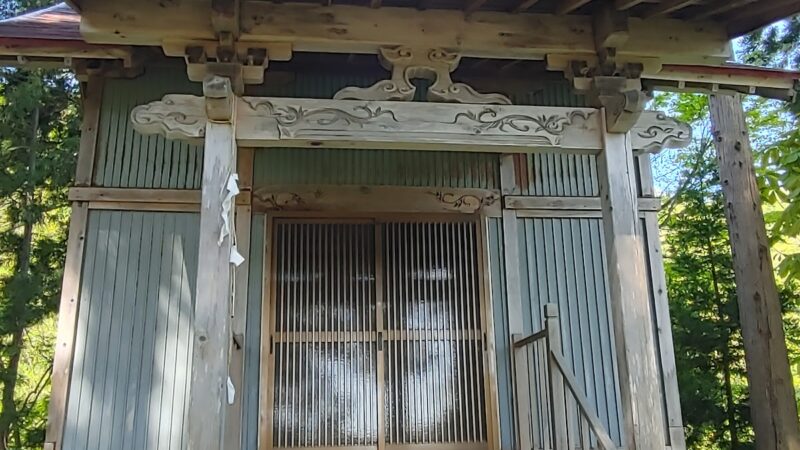
Inari Shrine (Yamamichiue, Shakanai, Odate City, Akita Prefecture) Complete Guide | History, Deities, and Access Information
Located in Yamamichiue, Shakanai, Odate City, Akita Prefecture, the Inari Shrine is a historical shrine that attracts the faith of the local community. Among the approximately 2,655 Inari shrines nationwide, it stands in the unique region of Odate City in northern Akita Prefecture, preserving its distinctive culture and traditions. This article provides a detailed introduction to the charm of this community-rooted shrine, covering everything from basic information and history to its enshrined deities, annual events, and access methods.
Basic Information about Inari Shrine
Location and Contact Information
Address: 28 Yamamichiue, Shakanai, Odate City, Akita Prefecture 017-0012
Corporate Number: 5410005002994
Religious Corporation Classification: Shrine under the Association of Shinto Shrines
Inari Shrine is located in the Shakanai area of Odate City, Akita Prefecture. As the place name Yamamichiue suggests, it is situated in a quiet environment on a slightly elevated area. The Shakanai area is located northeast of the center of Odate City and has long been a place where people have lived a life centered on agriculture.
Deities and Divine Virtues
The main deity enshrined at Inari Shrine is Ukanomitama-no-kami. This is the central deity of Inari worship and is believed to bestow blessings such as abundant harvests, business prosperity, and family safety.
In Japanese mythology, Ukanomitama-no-kami is considered a child of Susanoo-no-Mikoto, and “Uka” is an archaic word meaning grain or food. In Odate City, Akita Prefecture, a region known for its thriving agriculture, this deity has long been deeply revered as a god prayed to for abundant harvests.
Main Divine Virtues:
- Abundant harvests and agricultural prosperity
- Business success and venture success
- Family safety and protection from evil
- Good fortune and prosperity
Characteristics of Odate City and Shakanai Area, Akita Prefecture
Overview of Odate City
Odate City, Akita Prefecture, is a city located in the northern part of Akita Prefecture with a population of approximately 70,000 (as of 2023). With approximately 30,000 households, it is the third largest city in Akita Prefecture after Akita City and Yokote City.
Characteristics of Odate City:
- Hometown of the Akita Inu: Known as the birthplace of Hachiko, the loyal dog, the city is dedicated to the preservation and promotion of the Akita Inu breed.
- Birthplace of Kiritanpo: Famous as the birthplace of “kiritanpo,” a representative local dish of Akita Prefecture.
- History of Mining: The city once flourished with mining, including the Osarizawa Mine.
- Abundant Nature: A region blessed with beautiful natural surroundings, including Lake Towada and Hachimantai.
History and Culture of the Shakanai Region
The place name Shakanai is a rare name derived from Buddhism. A unique religious culture has been deeply rooted in this region since ancient times, reflecting a history of syncretism between Shinto and Buddhism.
The Shakanai region is located in the northeastern part of Odate City, and is dotted with settlements centered on agriculture. Many small place names (koaza) derived from topography and geographical features remain, such as Yamamichiue, Shihoishi, Yokosekishita, and Yokonagane, conveying the form of the local community formed over a long history.
Population Dynamics of the Shakanai Area:
In the Reiwa era, like many regional cities, the area is experiencing population decline and aging, but efforts to preserve the region’s traditional culture continue. The maintenance and management of the shrine and the continuation of festivals by local residents play an important role in strengthening community bonds.
History and Origins of Inari Shrine
Circumstances of Founding
The exact founding date of Inari Shrine is unknown as no records remain, but based on local oral traditions and the surrounding historical background, it is estimated to have been founded during the mid-to-late Edo period.
The Odate region in northern Akita Prefecture was under the control of the Akita Domain (Kubota Domain) during the Edo period, and agriculture flourished, taking advantage of the fertile land in the Yoneshiro River basin. The Inari faith, which prays for a bountiful harvest, spread in response to the earnest wishes of farmers, and Inari shrines were built in each village.
Spread of Inari Faith
Inari faith is a representative Japanese faith that spread throughout the country, with Fushimi Inari Taisha in Kyoto as its head shrine. During the Heian period, the faith spread among the imperial court and nobility, and from the medieval period onward, it permeated among samurai and commoners.
In Akita Prefecture, Inari faith became established throughout the Edo period, and it came to be widely worshipped as the god of bountiful harvests in rural areas and as the god of business prosperity in castle towns and commercial areas. There are several Inari shrines in Odate City, and each region has developed its own unique form of worship.
Changes After the Meiji Era
The Meiji-era decree separating Shinto and Buddhism brought about significant changes to shrines throughout the country. Shrines and temples were clearly distinguished, and shrines were incorporated under the system of State Shinto.
Inari shrines were also established within the modern shrine system and registered as religious corporations. Following the enactment of the Religious Corporations Law after World War II, they were assigned the current corporate number 5410005002994 and are operated as shrines under the jurisdiction of the Association of Shinto Shrines.
The “Ningyo-sama” Worship in Matsumine Village
What is the Dōsojin “Ningyo-sama”?
At the Inari Shrine located in the Matsumine village of Shakanai, Ōdate City, a Dōsojin called “Ningyo-sama” is enshrined as a special object of worship. This is one of the folk beliefs unique to the Tohoku region, and it has been revered as a guardian deity of the area.
Dōsojin are enshrined at village boundaries and crossroads, and are considered gods that protect against external calamities and safeguard the safety and prosperity of the village. The name “Ningyo-sama” is thought to originate from the word “ningyo” (doll), suggesting that a doll-like deity was used as a vessel for the god.
The Ningyo-sama Festival
Every year in late November, the Ningyo-sama Festival is held in the Matsumine settlement. This festival has been passed down for many years as an important annual event in the region.
Festival Characteristics:
- Timing: Late November (after the harvest, when agricultural work is mostly finished)
- Purpose: Gratitude for the year’s harvest, prayers for a bountiful harvest next year, and prayers for the safety of the community
- Participants: Primarily residents of the Matsumine settlement, along with people from the Shakanai area
- Contents: Traditional Shinto rituals, celebratory feasts, etc.
This festival is more than just a religious event; it strengthens the bonds of the local community and serves as a place for intergenerational exchange. In rural areas with aging populations, the continuation of such traditional events plays an important role in maintaining the vitality of the region.
Dōsojin Faith in Akita Prefecture
In Akita Prefecture and other parts of the Tohoku region, Dōsojin faith has developed in a unique way. In areas with particularly heavy snowfall, there is a strong tendency for people to cherish the worship of Dōsojin (roadside guardian deities) as gods who protect settlements from the harshness of winter.
Ōdate City is located in a heavy snowfall area, and in some years, snow accumulation exceeds 2 meters during the winter. In this harsh natural environment, people have offered prayers to gods and Buddhas, strengthening the bonds of their communities. The worship of Ningyo-sama (a type of guardian deity) has also been nurtured within this region’s history and culture.
Shrine Culture of Ōdate City, Akita Prefecture
Overview of Shrines in Ōdate City
As of 2023, there are currently 83 shrines in Ōdate City, Akita Prefecture. This represents approximately 7.3% of the total 1,138 shrines in Akita Prefecture, making it one of the areas with a high density of shrines relative to its population.
Major Shrines in Odate City:
- Odate Shinmei Shrine: A shrine revered as the guardian shrine of Odate City.
- Hachiman Shrine: Located in multiple areas, worshipped as the god of military fortune and agriculture.
- Inari Shrine: Scattered throughout the city, each attracting worshippers in its respective region.
- Yama Shrine: A shrine dedicated to the mountain god, where prayers are offered for safety in forestry and hunting.
Nationwide Ranking of Inari Shrines
There are approximately 2,655 shrines with the name “Inari Shrine” nationwide, making it the second most numerous shrine name (the most numerous being Hachiman Shrine with approximately 7,800). This indicates that Inari worship is widely prevalent throughout Japan.
Numerous Inari shrines also exist within Akita Prefecture, each developing its own unique form of worship in its respective region. The Inari Shrine in Yamamichiue, Shakanai, Odate City, is also part of this nationwide network of Inari worship.
Shrine Statistics in Akita Prefecture
Akita Prefecture has 1,138 shrines in total, placing it in the middle of the rankings for the number of shrines among prefectures. Akita Prefecture’s area is approximately 11,638 square kilometers. While the number of shrines per unit area is slightly below the national average, this is influenced by the large amount of mountainous and forested land.
Number of Shrines by Municipality in Akita Prefecture (Major Cities):
- Akita City: Approximately 200 shrines
- Odate City: 83 shrines
- Yokote City: Approximately 150 shrines
- Yurihonjo City: Approximately 180 shrines
Looking at the number of shrines per capita, Akita Prefecture exceeds the national average, indicating that shrines play an important role in the religious life of the region.
How to Access Inari Shrine
Access by Public Transportation
Using the JR Ou Main Line:
- Get off at JR Odate Station
- Take an Akita Kita Bus or taxi from the station.
- Travel for approximately 15 minutes towards Shakanai.
- Walk for approximately 10-15 minutes from the nearest bus stop.
Odate Station is approximately 4 hours and 30 minutes from Tokyo by Shinkansen and local trains, and approximately 1 hour from Akita Station by limited express train.
Access by Car
Via Tohoku Expressway:
- Exit at Odate Kita IC
- Take National Route 7 towards Odate city center
- Turn onto the prefectural or municipal road towards Shakanai area
- Head towards Yamamichiue area (approximately 15-20 minutes)
Via Akita Expressway:
- Exit at Odate Noshiro Airport IC
- Take National Route 103 towards Odate city center
- Head towards Shakanai area (approximately 20-25 minutes)
Parking: Depending on the size of the shrine, a dedicated parking lot may not be available. Please be considerate of local residents when visiting.
Geographical Information of the Surrounding Area
Shakanai, Yamamichiue, where Inari Shrine is located, is approximately 5-7 kilometers northeast of Odate city center. The surrounding area is a typical rural region with a mix of farmland and residential areas, and several small hamlets such as Shioishi, Yokosekishita, Yokonagane, and Inariyamashita are located close together.
Topographically, it is situated on gently rolling hills and is fertile land fed by tributaries of the Yoneshiro River system. From spring to autumn, a picturesque rural landscape unfolds, while in winter, it becomes a tranquil scene covered in snow.
Etiquette and Manners for Worship
Basic Worship Etiquette
There are traditional customs for visiting shrines. When visiting Inari Shrine, observing the following basic etiquette will allow for a more heartfelt visit.
Procedure for Worship:
- Bow before passing through the torii gate: This shows respect when entering the sacred area.
- Walk along the edge of the path: The center of the path is considered the path of the gods.
- Purify yourself at the water basin: Purify in the order of left hand → right hand → mouth → left hand.
- At the front of the main hall: Place your offering, ring the bell, bow twice, clap twice, and bow once.
- Bow again at the torii gate when leaving: This expresses gratitude.
Unique Worship Practices at Inari Shrines
At Inari shrines, foxes are considered messengers of the gods. Many Inari shrines have fox statues, which are also objects of worship.
Offerings:
Traditional offerings to Inari shrines include fried tofu and rice stalks. This stems from the fact that Inari is the god of agriculture. However, be sure to follow the shrine’s regulations regarding offerings and remember to take them home with you.
Considerations When Visiting Local Shrines
When visiting community-oriented shrines like the Inari Shrine in Shakanai, please be mindful of the following points:
- Respect for Local Residents: Be aware that the area around the shrine is a residential area and be considerate of noise and illegal parking.
- Photography Etiquette: Photography of the shrine architecture and grounds is permitted, but please be considerate of festivals and the privacy of local residents.
- Maintaining Cleanliness: Always take your trash with you and maintain the cleanliness of the grounds.
- No Unauthorized Entry: Do not enter restricted areas such as the shrine office or main hall.
Nearby Attractions and Tourist Information
Major Tourist Spots in Odate City
Here are some tourist spots in Odate City that you might want to visit along with your visit to the Inari Shrine.
Akita Dog Village:
A tourist exchange facility that opened in 2019 in front of Odate Station. It features exhibits of Akita dogs and a space where you can actually interact with them. There are also extensive exhibits about the life of Hachiko, the loyal dog.
Odate Jukai Dome:
One of the world’s largest wooden dome structures. A beautiful building made extensively with Akita cedar, it hosts various events and exhibitions.
Birthplace of Kiritanpo:
Odate City is known as the birthplace of kiritanpo, and there are numerous kiritanpo specialty restaurants in the city. You can enjoy the authentic taste.
Odate Local History Museum:
A museum where you can learn about the history and culture of Odate City. Exhibits include local history and folklore materials from the Jomon period to the present day.
The Charm of the Shakanai Area
The Shakanai area is a region within Odate City that particularly retains its rural landscape.
Seasonal Scenery:
- Spring: Cherry blossoms and plum blossoms bloom, and preparations for rice planting begin.
- Summer: Lush green rice paddies stretch out, and it’s festival season.
- Autumn: Golden rice stalks ripen, and it’s a time filled with the joy of harvest.
- Winter: The shrine is enveloped in silence amidst a blanket of snow.
Local Specialties:
Odate City, including the Shakanai area, is known for producing high-quality rice. Hinai chicken and tonburi (field caviar) are also representative local products of Akita Prefecture.
Nearby Shrines and Temples
There are 83 shrines within Odate City. Visiting them, along with the Inari Shrine in Shakanai, will allow you to gain a deeper understanding of the region’s religious culture.
Major Nearby Shrines:
- Odate Shinmei Shrine (Central Odate City)
- Hachiman Shrine (Various Districts)
- Other Inari Shrines (Iwase District, etc.)
Each shrine has its own unique history and characteristics, attracting the faith of the local people.
Shrine Culture and Beliefs in Akita Prefecture
Characteristics of Shrine Beliefs in the Tohoku Region
Shrine beliefs in the Tohoku region have characteristics deeply intertwined with the harsh natural environment. For the people of Tohoku, who have historically faced many difficulties such as heavy snowfall, cold damage, and famine, shrines were places of prayer and the center of the community.
Characteristics of Shrine Worship in Tohoku:
- Strong Nature Worship: A belief system that sanctifies mountains, rivers, and large trees.
- Importance of Prayers for a Bountiful Harvest: Due to a history of suffering from cold damage, prayers for abundant harvests are deeply felt.
- Coexistence of Dōsojin and Jizō Worship: A strong remnant of syncretism between Shinto and Buddhism remains.
- Community-Based Rituals: A tendency for each small community to have its own shrine.
Folk Beliefs of Akita Prefecture
Akita Prefecture retains many unique folk beliefs.
Namahage:
A traditional event of the Oga Peninsula, registered as a UNESCO Intangible Cultural Heritage. It is a type of visiting deity belief, based on the belief that gods visit at the turn of the year.
Kantō Festival:
A summer tradition of Akita City. A festival praying for a bountiful harvest and protection from evil, the highlight is the skillful manipulation of the giant Kanto lanterns.
Inukko Festival:
A traditional winter event in Yuzawa City. Snow sculptures of dogs are displayed, and prayers are offered for protection against theft and for the safety of the household.
Many of these folk events are closely linked to Shinto beliefs and are important elements in forming the region’s identity.
The Role of Shinto Shrines in Modern Times
In Akita Prefecture, which is experiencing population decline and aging, Shinto shrines play a role beyond that of mere religious institutions.
As a Community Core:
Festivals and cleaning activities centered around shrines serve as places for interaction among local residents and play a role in maintaining a sense of community.
As a Center for Cultural Transmission:
Through traditional rituals and events, shrines have an educational function in passing on the history and culture of the region to the next generation.
As a Tourism Resource:
Local shrines are also attracting attention as tourism resources that convey the unique history and culture of the area.
Annual Events at Inari Shrines
Main Festivals and Events
At Inari shrines, various festivals and events are held throughout the year. While varying in scale, each of these events holds significant meaning in the religious life of the region.
Hatsumode (January 1st-3rd):
A visit to the shrine to welcome the new year and pray for safety and prosperity throughout the year. Local people visit with their families.
Spring Festival (April-May):
A festival celebrating the arrival of spring and praying for a bountiful harvest. Held to coincide with the start of agricultural work.
Natsukoshi no Harae (Late June-Early July):
A Shinto ritual to purify oneself of the impurities accumulated over the past six months and pray for good health and protection from illness for the remaining half of the year.
Autumn Festival (September-October):
An important festival offering thanks for the harvest. A vital local event celebrating the fruitful autumn.
Ningyo-sama Festival (Late November):
As mentioned above, a traditional event unique to the Matsumine settlement. Offerings of gratitude and prayers to the Dōsojin (roadside guardian deity).
Daily Life of Faith
Local people have connections with the shrine not only through festivals but also in their daily lives.
- Monthly Visits: The custom of visiting regularly, such as on the 1st or 15th of each month.
- Life Cycle Rituals: First shrine visit for a newborn, Shichi-Go-San (7-5-3) festival, exorcism, etc.
- Daily Prayers: Family safety, traffic safety, academic success, etc.
These daily practices of faith strengthen the bond between the shrine and the community.
Preservation and Future of Inari Shrines
Challenges in Maintaining Shrines
Small-scale local shrines face various challenges in modern times.
Population Decline and Decreasing Number of Parishioners:
Akita Prefecture is one of the regions in Japan with a particularly serious population decline. The decrease in parishioners (local residents who support the shrine) directly impacts the maintenance and management of the shrine.
Aging Population:
The aging of those who carry out festivals and maintain the shrine is making it increasingly difficult to pass on traditions.
Financial Challenges:
Repairing shrines and holding festivals incurs costs, but the declining number of parishioners has weakened the financial base.
Regional Initiatives
Meanwhile, various initiatives are being undertaken to address these challenges.
“Akita Genki Mura” Project:
This regional revitalization project promoted by Akita Prefecture introduces and supports the preservation and transmission of local traditional culture, such as the Ningyo-sama Festival in the Shakanai area.
Passing on to Younger Generations:
Efforts are being made to pass on the history and traditions of the region to children through school education and local events.
Utilization as a Tourism Resource:
Attempts are underway to position local shrines and festivals as tourism resources to attract visitors from outside the area.
For a Sustainable Shrine Culture
Diverse approaches are necessary to pass on the local shrine culture to future generations.
Collaboration Within and Outside the Region:
It is important to expand the circle of support not only with local residents, but also with people from outside the region who have an interest in the area.
Utilization of Digital Technology:
Digitizing and widely disseminating records of the shrine’s history and festivals can increase interest among the public.
Flexible Management:
Exploring flexible management methods that adapt to the times while preserving tradition enhances sustainability.
Summary: A Place of Worship Rooted in the Community
The Inari Shrine, located in Yamamichiue, Shakanai, Odate City, Akita Prefecture, is one of many Inari shrines throughout Japan, but it is a valuable place of worship with a history and culture unique to this region.
As a god of abundant harvests and a guardian deity of the region, this shrine has received people’s prayers for many years, and has played a role as a core of the local community, going beyond being merely a religious facility. In particular, the “Ningyo-sama” faith of the Matsumine settlement is carefully preserved as a unique culture of this region.
Despite facing challenges such as population decline and an aging population, the traditions continue to be passed down through the efforts of the local people. The religious culture nurtured within Akita Prefecture’s rich natural environment and history teaches us the importance of community bonds and the profound wisdom and prayers of our ancestors.
Visiting an Inari shrine is not merely sightseeing; it’s a valuable opportunity to connect with the region’s history and culture and experience the lives of the people who live there. When you visit Odate City, we highly recommend visiting this tranquil shrine and experiencing the rich religious culture of northern Akita Prefecture.