Kumata Shrine (Osaka Prefecture) Complete Guide | A Thorough Explanation of History, Deities, Important Cultural Properties, and the Charm of the Danjiri Festival
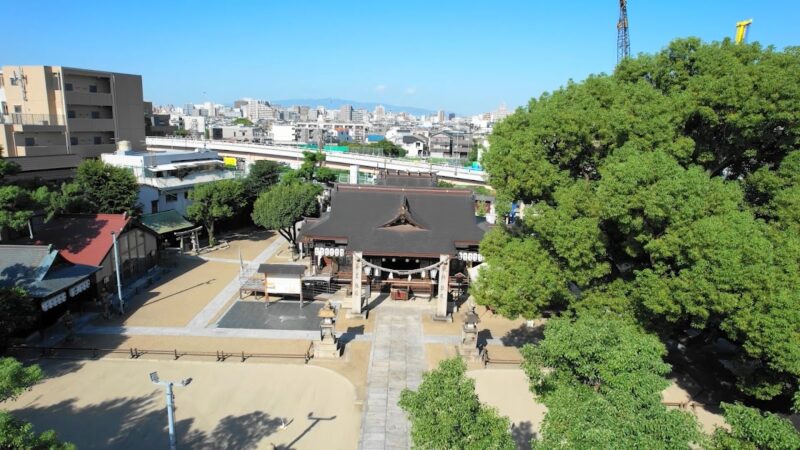
Kumata Shrine, located in Hirano-Miyamachi, Hirano-ku, Osaka City, is a historic shrine founded in 862 AD during the early Heian period. Formerly a prefectural shrine, it served as the tutelary shrine of the Sakagami clan and the guardian shrine of Hirano-go town, affectionately known as “Omiya-san” and deeply revered by the local people.
With its three main halls designated as important national cultural properties, the nation’s only renga (linked verse) hall, and the Hirano Danjiri Festival (Kumata Festival) held every July, this shrine is brimming with historical and cultural value. This article provides a thorough explanation of Kumata Shrine, from its history and highlights to its festivals and access methods.
Table of Contents
- History and Origin of Kuwata Shrine
- About the Enshrined Deity
- Highlights of the Shrine Grounds
- The Three Halls, Nationally Designated Important Cultural Properties
- The Only Renga (Linked Verse) Hall in Japan
- Hirano Danjiri Festival (Kuwata Festival)
- Other Festivals and Annual Events
- Access and Parking Information
- Etiquette and Benefits of Worship
- Nearby Tourist Spots
History and Origin of Kuwata Shrine
Founding History
The founding of Kuwata Shrine dates back to the early Heian period, specifically to Jogan 4 (862). It is said that Sakanoue Todo, the grandson of Sakanoue Tamuramaro, a famous Shogun, received a divine oracle from Gozu Tenno and enshrined Susanoo-no-Mikoto as the tutelary deity.
Sakanoue no Hirono Maro, son of Sakanoue no Tamuramaro, was granted the territory of Kumata-no-sho in this area, and his son, Tomoyuki, founded the Gion Shrine (the current First Main Hall). The place name “Kumata” is the origin of the shrine’s name.
Deep Connection to Hirano-go
Kumata Shrine played a central role in the local community as the guardian shrine of Hirano-go, which flourished from the medieval to the early modern period. Hirano-go developed as a moated settlement and was a self-governing city that prospered through commerce and industry. Kumata Shrine was revered as the guardian deity of the entire Hirano-go area and served as a spiritual pillar of the region.
Connection to Kumano Faith
The Second and Third Main Halls enshrine the Kumano Sansho Gongen, and were formerly known as “Kumano Gongen Shrine” and “Kumano Sansho Gongen.” Influenced by the Kumano faith, which spread throughout Japan from the late Heian period to the Kamakura period, the second and third main halls were constructed in Eisho 10 (1513).
This fusion of Kumano and Gion faiths is one of the major characteristics of Kuwata Shrine.
Developments since the Modern Era
Kuwata Shrine was greatly affected by the Meiji-era separation of Shinto and Buddhism. Under the old shrine ranking system, it was ranked as a Prefectural Shrine, positioning it as an important shrine within Osaka Prefecture.
During the Great Osaka Air Raid of 1945, the surrounding area suffered extensive damage, but miraculously, the main halls of Kuwata Shrine escaped the flames and have been preserved as valuable historical buildings to this day.
About the Enshrined Deities
Kuwata Shrine has three main halls, each enshrining a different deity.
Deities enshrined in the First Main Shrine
Susanoo-no-Mikoto is enshrined as the principal deity. Susanoo-no-Mikoto is a heroic god in Japanese mythology, known for the legend of slaying Yamata-no-Orochi, and is believed to have the divine power of warding off evil, eradicating disease, and matchmaking.
He is also syncretized with Gozu Tenno and is a central deity of Gion faith. He is the oldest enshrined deity, worshipped since the shrine’s founding.
Deities enshrined in the Second Main Shrine
Izanami-no-Mikoto, Hayatama-no-Mikoto, and Kotosaka-no-Mikoto are enshrined here, and are revered as the Kumano Sanjo Gongen.
Izanami-no-Mikoto is a goddess appearing in the creation myth of Japan, and is believed to have the divine power of safe childbirth, child-rearing, and matchmaking. Hayatamao-no-Mikoto and Kotoshikao-no-Mikoto are important deities in Kumano faith.
Deities enshrined in the Third Main Hall
Izanagi-no-Mikoto is the principal deity, enshrined as Kumano Shojo Gongen.
Izanagi-no-Mikoto is the husband of Izanami-no-Mikoto and is the creator god who gave birth to the land of Japan and many gods. He is believed to bestow blessings of marital harmony, family safety, and good fortune.
Worship of a Married Couple
Izanami-no-Mikoto, enshrined in the Second Main Hall, and Izanagi-no-Mikoto, enshrined in the Third Main Hall, are a married couple, and Kuwata Shrine is known as a power spot for matchmaking and marital harmony. The arrangement of enshrining this married couple and their child, Susanoo-no-Mikoto, symbolizes family bonds and the prosperity of descendants.
Highlights of the Shrine Grounds
Torii Gate and Approach
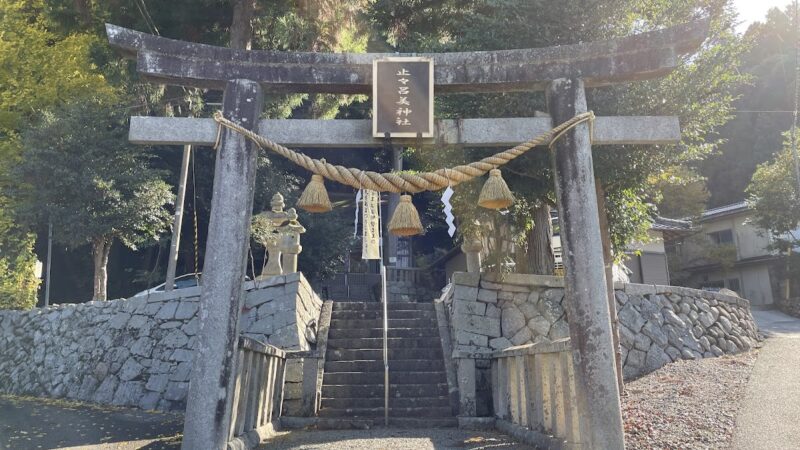
The main torii gate of Kuwata Shrine faces the Miyamae intersection on National Route 25 (the old Nara Road), creating a solemn atmosphere despite its urban location. Passing through the torii gate, a lush, green approach leads to the main shrine.
Worship Hall
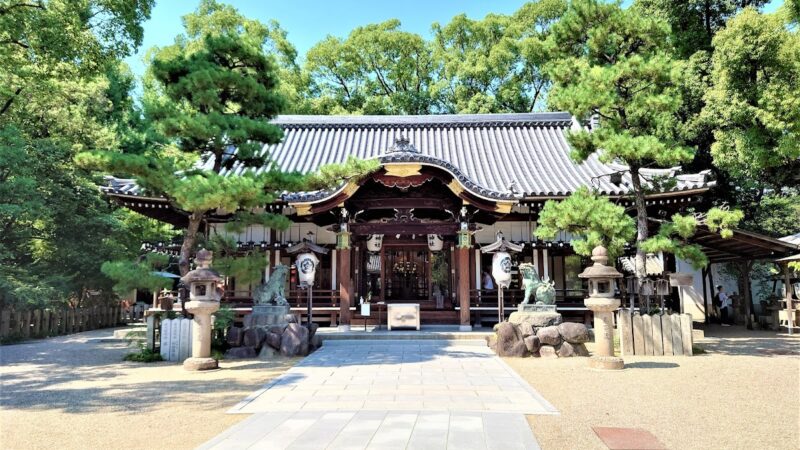
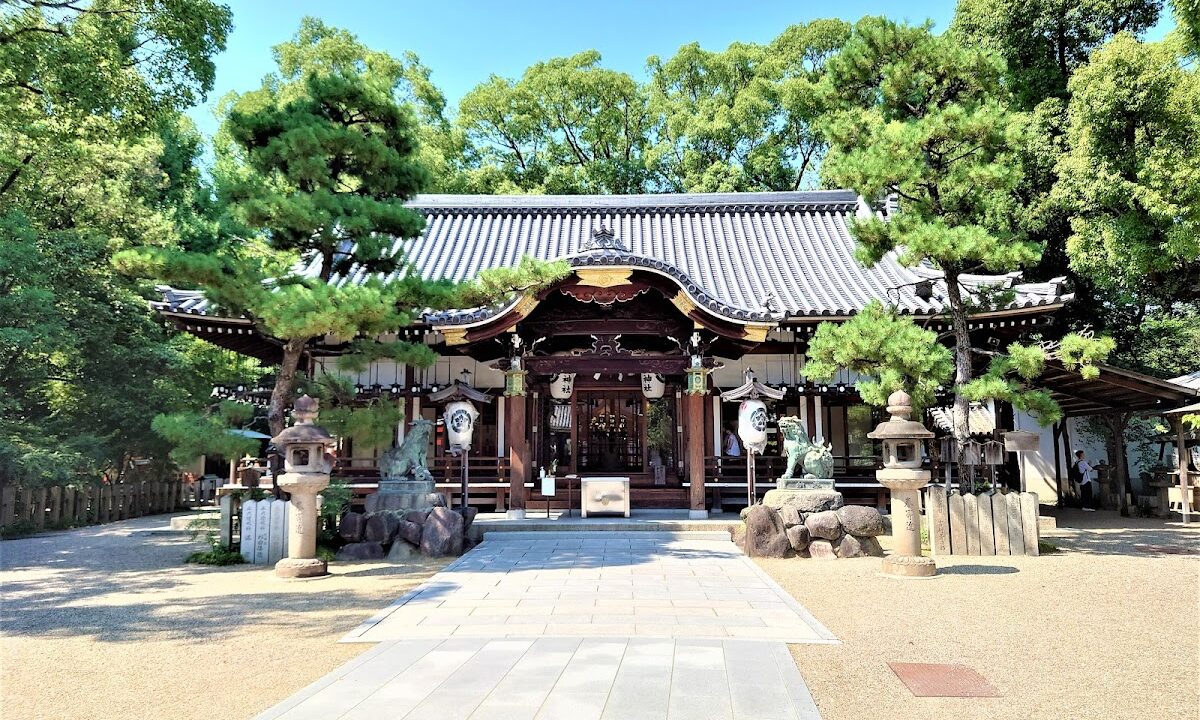
At the end of the approach is a magnificent worship hall, where worshippers pay their respects to the three main shrines. The architectural style of the worship hall is impressive, allowing visitors to appreciate the beauty of traditional shrine architecture.
Power Spot of Giant Trees
The shrine grounds contain several giant camphor trees (Kusunoki), estimated to be several hundred years old, creating a mystical atmosphere. These giant trees are also known as power spots, and many worshippers clasp their hands together in front of them, feeling the energy of nature.
In particular, the large camphor tree behind the main shrine has an overwhelming presence and is revered as a sacred tree that has watched over a long history.
Water Basin
At the water basin located along the approach to the shrine, you can purify your mind and body with pure water. Before praying, be sure to purify yourself and compose yourself before proceeding to the main shrine.
Shrine Office/Amulet Shop
The shrine office on the grounds offers goshuin (stamped seals), amulets, and ema (votive tablets). The original amulets of Kuwata Shrine, with their designs reflecting local traditions, are very popular.
Three Nationally Designated Important Cultural Properties
The greatest highlight of Kuwata Shrine is its three main shrines, designated as Nationally Important Cultural Properties. These are the oldest wooden buildings in Osaka City and possess extremely high historical and cultural value.
First Main Shrine (Gion Shrine)
This is the oldest shrine building, dating back to the shrine’s founding in 862 (Jogan 4), and enshrines Susanoo-no-Mikoto. While there are various theories regarding its construction date, it strongly retains the architectural style of the Muromachi period.
The first main shrine is built in the Ikkensha Kasuga-zukuri style, with a beautifully curved cypress bark roof. The intricate carvings and decorations are exquisite, showcasing the advanced architectural techniques of the time.
Second Main Shrine (Kumano Sansho Gongen)
This shrine has clear construction records from Eisho 10 (1513) and, like the first main shrine, is built in the Ikkensha Kasuga-zukuri style with a cypress bark roof. It is remarkable that a building over 500 years old is preserved in such good condition.
It enshrines Izanami-no-Mikoto and the Kumano Sansho Gongen, reflecting the strong influence of Kumano faith.
Third Main Shrine (Kumano Shosei Gongen)
Like the second main shrine, this shrine was built in Eisho 10 (1513) and enshrines Izanagi-no-Mikoto. The architectural style is the same as the first and second main shrines: a one-bay Kasuga-zukuri style with a cypress bark roof.
The arrangement of the three main shrines side by side is called the “Three Shrines Arranged in Parallel style,” a rare shrine layout nationwide. This style reflects the fusion of Kumano and Gion faiths during the era of Shinto-Buddhist syncretism.
History of Designation as Important Cultural Property
The three main shrines have been designated as National Important Cultural Properties in recognition of their historical value and the excellence of their architectural style. They retain well the characteristics of shrine architecture from the Muromachi to Sengoku periods, and as the oldest wooden building group in Osaka City, they are an extremely important cultural asset in architectural history.
Regular preservation and repair work is carried out, and they are carefully protected as a valuable cultural heritage that should be passed down to future generations.
The Only Renga Hall in Japan
One of the notable cultural features of Kuwata Shrine is the existence of the only remaining Renga hall in Japan.
What is Renga?
Renga is a traditional Japanese literary art form in which multiple people gather and compose verses in alternating 5-7-5 and 7-7 syllable patterns. It flourished among samurai, court nobles, and cultural figures from the Muromachi period to the Edo period.
History of the Kuwata Shrine Renga Hall
The Kuwata Shrine Renga Hall was a place where cultural figures of Hirano-go held renga gatherings from the medieval to early modern periods. Hirano-go was a culturally mature region that prospered through commerce and industry, and literary activities, including renga, were thriving.
After the Meiji era, the custom of renga declined nationwide, and many renga halls were lost. However, the Kuwata Shrine Renga Hall has been preserved as a building to this day.
Revival of Renga Gatherings
In 1987 (Showa 62), thanks to the efforts of local cultural figures, the renga gathering was revived as the Hirano Horaku Renga Association. Even today, renga gatherings are held regularly every month, continuing the activities to pass on this traditional literary art. There are also renga (linked verse) gatherings open to the public, offering a valuable opportunity to experience classical Japanese literature. Those interested are encouraged to inquire at the shrine.
Cultural Value
As the only remaining renga hall in Japan, the renga hall at Kuwata Shrine is an extremely important cultural asset in the history of Japanese literature. The building itself has high historical value and is an important component of the shrine grounds.
Hirano Danjiri Festival (Kuwata Festival)
The Hirano Danjiri Festival (Kuwata Festival), the largest festival of Kuwata Shrine, is a summer tradition held annually over four days from July 11th to 14th.
Festival History and Scale
The Kuwata Festival has a long history, continuing since the Edo period as the summer festival of Kuwata Shrine, the guardian shrine of Hirano-go. A total of nine danjiri (floats) from the nine towns of Hirano-go are pulled, making it one of the largest festivals in Osaka City.
Festival Schedule
- July 11th (Eve of the Festival): Each town’s danjiri float is pulled through the town, marking the start of the festival.
- July 12th: Preparations for entering the shrine and the floats are pulled through the town.
- July 13th (Main Festival): The grandest day, when all nine danjiri floats enter the Kuwata Shrine.
- July 14th (Post-Festival Celebration): The floats are pulled through the town one last time, bringing the festival to a close.
Characteristics of the Danjiri Floats
Hirano’s danjiri floats are of the Osaka type, distinct from the Kishiwada type, and are characterized by the fact that no one rides on the roof. They are adorned with elaborate carvings and decorations, and each town’s danjiri float has its own unique character.
During the procession, the unique chant of “Sorya, sorya” is accompanied by the resounding sounds of flutes and drums, creating a magnificent and spirited atmosphere.
Highlights of the Shrine Entry
On the 13th, the main day of the festival, nine danjiri floats enter the Kuwata Shrine one after another. The shrine grounds are filled with many spectators, creating an atmosphere of excitement and enthusiasm.
The moment the danjiri floats pass through the torii gate and the turning maneuver within the shrine grounds (known as “yarimawashi”) are the festival’s greatest highlights.
Traffic Restrictions
During the festival, large-scale traffic restrictions will be in place on National Route 25 around Kuwata Shrine. Especially during the shrine entry time on the 13th, major roads will be closed, so it is recommended to avoid visiting by car and use public transportation.
Connection to the Community
The Hirano Danjiri Festival is not merely a tourist event; it is an integral part of the identity of the people of Hirano-go. Through festivals, community bonds deepen, and intergenerational exchanges are fostered. Local children also participate in the festivals, ensuring the continuation of traditional culture.
Other Festivals and Annual Events
Besides the Danjiri Festival, Kuwata Shrine holds various festivals and events throughout the year.
New Year’s Visit (January 1st-3rd)
Many worshippers visit the shrine for their first shrine visit of the new year. From New Year’s Day to the third day, the shrine is bustling with people praying for family safety, business prosperity, academic success, and more.
Setsubun Festival (Around February 3rd)
On Setsubun, a bean-throwing ceremony is held to ward off evil and bring good fortune. Local people participate, throwing beans while chanting “Demons out, fortune in!”
Summer Purification Ceremony (June 30th)
This is a Shinto ritual to purify and cleanse away the sins and impurities accumulated over the past six months. A ritual of passing through a ring of reeds is performed to pray for good health and protection from illness.
Autumn Festival (October)
An autumn festival is held to give thanks for the harvest. Prayers are offered for a bountiful harvest, and sometimes Kagura (sacred dance) and other offerings are performed.
Shichi-Go-San (November)
Shichi-Go-San visits are held to celebrate the growth of children. Many families dress formally and visit the shrine, taking commemorative photos.
Year-End Purification Ceremony (December 31st)
As a conclusion to the year, a Shinto ritual is performed to purify and cleanse away sins and impurities. It is an important event for welcoming the new year with a refreshed spirit.
Monthly Festival
Monthly festivals are held on the 1st and 15th of each month, praying for the well-being of parishioners and worshippers, and for peace in the community.
Access and Parking Information
Location
2-1-67 Hirano-Miyamachi, Hirano-ku, Osaka City, Osaka Prefecture 547-0046
Access by Train
Using the JR Yamatoji Line
- Get off at Hirano Station on the JR Yamatoji Line, approximately 5 minutes on foot from the South Exit
- Hirano Station is easily accessible, approximately 10 minutes from Tennoji Station on the Osaka Loop Line.
Using the Osaka Metro
- Get off at Hirano Station on the Osaka Metro Tanimachi Line, approximately 5 minutes on foot from Exit 4
- Convenient access from Umeda and Tennoji areas.
Access by Bus
- Immediately accessible from the “Kuwata Shrine” bus stop on the Osaka City Bus
- Multiple bus lines serve this stop, providing access from surrounding areas.
Access by Car
From Major Roads
- Located at the Miyamae intersection on National Route 25 (formerly Nara Road)
- Approximately 5 minutes from the Hirano Exit of the Hanshin Expressway Route 14 Matsubara Line
Parking Information
There is a parking lot for visitors on the shrine grounds, but the number of spaces is limited. Please note that cars can only enter from the torii gate facing the Miyamae intersection on National Route 25.
Congestion is expected during festivals and weekends, so we recommend using public transportation whenever possible. Especially during the Hirano Danjiri Festival, traffic restrictions are in place, making train access essential.
Nearby Parking
There are several coin-operated parking lots around the shrine, but they are often full on holidays and during festivals, so please try to arrive early.
Etiquette and Benefits of Worship
Etiquette of Worship
When visiting Kuwata Shrine, please observe the following etiquette:
- Passing Through the Torii Gate: Bow before passing through the torii gate. Walk along the edges of the approach to the shrine, as the center is the path for the gods.
- Purify yourself at the water basin: Purify your left hand, then your right hand, then your mouth, and finally your left hand.
- Bow at the main hall: Gently place your offering in the offering box and ring the bell.
- Two bows, two claps, one bow: Bow deeply twice, clap twice, and finally bow deeply once.
- Exit: Turn around and bow once after leaving the torii gate.
Main Benefits
At Kuwata Shrine, the following benefits are believed to be available due to the divine virtues of the enshrined deity.
- Protection from Evil and Disaster: The powerful divine virtue of Susanoo-no-Mikoto in warding off evil.
- Prayer for the Eradication of Plagues and Good Health: The power of Gozu Tenno in warding off plagues.
- Matchmaking and Marital Harmony: The protection of the divine couple Izanagi-no-Mikoto and Izanami-no-Mikoto.
- Safe Childbirth and Child-Rearing: The maternal divine virtue of Izanami-no-Mikoto.
- Family Safety and Prosperity of Descendants: Protection of the entire family by the three enshrined deities.
- Good Fortune and Business Prosperity: The guardian deity as the general guardian of Hirano-go.
About Goshuin (Shrine Seals)
At Kuwata Shrine, in addition to the regular goshuin, special goshuin are sometimes given out for seasonal or festival periods. Those with a goshuincho (seal book) can receive them at the shrine office.
The offering fee is usually around 300 to 500 yen. The meticulous calligraphy and vermilion seal are beautiful, making it a popular souvenir of your visit.
Nearby Tourist Attractions
When visiting Kuwata Shrine, we recommend also visiting the nearby historical sites.
Hirano-go Townscape
Around Kuwata Shrine, you can find a townscape that retains the atmosphere of the former moated settlement, Hirano-go. Old merchant houses and townhouses are scattered throughout, making it a great place for a historical stroll.
Dainenbutsu-ji Temple
Located in Hirano Ward, this is the head temple of the Yuzu Nenbutsu sect and a large, ancient temple with extensive grounds. It’s within walking distance of Kuwata Shrine, and many people visit both together.
Hirano Park
This park is a local gathering place where you can enjoy seasonal flowers. It’s an ideal resting spot during your stroll.
Choho-ji Temple
An ancient Shingon Buddhist temple, this is one of the temples that tells the history of Hirano-go. You can worship in a peaceful atmosphere.
Hirano Market (Morning Market)
A market featuring fresh local vegetables and ingredients is held regularly. It’s a great opportunity to experience the local food culture.
Summary
Kuwata Shrine is a venerable shrine with a history of over 1160 years. It boasts three nationally designated important cultural properties, the only linked verse (renga) hall in Japan, and the magnificent Hirano Danjiri Festival, making it a hidden gem in Osaka with diverse attractions.
Despite being in an urban area, the shrine grounds are lush with ancient trees, creating a tranquil atmosphere where visitors can find peace of mind during their visit. It’s a valuable place to experience multi-layered history and culture, including the history associated with the Sakagami clan, the fusion of Kumano and Gion faiths, and the cultural traditions of Hirano-go.
The three main halls, the oldest wooden structures in Osaka City, are of great architectural historical importance, and their beautiful appearance is well worth seeing. Furthermore, the Hirano Danjiri Festival, held every July, is a spectacular festival where the passion and traditions of the local people converge, and it’s an event you should definitely experience at least once. With its convenient access, just a 5-minute walk from Hirano Station on the JR and Osaka Metro lines, Kuwata Shrine is a truly appealing location. When sightseeing in Osaka, be sure to visit Kuwata Shrine and experience its history, culture, and the deep faith of the local people.
Kuwata Shrine warmly welcomes visitors seeking various blessings, including protection from evil, matchmaking, and family safety. This shrine, affectionately known as “Hirano’s Omiya-san,” is sure to provide visitors with peace of mind and renewed energy.