
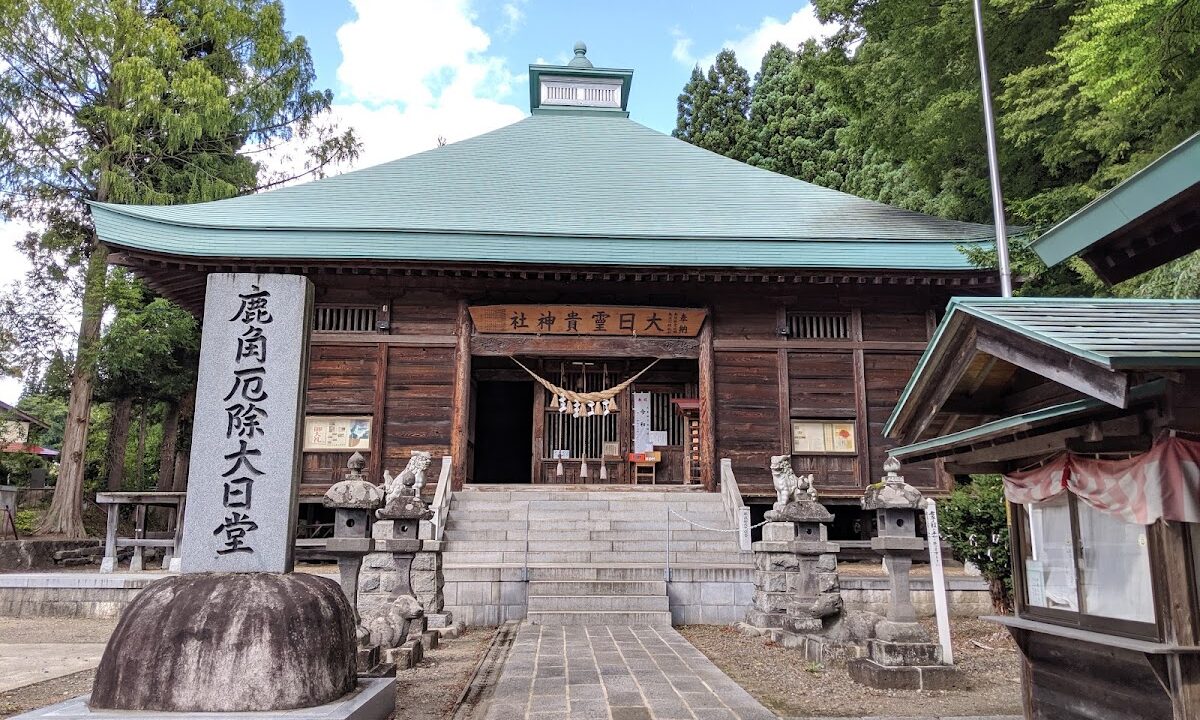
Complete Guide to Ohirumemuchi Shrine (Kazuno City, Akita Prefecture) | The Sacred Site of the UNESCO Intangible Cultural Heritage, Dainichido Bugaku
Located in Hachimantai, Kazuno City, Akita Prefecture, Ohirumemuchi Shrine, affectionately known as “Dainichido” by locals, is a historic shrine. The “Dainichido Bugaku,” performed annually on January 2nd, is registered as a UNESCO Intangible Cultural Heritage and is nationally renowned as a precious folk art that has continued for over 1300 years since the Nara period. This article comprehensively introduces all the information you need to know before visiting Ohirumemuchi Shrine, including its history, enshrined deities, cultural properties, and access information.
Table of Contents
- Overview of Dainichireiki Shrine
- Deities and Divine Virtues
- History and Origin of the Shrine
- Connection to the Danburi Chōja Legend
- Characteristics of the Shrine Architecture
- Dainichidō Bugaku | UNESCO Intangible Cultural Heritage
- Main Events and Festivals
- Designation as a Cultural Property
- Access and Visiting Information
- Nearby Tourist Spots
Overview of Dainichireiki Shrine
Dainichireiki Shrine is located in the Azusawa district of Hachimantai, Kazuno City, Akita Prefecture. It has long been revered by local people as the guardian shrine of the Kazuno region. While its official name is “Dainichireiki Shrine,” it is commonly known as “Dainichidō.”
The shrine’s most distinctive features are its scale, considered one of the largest shrine buildings in Akita Prefecture, and its unique spatial configuration, suitable for performing Bugaku (court dance and music). This shrine has a history of syncretism between Shinto and Buddhism, and features an unusual layout with a temple gate at the entrance, beyond which stands a torii gate. This is a valuable historical relic that conveys the appearance of the shrine before the separation of Shinto and Buddhism in the Meiji era.
Basic Information
- Location: Azusawa, Hachimantai, Kazuno City, Akita Prefecture
- Common Name: Dainichido
- Shrine Rank: Former Village Shrine
- Annual Festival Date: January 2nd (Dainichido Bugaku)
- Main Cultural Properties: Important Intangible Folk Cultural Property (Dainichido Bugaku), UNESCO Intangible Cultural Heritage
Deity and Divine Virtues
The deity enshrined at Dainichireiki Shrine is “Ohirumemuchi-no-kami,” another name for Amaterasu Omikami. This name is also written as “Ohirume-no-mikoto,” and refers to Amaterasu Omikami as the sun goddess.
During the era of syncretism of Shinto and Buddhism, the Buddhist deity Dainichi Nyorai and the Shinto deity Amaterasu Omikami were identified, and the name “Dainichi-do” (大日堂) originates from this form of worship. Therefore, despite being a Shinto shrine, it uses the Buddhist term “do” (堂).
Divine Virtues
- National Peace and Security
- Abundant Harvests
- Good Fortune and Prosperity
- Family Safety
- Protection from Evil
As it enshrines the sun god, it has been worshipped as the source of life force and the power to nurture all things, playing an important role in local communities centered on agriculture.
History and Founding Origins
The history of Dainichi Reikijinja Shrine is ancient, dating back to the reign of Emperor Keitai (early 6th century) according to shrine tradition. The legend of the “Danburi Choja” (団ぶり忠者), a local legend, is deeply involved in the circumstances of its founding.
Founding Legend
According to shrine tradition, during the reign of Emperor Keitai, the Dainichi Jigen Shrine was founded by imperial decree in the second year of the Zenki era (there are various theories regarding the exact year) to commemorate the virtuous deed of a wealthy man who received a sweet spring (reisen) from a highly virtuous individual.
Reconstruction in the 2nd Year of the Yōrō Era
During the reign of Empress Genshō, in the first year of the Yōrō era (717), a sweet spring gushed forth in Mino Province (present-day Gifu Prefecture), and the era name was changed to “Yōrō” due to the virtuous deeds of a filial son. At this time, the story of the wealthy man Danburi, which was passed down in this region, was presented to the imperial court, and Empress Genshō sent the renowned monk Gyōki to the Tohoku region.
It is said that the Dainichi Shrine was rebuilt by Gyōki in the second year of the Yōrō era (718). This period falls in the early Nara period and coincides with the expansion of the imperial court’s influence in the Tohoku region. Gyōki was a high-ranking Buddhist monk known for his missionary work among the common people and for establishing temples and shrines throughout the region.
Changes from the Middle Ages Onward
During the Middle Ages, influenced by Shugendō (mountain asceticism), the syncretism of Shinto and Buddhism intensified. During the Sengoku period (Warring States period), it received the patronage of local warlords, and during the Edo period, it was maintained under the protection of the Nanbu clan. While the Buddhist elements were removed by the Meiji-era separation of Shinto and Buddhism, remnants such as the temple gate still remain.
Connection to the Danburi Chōja Legend
Deeply connected to the founding of Ōhirume Shrine is the “Danburi Chōja Legend,” a local tradition. This legend is a widely circulated folk tale in the northern region of Akita Prefecture and has several variations.
Summary of the Legend
Long ago, a poor young man lived in this area. One day, the young man found a mysterious “danburi” (dragonfly) in the mountains, and following it, he discovered a pure spring gushing from the ground. The legend tells of a spring that produced sweet, sake-like water, which cured the illnesses of those who drank it. A young man, through his virtuous act of sharing the spring’s water with others, eventually became a great wealthy man.
Similarities to the Yōrō Era Change
This legend bears a striking resemblance to the legend of the sweet spring in Mino Province, which gave rise to the Yōrō era change during the Nara period. According to shrine records, when this legend was presented to the imperial court, Empress Genshō was so impressed that she dispatched Gyōki to investigate. This is an interesting example of the intersection of local folklore and central history.
Transmission to the Modern Age
The Danburi Chōja legend is also linked to the origin of the Dainichidō Bugaku dance and has been passed down to the present day as an important element of regional identity. In Kazuno City, this legend is utilized as a tourist resource and is positioned as a core element of local culture.
Characteristics of the Shrine Architecture
The shrine building of Dainichireiki Shrine boasts one of the largest scales among shrine architecture in Akita Prefecture, making it a valuable historical artifact.
Structure of the Worship Hall
The worship hall is specially designed for the performance of Gagaku (court music and dance), featuring a spacious, wooden-floored stage area. The structure is carefully designed to allow for easy movement of the dancers and musicians (known as “Noshu”) and to provide a clear view for the audience.
The high ceiling and excellent acoustics ensure that the sounds of Gagaku resonate beautifully. The pillars and beams are adorned with decorations, conveying a sense of high status.
Main Sanctuary
The main sanctuary is located behind the worship hall and is built in the traditional style of Shinto shrine architecture. It features carvings and vibrant colors, possessing a dignified appearance that speaks of its long history.
Remnants of Shinto-Buddhist Syncretism
The temple gate at the entrance to the grounds is a valuable relic that retains the style of a Buddhist temple. The arrangement of a shrine torii gate standing after passing through the main gate reflects the pre-separation of Shinto and Buddhism. Such a structure is rare nationwide and is considered a landscape of high cultural and historical value.
Dainichido Bugaku | UNESCO Intangible Cultural Heritage
What makes Dainichireiki Shrine famous throughout Japan is the “Dainichido Bugaku” performance, which is dedicated annually on January 2nd.
Overview of Dainichido Bugaku
Dainichido Bugaku is an ancient and elegant form of dance and music said to have been introduced by Gyoki in 718 AD, boasting a history of over 1300 years. It is highly regarded academically as a valuable folk art that preserves the forms of gagaku and bugaku from the Nara period.
Dedication by Noh Performers from Four Villages
The most distinctive feature of Dainichido Bugaku is that it is performed by dancers and musicians called “Noh performers,” selected from four villages: Osato, Azusawa, Nagamine, and Taniuchi. Each village has inherited specific performances for generations, and each village proudly passes down its own repertoire.
On the early morning of the second day of the New Year, Noh performers from each village gather at the shrine and offer various Gagaku (court dance and music) in front of the shrine and inside the hall. This tradition is an important event that strengthens the bonds of the local community, and its transmission to younger generations is actively pursued.
Main Performances
There are several performances in the Dainichido Gagaku, but the following are among the most famous:
Godaisonmai (Dance of the Five Great Deities)
A powerful dance representing the Five Great Wisdom Kings, this performance is performed to ward off evil spirits and pray for a bountiful harvest. The costumes and masks are magnificent, making it a particularly impressive Gagaku performance.
Torimai (Bird Dance)
An elegant dance imitating the movements of birds, this performance is performed to pray for a good harvest. It is characterized by its light movements and beautiful costumes.
Other Performances
Each village has its own traditional performances, such as Gongenmai and Komai, and various Gagaku are performed throughout the day. ### Cultural Property Designation and UNESCO Registration
Dainichido Bugaku was designated a National Important Intangible Folk Cultural Property in 1976 (Showa 51). Furthermore, in 2009 (Heisei 21), it was registered as a UNESCO Intangible Cultural Heritage under the name “Dainichido Bugaku,” recognizing its value globally.
The registration as a UNESCO Intangible Cultural Heritage recognized its preservation of a particularly ancient form among Japanese traditional performing arts and its continuation by the local community.
Visiting Information
Dainichido Bugaku is open to the public every year on January 2nd, and anyone can visit. However, winter in Akita Prefecture is extremely cold, so warm clothing is essential. Also, due to the large number of visitors, early arrival is recommended.
Main Events and Festivals
In addition to Dainichido Bugaku, various events are held throughout the year at Dainichireiki Shrine.
Annual Events
- January 1st: New Year’s Day Festival
- January 2nd: Dainichido Bugaku (Important Intangible Folk Cultural Property, UNESCO Intangible Cultural Heritage)
- Spring Festival: Prayer for a Bountiful Harvest
- Autumn Festival: Harvest Thanksgiving Festival
For the local people, these festivals are important opportunities to feel the changing seasons and reaffirm the bonds of community.
Cultural Property Designation
Dainichireiki Shrine and its related cultural properties have received multiple cultural property designations.
Important Intangible Folk Cultural Property
- Dainichido Bugaku (Designated in 1976)
UNESCO Intangible Cultural Heritage
- Dainichido Bugaku (Registered in 2009)
Other Cultural Properties
The shrine architecture, masks used in the Bugaku, and costumes are also preserved as valuable cultural properties, and some are designated as cultural properties of Kazuno City.
Access and Visiting Information
This section provides information on how to access Dainichireiki Shrine.
Access by Train
- Approximately 3 minutes on foot from JR Hanawa Line “Hachimantai Station”
Hachimantai Station is the closest station to Dainichireiki Shrine, and the shrine is located very close to the station. The fact that it is accessible on foot is a significant advantage for visitors using public transportation.
Access by Car
- Approximately 15 minutes from Tohoku Expressway “Kazuno Hachimantai IC”
- Approximately 30 minutes from Tohoku Expressway “Towada IC”
Parking is available around the shrine, but it becomes extremely crowded on January 2nd, the day of the Dainichido Bugaku performance, so using public transportation is recommended.
Visiting Hours
While the shrine grounds are generally open for free visits, the shrine office is only open during the daytime. If you wish to receive a Goshuin (shrine stamp), it is recommended to inquire in advance.
Contact Information
For detailed information, please contact the Kazuno City Tourism and Exchange Division or the shrine directly.
- Kazuno City Industrial Revitalization Division, Tourism and Exchange Division
- Address: 4-1 Arata, Hanawa, Kazuno City, Akita Prefecture 018-5292
- Phone: 0186-30-0248
Nearby Tourist Attractions
When visiting Ohirume Shrine, we recommend also visiting nearby tourist attractions.
Tourist Attractions in Kazuno City
- Oyu Stone Circle: A large-scale stone circle from the late Jomon period, a component of the World Heritage Site “Jomon Archaeological Sites in Hokkaido and Northern Tohoku”
- Korakukan: A Meiji-era theater, designated as a National Important Cultural Property as the oldest active wooden theater
- Kosaka Mine Office: A Meiji-era Western-style building, also a National Important Cultural Property
- Lake Towada: A beautiful caldera lake where you can enjoy the scenery of each season
Hot Springs
There are many hot spring resorts around Kazuno City:
- Oyu Onsen: A historic hot spring town
- Yuse Onsen: A quiet hot spring resort along the Yoneshiro River
- Goshogake Onsen: A hidden hot spring in Hachimantai
You can enjoy the local history, culture, and nature in conjunction with a visit to the Dainichireiki Shrine.
Summary
Dainichireiki Shrine (Dainichido) boasts a history of over 1300 years and is a precious shrine where the Dainichido Bugaku, a UNESCO Intangible Cultural Heritage, is performed. With its founding legend during the reign of Emperor Keitai, its reconstruction by Gyoki in the second year of the Yoro era, and its connection to the Danburi Choja legend, it is a shrine of immense historical and cultural value.
The largest shrine building in Akita Prefecture, the layout of the grounds retaining traces of Shinto-Buddhist syncretism, and above all, the Dainichido Bugaku, preserved and passed down by the people of the four local villages, allow you to truly experience the splendor of traditional Japanese culture.
In particular, the Dainichido Bugaku performance on January 2nd each year is a traditional event well worth seeing. Witnessing this Bugaku, passed down for over 1300 years, in the harsh winter of Akita will be an unforgettable experience.
When visiting Kazuno City, be sure to visit Dainichireiki Shrine and experience this sacred place filled with long history and the feelings of the local people.


