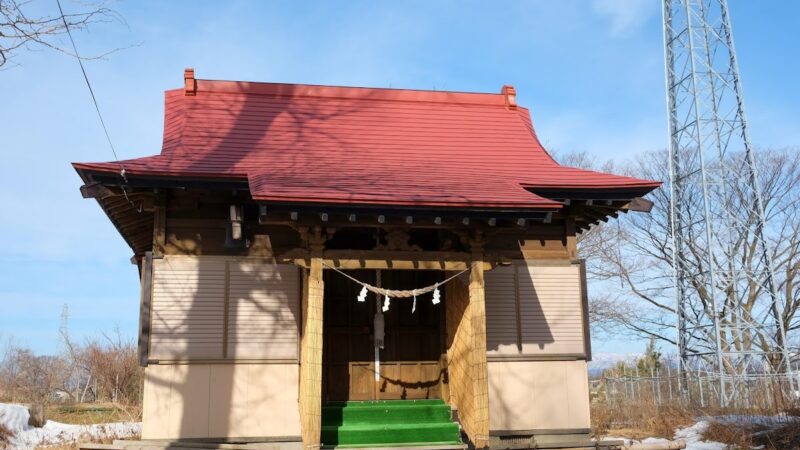
Shinzan Shrine (Noshiro City, Akita Prefecture) Complete Guide | History, Deities, and Access Information
Shinzan Shrine, located in Noshiro City, Akita Prefecture, is a shrine that attracts the faith of the local people. This article provides detailed information about Shinzan Shrine, from its basic information and history to information about surrounding shrines.
Basic Information about Shinzan Shrine
Shinzan Shrine is located at 97 Shinzanmae, Noshiro City, Akita Prefecture. Noshiro City is located in the northwestern part of Akita Prefecture and is known as a region rich in nature, surrounded by the magnificent Sea of Japan and the World Natural Heritage site “Shirakami Mountains.”
Location and Contact Information
- Location: 97 Shinzanmae, Noshiro City, Akita Prefecture 016-0174
- Jurisdiction: Akita Prefectural Shrine Association
- Regional Classification: Noshiro District (Former Noshiro City)
Shinzan Shrine is one of the 42 shrines located within Noshiro City and plays an important role in supporting the spiritual culture of the region.
The Deities and Beliefs of Shinzan Shrine
The name “Shinzan” of Shinzan Shrine is thought to originate from mountain worship and nature worship. In Akita Prefecture, the deification of mountains has been deeply rooted since ancient times, and Shinzan Shrine is one of the shrines that carries on this tradition.
Mountain Worship and Shinzan Shrine
In Akita Prefecture’s shrine culture, mountains have been revered as sacred places where gods reside. The name “Shinzan” of Shinzan Shrine may represent a belief in a specific mountain in the region, or gratitude to the mountain god in newly developed land.
The area around Noshiro City is surrounded by the lush forests of the Dewa Hills, and has been a region that has lived in harmony with the blessings of the mountains since ancient times. In this environment, shrines dedicated to mountain gods were important as guardian deities of agriculture and forestry, and as places to pray for the peace and security of the region.
Shrine Culture and Historical Background of Noshiro City
Noshiro City in Akita Prefecture has 42 shrines, each telling a story of the region’s history and culture. Shinzan Shrine plays a vital role in understanding Noshiro City’s shrine culture.
Representative Shrines of Noshiro City
Besides Shinzan Shrine, Noshiro City has many other historical shrines.
Ginkgo Mountain Shrine
Ginkgo Mountain Shrine is one of Noshiro City’s representative shrines. It is said to have been built in 658 AD by Abe no Hirafu during the Yamato court era to pray for victory in his campaign against the Emishi, boasting a history of over 1,300 years. This shrine is a symbolic presence demonstrating Noshiro City’s historical importance.
Shinmei Shrine
Shinmei Shrine is also located in Noshiro City. As a shrine dedicated to Amaterasu Omikami, the deity of Ise Grand Shrine, it attracts the faith of the local people.
Yamajinja Shrine
Located at 59 Haraikawa, Kogake, Futatsui-machi, Noshiro City, Akita Prefecture, is Yamajinja Shrine, which, like Shinyamajinja Shrine, is a shrine related to mountain worship.
Distribution of Shrines in the Noshiro and Futatsui Districts
Shrines in Noshiro City are distributed between the Noshiro district (former Noshiro City) and the Futatsui district (former Futatsui Town). The Akita Prefectural Shrine Association manages shrine information for each of these districts, and Shinyamajinja Shrine belongs to the Noshiro district.
Statistical Information on Shrines in Noshiro City, Akita Prefecture
Let’s look at the shrines in Noshiro City, Akita Prefecture from a statistical perspective.
Number and Distribution of Shrines in Noshiro City
- Total Number of Shrines: 42
- Regional Division: Noshiro District (former Noshiro City), Futatsui District (former Futatsui Town)
- Population: Approximately 50,000 (as of 2024)
- Area: Approximately 426.95 square kilometers
The density of shrines in Noshiro City, when viewed per capita and per area, is at a standard level within Akita Prefecture. This reflects the history of Noshiro City as a long-established area where shrines have taken root in each settlement.
Number of Shrines in Akita Prefecture as a Whole and Noshiro City’s Position
There are approximately 1,138 shrines in Akita Prefecture as a whole. The number of 42 shrines in Noshiro City is a medium-sized number among the municipalities in the prefecture. This indicates that Noshiro City is a historically important area where many settlements and local communities have been formed.
How to Access Shinzan Shrine
For those planning a visit to Shinzan Shrine, here’s how to get there.
Access by Public Transportation
- Nearest Station: JR Gonō Line, Noshiro Station
- Access from the Station: Take a taxi or local bus.
Noshiro Station is the central station of Noshiro City, approximately 1 hour by express train and 1 hour 30 minutes by local train from Akita Station.
Access by Car
- Expressway: Approximately 15 minutes from Noshiro Minami IC on the Akita Expressway
- General Roads: Take National Route 7 towards Noshiro city center
- Parking: Parking may be available on the shrine grounds or nearby (prior confirmation recommended)
Noshiro City is located in the northwestern part of Akita Prefecture, facing the Sea of Japan coast. Therefore, National Route 7, which runs along the coastline, is the main access route.
Location Confirmation via Smartphone
You can confirm the exact location of Shinyama Shrine using your smartphone’s GPS function or map app. By entering the address “97 Shinyama-mae, Noshiro City, Akita Prefecture,” you can search for a route from your current location. Sharing location information using a QR code is also convenient.
Attractions Around Shinyama Shrine
When visiting Shinyama Shrine, we recommend also visiting other tourist spots in Noshiro City.
Shirakami Mountains
The Shirakami Mountains, a World Natural Heritage site, are a vast primeval beech forest located in the southeastern part of Noshiro City. This region, with its untouched nature, is an ideal spot for hiking and nature observation.
Noshiro’s Timber Culture
Noshiro City is known as “Noshiro, the City of Wood,” and has long been a thriving timber industry region. It flourished as a production area for Akita cedar, and the traditions of wood processing techniques and wooden architecture are still passed down today.
Noshiro Port and the Sea of Japan
Noshiro Port is an important port facing the Sea of Japan and is a popular spot for viewing beautiful sunsets. Driving along the coastline is also enjoyable.
List of Shrines by Municipality in Akita Prefecture (1,138 Shrines)
There are approximately 1,138 shrines throughout Akita Prefecture, distributed across all municipalities. Noshiro City’s 42 shrines account for approximately 3.7% of the prefecture’s total.
Number of Shrines in Major Municipalities
- Akita City: Approximately 150 shrines
- Yokote City: Approximately 100 shrines
- Daisen City: Approximately 90 shrines
- Yurihonjo City: Approximately 120 shrines
- Noshiro City: 42 shrines
- Odate City: Approximately 80 shrines
Shrines in Akita Prefecture are widely distributed throughout the prefecture, reflecting the history, culture, and beliefs of each region. Data such as nationwide rankings of the number of identical shrine names, rankings of shrines by prefecture, and rankings of shrines by city/town/village reveal the rich shrine culture of Akita Prefecture.
Characteristics of Shrines in Akita Prefecture
Shrines in Akita Prefecture have the following characteristics:
- Mountain Worship: A strong belief in mountains as deities, such as the Dewa Sanzan and Taiheizan.
- Agricultural Deities: As a region where rice cultivation is thriving, there are many shrines dedicated to praying for abundant harvests.
- Sea Deities: Along the Sea of Japan coast, there are shrines dedicated to praying for maritime safety and bountiful catches.
- Mining Deities: In areas where mining once flourished, there are also shrines dedicated to the guardian deities of mines.
List of Shrines in Neighboring Prefectures
Many shrines also exist in prefectures adjacent to Akita Prefecture.
Shrines in Aomori Prefecture
Aomori Prefecture has over 900 shrines, and distinct shrine cultures have developed in the Tsugaru and Nanbu regions. Famous shrines include Iwaki-san Shrine and Utou Shrine.
Shrines in Iwate Prefecture
Iwate Prefecture has approximately 900 shrines, with Morioka Hachimangu Shrine and Komagata Shrine being representative examples. Many shrines are deeply connected to the history of the Nanbu Domain.
Shrines in Miyagi Prefecture
Miyagi Prefecture has over 900 shrines, with Shiogama Shrine and Osaki Hachimangu Shrine being famous examples. Its shrine culture is characterized by the influence of the Sendai Domain.
Shrines in Yamagata Prefecture
Yamagata Prefecture has over 1,700 shrines, with the mountain worship of the Dewa Sanzan (Gassan, Hagurosan, and Yudono-san) being particularly famous. Chokaisan Omokami Shrine, the Ichinomiya (first-ranked shrine) of Dewa Province, is also an important shrine.
Shrines in Fukushima Prefecture
Fukushima Prefecture has over 3,000 shrines, making it known as one of the prefectures with the largest number of shrines in Japan. Representative examples include Isasumi Shrine and Tsutsukowake Shrine.
Shrines in Hokkaido
Hokkaido has approximately 600 shrines, many of which were established during the pioneering era when people migrated from Honshu and invited deities from their hometown shrines. Hokkaido Shrine is the most famous.
Etiquette and Manners for Visiting Shinzan Shrine
This section introduces basic etiquette for visiting a shrine.
How to Pass Through a Torii Gate
The torii gate is the entrance to the sacred area. Bow before passing through the torii gate, and walk along the side of the path, as the center of the path is considered the path of the gods.
Proper Hand-Washing Ritual
- Hold the ladle in your right hand and wash your left hand.
- Switch the ladle to your left hand and wash your right hand.
- Hold the ladle in your right hand again, receive water in your left hand, and rinse your mouth.
- Wash your left hand again.
- Hold the ladle upright, let the water flow down the handle, and return it to its original place.
How to Worship at the Shrine
The basic worship ritual is “two bows, two claps, one bow”:
- Place your offering in the offering box.
- If there is a bell, ring it.
- Bow deeply twice.
- Clap your hands twice.
- Join your hands and pray.
- Bow deeply once.
History and Culture of Noshiro City
Let’s deepen our understanding of the history and culture of Noshiro City, where Shinzan Shrine is located.
History of Noshiro City
Noshiro City has been inhabited since ancient times, and Jomon period ruins have been discovered there. In the Middle Ages, it was under the rule of the Ando clan, and in the early modern period, it developed as part of the Akita Domain.
During the Edo period, it flourished as a port town located at the mouth of the Yoneshiro River, playing an important role as a timber shipping port. Known as a production area for Akita cedar, it laid the foundation for “Noshiro, the City of Wood.”
Traditional Culture of Noshiro
Noshiro Tanabata Festival: “The City That Never Sleeps in the Sky”
The most representative festival of Noshiro City is the “Noshiro Tanabata Festival: The City That Never Sleeps in the Sky.” This spectacular festival features giant lanterns exceeding 17 meters in height parading through the streets, and was revived in 2013 after a hiatus of approximately 1 century.
Noshiro Basketball
Noshiro City is also known as a “basketball town,” and Noshiro Technical High School (now Noshiro Science and Technology High School) is a prestigious school boasting 58 victories in the National High School Basketball Championship.
Shrine Visits and Seasonal Events
Nishiyama Shrine may hold various Shinto rituals and events throughout the year.
Major Annual Shrine Events
General annual events at shrines include the following:
- January: New Year’s Day Festival, First Shrine Visit of the Year
- February: Setsubun Festival, Prayer Festival
- Spring: Spring Grand Festival
- Summer: Summer Purification Ceremony
- Autumn: Autumn Grand Festival, Harvest Festival
- December: Year-End Purification Ceremony
For specific events at Shinyama Shrine, please contact the Akita Prefectural Shrine Association or the local parishioners’ representative.
Akita Prefecture Shrine Pilgrimage Guide
For those planning a shrine pilgrimage in Akita Prefecture, including Shinyama Shrine, we introduce an efficient way to visit the shrines.
Shrine Pilgrimage in Noshiro City
To visit all 42 shrines in Noshiro City, we recommend grouping them by area and planning your visit systematically. It’s a good idea to divide your visit into the Noshiro area and the Futatsui area, allocating one day to each.
Shrine Pilgrimage Route in Northern Akita Prefecture
A popular route starts in Noshiro City and visits shrines in Odate City, Kitaakita City, Kazuno City, and other areas. Combining this with nature sightseeing such as the Shirakami Mountains and Lake Towada makes for a fulfilling trip.
Differences Between Temples and Shrines
When visiting shrines, it’s important to understand the differences between them and temples. Shrines are Shinto facilities that enshrine Shinto gods, while temples are Buddhist facilities that enshrine Buddhas. Akita Prefecture has many temples listed in the complete list of Buddhist temples, and visiting them along with shrines allows for a deeper understanding of Japanese religious culture.
The Future of Shinzan Shrine and its Connection to the Community
Shinzan Shrine will continue to play an important role as a center of the local community.
Shrines and Local Communities
In regional cities facing declining birth rates and an aging population, shrines are important places for maintaining community bonds. Through festivals and cleaning activities, they serve as places for intergenerational exchange.
Value as a Cultural Asset
Older shrines often retain cultural assets of historical and cultural value, such as shrine buildings, stone monuments, guardian lion-dogs, and votive tablets. Preserving these and passing them on to future generations is an important role of shrines.
Shrines as a Tourist Resource
In recent years, collecting Goshuin (shrine stamps) and visiting shrines has become popular, and shrines are attracting attention as local tourist resources. Shinyama Shrine also has the potential to play a role in promoting tourism in Noshiro City.
Summary
Shinyama Shrine, located at 97 Shinyama-mae, Noshiro City, Akita Prefecture, is a shrine that attracts the faith of the local community. As one of the 42 shrines in Noshiro City, it conveys the history and culture of the region to the present day.
Noshiro City is a naturally rich area surrounded by the World Natural Heritage site “Shirakami Mountains,” the Sea of Japan, and lush forests, and Shinyama Shrine has walked hand in hand with the local people in this environment.
Across Akita Prefecture, there are approximately 1,138 shrines, each with its own unique history and beliefs. We hope that your visit to Shinzan Shrine will allow you to experience traditional Japanese religious culture and feel the history of the region.
When you visit Noshiro City, you can appreciate the charm of Noshiro more deeply by experiencing not only Shinzan Shrine, but also other historical shrines such as Ginkgoyama Shrine, and traditional culture such as the Noshiro Tanabata Festival “The Sky’s Sleepless Castle.”
Please explore the rich shrine culture of Akita Prefecture by using the nationwide shrine search, shrine list, and prefectural temple and shrine information. You can efficiently find shrines that interest you by using the full-text search function from the top page.