Complete Guide to Togakuji Temples: Characteristics and Visiting Information for Historic Temples Across Japan
There are several temples named Togakuji throughout Japan. Each has its own unique history and characteristics, and has long been cherished as a center of local faith. This article comprehensively introduces the history, highlights of the temple grounds, transportation access, and visiting information for major Togakuji temples.
What is Togakuji?
The temple name “Togakuji” originates from “Togaku,” which represents a stage of Buddhist practice. Togaku is one of the highest stages of Buddhist practice, signifying a state of enlightenment equal to that of a Buddha. Temples bearing this prestigious name have played an important religious role in their respective regions.
Across Japan, there are Togakuji temples belonging to different sects, such as the Shinshu Otani sect, Nichiren sect, and Rinzai Myoshinji sect, each deeply intertwined with the history and culture of its region.
Tokakuji Temple, Taito Ward, Tokyo
History and Origin
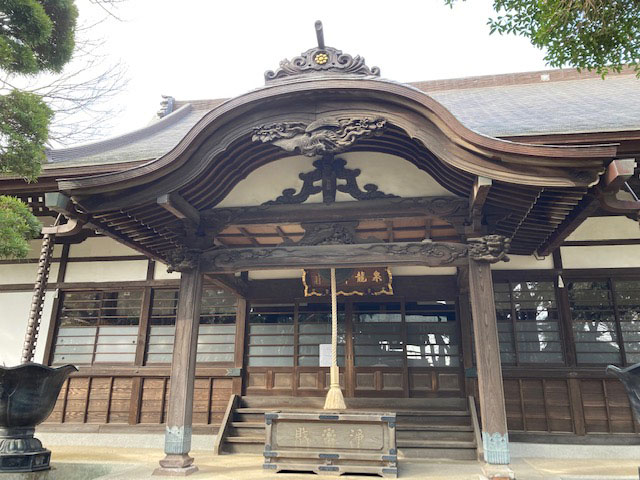
Tokakuji Temple, located in Moto-Asakusa, Taito Ward, Tokyo, is a temple belonging to the Shinshu Otani sect, and its mountain name is Shoryuzan. The history of this temple dates back to the late Sengoku period.
According to temple tradition, it is said to have begun when Katsuryu, the eldest son of Kagetaka, the second son of Asakura Danjo Kusakabe Sadakage, the lord of Echizen Castle, became a Tendai Buddhist scholar and built a temple. The founding priest was Keisen, a member of the Echizen Asakura clan, who became a Sengoku daimyo. Keisen became a Tendai Buddhist monk and founded this temple.
Later, after the changes in religious policy during the Meiji era, it converted to the current Shinshu Otani sect, and remains so to this day.
Characteristics of the Temple Grounds
Tokakuji Temple in Taito Ward is a small, family-run temple located in the downtown area of Tokyo. Despite its location amidst the hustle and bustle of the city, it maintains a tranquil atmosphere and is cherished by local residents.
The temple operates under the philosophy of “being a temple that is easily accessible and always feels close to everyone,” functioning as a temple open to the community.
Perpetual Memorial Services and Joint Burial Grounds
Togakuji Temple in Taito Ward offers perpetual memorial services and joint burial grounds that meet modern needs. Located in the heart of the city, it provides memorial services for those without heirs or those who wish to avoid burdening their descendants, and is utilized by many.
Access
Location: Motoasakusa, Taito-ku, Tokyo
Nearest Stations:
- Approximately 3 minutes on foot (approx. 264m) from Inaricho Station on the Tokyo Metro Ginza Line
- Approximately 10 minutes on foot from Ueno Station on the JR Yamanote Line and Keihin-Tohoku Line
- Approximately 7 minutes on foot from Shin-Okachimachi Station on the Tsukuba Express
Due to its central location, it is easily accessible by public transportation.
Togakuji Temple, Yokosuka City (Kurihama), Kanagawa Prefecture
History and Origin
Togakuji Temple, located in Kurihama, Yokosuka City, Kanagawa Prefecture, is a Nichiren Buddhist temple. Its mountain name is Eikyusan.
It was founded on June 28, 1584 (Tensho 12) by Togakuin Nichidai Shonin. Nichidai Shonin enjoyed the deep trust of the 17th head priest of Minobu-san, Nichishin Shonin, who encouraged him to establish a temple in this location. Nichidai Shonin was also the 5th head priest of Shogakuji Temple in Sawara, playing a central role in the propagation of Nichiren Buddhism in this region.
Principal Image and Cultural Properties
The principal image is a statue of the Three Treasures. Within the temple grounds is the Kannon Hall, which houses the following precious Buddhist statues:
- Wooden Standing Statue of Kannon Bodhisattva
- Wooden Standing Statue of Kongo Rikishi
These statues are carefully preserved as important cultural assets that tell the history of the temple.
Highlights of the Temple Grounds
The Kannon Hall, located to the left and slightly in front of the main hall, is a must-see spot for visitors. You can admire these historical Buddhist statues in a tranquil atmosphere.
Access
Location: Kurihama, Yokosuka City, Kanagawa Prefecture
The Kurihama area is located on the eastern side of the Miura Peninsula and is accessible from Keikyu Kurihama Station and JR Kurihama Station. It is one of the local attractions featured on the Kurihama Tourism Association’s official website.
Tokakuji Temple, Tsuchiura City, Ibaraki Prefecture
History and Origin
Tokakuji Temple, located in Tsuchiura City, Ibaraki Prefecture, is a temple of the Shinshu Otani sect. According to temple records, the predecessor of Tokakuji Temple was Fujisan Sankyokaku Gokurakuji Temple in Hitachi Fujisawa, and its founder is said to have been Ryoshin.
After the Meiji era, it relocated to its current location in Tsuchiura City and has developed as a local Shinshu Otani sect temple.
Connection to the Community
Tokakuji Temple in Tsuchiura City is introduced as a local tourism resource, such as in “Tsuchiura Exploration,” and is an important temple for understanding the history of the region.
Location
Location: Tsuchiura City, Ibaraki Prefecture
Tsuchiura City is a historic city located in the southern part of Ibaraki Prefecture, facing Lake Kasumigaura.
Tokakuji Temple in Uwajima City, Ehime Prefecture
History and Origin
Tokakuji Temple, located in Uwajima City, Ehime Prefecture, is a temple of the Rinzai sect Myoshinji school. Its mountain name is Ryugezan, and its principal image is Shakyamuni Buddha.
This temple, along with Dairyu-ji Temple, is known as the family temple of the Date family, the lords of the Uwajima Domain. The Date family was a branch family of the Sendai Domain that ruled Uwajima, and Tokaku-ji Temple played an important role in commemorating the family of the lords.
Features
Due to its status as the family temple of the lords, the temple grounds retain historically valuable tombs and buildings. Its dignified appearance as a Zen temple of the Myoshin-ji branch of the Rinzai school is also a distinctive feature.
Location
Location: Uwajima City, Ehime Prefecture
Uwajima City is located in the southwestern part of Shikoku and developed as a castle town facing the Uwa Sea.
Tokaku-ji District, Kanda Town, Miyako District, Fukuoka Prefecture
Natural Environment and Landscape
The Tokaku-ji district, located in Yamaguchi, Kanda Town, Miyako District, Fukuoka Prefecture, is a mountainous area situated at an altitude of approximately 300 meters. This area is known not for the temple itself, but as a region called Tokakuji.
The terraced rice fields of Tokakuji boast a beautiful landscape, selected as one of the “100 Best Rural Landscapes” by the Ministry of Agriculture, Forestry and Fisheries in 1992. Local residents actively engage in landscape preservation activities, making it a valuable area that conveys the original landscape of Japan to the present day.
Tourism Resources
Introduced as a tourist resource by the Kanda Town Development Tourism Association, visitors can enjoy the scenery of the terraced rice fields and the natural environment. The terraced rice fields, which show different expressions in each season, are a popular spot for photography enthusiasts and nature lovers.
Access
Location: Yamaguchi, Kanda-machi, Miyako-gun, Fukuoka Prefecture
Kanda-machi is located in the northeastern part of Fukuoka Prefecture and is close to Kitakyushu Airport.
Guidelines for Visiting Togakuji Temple
Basic Manners for Visiting
When visiting any Togakuji temple, please observe the following basic manners:
- Bow at the Temple Gate: Bow before entering the temple grounds.
- Respect: Be quiet within the temple grounds and avoid disturbing other visitors.
- Permission for Photography: It is advisable to obtain permission in advance before taking photographs of the temple grounds or Buddha statues.
- Attire: Wear clean, understated clothing when visiting.
- Offering: You may offer an offering of your choice during your visit.
Differences by Sect
Togakuji temples include temples of different sects, such as the Shinshu Otani sect, Nichiren sect, and Rinzai Myoshinji sect. The etiquette for visiting temples may differ depending on the Buddhist sect:
- Shinshu Otani-ha: Only joins hands in prayer; clapping is not performed.
- Nichiren-shu: Chants the title “Namu Myoho Renge Kyo.”
- Rinzai-shu: As a Zen sect temple, quietly joins hands in prayer and bows.
The Role of Tokakuji Temple in Modern Times
Center of Local Communities
Tokakuji temples in various locations serve not only as religious facilities but also as centers of local communities. Through memorial services and events, they serve as places for interaction among local residents.
Preservation of Cultural Assets
Historical Tokakuji temples store valuable cultural assets and ancient documents, playing an important role in passing on the history of the region to future generations.
Responding to Modern Needs
Especially in urban areas, Tokakuji temples offer services that meet the needs of modern society, such as perpetual memorial services and communal burial grounds. Amidst the declining birthrate and aging population, they function as a place for memorial services for those without successors.
Points to Note When Visiting Tokakuji Temple
Visiting Hours
Many temples have set visiting hours. Generally:
- Opening: Around 9:00 AM
- Closing: Around 5:00 PM
However, these hours vary by temple, so it is recommended to check in advance.
Events and Ceremonies
Each temple regularly holds memorial services and ceremonies. General public access may be restricted during major ceremonies, so it’s best to check in advance.
Parking
Parking is often limited at temples in urban areas, so using public transportation is recommended.
Tourist Attractions Around Tokakuji Temple
Around Tokakuji Temple in Taito Ward
- Senso-ji Temple: A representative Tokyo tourist spot within walking distance
- Ueno Park: A cultural hub with art museums and a zoo
- Kappabashi Kitchenware Street: A street specializing in kitchenware and tableware
Around Tokakuji Temple in Kurihama
- Perry Park: A park that tells the history of the arrival of the Black Ships
- Kurihama Flower Park: A park where you can enjoy flowers of all seasons
- Kurihama Port: The departure and arrival point for Tokyo Bay ferries
Around the Tokakuji Temple District in Kanda Town
- Seiryu-kutsu Cave: A natural landscape known as a limestone cave
- Ishizukayama Kofun: A keyhole-shaped burial mound designated as a national historic site
- Kanda Town Historical Museum
Summary
Temples bearing the name Tokakuji exist throughout Japan, each with its own history and characteristics. While differing in sect and location, temples such as the Shinshu Otani sect temple in Taito Ward, Tokyo, the Nichiren sect temple in Kurihama, Kanagawa Prefecture, and the Rinzai sect temple in Uwajima City, Ehime Prefecture, have all played a vital role as centers of local faith and culture.
Even today, they continue traditional religious activities while also responding to new needs such as perpetual memorial services, operating in a way that is in line with the times. Furthermore, the term “Togakuji” is also used to name areas that preserve beautiful rural landscapes, such as the Togakuji district in Kanda Town, Fukuoka Prefecture.
When visiting a Togakuji temple, understanding the unique history and characteristics of each temple and paying respects with appropriate manners will lead to a deeper experience. Why not visit Togakuji temples in various locations as an opportunity to experience local history and culture?