Joganji Temple Complete Guide | A Historic Temple in Yugawara with a Nationally Designated Natural Monument Juniper Tree and Connections to Doi Sanehira
Located in Yugawara Town, Ashigarashimo District, Kanagawa Prefecture, Joganji Temple is a historic temple founded by Doi Sanehira, a warrior who played an active role in the Genpei War. A magnificent juniper tree, a nationally designated natural monument over 850 years old, stands proudly, and the temple is a popular power spot in Yugawara, attracting many visitors. This article will introduce the charm of this historic temple in its entirety, from its history and highlights to access methods.
History and Origins of Joganji Temple
Founded by Doi Sanehira
The history of Joganji Temple dates back to the late Heian period, approximately 860 years ago. It is said that the temple originated when Doi Jiro Sanehira, a powerful local lord who ruled Doi-go in Sagami Province (present-day Yugawara town), built a small private Buddhist chapel on the hillside behind his residence.
Doi Sanehira was a warrior who played an active role as a senior retainer of Minamoto no Yoritomo during the Genpei War, and is particularly known as one of the “Seven Knights of Yoritomo” who protected Yoritomo when he was defeated at the Battle of Ishibashiyama. After winning the Genpei War, Sanehira named this temple “Mannenzan Jōganji” (萬年山城願寺) to pray for the repose of the souls of all those who died in battle, regardless of whether they were friend or foe, and to express his wish for the prosperity of the Doi family for all eternity.
Restoration and Sectarian Changes during the Nanboku-chō Period
Although Jōganji Temple flourished in its early days, it experienced a period of decline from the late Kamakura period to the Muromachi period. However, a turning point came during the Nanboku-chō period. Doi Hyōe Nyūdō, a descendant of Doi Sanehira, invited the Zen monk Unrin Seishin, a disciple of the then-high-ranking monk Seisetsu Shōchō (Daikan Zenji), to be the founding abbot, and thus rebuilt the temple.
At this time, Jōganji Temple was reborn as a Rinzai Zen temple, and in the late Kamakura period, it was designated as a Shozan, a temple rank second only to the Five Mountains and Ten Temples, and flourished as one of the leading Zen temples in the western Sagami region. Seiisetsu Shōchō was the nominal founding abbot, but Unrin Seishin served as the actual founding abbot.
Afterwards, following the turmoil of the Sengoku period, it converted to the Sōtō Zen sect during the Edo period, and remains so to this day.
Highlights of Joganji Temple
The Nationally Designated Natural Monument: “The Byakushin (Juniper) of Joganji Temple”
One of the biggest reasons to visit Joganji Temple is the giant Byakushin (also known as Ibuki) tree that stands tall within the temple grounds. This tree boasts an estimated age of 850 years (some sources say 900 years) and a height of approximately 20 meters. It was designated a National Natural Monument on September 7, 1939 (Showa 14). It is known as the largest Byakushin in Kanagawa Prefecture.
This Byakushin, said to have been planted by Doi Sanehira himself, has watched over the history of Joganji Temple from the Heian period to the Kamakura period and up to the present day. Its lush green leaves, powerfully twisted trunk, and overwhelming presence captivate visitors.
The juniper tree standing in the temple grounds at the top of the stone steps of the approach is a popular power spot, believed to be imbued with “Juniper Power”, and is said to bestow “trust, friendship, and gratitude.” Its appearance, overgrown to cover the top of the stone steps, is truly breathtaking.
The Doi Clan’s Burial Grounds and the Seven Knights Hall
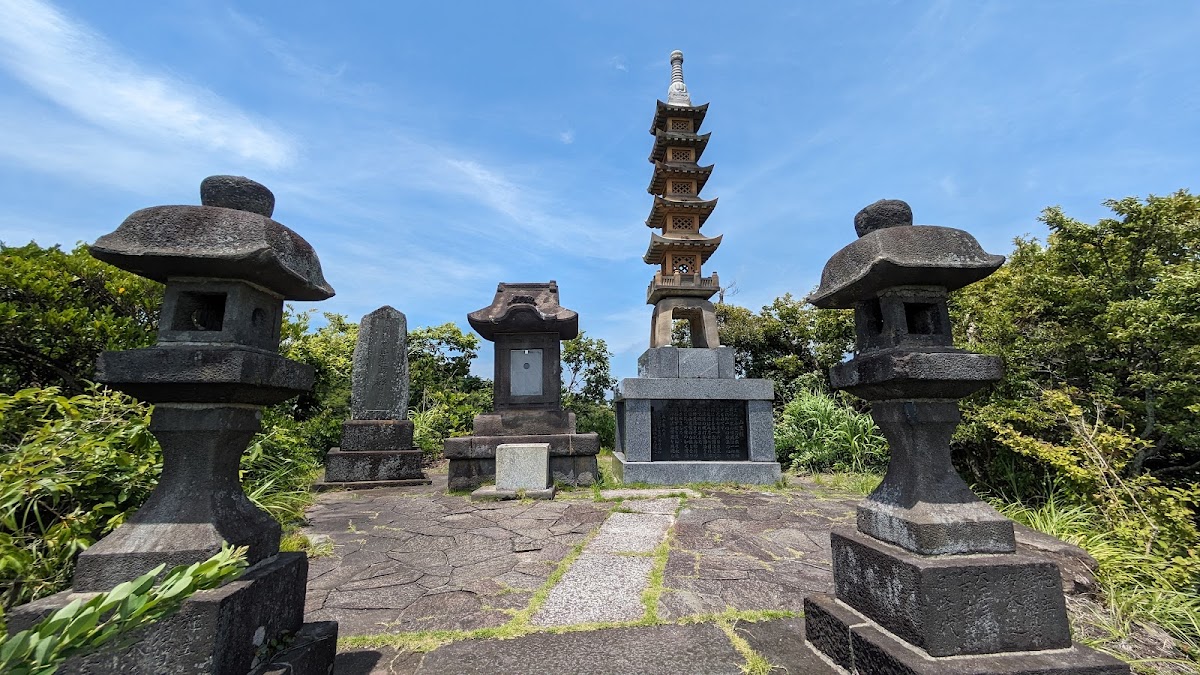
Within the temple grounds are the burial grounds of the Doi clan, including Doi Sanehira. This place, where the warriors who supported Minamoto no Yoritomo rest, is a must-see spot for history buffs.
Furthermore, there is a building called the Seven Knights Hall, which enshrines the “Seven Knights of Yoritomo” who protected Yoritomo at the Battle of Ishibashiyama. Doi Sanehira was the foremost of these seven and made a significant contribution to the restoration of the Minamoto clan. The Seven Knights Hall is an important historical site that conveys his achievements to the present day.
Historical Sites Associated with Minamoto no Yoritomo
Within the temple grounds is a stone called “Yoritomo’s Sitting Stone”, where Minamoto no Yoritomo is said to have sat when he visited this area. Considering the historical context—that Doi Sanehira sheltered Yoritomo after his defeat at the Battle of Ishibashiyama, which led to his subsequent recovery—this stone can be considered an important witness to the Genpei War.
Five-Storied Stone Pagoda and Main Hall
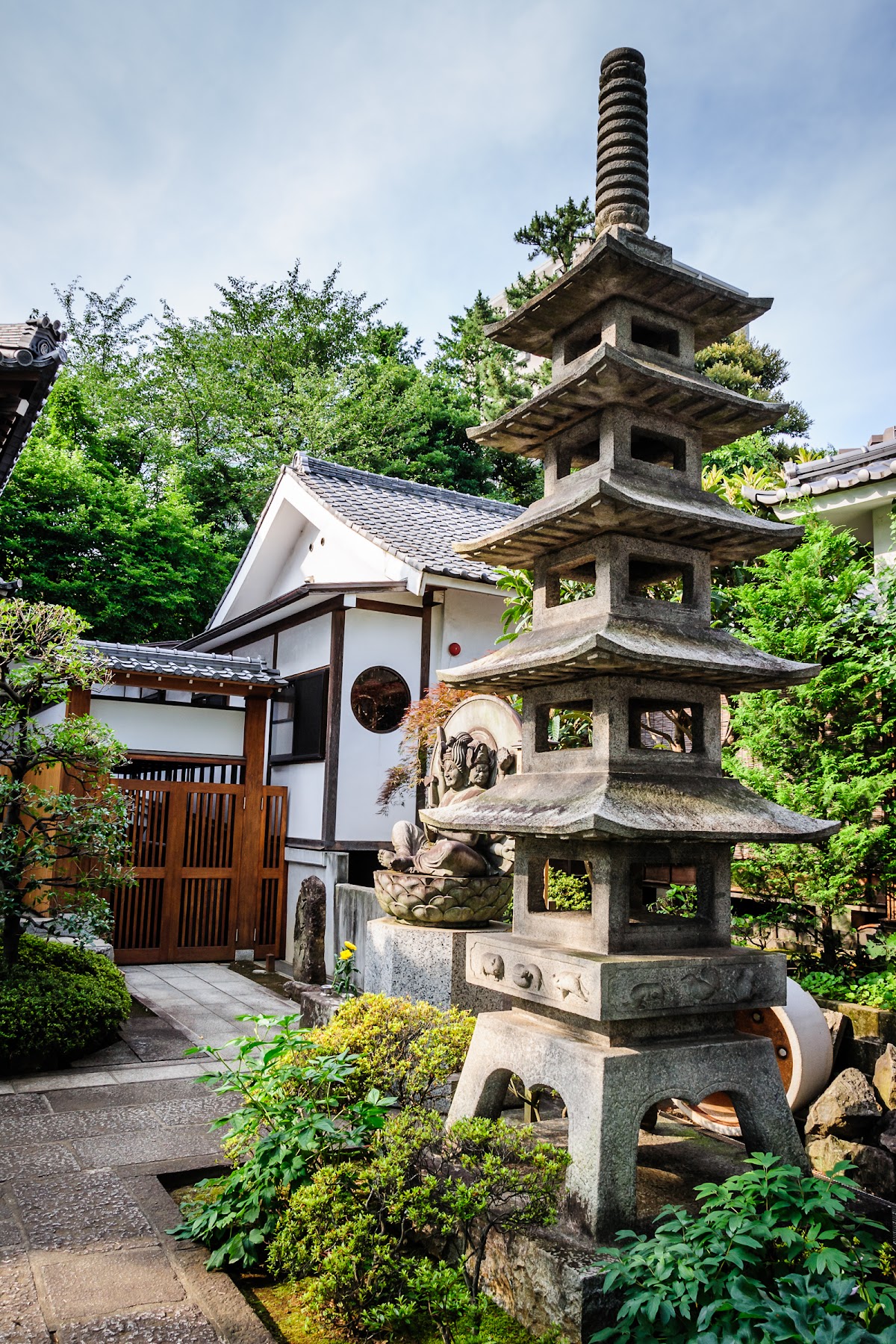
A five-storied stone pagoda stands within the temple grounds, preserving the style of the Muromachi period. The pagoda’s body is inscribed with the seed syllables of the Four Buddhas of the Vajradhatu Mandala, and the base features a double-petaled inverted lotus pedestal, demonstrating the exquisite craftsmanship in every detail. The distinctive tiered structure of the roof, with two lower tiers and four upper tiers, speaks to the high level of stonework technology of the time.
The main hall, though built after the Edo period, exudes the solemn atmosphere of a Soto Zen temple. Regular religious services are still held inside the hall where the principal image is enshrined.
Geological Value of Yugawara Volcano
The area around Joganji Temple is geologically interesting. Lava from the Yugawara volcano, which was active between 350,000 and 300,000 years ago, is distributed throughout this area, which is also designated as part of the Hakone Geopark. It’s a place where you can feel not only the history of the temple but also the workings of the ancient Earth.
Annual Events at Joganji Temple
New Year’s Eve Bell Ringing and Burning Ceremony
Every year on December 31st, New Year’s Eve, the New Year’s Eve Bell is rung. General visitors can also ring the bell, warding off the 108 worldly desires and welcoming the new year with a refreshed feeling. At the same time, a burning ceremony is held, where old amulets and talismans are purified and given a proper send-off. This is a winter tradition in Yugawara, attracting many local residents and tourists.
Sejiki-e (Feeding of Eating Spirits)
In September, the Sejiki-e memorial service is held. This is an important Soto Zen Buddhist service to express gratitude to Buddha and to offer prayers for spirits without relatives or those who have fallen into the realm of hungry ghosts. It can be said that the spirit of the temple’s founding, where Doi Sanehira mourned the spirits of all those who died in the Genpei War, both friend and foe, is carried on in this event to this day.
Enjoying the Temple Grounds with a 360-Degree Camera
In recent years, Joganji Temple has also been offering tours of its grounds using a 360-degree camera. The official website offers content that allows you to virtually explore the grounds before actually visiting, allowing you to experience the impressive juniper trees and the atmosphere of the temple in advance. This is a convenient service for those living far away or for those who want to preview the temple before visiting.
Information on Hyakusō Cemetery and Jakujōtō Pagoda
Jōganji Temple operates columbarium facilities such as Hyakusō Cemetery and Jakujōtō Pagoda, which are designed to meet modern needs. In addition to traditional cemeteries, it accommodates diverse forms of memorial services, including perpetual memorial graves and tree burials, and is used by many people from both within and outside Yugawara Town.
While being a historical temple, Jōganji Temple’s flexible approach to modern societal changes is one of the reasons why it continues to be a beloved temple deeply rooted in the community.
How to Access Jōganji Temple
Access by Train
Jōganji Temple is conveniently located about a 10-minute walk from JR Tōkaidō Main Line “Yugawara Station”. Exiting the station, head north, pass through the residential area, and walk slightly uphill to reach the entrance to the temple grounds. The path is a gentle uphill slope, offering a pleasant hiking experience.
Access by Car
If visiting by car, it’s approximately 15 minutes from the Ishibashi Interchange on the Odawara-Atsugi Expressway, or accessible via National Route 135 through the center of Yugawara Town. While the temple has parking for visitors, spaces are limited, so using public transportation is recommended on weekends and during events.
Address and Basic Information
- Official Name: Mannenzan Jōganji Temple
- Sect: Sōtō Zen
- Address: 252 Jōbori, Yugawara-machi, Ashigarashimo-gun, Kanagawa Prefecture
- Visiting Hours: Grounds are freely accessible (prior contact required for entry into the main hall)
- Admission Fee: Free
- Parking: Available (limited spaces)
Tourist Attractions Around Jōganji Temple
When visiting Jōganji Temple, you can also enjoy nearby tourist attractions.
Yugawara Onsen
Around Yugawara Station, there are many hot spring inns and day-trip bathing facilities, allowing you to relax and soothe your fatigue in the hot springs after visiting Joganji Temple. Yugawara Onsen is a historic hot spring resort mentioned in the Manyoshu (an ancient collection of Japanese poetry), and is known for its skin-beautifying properties.
Manyo Park
This park allows you to fully enjoy the nature of Yugawara, with seasonal flowers and autumn foliage to admire. There is also a footbath facility within the park, perfect for a break during your stroll.
Fudo Falls
A waterfall with a drop of 15 meters, it is one of Yugawara’s representative scenic spots. A walking path is maintained around the waterfall, allowing you to enjoy forest bathing while breathing in negative ions.
Points to Note When Visiting Joganji Temple
Manners for Visiting Temple
Joganji Temple is a temple that still functions as a place of worship. Please observe the following manners when visiting the temple:
- Please be quiet within the temple grounds.
- Photography is permitted, but please be considerate inside the main hall and in the cemetery.
- Do not touch the juniper trees (for their protection).
- Please take all your trash with you.
Clothing and Belongings
Since there are stone steps on the approach to the temple, we recommend wearing comfortable shoes. Particular caution is needed when it rains, as the steps can become slippery. In summer, the sun is strong, so a hat or parasol would be useful.
Best Season
As juniper trees are evergreen, you can enjoy their lush green appearance throughout the year. However, the seasons of fresh greenery (April-May) and autumn leaves (November) are especially recommended, as the surrounding nature is also beautiful. Also, if you would like to experience the ringing of the New Year’s Eve bell, consider visiting on New Year’s Eve.
Historical Value of Joganji Temple
Joganji Temple is not merely a tourist spot, but a valuable cultural asset that conveys the history of Japan to the present day. The footsteps of Doi Sanehira, who played a pivotal role in the Genpei War—a turning point in Japanese history; the development of Zen Buddhist culture from the Kamakura to Muromachi periods; and the juniper tree that has lived for over 850 years—all of these are condensed within this small temple.
The founding spirit of Doi Sanehira, who prayed for the repose of the souls of those who died in battle “without distinguishing between friend and foe,” teaches us the preciousness of peace even today. Furthermore, its history of decline and revival during the Nanboku-cho period, overcoming the turmoil of the Sengoku period, and continuing to exist even while changing sects during the Edo period, demonstrates the importance of adapting to change while preserving its essence.
Summary: A Sacred Site Where History and Nature Intersect in Yugawara
Joganji Temple in Yugawara Town, Kanagawa Prefecture, is a temple with multifaceted charm, boasting a giant juniper tree designated as a national natural monument and over 850 years old, historical buildings associated with Doi Sanehira, and a place of faith that continues to be passed down to the present day.
Located just a 10-minute walk from Yugawara Station, the moment you step onto the temple grounds, you’ll find yourself immersed in a history spanning over 860 years. The stories of the warriors who supported Minamoto no Yoritomo, the splendor of Zen Buddhist culture, and the ancient trees that have witnessed the passage of time—all of these evoke deep emotions in visitors.
When traveling to Yugawara Onsen, be sure to visit Joganji Temple and experience the weight of history and the power of nature. Standing beneath the juniper tree and contemplating the “eternal wish” embodied by Doi Sanehira will surely be a memorable experience.